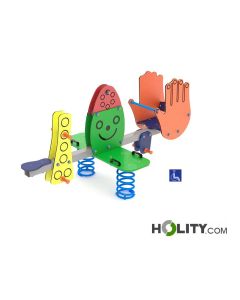
mon-fri 9-13 / 14.30-18.30
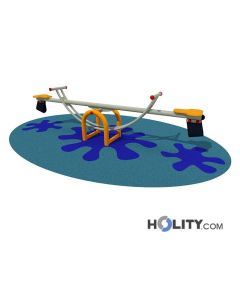
Metal seesaw. Seats: 2. Dimensions: L256 x P40 x H68 cm.
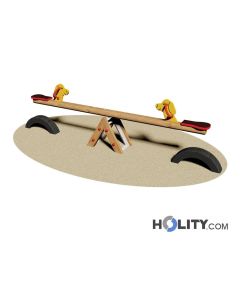
2-seater wooden seesaw for playgrounds and public gardens. Dimensions: L260 x W30 x H75 cm
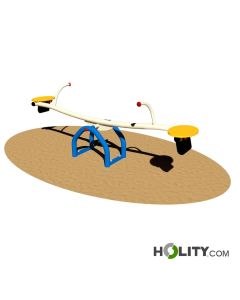
Seesaw with 2 seats. Electro-galvanized and painted steel structure.
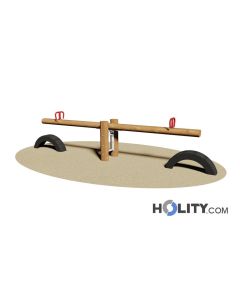
Two-seater see-saw swing complete with tires to be buried. Suitable for children aged 3-8 years. Fall height: 80 cm.
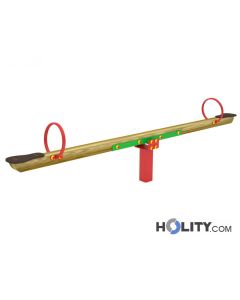
See-saw swing with Nordic pine wood beam. 2-seater. Overall dimensions: L306 x D30 x H77 cm
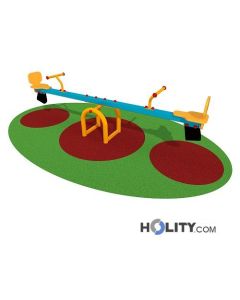
Seesaw swing for public or private playgrounds. Equipped with 2 seats. Material: metal.
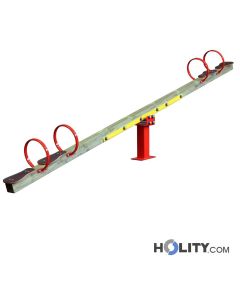
<p>Seesaw for playgrounds and public gardens. 4-seater. Overall dimensions: L406 x W30 x H77 cm</p>
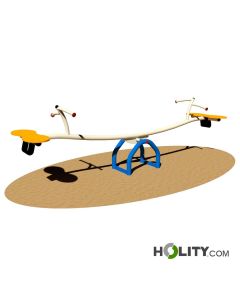
Seesaw swing for outdoor spaces. Number of users: 4. Dimensions: L. 247 x D. 75 x h. 86 cm.
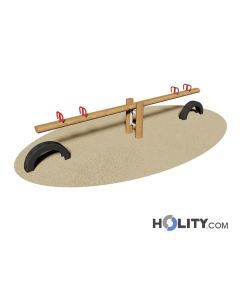
Playground seesaw, in wood, 4-seater. Dimensions: L400 x W42 x H85 cm
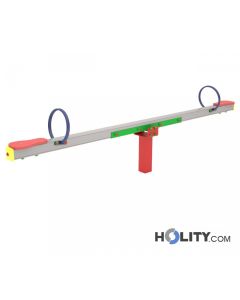
Aluminum seesaw for open spaces and playgrounds. 2 seats. Dimensions: 306 x 30 x 77 cm
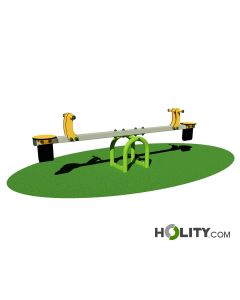
Seesaw for playgrounds. Seats: 2. Dimensions: 250 x 40 x h. 78 cm.
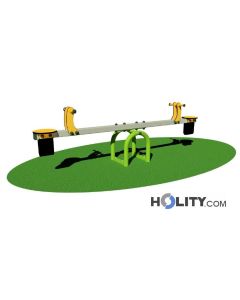
Seesaw with 2 seats in aluminum and electro-galvanized steel.
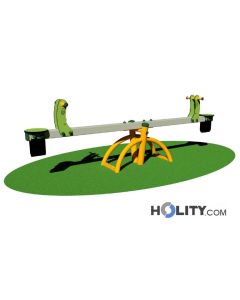
Seesaw with 2 seats. In aluminum and electro-galvanized steel.
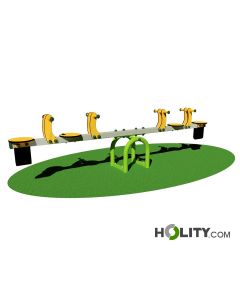
Aluminum seesaw. Dimensions: 308 x 40 x h. 78 cm.
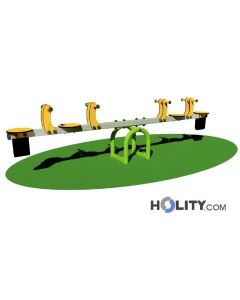
Seesaw with 4 seats. Structure in aluminum and electro-galvanized steel.
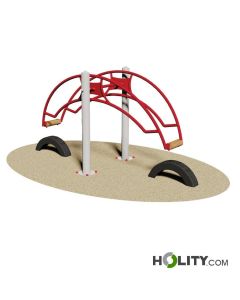
Seesaw for playground. Age of use: 3-12 years. Maximum dimensions: L. 250 x W. 112 x h. 151 cm.
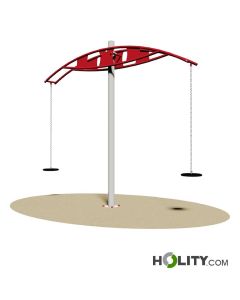
Seesaw for playground. Age range: 3-8 years. Maximum dimensions: L. 355 x W. 33 x h.305 cm.
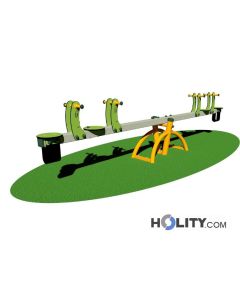
Seesaw for playground with 4 seats. In aluminum and electro-galvanized steel.
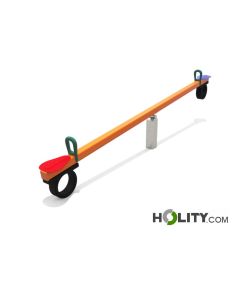
2-seater seesaw for playground. Dimensions: L.386 x D.25 x h90 cm. Safety area: 19.5 sqm.
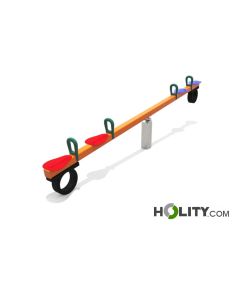
Playground seesaw with 4 seats. Dimensions: L.386 x D.25 x h.90 cm. Recommended age: 2-14 years.
The seesaw represents one of the most widespread classic games in public spaces, schools, and playrooms. It is a structure based on a simple but effective mechanical principle: an oscillating beam that rotates on a central fulcrum, allowing two or more children to alternate in ascending and descending movement. This type of play develops balance, motor coordination, and a sense of cooperation among young users. The seesaws available on the market vary significantly in construction materials, load capacity, dimensions, and anchoring systems, responding to different installation needs in public and private contexts.
The load-bearing structure can be made of galvanized metal, treated Nordic wood, or aluminum; each material offers different performance in terms of durability, maintenance, and weather resistance. Commercial models range from more compact 2-seater versions, ideal for small gardens, to 4-seater configurations designed for play areas with high user flow. Many manufacturers include integrated safety systems, such as underground tires for cushioning falls and play surfaces compliant with European standards on the safety of children’s games. The choice of model depends on technical variables such as the target age of the users, the available space, local weather conditions, and the level of maintenance that the manager can guarantee over time.
Seesaws offer significant benefits from the perspective of children’s cognitive and physical development. This game naturally stimulates the calculation of balance and strength, teaching children to regulate their own body weight to keep the beam in harmonic motion. The play experience of the seesaw promotes peer collaboration, as the game only works correctly if both participants coordinate their movements. From a management point of view, seesaws require little space compared to other play attractions, have very low maintenance costs, and excellent construction longevity, especially in models made of galvanized steel or aluminum. Furthermore, their acquisition cost remains competitive compared to more complex games, allowing even small municipalities and schools to equip themselves with safe and compliant attractions.
In the recreational field, seesaws adapt to very different contexts: public parks, school courtyards, indoor playrooms, private gardens, corporate recreational facilities, and hospitality structures. Construction simplicity does not imply poor performance; professional models are designed according to EN 1176 regulations relating to playground safety and guarantee a varied play experience in all seasons. The oscillatory movement also develops the child’s vestibular system, fundamental for orientation in space and posture control. Many educators and psychomotor therapists recognize the seesaw as a valuable educational tool, especially for the development of body awareness and managed risk management.
The seesaw market offers a notable variety of constructions, first and foremost the choice of structural material. Models in electro-galvanized and painted steel represent the most robust and durable solution over time, with exceptional resistance to extreme weather conditions and a minimum need for maintenance. Galvanized steel maintains its mechanical properties even after years of exposure to rain, sun, and thermal variations, making it ideal for permanent installations in public spaces. Treated Nordic wood models offer a more natural and warm aesthetic, appreciated in contexts where landscape integration is important; the wood used typically comes from sustainable forests and is subjected to antifungal and antioxidant treatments that extend its life to 10-15 years with regular maintenance. Aluminum represents an intermediate choice, combining lightness and resistance to corrosion, although with a generally higher cost than steel.
As for capacity, 2-seater models represent the most classic and widespread configuration, with compact dimensions (usually 250-310 cm in length) and a maximum permitted weight ranging between 80 and 120 kg total. The 4-seater versions increase the footprint (up to 400 cm in length) and the load capacity, allowing play sessions with more children and reducing waiting times in areas with high flow. There are also inclusive versions specifically designed to accommodate children with motor disabilities, equipped with ergonomic seats, stabilization devices, and spaces suitable for wheelchairs. Many manufacturers include underground tires in the equipment for cushioning falls, fundamental for compliance with safety regulations. Some models also offer decorative shapes in contoured wood or steel, which transform the seesaw into a replica of animals or vehicles, increasing its aesthetic appeal without compromising the play functions.
The selection of a seesaw must start from the analysis of the target audience and the available space. If the installation is intended for a school area with children between 3 and 8 years old, the choice naturally falls on 2-seater models with contained fall heights (generally 60-80 cm) and proportional safety surfaces. For high-traffic public parks, 4-seater versions guarantee better management of the play flow and represent a more sustainable investment over time. A crucial aspect is the analysis of the terrain and local climatic conditions: if the area is subject to frequent rain and humidity, galvanized steel or aluminum are more suitable than wood, which requires periodic treatments and constant maintenance. Conversely, in areas with low humidity and moderate sunlight, treated Nordic wood offers superior aesthetics with reasonable maintenance costs.
A common mistake is underestimating the importance of the safety surface and the free fall area. According to the EN 1176 standard, every seesaw must have a surrounding protection zone defined by the product’s technical specifications, generally between 15 and 20 square meters. If the available space does not allow for correct installation, it is better to opt for more compact models rather than forcing a non-compliant installation. The ground anchoring system also represents a critical factor: models with underground tires offer greater stability and regulatory compliance than simply positioned stands. For permanent installations in schools or municipal parks, it is advisable to check that the supplier provides certificates of compliance with European EN 1176 standards and a declaration of performance according to the CPR regulation. Finally, consider the acceptable level of maintenance: painted steel requires periodic inspections, treated wood needs annual reviews, aluminum requires periodic cleaning to preserve the surface.
The seesaw, as a game for public parks, must comply with the European standard EN 1176-1 “Playground equipment and surfacing - Part 1: General safety requirements and test methods”. This regulation prescribes strict technical parameters regarding construction materials, mechanical resistance, safety spaces, free fall heights, and ergonomic design of play surfaces. Every serious manufacturer must provide a declaration of performance certifying compliance with the requirements of the standard and availability of the technical file with construction drawings, assembly manuals, and maintenance instructions. Regulatory compliance is mandatory for installation in public areas, while installations on private land can enjoy greater flexibility, always considering the owner’s civil responsibilities in case of accidents.
Specific aspects addressed by regulations include the resistance of the load-bearing structure to static and dynamic loads, calculated considering the maximum weight of users and amplification factors due to oscillatory movements. The geometry of openings and spaces must exclude the possibility of entrapment of the head or upper limbs, with precisely defined minimum and maximum diameters. Surfaces in contact with the skin (seats, handles) must be free of sharp edges and treated to avoid excessive overheating under the summer sun. The surrounding free fall area must be covered by certified cushioning materials, usually loose rubber or synthetic elastic flooring, sized according to the maximum expected fall height. Many public park managers also require periodic reviews by certified technicians, usually annual, with registration of inspections and any maintenance or replacement of damaged components. The EN 1176-3 standard specifically delves into safety distances from other equipment and fixed obstacles, preventing installations that are too close and could compromise safety during oscillatory movement.
Explore all the products in the category and compare the available solutions to find the one most suitable for your operational context. Whether it is a school installation, a public park, or a private facility, our range of seesaws offers models compliant with European regulations, made with durable materials and designed to guarantee safety and fun for children.
A seesaw is a game based on a simple lever principle: a horizontal beam rests on a central fulcrum and oscillates when two or more children move alternately up and down. The movement occurs naturally thanks to the change in children’s body weight, without the need for motorization. It is one of the most classic games for the development of balance and motor coordination.
Galvanized steel offers maximum durability and minimum maintenance, ideal for humid climates. Treated Nordic wood provides natural aesthetics and warmth but requires annual maintenance. Aluminum combines lightness and resistance to corrosion, with a generally higher cost. The choice depends on local climatic conditions and the budget available for future maintenance.
2-seater models are more compact (250-310 cm in length), require less space, and adapt to smaller gardens or limited school areas. 4-seater models are longer (about 400 cm), allow play sessions with more children, and are preferable in high-traffic public parks, reducing waiting times.
The EN 1176 standard prescribes strict requirements on mechanical resistance, safety spaces, free fall heights, absence of sharp edges, and ergonomic compliance. It obliges the provision of a declaration of performance, technical file, and assembly and maintenance manuals. Regulatory compliance is a mandatory requirement for installation in public areas.
The necessary space includes the footprint of the structure plus the surrounding free fall area, usually 15-20 square meters total. A 2-seater model requires approximately 60-80 square meters of total area, while a 4-seater model needs at least 100-120 square meters. Always check the technical specifications of the chosen product.
 English
  Italian
 French
 German
 Spanish