mon-fri 9-13 / 14.30-18.30
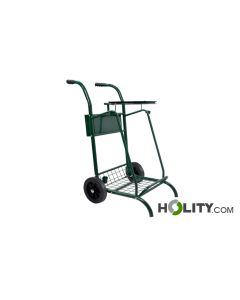
Trolley for street cleaners with 110 lt bag holder and rubber wheels. Made in France. Solid rubber.
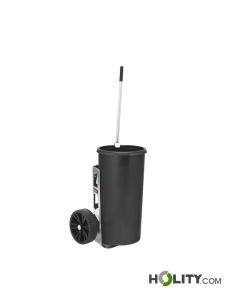
Lightweight and easy-to-handle hand trolley, with a 60-liter plastic container, pneumatic wheels Ø 260 mm and aluminum and galvanized steel structure. Dimensions: W 51 × D 50 × H 137 cm.
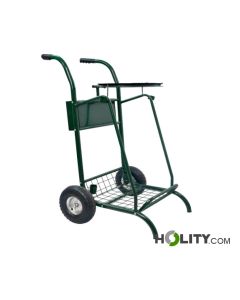
Street cleaning cart without lid with 110 lt bag holder. Color: moss green. With pneumatic tires.
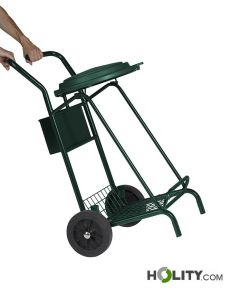
Urban sanitation trolley made of painted steel. Color: moss green RAL 6005. Dimensions: W.620 x D.670 x h.1150 mm.
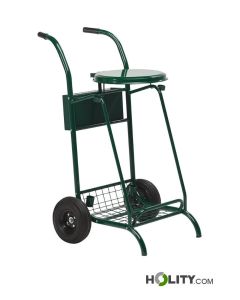
Street cleaning trolley with bag holder (bag not included). Dimensions: W.670xD.670xH.1170 mm
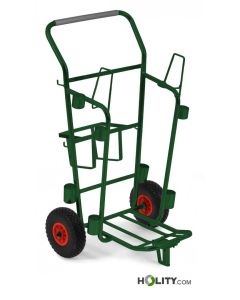
Pack of 2 pieces
€606.82 VAT excl.Street cleaning trolley with ø 260 mm wheels, in painted steel.
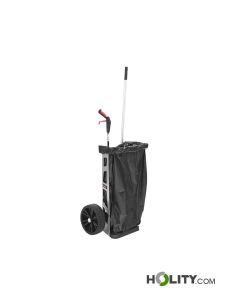
Lightweight and compact hand trolley, with aluminum and galvanized steel structure, pneumatic wheels and 120-liter bag support. Dimensions: W 37 × D 50 × H 150 cm.
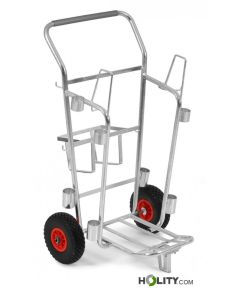
Pack of 2 pieces
€642.52 VAT excl.Street cleaning trolley with wheels ø 260 in galvanized steel. Dimensions: W.77xD.68xH.114 cm.
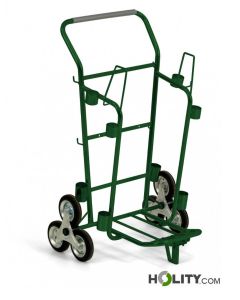
Street cleaning trolley in painted steel with star-shaped wheels ø 160 mm.
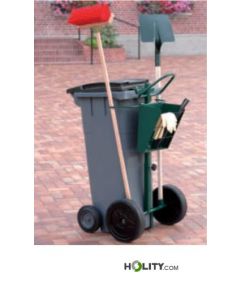
Urban waste collection trolley. Height adjustable from 88.5 to 113.5 cm. With ergonomic handle.
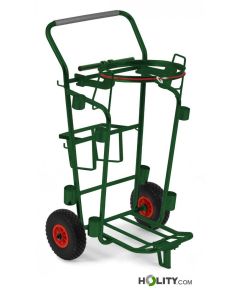
Street cleaning trolley for sanitation workers with 120 lt bag holder and ø 260 mm wheels
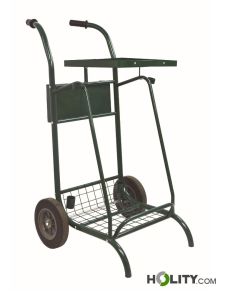
Urban waste collection trolley made of moss green RAL 6005 painted steel. Dimensions: W. 68 x D. 88.5 x H. 112.7 cm. With solid rubber wheels.
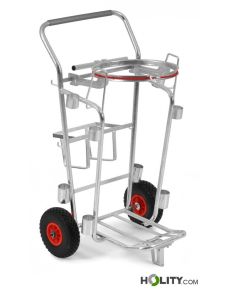
Galvanized street cleaning trolley with 120 lt bag holder. Dimensions: W.77xD.68xH.114 cm
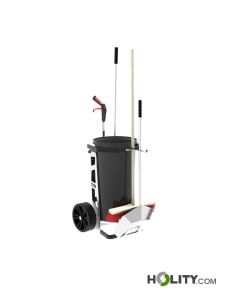
Compact and lightweight hand cart, adjustable handle, puncture-proof wheels Ø 260 mm and aluminum and galvanized steel frame. Dimensions: W 65 × D 49 × H 157 cm.
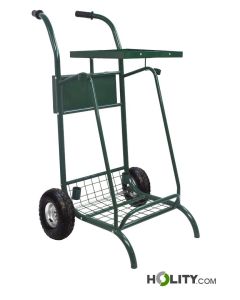
Steel street cleaning trolley. Color: moss green RAL 6005. Dimensions: W.68 x D. 88.5 x h. 112.7 cm. With pneumatic wheels.
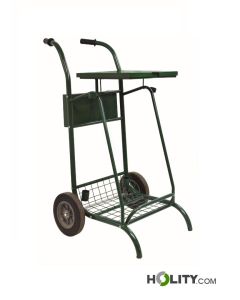
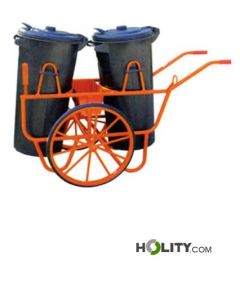
Street cleaning trolley with 2 bag holders (bag not included). Dimensions: W.68 x D.88.5 x H.112.7 cm. Solid rubber wheels.
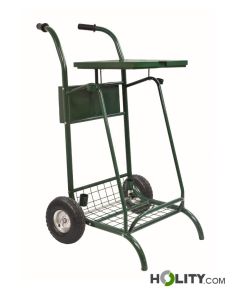
Street cleaner cart in moss green RAL 6005, with 2 x 110-liter bag holders. With pneumatic wheels.
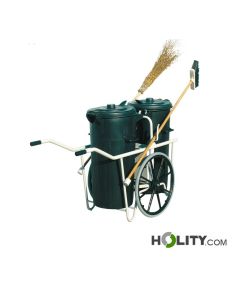
Galvanized steel street cleaning cart for two bins. With 600 mm diameter wheels
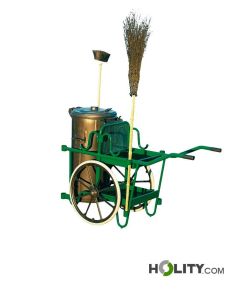
Galvanized steel urban waste collection trolley with 600 mm diameter spoked wheels
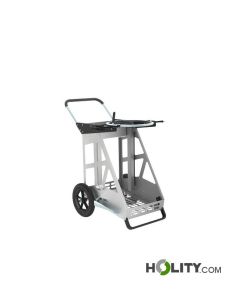
Lightweight and functional hand trolley with mobile support for bags up to 120 liters, tool holders, open storage compartment and puncture-proof wheels Ø 310 mm. Dimensions: W 90 × D 71 × H 102 cm.
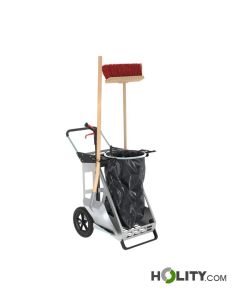
Lightweight and functional hand trolley, with support for bags up to 120 liters, tool holders and puncture-proof wheels Ø 310 mm. Dimensions: W 90 × D 71 × H 102 cm.
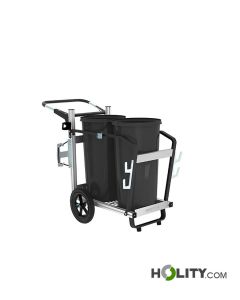
Compact and functional hand trolley with capacity for two 120-liter containers, height-adjustable handle and puncture-proof wheels Ø 310 mm. Dimensions: W 121 × D 71 × H 98 cm.
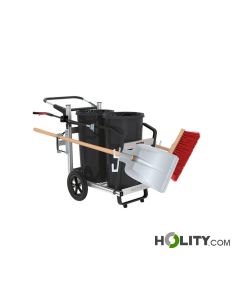
Compact and functional hand trolley with two 60-liter containers, adjustable handle, tool support and puncture-proof wheels Ø 310 mm. Supplied already assembled. Dimensions: W 121 × D 71 × H 98 cm.
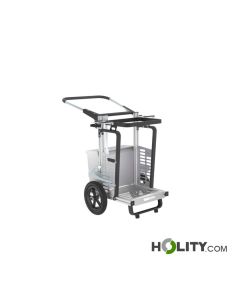
Manual trolley for urban cleaning with vertical support, lockable storage compartment and height-adjustable handle. Dimensions: W 93 × D 71 × H 106 cm.
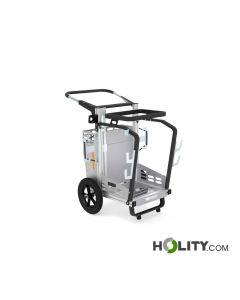
Manual urban cleaning trolley with storage compartment, tool support and adjustable handle. Dimensions: W 87 x D 71 x H 103 cm.
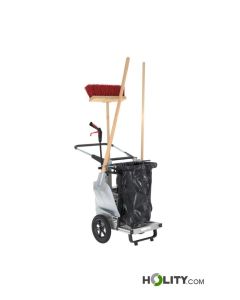
Compact manual trolley with tool support, lockable compartment and adjustable handle. Dimensions: W 93 x D 71 x H 106 cm.
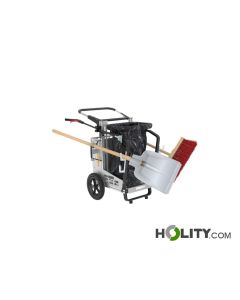
Manual urban cleaning cart with storage compartment, tools included, and height-adjustable handle. Dimensions: W 87 x D 71 x H 103 cm.
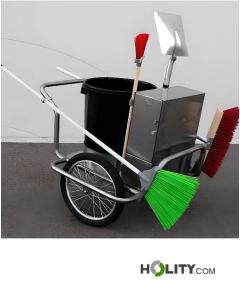
Street cleaning cart in 304 stainless steel, resistant to corrosion and atmospheric agents. Equipped with a storage cabinet and tool holders. Dimensions: W. 1221 x D. 727 x h. 896 mm.

Street cleaning trolley for 2 bins, in 304 stainless steel with tubular structure. Capacity of 180 liters, equipped with storage locker and tool supports. Dimensions: W. 1572 x D. 742 x h. 875 mm.
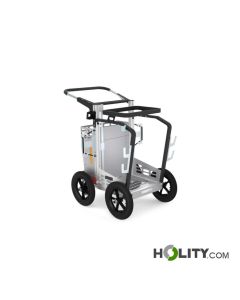
Manual trolley for external municipal cleaning, with storage compartment and open shelf, height-adjustable handle. Dimensions: W 90 x D 71 x H 103 cm.
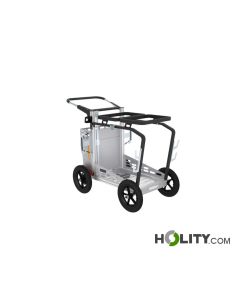
Large manual trolley with double bag holder and closed compartment for municipal cleaning. Dimensions: L 116 x D 71 x H 103 cm.
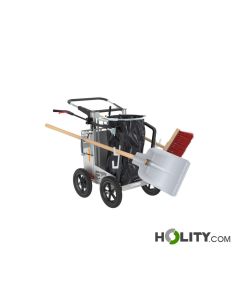
Manual trolley for municipal cleaning with storage compartment and open shelf, fully equipped with tools and height-adjustable handle. Dimensions: W 90 x D 71 x H 103 cm.
Street cleaning carts represent a fundamental operational tool for cleaning and waste collection activities in public spaces. These manual or semi-mechanical transport systems allow ecological operators to efficiently manage waste sorting, sweeping, and the maintenance of urban decorum. The choice of the appropriate cart directly affects operator productivity, work safety, and the quality of service provided to the community. An inadequate solution can lead to ergonomic risks, operational inefficiencies, and significant maintenance costs. The available range spans from compact and lightweight models for restricted areas to carts equipped with multiple containers and support systems for specialized tools.
The standardization of street cleaning carts allows for consistent logistical management across various municipalities and public bodies. Materials such as painted steel, galvanized steel, and aluminum define the characteristics of durability and resistance to corrosion. The wheels, available in solid or pneumatic rubber, represent a critical element that affects the ease of movement on different surfaces, from urban paving to irregular terrain.
Choosing an appropriate street cleaning cart generates tangible benefits in the daily operation of cleaning services. A correctly sized cart reduces the operator’s physical fatigue, increases the number of collection cycles, and improves work ergonomics. Models equipped with an integrated bag holder eliminate the need for loose bags and facilitate the management of waste sorting through multiple supports. Structural stability prevents tipping even when turning, a critical aspect for safety in environments with high pedestrian and vehicle flow. Ecological operators who use well-designed carts report a significant reduction in musculoskeletal injuries and a better quality of working life. Furthermore, the versatility of the models allows the tool to be adapted to specific contexts: from historic centers with narrow alleys and irregular paving to open spaces with wide public avenues.
From a management perspective, investing in robust and standardized carts leads to lower maintenance and replacement costs in the medium to long term. The durability of painted or galvanized steel effectively resists wear resulting from exposure to weather and urban humidity. Models with puncture-proof wheels in special elastomer guarantee operational continuity even on surfaces dotted with debris or sharp objects. Cleaning the cart is simplified with structures free of gaps where dirt can accumulate, a fundamental aspect for compliance with the hygiene protocols required in public environments.
The categorization of street cleaning carts follows functional and dimensional criteria. Single-container carts, with capacities ranging between 60 and 120 liters, represent the entry-level solution for small municipalities or neighborhoods with low population density. These lightweight models, often made of aluminum with galvanized steel, maintain a total weight of less than 30 kg when empty, facilitating transport and maneuvering in tight spaces. Double-container carts, on the other hand, allow for the simultaneous management of two waste sorting streams, doubling collection efficiency per cycle. Models with a mobile bag holder offer flexibility in bag positioning during operation, adapting to both fixed 120-liter large bags and manual bags of various sizes. Some carts include lockable storage compartments, useful for storing specialized tools such as brooms, dustpans, and pickers. Painted steel structures with a RAL 6005 moss green finish represent the recognizable aesthetic standard in many Italian municipalities, although gray or black variants are available for specific needs.
Larger carts, also known as mechanized or semi-mechanized collection carts, include stabilized vertical support systems and height-adjustable ergonomic handles. These models, with an overall weight of 40 to 60 kg, incorporate larger diameter wheels (up to 310 mm) to tackle rough terrain and moderate slopes. Some advanced carts feature motion damping systems that limit impact during parking or unloading. The choice between solid rubber, pneumatic rubber, or special elastomer wheels affects operational noise and shock absorption capacity. Carts for large volume bins (from 240 to 1100 liters) represent a specialized category intended for collection centers, industrial zones, or commercial areas, where moving fixed containers is a priority over ease of transport.
Selecting the ideal cart requires a preliminary assessment of the operational context and the expected workloads. Operators must first consider the average volume of waste to be collected per shift: in low-density residential areas, a single-container cart of 60-110 liters is sufficient, while in densely populated neighborhoods or in the immediate vicinity of commercial establishments, a double-container model or one with a mobile bag holder is preferable. A frequent error consists in undersizing the cart relative to peak loads, causing multiple emptying cycles and longer operational times. The configuration of the urban territory represents a second decision criterion: areas with asphalt paving and flat surfaces are suited to small-diameter pneumatic wheels, while hilly areas or those with irregular stone paving require larger diameter wheels and stiffened structures. Access to tight spaces, such as alleys in historic centers, imposes strict dimensional constraints; in these contexts, compact carts with a maximum width of 50-60 cm are indispensable. The presence of architectural barriers, steps, or narrow passages must be mapped in advance to avoid inconsistent purchases.
The ergonomic aspect must not be overlooked: the handle height must allow for a neutral posture during pushing, avoiding excessive bending of the torso. The height-adjustability of the handle allows the cart to be adapted to operators of different statures, increasing versatility of use within the same team. The choice of surface finish (painted versus galvanized steel) depends on the climatic environment and the frequency of preventive maintenance available: galvanized steel offers greater resistance in coastal environments with high salinity, while painting offers better aesthetics and ease of cleaning. Verifying compatibility with local waste sorting systems is critical: if the municipality uses standardized 120-liter bins with bayonet supports, it must be confirmed that the cart has the same attachments. Finally, the available budget must be balanced against the expected durability: lower-end carts pay for themselves in 2-3 years with probable replacement, while robust models maintain operational efficiency for over 7-8 years.
Street cleaning carts are subject to specific regulations governing their construction, materials, and operational safety. The UNI EN 1740-1 standard defines safety requirements for manual carts, including tests for stability, structural strength, and component durability. Carts intended for collecting urban waste must have easily sanitizable contact surfaces, without sharp corners or gaps where organic material can deposit; this prescription is based on the hygiene protocols of the Higher Institute of Health. All components in contact with waste must be made of materials not subject to corrosion or accelerated degradation: hot-dip galvanized steel represents the benchmark for exposed areas, while structural parts in aluminum require anodization for prolonged urban use. The wheels must be equipped with sealed ball bearings to prevent the accumulation of moisture and contaminants; the use of puncture-proof synthetic rubber is mandatory for environments with a high risk of punctures. The maximum capacity of the cart must be clearly indicated by fixed metal plates; exceeding this limit entails risks of structural failure and legal liability for the management body.
Legislative Decree no. 81/2008 on safety in the workplace extends further obligations to carts used in urban cleaning operations: lateral stability must be guaranteed on slopes up to 5%, maneuverability with a maximum pushing force not exceeding 300 N, and the absence of edges or protrusions that create risks of injury. Painted materials must comply with limits for toxic substances (RoHS and REACH directive), excluding lead and hexavalent chromium from paint formulations. CE conformity certification is mandatory for placement on the Italian market; it certifies that the cart has been subjected to the prescribed tests and documentary construction checks. Some municipalities also require the indication of the cart identification number, easily removable and rewritable, for the traceability of municipal assets. Ordinary maintenance, including axle lubrication, visual inspection of the wheels, and checking structural integrity, must take place at least twice annually; maintenance logs constitute legal documentation in the event of disputes.
Explore all the products in the category and compare the available solutions to find the one best suited to your operational context. Evaluate dimensions, capacity, materials, and specific configurations to ensure efficiency and safety in daily street cleaning operations.
The street cleaning cart is specifically designed for ecological operators working in public spaces, with access to roads, parks, and open areas. It features larger diameter wheels, reinforced structures for moderate slopes, and multiple compartments for waste sorting. A generic waste collection trolley has less specialization and does not always integrate the ergonomic supports and stability systems required by continuous professional use.
Pneumatic wheels with a diameter of 260-310 mm represent the optimal solution for irregular pavements, damaged asphalt, and sloping terrain. They offer superior shock absorption compared to solid rubber. For very jagged surfaces, puncture-proof special elastomer wheels are preferred as they balance absorption and resistance to punctures from sharp objects.
The nominal capacity (60-120 liters) represents the geometric volume of the container. The actual transport capacity is reduced by 15-20% to allow for safe management without risks of tipping when turning or pushing. If the municipality uses standard 120-liter bags, it is advisable to opt for a cart with a mobile bag holder that accepts this format rather than forcing the containment.
Hot-dip galvanized steel effectively resists sea air salinity for 8-10 years without preventive maintenance. Anodized aluminum represents a lighter alternative, although it requires periodic visual checks to verify the integrity of the anodization. Epoxy painting on steel is less suitable for coastal areas due to salt penetration under the coating.
Some professional models offer telescopic handles adjustable between 88 and 113 cm, allowing for adaptation to operators of different statures. Cheaper carts have a fixed handle; in these cases, it is appropriate to choose a model that conforms to the average height of the operational team. Post-purchase modifications are generally inadvisable because they compromise structural certification.
 English
  Italian
 French
 German
 Spanish