mon-fri 9-13 / 14.30-18.30
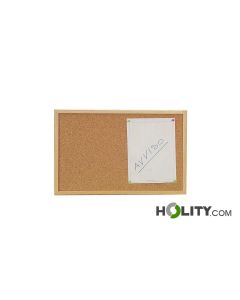
Notice board with cork wall and wooden frame. Dimensions: W. 90 x H. 60 cm.
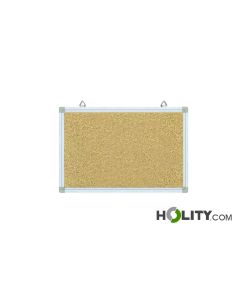
Notice board with cork surface and aluminum frame. Dimensions: W. 90 x H. 60 cm.
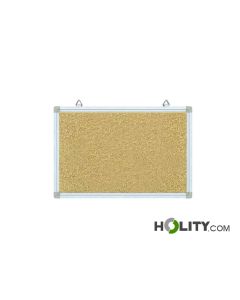
Notice board with cork surface and aluminum frame. Dimensions: W. 120 x H. 90 cm.
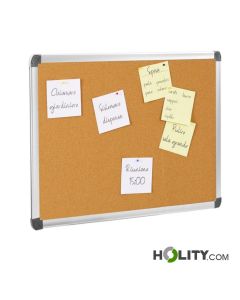
Notice board with natural cork background. Dimensions: W. 120 x h. 90 cm
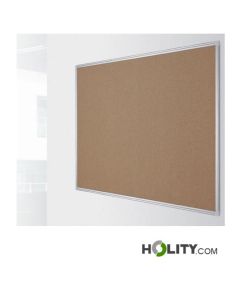
Office notice board with cork background. Dimensions: 45 x 60 cm.
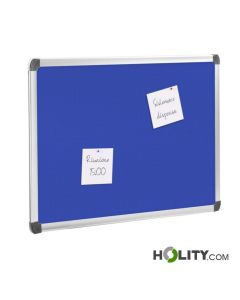
Notice board with blue felt background. Dimensions: W. 120 x h. 90 cm
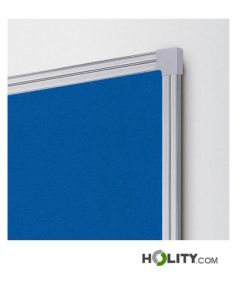
Notice board panel with felt background. Dimensions: 45 x 60 cm.
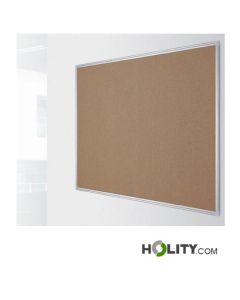
Notice board with cork background. Dimensions: 90 x 60 cm.
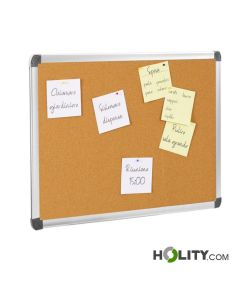
Office notice board with cork background. Dimensions: W. 150 x H. 100 cm
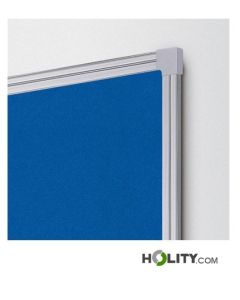
Notice board for office with cloth background. Dimensions: 60 x 90 cm.
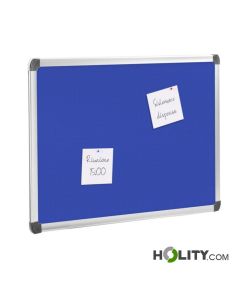
Office notice board with blue felt background. Dimensions: W. 150 x h. 100 cm.
Notice board with cork surface and aluminum frame. Dimensions: W. 150 x H. 100 cm.
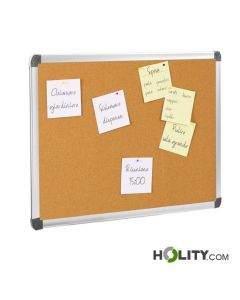
Office notice board with cork background. Dimensions: W. 200 x h. 100 cm
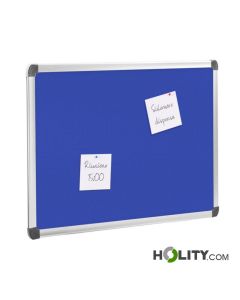
Office notice board with blue felt background. Dimensions: W. 200 x h. 100 cm
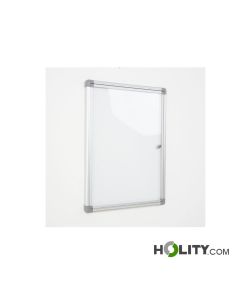
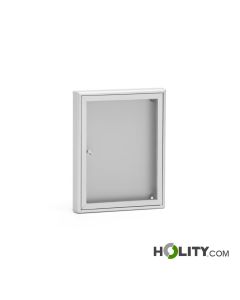
Notice board in anodised aluminium with magnetic and writable surface, transparent methacrylate door, side-hinged opening and lockable closure. Dimensions: W 88 x D 3 x H 67 cm.
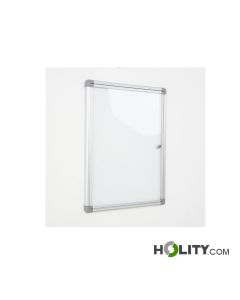
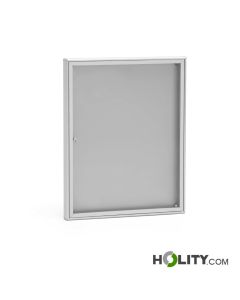
Notice board with anodized aluminum profiles, magnetic and writable surface, transparent methacrylate door, book-style opening and lock. Dimensions: W 70 x D 3 x H 97 cm.
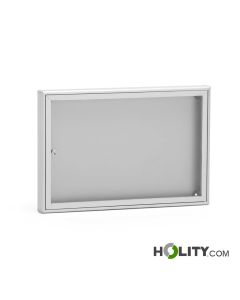
Office notice board. A3 format. With magnetic background.
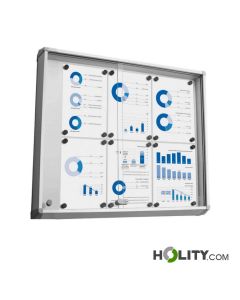
Magnetic notice board with sliding doors. 6 x A4 format. Dimensions: W. 72 x D. 5.9 x H. 67.5 cm
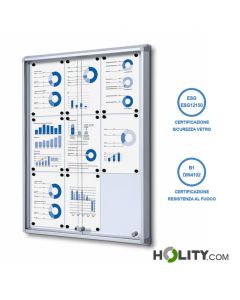
Notice board ideal for offices. 9 x A4 format. Magnetic back. Dimensions: W. 72 x D. 5.9 x H. 98.2 cm
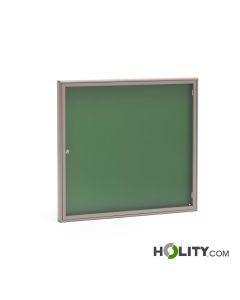
Office notice board for announcements. Dimensions: 75 x 69 cm. Magnetic background.
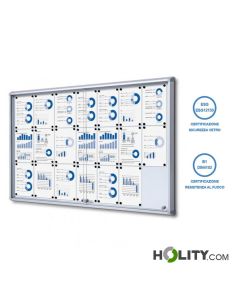
Notice board ideal for offices, restaurants. Magnetic back. Format 21 x A4.
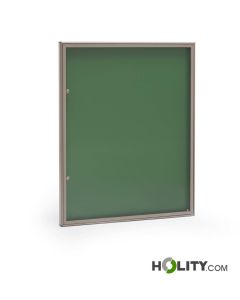
Office notice board for announcements. Dimensions: W. 80 x h. 100 cm.
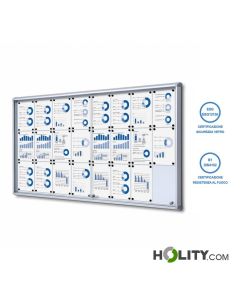
Office notice board with magnetic background. Dimensions: W. 181.5 x D. 5.9 x H. 98.2 cm
Notice boards represent an essential tool in professional environments, from offices to public facilities, to common areas of residential and commercial buildings. These communication systems allow the orderly and visible posting of documents, circulars, notices, and important communications, maintaining a dedicated and organized space for information. An effective notice board combines practicality of use, durability, and the ability to attract attention, favoring clear and timely communication without resorting to digital methods.
Choosing the right board depends on several factors: the surface material (cork, panel, felt, magnetic), dimensions, the type of fixing, and the context of use. From simple and economical solutions to sophisticated systems with transparent doors and book-style opening, the market offers options suitable for every operational need and every budget. A well-positioned and easily accessible notice board significantly improves communication efficiency within organizations of any size.
A notice board offers considerable advantages in terms of internal communication management. Firstly, it allows for the centralization of notices, reducing the need to send numerous emails or multiple paper copies of documents. This centralization ensures that all recipients access the same information source, minimizing the risk of misunderstandings or fragmented communications. Physical notice boards remain a reliable communication tool, not subject to technological malfunctions or connectivity problems, and represent an inclusive solution accessible to everyone, regardless of familiarity with digital devices.
From a practical point of view, notice boards allow for real-time information updates, quickly removing obsolete messages and replacing them with current ones. This aspect is particularly important in environments where timely communication affects safety, such as in public buildings, healthcare facilities, or workplaces with frequently updated regulations. Furthermore, the operating cost is minimal: paper, adhesives, or small fasteners are enough, without the need for continuous technical maintenance. Finally, the physical visibility of messages promotes greater attention compared to digital notifications that can easily be ignored in the incessant flow of communications.
The catalog of notice boards is mainly divided based on the surface material and the fixing mechanism. Natural cork notice boards represent the classic and versatile solution: cork allows the direct insertion of pins, tacks, and nails without damaging the support, ensuring ease of use and long life. Alongside these are boards with a textile panel surface (blue felt, natural cloth), ideal for environments where aesthetics are more important and where ease of cleaning is an important requirement. Felt surfaces also offer better acoustic insulation capacity, making them particularly suitable for open-space offices and high-traffic areas.
Another significant category includes magnetic notice boards, often equipped with a writable surface (whiteboard), which combine the function of a notice board with the possibility of temporary notes. These solutions are frequently made with anodized aluminum frames, ensuring robustness and a modern, professional appearance. Finally, there are sophisticated notice boards with transparent methacrylate doors, which allow the posting of documents protected from the outside, with a swing opening system and lock: solutions designed for environments where content security or the prevention of tampering is a priority. Sizes vary considerably, from compact A4 formats to modular solutions capable of holding 21 A4 sheets, adapting to small spaces or needs for great visibility.
The choice of a notice board must start from the analysis of the available space and the frequency of message updates. If space is limited, an A4 or A3 format is sufficient for timely and manageable communications. Conversely, if notices are numerous and frequently modified, an A2 or larger format board, potentially modular (6, 9, 12, or 21 sheets), offers greater organizational capacity. A common mistake is underestimating the importance of visibility: a board that is too small or poorly positioned will be ignored, frustrating the initial investment. The position must be strategic, near entrances, in the break area, at the reception, or in busy corridors.
Regarding the material, natural cork remains the most versatile and maintainable choice over time, resisting wear well and allowing the use of different fixing systems. Felt or cloth are preferable in contexts where aesthetics are a priority or where cleaning is frequent. Magnetic solutions prove ideal for environments where paper communications and temporary notes (agendas, urgent updates) coexist. Boards with protective doors become essential if the posted content requires confidentiality (e.g., union communications, legal notices, sensitive data): the cost is higher, but the protection and professionalism justify the investment. Finally, consider the wall-mounting system: cork or lightweight panel boards are easily mounted with screws or brackets, while large solutions may require more complex structural interventions.
Although notice boards are not subject to stringent technical regulations like other professional equipment, there are guidelines and best practices that must be respected. Firstly, accessibility: according to regulations on equal treatment and accessibility to public services, a notice board must be positioned so that it is reachable by people with reduced mobility, preferably at a height between 1.20 and 1.60 meters from the ground. The readability of the posted content is an implicit requirement of any effective notice board: characters must be of adequate size and contrast must be sufficient to ensure easy reading even in suboptimal lighting conditions.
In a business environment, Legislative Decree 81/2008 (occupational safety regulations) requires that certain mandatory notices be posted in a clearly visible and easily reachable position, often near critical areas such as emergency exits, first aid stations, or high-risk spaces. Public bodies and healthcare facilities also have explicit communication obligations: privacy communications, information on opening hours, maintenance notices, and emergency instructions must be regularly updated and clearly posted. A cork or felt board allows for rapid document replacement, while solutions with transparent doors and locks provide certification of formal integrity, useful in regulated contexts. Periodic cleaning of the board and supports is important not only for hygiene but also to maintain the communication effectiveness and credibility of the organization.
Explore all products in the category and compare the available solutions to find the one best suited to your operational context. From traditional cork boards to modern solutions with magnetic surfaces and protective methacrylate, our catalog offers options for every internal communication need and every professional environment.
Cork is natural and allows the use of pins and tacks without damaging the material, ideal for frequent updates. Felt (or cloth) offers a more elegant appearance, is easier to clean, and better insulates noise, but requires the use of adhesive velcro or hangers. The choice depends on the environment and the frequency of document changes.
Standard sizes range from 45×60 cm (single A4 format) up to 200×100 cm for multi-format solutions. The intermediate models 90×60 cm and 120×90 cm represent the most common compromise between communication capacity and footprint. The choice depends on the available space and the number of notices to be posted simultaneously.
Yes, magnetic boards are available in A4 format (approximately 21×30 cm) that fit very limited spaces such as individual workstations or passage corners. While having less capacity, they maintain the functionality of a magnetic base and writable surface, perfect for specific communications or personal agendas.
Not for all contexts. It is essential when notices involve sensitive documents (union communications, confidential company data, medical information), when protection from tampering is critical, or when certification of the integrity of official communications is needed. For general environments, open solutions are sufficient and more economical.
The optimal height is between 1.20 and 1.60 meters from the ground, so that the center of the board is at eye level for an average person. This position ensures visibility, readability, and accessibility for people with reduced mobility. Avoid fixing boards too high or too low, where they might be ignored or difficult to reach.
Anodized aluminum boards are lightweight yet robust and require direct wall fixing screws, preferably on a masonry or plasterboard wall with appropriate plugs. For particularly fragile walls, additional support brackets can be used. Assembly must be carried out with care to ensure stability and safety.
Multi-format solutions offer flexibility: they allow documents to be divided by theme or recipient, improving visual organization. A large board is instead advisable when notices must be consulted together or when wall space allows it. The choice depends on how communications are organized and the company culture (centralization vs. distribution).
For cork boards, avoid the accumulation of broken pins and check that the material does not compress excessively. For felt, regularly wipe with a damp cloth or a special soft brush. Magnetic and aluminum surfaces are easily cleaned with a dry cloth. Replacing damaged documents and removing obsolete notices maintains the credibility and communication efficiency of the board.
 English
  Italian
 French
 German
 Spanish