mon-fri 9-13 / 14.30-18.30
First aid equipment represents the complete set of aids and devices necessary to ensure timely and appropriate intervention in health emergency situations. Whether operating in a hospital setting, in pre-hospital care, in corporate structures or in sports contexts, the immediate availability of qualified material can make the difference in patient stabilization. The medical-healthcare sector requires tools that comply with specific regulations, capable of operating in critical conditions and often in harsh environments. From patient transport to emergency thermoregulation management, the choice of certified and reliable equipment is fundamental to reduce intervention times and improve clinical outcomes.
Growing awareness of safety in the workplace has amplified the demand for adequate equipment in companies, public bodies, and sports centers. Each operational context presents specific needs ranging from portability to mechanical resistance, from ease of sanitization to compatibility with standardized intervention protocols. First aid equipment is not simply an accessory, but a real life-saving tool that requires conscious selection and constant maintenance.
An effective rescue intervention depends primarily on the quality and availability of the equipment used. Anti-trauma stretchers, transport chairs, vacuum mattresses, and emergency thermal blankets are not interchangeable with ordinary furniture: they are made according to technical specifications that guarantee the containment of damage during transport. In contexts where every second is critical, such as pre-hospital interventions or rescues in dangerous environments, the availability of certified devices significantly reduces the risk of secondary complications. Bags and backpacks organized for first aid allow medical and paramedical personnel to quickly access the necessary devices, avoiding delays that could compromise the intervention. From companies to sports complexes, the regulatory compliance of equipment also represents a legal obligation and a tool for protecting civil liability.
Operational benefits also extend to staff training and preparation. Having resuscitation mannequins that comply with international standards allows for realistic and documented quality training courses. The thermal stabilization of a traumatized patient or one in hypothermic conditions is facilitated by specific reflective blankets that reduce heat loss. Spinal boards for transport immobilize vertebral lesions during movement, decreasing the risk of iatrogenic paralysis. The conscious choice of equipment means investing in the quality of interventions and the safety of those who perform them.
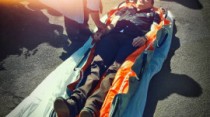
The catalog of first aid equipment is divided into several macro-categories, each responding to specific operational needs. Stretchers represent the most varied category: anti-trauma scoop stretchers allow the patient to be lifted without moving the spine, ideal for polytrauma or accidents with high impact energy; roll-up stretchers guarantee portability and reduced bulk, perfect for transport on rough terrain or stairs; basket stretchers are built in resistant synthetic mesh and allow recovery from harsh environments such as caves or construction sites; folding and inflatable stretchers represent a light and compact solution for corporate equipment, while spinal boards immobilize the patient in an anti-shock position. Each type of stretcher differs in rated capacity, construction materials, and fields of application.
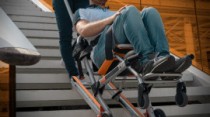
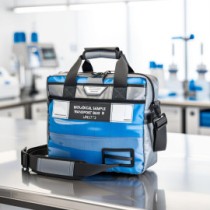
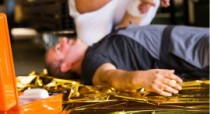
Transport chairs and evacuation chairs are built in steel or aluminum with easily sanitizable plastic coatings. Their structural lightness does not compromise mechanical resistance; on the contrary, they allow agile transport even in narrow spaces such as internal stairs or hospital corridors. Vacuum mattresses provide conformable immobilization to any anatomical part, used mainly in pre-hospital and hospital environments. Emergency thermal blankets use the silver and gold coating to reflect body heat (silver side) or absorb it in case of heat stroke (gold side), weighing less than 100 grams. First aid bags and backpacks are offered both empty, to adapt to specific protocols, and pre-accessorized with standardized emergency kits. Semiautomatic defibrillators (AEDs) represent an increasingly frequent addition, while protective clothing for rescuers guarantees hygiene and biological safety during the intervention.
The selection of equipment requires a preliminary assessment of the operational context and the protocols already in place. The first criterion is the definition of the field of application: a hospital will have different needs than a sports club, just as a manufacturing company will differ from a public body. For stretchers, it is necessary to consider the maximum supported weight (capacity), the environment of use (indoor, outdoor, access with obstacles), the availability of storage space, and the frequency of use. If the intervention takes place mainly in environments with easy access, a standard roll-up stretcher is sufficient; if, instead, recovery from construction sites or impervious areas is expected, the basket stretcher becomes necessary. Transport chairs are chosen when the patient is able to maintain a seated posture and vertical access is the critical factor. Vacuum mattresses are justified in situations with consolidated immobilization protocols and trained personnel. Thermal blankets are an essential element in any kit, given their lightness and versatility.
A frequent error is purchasing stretchers or chairs that are oversized compared to real needs, compromising portability and storage space. Another concerns the lack of coordination between the supply of devices and the training level of the personnel: a spinal board requires personnel certified in positioning, otherwise it risks causing damage rather than protection. Compatibility with ambulance systems or hospital trolleys is an often overlooked but decisive criterion in daily practice. It is necessary to check the loading dimensions of ambulance stretchers compared to the available fixing systems. Finally, periodic maintenance and the replacement of worn components (handles, belts, coatings) must be planned at the time of purchase: choosing suppliers who guarantee the availability of spare parts is a choice of management prudence.
First aid equipment in Italy and Europe is regulated by a series of technical standards that guarantee safety and reliability. Stretchers, evacuation chairs, and vacuum mattresses must comply with the EN ISO 13730 standard (stretchers and mattresses), which specifies minimum and maximum capacity, structural resistance, ease of sanitization, and testing procedures. Semiautomatic defibrillators fall into the category of class II medical devices and must have CE marking according to the MDR 2017/745 Regulation. Emergency thermal blankets follow ISO specifications regarding reflective properties and mechanical resistance. Medical clothing and personal protection elements must comply with EN standards relating to the level of biological barrier (EN 455 for gloves, EN 13795 for medical gowns). Any company that does not have suitable equipment not only incurs regulatory violations but exposes its employees to risks that could make civil and criminal liabilities significant in the event of an accident.
Regulatory compliance is not an additional cost, but rather a guarantee of quality and durability over time. Public and private healthcare facilities require ISO certifications and CE marking before adding new devices to inventories. Non-healthcare companies, although not subject to the same rigors, find in compliance with standards effective protection against litigation. Recurring aspects emerging from inspections concern the obsolescence of devices (stretchers, backpacks), lack of ordinary maintenance, absence of traceability labels, and failure to replace worn elements. Compliance documentation, test certificates, and supplier technical data sheets must be kept as a record of correct risk management. Furthermore, accessibility to first aid must be guaranteed by protocols that clearly indicate where the equipment is stored and how to access it in case of emergency.
Explore all the products in the category and compare the available solutions to find the one best suited to your operational context. The conscious choice of certified equipment guarantees effective interventions and regulatory compliance in emergency management.
The scoop stretcher is built with two metal half-shells that wrap around the patient maintaining spinal immobilization during lifting, ideal for high-energy trauma. The roll-up stretcher is a synthetic sheet with side handles that rolls up on itself, lighter and more compact, suitable for transporting conscious people or rescues in tight spaces without suspicion of vertebral fractures.
The weight capacity should exceed the average weight of the assisted population by at least 25-30%. A stretcher with a maximum capacity of 150 kg is sufficient for most corporate contexts, while hospital facilities might require 200-250 kg for complex patients or those with reduced mobility. Always check the supplier’s data and do not exceed the declared limit.
Transport chairs allow the transport of people able to sit through stairs, narrow corridors, and environments with limited access. They are much lighter than stretchers (4-6 kg), easy to maneuver by a single person, and occupy less storage space. They represent the ideal solution for evacuation from buildings, residences, or non-healthcare facilities.
The thermal blanket reflects the patient’s body heat back to themselves (silver side) preventing hypothermia in case of trauma, extensive burns, or exposure to cold. The gold side absorbs heat and is used in case of heat stroke. Every first aid kit should contain at least one thermal blanket given its lightness (less than 100 grams) and versatility of use.
It is not mandatory by law in non-healthcare companies, but it is strongly recommended if staff are trained in its use. It provides conformable immobilization for spinal trauma and polytrauma, but requires significant storage space and maintenance protocols. The decision depends on the risk profile of the operational reality and the level of training available.
Metal stretchers and chairs with plastic coating must be cleaned with certified disinfectants after each use. Removable components (belts, cushions) should be washed according to standard protocols. Regularly inspect handles, hinges, and structural components for wear and damage. Promptly replace damaged coatings to avoid bacterial accumulation.
 English
  Italian
 French
 German
 Spanish