
mon-fri 9-13 / 14.30-18.30
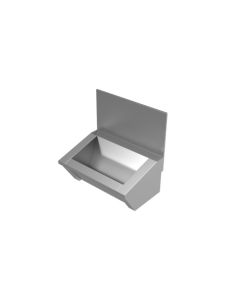
Wall-mounted operating room sink with satin finish. Dimensions: W. 75 x D. 51 x H. 77 cm.
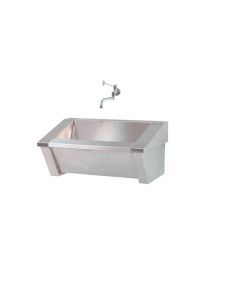
Operating room hand washbasin in stainless steel, single-user. W.75xD.50xH.37cm
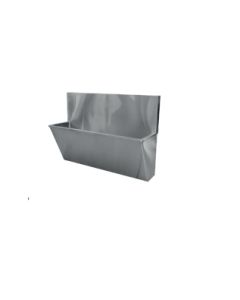
Surgical operating room sink in AISI 304 stainless steel. Dimensions: W.700xD.520x H.725 mm
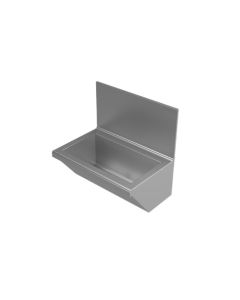
Stainless steel operating room washbasin with straight edges on the sides. Dimensions: W. 75 x D. 50 x H. 71 cm.
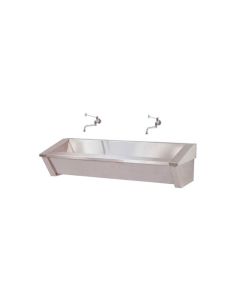
Surgical scrub sink made of stainless steel. W.150x D.50xh.37
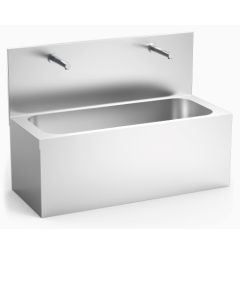
Surgical scrub sink 2 stations with electronic taps. Dimensions: W. 1200 x D. 500 x h. 850 mm.
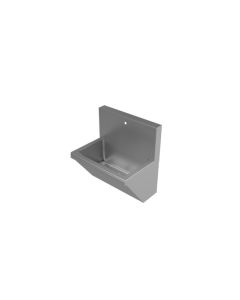
Durable stainless steel operating room washbasin, recommended for electronic taps. Dimensions: W. 75 x D. 50 x H. 71 cm.
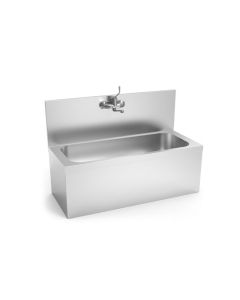
Single-channel surgical sink with protective back panel and clinical flex lever mixer. 20 cm deep bowl, 20 cm backsplash. Dimensions: W 100 x D 50 x H 47 cm.
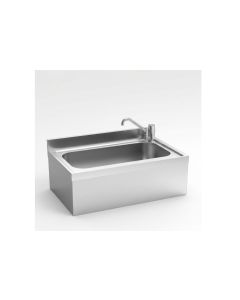
Single-channel surgical sink with flex clinic lever mixer. 20 cm deep basin, 10 cm splashback. Dimensions: W 100 x D 50 x H 35 cm. Drain and pull-out spray included.
Single-station surgical sink. Dimensions: W.80 x D.55 x h.60 cm. Material: AISI 304 stainless steel scotch-brite finish.
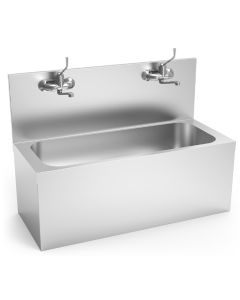
Surgical washbasin made of AISI 304 stainless steel. Sink equipped with two elbow-operated taps.
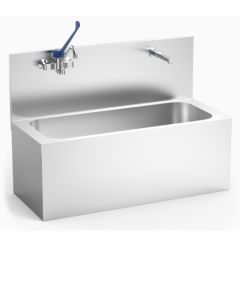
Operating room sink for 2 users with mixed taps. Dimensions: W. 1200 x D. 500 x H. 850 mm.
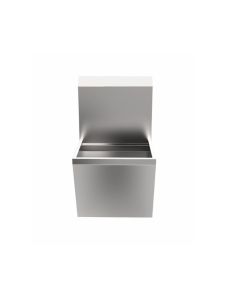
1-station surgical sink in AISI 304 stainless steel, soundproofed and anti-drumming. Dimensions: W 70 x D 55 x H 97.2 cm.
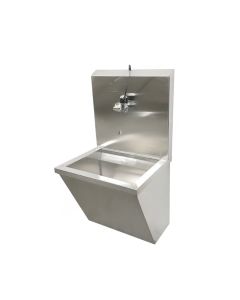
Wall-mounted surgical sink in AISI 304 stainless steel with lever mixer. Total dimensions: W 60 x D 55 x H 118 cm.
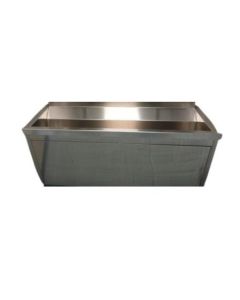
Scrub sink for operating rooms with 2 stations. Dimensions: W.120 x D.55 x H.60 cm. Material: AISI 304 stainless steel scotch-brite finish.
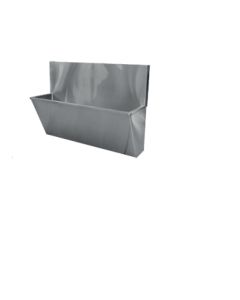
Operating room sink for two operators. Dimensions: W.1400x D.520x H.725mm
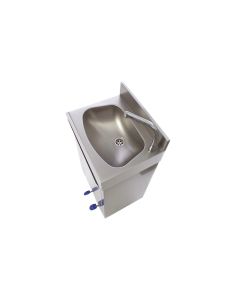
Operating room sink in AISI 304 stainless steel. With pedal-controlled dispenser. Dimensions W50xD40xH85 cm.
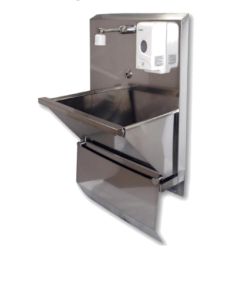
Surgical sink for operating theaters with knee-operated control. Number of stations: 1. Dimensions: W.70 x D.46 x h.104 cm.
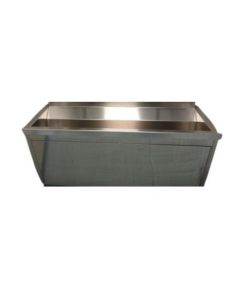
Surgeon’s scrub sink in AISI 304 stainless steel scotch-brite finish. Dimensions: W.180 x D.55 x H.60 cm. Stations: 3.
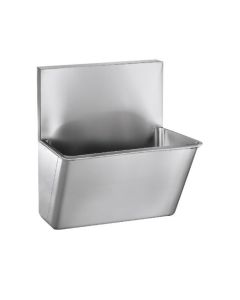
Operating room scrub sink in AISI 304 stainless steel. Hospital sink with wall-mounted installation. Length: 700 mm.
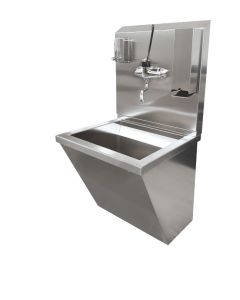
Wall-mounted single-channel operating room sink with clinical lever mixer.
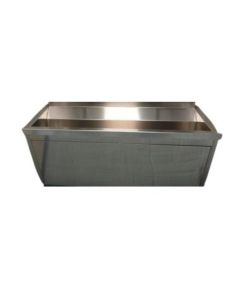
Surgical scrub sink for medical use. Dimensions: W.240 x D.55 x H.60 cm. Number of stations: 4.
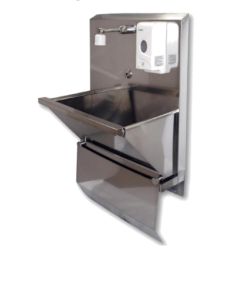
<p>Surgical washbasin with electronic taps for laboratory. Material: stainless steel. Dimensions: W.70 x D.46 x h.104 cm.</p>
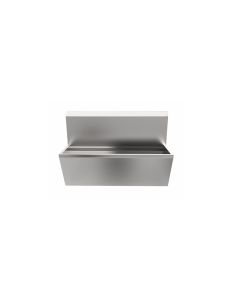
2-station sink in AISI 304 stainless steel, soundproofed bowl and rounded edges. Dimensions: W 140 x D 55 x H 97.2 cm.
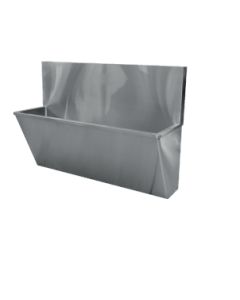
Operating room sink suitable for 3 users. Dimensions: W.2100xD.520xH.725mm
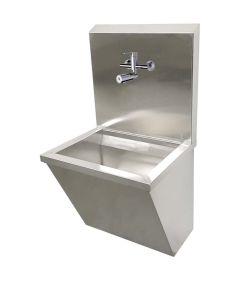
Operating room sink with electronic mixer. Dimensions: W60 x D55 x H118 cm.
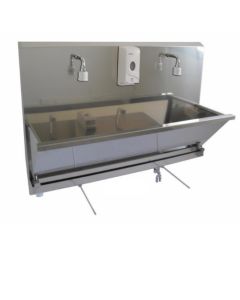
Operating room sink with 2 stations. Material: stainless steel. With knee control.
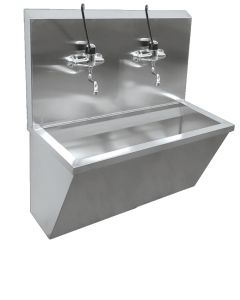
Operating room washbasin with double station. Clinical lever tap. Dimensions: W140 x D55 x H118 cm.
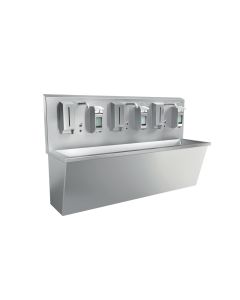
Surgical sink with three stations in AISI 304 stainless steel, 1900x565 mm. Anti-splash design and touchless dispensing for maximum hospital hygiene.
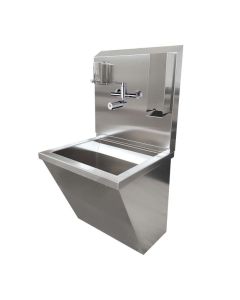
Surgical scrub sink with electric mixer. Dimensions: W.60xD.55xH.118 cm
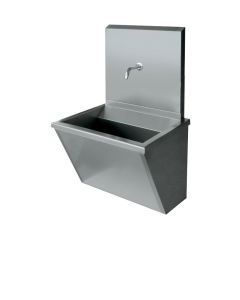
Operating room stainless steel washbasin with wall mounting. Dimensions: W70 x D55 x H105 cm
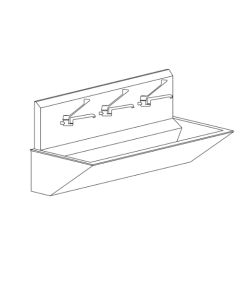
Operating room washbasin with 3 stations. Dimensions: W.180 x D.55 x H.120 cm. With lever taps.
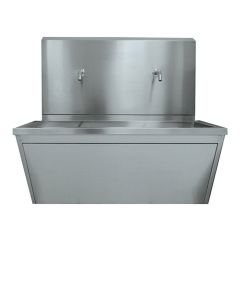
Surgeon’s sink in stainless steel, wall-mounted with 2 stations. Dimensions: W120 x D55 x H105 cm
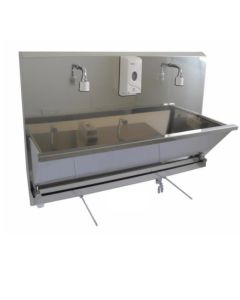
Operating room scrub sink with 2 stations. Dimensions: W.140 x D.46 x H.104 cm. Material: stainless steel.
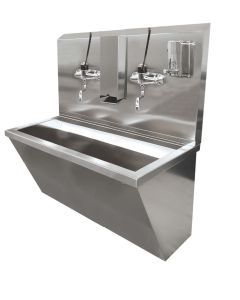
Surgical sink with two channels and clinical lever mixer. Dimensions: W.140xD.55xH.118 cm
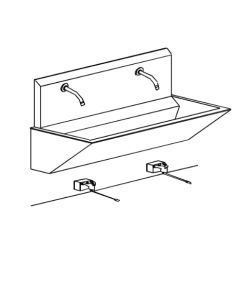
Operating room scrub sink with 2 stations. Dimensions: W.120 x D.55 x h.120 cm. With foot-operated taps.
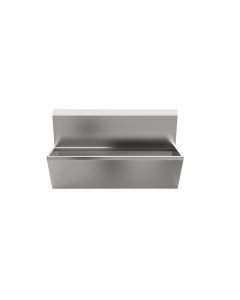
3-station sink in AISI 304 stainless steel, soundproofed basin and rounded edges. Dimensions: W 195 x D 55 x H 97.2 cm.
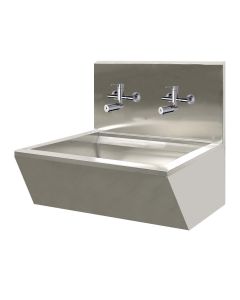
Operating room washbasin with electronic tap. Number of channels: 2. Dimensions: W140 x D55 x H118 cm.
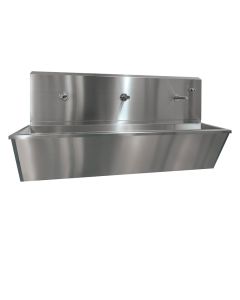
Stainless steel surgical scrub sink for 3 operators. Dimensions: W220 x D55 x H105 cm
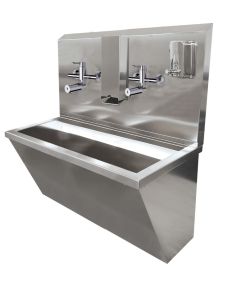
Operating room sink with 2 bays and electric mixer. Dimensions: W.140xD.55xH.118 cm
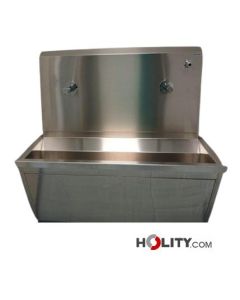
Surgical washbasin for operating room with 2 stations. Dimensions: W.120 x D.55 x h.120 cm.
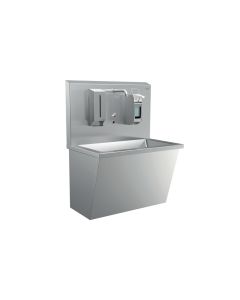
Single-station surgical washbasin in AISI 304 stainless steel (900x565 mm). Seamless monobloc design for maximum clinical hygiene.
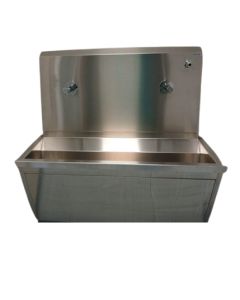
Operating room sink with electronic faucets. Number of stations: 3. Dimensions: W.180 x D.55 x h.120 cm.
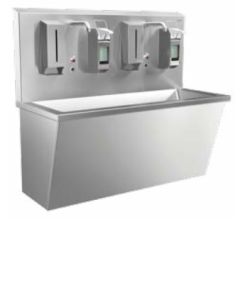
2-station surgical sink in AISI 304 satin stainless steel, 1600x565 mm. Splash-proof monoblock structure with photocell tapware.
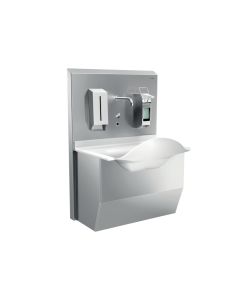
1-station surgical sink with Corian basin and AISI 304 stainless steel structure. Dimensions 840x625x1200 mm, ergonomic and antibacterial.
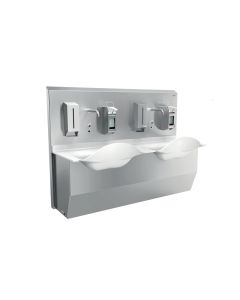
Two-station surgical scrub sink in Corian and AISI 304 stainless steel, 1640x625x1200 mm. Antibacterial surface and photocell sensors for maximum hygiene.
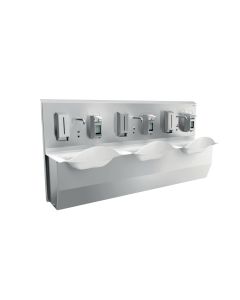
3-station surgical sink in Corian and AISI 304 stainless steel, 2450x625mm. Superior seamless hygiene with electronic photocell taps.
The operating room sinks represent a fundamental element of the surgical environment, designed according to strict regulations to ensure hygiene, safety, and functionality during medical procedures. Mainly made of AISI 304 stainless steel, these devices must ensure effective decontamination of the hands and limbs of healthcare personnel before surgery, preventing cross-contamination and hospital-acquired infections. Their configuration, available in different types and sizes, responds to the specific needs of hospital structures, surgical centers, and specialized laboratories, where reliability and compliance with hygienic standards are non-negotiable.
Each surgical sink integrates precise technical characteristics: from the tap systems (electronic, clinical lever, or non-touch controls) to the depth and shape of the basin, up to the type of drain and wall-mounted or mobile installation solutions. The choice of the right model depends on multiple technical factors, from the number of available stations to the type of water flow, from the dimensions of the available space to the specific operational needs of the surgical team.
A quality surgical sink plays a critical role in managing infection risk within a hospital or a specialized medical facility. AISI 304 stainless steel, the main construction material, offers natural antimicrobial properties, resistance to corrosion from aggressive disinfectants used in healthcare environments, and ease of sanitization. Unlike ordinary solutions, surgical sinks are equipped with deep basins (generally 20 centimeters) that allow complete washing up to the elbow, an essential element in preoperative antisepsis procedures according to international protocols. The geometry of the basin, with rounded edges and free of sharp corners, eliminates stagnation zones where bacteria or organic residues could accumulate.
The installation of an appropriate sink significantly reduces the preparation time of the surgical team, improves the ergonomics of the workstation, and ensures compliance with UNI EN ISO regulations relating to safety in hospital environments. Furthermore, models with electronic sensor taps or knee controls minimize direct contact with surfaces, an increasingly relevant aspect in the prevention of healthcare-associated infections (HAIs). The versatility of the available solutions allows the sink to be adapted to the specific dimensions of the room, the number of surgeons who will use it simultaneously, and the characteristics of the existing water system.
In the hospital equipment market, several configurations of surgical sinks are distinguished, each meeting different operational needs. Wall-mounted models represent the most common solution in environments with limited space: they generally measure between 600 and 700 millimeters in length, between 500 and 550 millimeters in depth, and maintain a useful basin height of around 725 millimeters. There are also single-station sinks (ideal for small departments or specialized clinics) and multi-station models, available in configurations with 2, 3, or 4 stations, which extend the device up to 2400 millimeters in total length. Regarding taps, traditional flex clinical lever systems (which allow washing with the elbow or knee without the use of hands) contrast with solutions with electronic IR sensor taps, the latter particularly suitable for environments with very high hygienic standards.
Another fundamental distinction concerns the installation method: suspended models guarantee ease of cleaning under the basin and are preferred in settings where floor hygiene is a priority, while sinks mounted on a support with legs offer a more robust structure independent of the wall system. Some models include integrated solutions such as an extractable shower, stainless steel drain, lower drawer unit with doors for storing sterile materials, or foot control in case manual systems cannot be used. The depth of the basin varies between 350 and 470 millimeters depending on the type, with the deepest spaces reserved for multi-station sinks where the water flow is more contained to allow several people to wash simultaneously.
The selection of an operating room sink requires preliminary evaluation of specific technical and organizational factors for the healthcare facility. First, it is essential to count the number of stations needed simultaneously: a team of 4-5 surgeons during an operation generally requires a minimum of a 2-station sink, while departments with a high turnover of procedures might need 3-4 station sinks located in different rooms. The space available in the preoperative area determines whether to opt for a wall-mounted model (compact, requires wall strength) or a solution suspended on legs (greater freedom of positioning, less structural load on the walls). It is essential to check the useful basin height (normally 725 millimeters from the floor) which must allow washing up to the elbow while maintaining an ergonomic posture, avoiding strain on the back during the procedure.
The choice of taps represents a critical aspect: flex clinical lever taps offer fine manual controllability and require lower maintenance, but assume that the operator can use elbows or knees for operation; electronic sensor taps completely eliminate manual contact and represent the standard in highly specialized centers, although they require a connection to the power supply and periodic maintenance of the sensors. Also evaluate the type of drain: models with a standard drain require periodic maintenance, while some include removable drainage systems that simplify sanitization. The surface finish (satin, polished, or scotch-brite) affects scratch resistance and daily cleaning needs: the satin finish hides signs of wear better. A frequent error consists in underestimating the necessary depth of the basin: 20 centimeters deep is a standard for extensive surgical procedures, while 10-15 centimeter models are limited to less extensive washing.
Operating room sinks must comply with international and national standards that guarantee safety of use and hospital hygiene. The UNI EN ISO 6162 standard specifies the technical requirements for sanitary systems in the hospital field, including constructive characteristics of the sinks, materials used, and drainage performance. The ISO 14644-1 standard, relating to controlled environments and clean rooms, establishes levels of cleanliness that directly influence the design of the sinks: devices capable of minimizing the dispersion of contaminants and easily sanitized are essential. All materials in contact with water must be certified according to the European directive 98/83/CE on the quality of drinking water, while the stainless steel must correspond to the AISI 304 classification, which guarantees resistance to sterilization processes and standard hospital detergents.
The Italian legislation implemented with D.M. 18 December 1975 defines the requirements for hospital hygiene, emphasizing the importance of structures that are easily cleaned and free of elements that favor the accumulation of microorganisms. The Lombardy Region and other regional entities have issued specific guidelines prescribing minimum distances between sinks (at least 120-150 centimeters between contiguous stations) and standardized heights to avoid incorrect postures during antiseptic washing. Although not mandatory by law, the CE mark on medical devices guarantees compliance with electrical safety requirements (if equipped with sensors), mechanical resistance, and biocompatibility of materials. Some manufacturers also respect the HACCP mark and ISO 9001 quality control procedures, elements that increase traceability and responsibility towards the purchasing structure, especially in case of litigation or hospital audits.
Explore all products in the category and compare the available solutions to find the one best suited to your operational context.
A surgical sink is a specialized sanitary structure made of AISI 304 stainless steel, with a deep basin (20 centimeters) that allows for complete washing up to the elbow according to preoperative antisepsis protocols. It differs from an ordinary washbasin due to its geometry without sharp edges, constructive robustness, the ability to resist aggressive disinfectants, and compliance with strict hospital regulations.
A typical operating room with a team of 4-5 surgeons needs at least two stations available simultaneously. The 2-station sinks (length 1200 millimeters) represent the best compromise between occupied space and functionality; larger facilities can benefit from 3-4 stations located in different environments to optimize preparation times.
Electronic infrared sensor taps represent the most hygienic standard as they eliminate manual contact, which is fundamental in high-risk control environments. The flex clinical lever remains a valid and reliable choice if the operator can activate the tap with elbows or knees, ensuring maintenance simplicity and prolonged durability.
The standard useful basin height is 725 millimeters from the floor, designed to allow washing up to the elbow while maintaining an ergonomic posture without straining the back. Some suspended models offer slight variability, but 70-75 centimeters represents the range universally accepted by international hospital guidelines.
Daily cleaning must use approved hospital detergents and non-abrasive brushes to avoid damaging the satin finish. The drainage should be inspected weekly to remove organic debris; it is advisable to have removable drain systems that facilitate deep sanitization. Once a month, perform cleaning with denatured alcohol or chlorine-based disinfectants to eliminate bacterial biofilm.
AISI 304 stainless steel is the standard because it offers natural antimicrobial properties, resistance to corrosion from aggressive disinfectants, ease of sanitization, and compatibility with hospital sterilization cycles. This grade of stainless steel contains chromium and nickel in optimal proportions for humid and hygienic environments like the operating room.
Check compliance with the UNI EN ISO 6162 standard (hospital sanitary systems), the ISO 14644-1 standard for controlled environments, the CE certification for medical devices, and that the steel is certified AISI 304. Some facilities also require ISO 9001 marks for quality traceability and compliance with regional hospital safety guidelines.
Wall-mounted models occupy less space and allow for easier cleaning under the basin, preferred where floor hygiene is a priority. Models on legs offer greater stability, independence from the wall system, and ease of repositioning. The choice depends on the room structure and the organizational needs of the healthcare facility.
 English
  Italian
 French
 German
 Spanish