
mon-fri 9-13 / 14.30-18.30
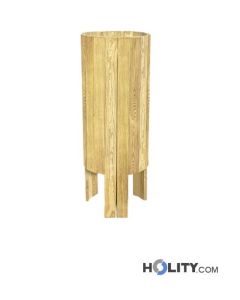
Wooden waste bin for waste collection in public spaces. Capacity: 80 lt. Dimensions: Ø50 x H120 cm
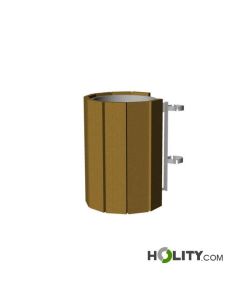
Pine wood waste bin for urban furniture. Capacity: approx. 27 liters. Dimensions: W.32 x D.43 x H.48 cm.
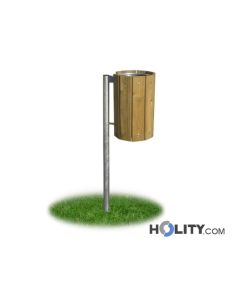
Urban furniture waste bin in galvanized steel and Nordic pine slats. Capacity 27L, inground fixing for parks, gardens and condominium walkways.
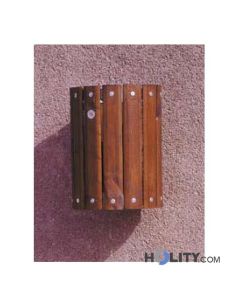
Waste bin covered with treated pine wood. Fixing: wall-mounted. Capacity: 25 liters. 100% Made in Italy. Dimensions: Ø 34 x h.45 cm.
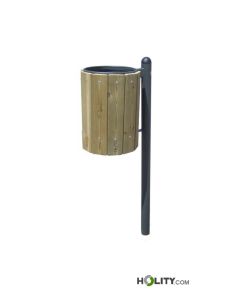
32L urban litter bin in galvanized steel and Nordic pine wood (34x45x120 cm). Integrated design with Allen key security locking system.
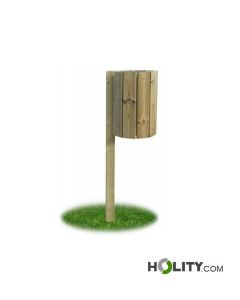
Nordic pine wood waste bin for trails. Capacity: approx. 27L. Dimensions: W.32 x D.39 x H.120 cm.
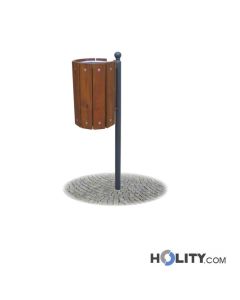
Wooden waste bin, to be buried, made of Nordic pine for waste collection. Capacity of 28 lt. Dimensions: cm 32 x 43 x 128 h - usable height approx. 108 cm.
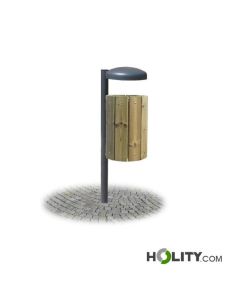
Waste bin with lid in pine wood for public spaces. Capacity: approx. 27 liters. Dimensions: W.32 x D.43 x H.125 cm.
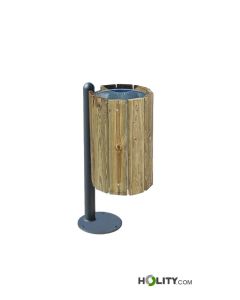
Litter bin for parks in galvanized steel and Nordic pine wood, capacity 27 liters, 32x43x100 cm. Robust solution for landscape integration.
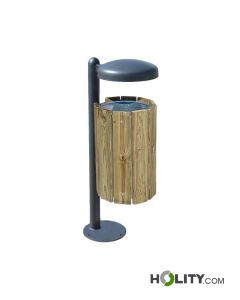
Street furniture litter bin in galvanized steel and pine slats (32x43x100 cm). Structure with protective roof and key-operated emptying system.
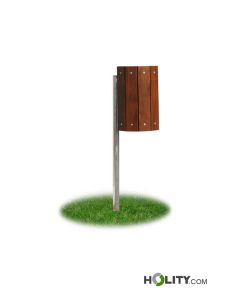
27-liter outdoor litter bin in galvanized steel and exotic wood, 32x43x120 cm. Durable design with tilting system and ground anchoring.
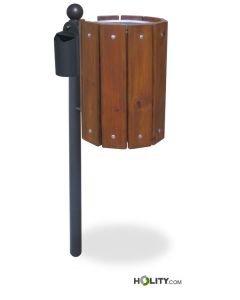
Outdoor waste bin with ashtray. Capacity: 27 liters.
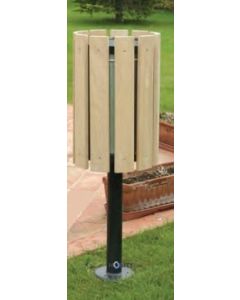
Waste bin with galvanized steel structure covered in wood. Dimensions: h 50 cm, diameter 35cm.
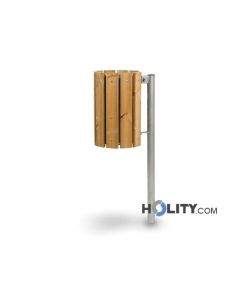
Tilting waste bin for urban furniture. Galvanized steel structure covered with wooden slats. To be buried
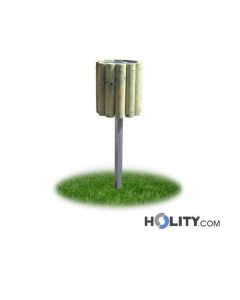
Outdoor wooden waste bin. Fixing: on pole to be buried. Capacity: 27 lt.
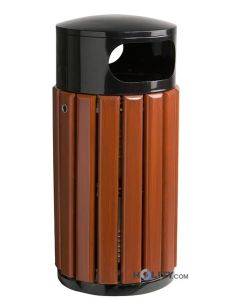
Steel and wood waste bin with 40L or 60L internal container. Elegant design for parks, apartment buildings and public avenues.
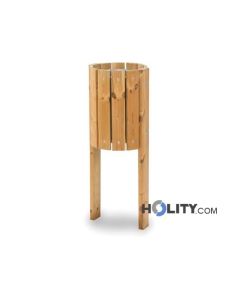
Nordic pine wood bin ideal for parks, gardens and outdoor public areas. Capacity: 28 liters. Steel internal container.
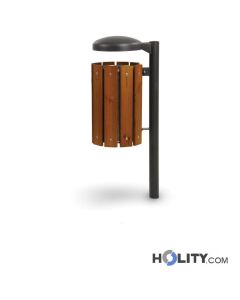
28 lt waste collection bins equipped with a top cover. Material: steel sheet and pine wood. Bin dimensions: Ø 31 x h. 48 cm.
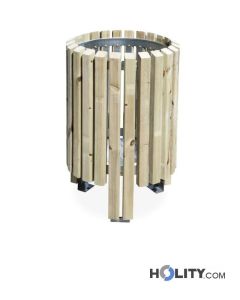
Wooden outdoor waste bin with base equipped with 3 feet. Dimensions: Ø50 x H71
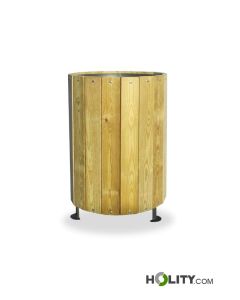
Professional outdoor litter bin in galvanized steel and Nordic pine, 50x50x85 cm. Capacity 120L, weather-resistant structure.
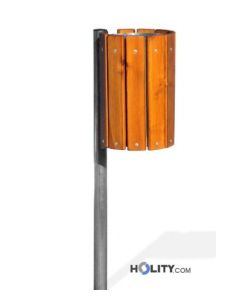
Waste bin with galvanized steel structure and wooden slats. Capacity 25 liters. Italian product.
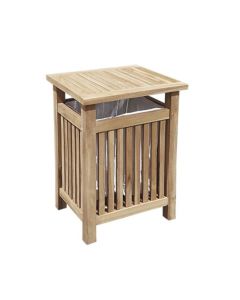
Outdoor waste bin made of high-quality natural teak wood, 60-liter capacity. Waterproof and ultra-resistant structure. Dimensions: W 49.8 x D 39.8 x H 80.5 cm.
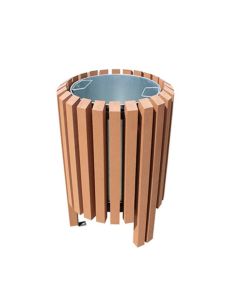
40L circular bin in composite wood and galvanized steel. Functional design for urban decor and public space cleanliness.
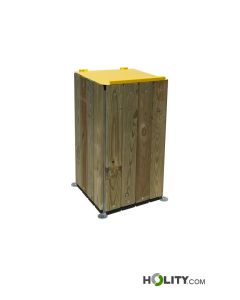
120-liter urban furniture litter bin in galvanized steel and Nordic pine, 41x41x80 cm, designed for resistance and aesthetic integration in outdoor spaces.
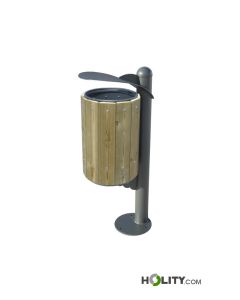
Outdoor litter bin in galvanized steel and Nordic pine, 34x51x100 cm. Integrated design for green areas with a quick-release emptying system.
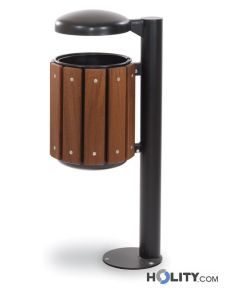
Outdoor waste bin in steel sheet with Iroko wood strips. Capacity: 33 lt. Bin dimensions: Ø 340 x h.460 mm.
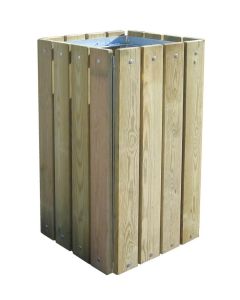
Square waste bin in steel and pressure-treated pine (41x41x80 cm). 120L capacity with bag holder ring for urban contexts and green areas.
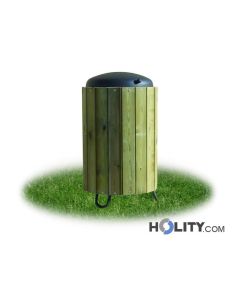
Waste bin with pressure-treated Nordic pine wood slats. Capacity approx. 120 liters. Dimensions: L.50 x D.50 x h.100 cm.
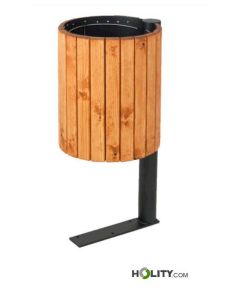
Wooden litter bin for public spaces. Capacity: 60 lt. Dimensions: W.42 x D.44 x h.90 cm.
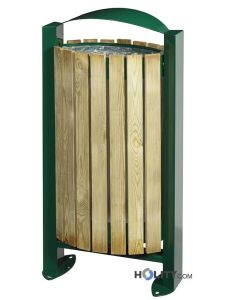
Floor-standing waste container with treated wooden slats ideal for outdoor use. Dimensions: cm 52.8x27.2x101.3.
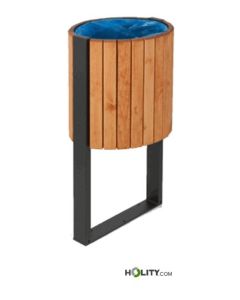
Wooden waste container for urban furniture. Capacity: 60 lt. Dimensions: W.50 x D.45 x h.90 cm.
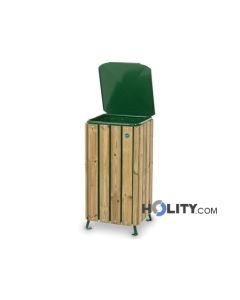
Waste bin for parks with tubular steel structure and pine wood cladding. Capacity: 128 liters. Dimensions: 43x43xh.90 cm.
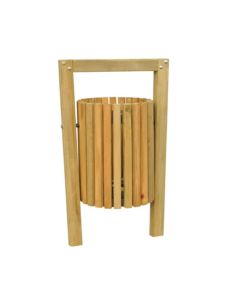
Outdoor wooden tilting bin treated in class IV autoclave, capacity 50 L. Double-leg structure 104.5 cm high and 35 cm round basket.
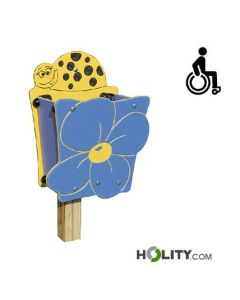
Playful waste bin in pressure-treated wood and polyethylene, 30L. Design with turtle and flower, ideal for playgrounds and schools (dim. 47x36x90 cm).
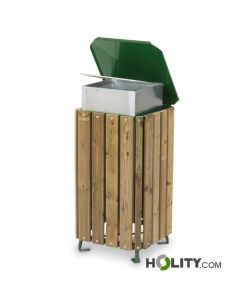
Waste bin for outdoor areas. Removable internal container in press-bent galvanized sheet metal and bag holder ring. Capacity: 90 liters.
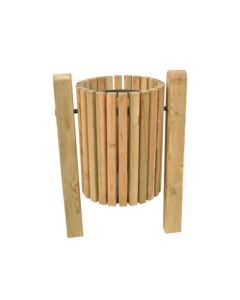
Round outdoor tilting litter bin made of class IV pressure-treated wood, 50-liter capacity. Double support legs. Dimensions: W 65 x D 42 x H 87.5 cm.
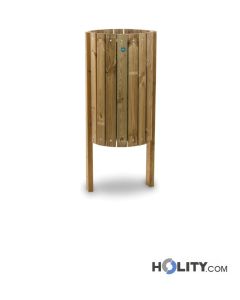
Waste bin for waste collection in treated Nordic pine wood. Capacity: 140 liters. Basket dimensions: Ø 440 x h.880 mm. Fixing: to be buried.
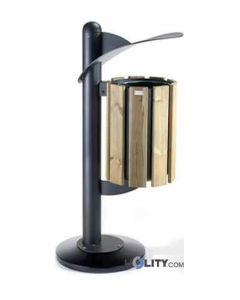
Waste bin for parks, gardens, and outdoor areas in galvanized sheet metal with pine wood slats. Complete with bag holder ring
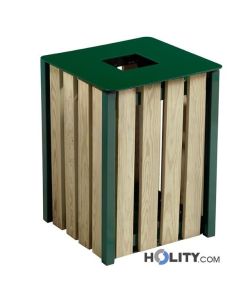
Treated pine wood bin with steel structure. Available in different finishes. Dimensions: 400 x 400 x h.565 mm. Capacity: 50 liters.
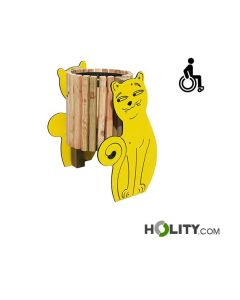
Waste bin for play areas in wood and steel with cat-shaped polyethylene sides. Dimensions 63x44.7x74 cm. Inclusive design.
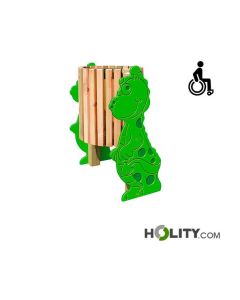
Thematic wooden and steel waste bin with dragon decoration. 50-liter capacity, EN 1176 certified, ideal for playgrounds and public parks.
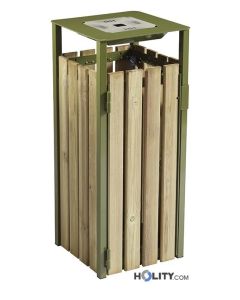
Waste bin with ashtray for outdoor spaces. Steel structure and wooden slats. Available in different colors.
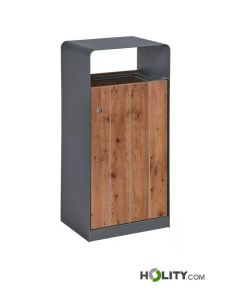
60L outdoor litter bin in RAL 7016 painted metal and Tyrolean pine effect HPL. Robust structure W.400xD.300xH.825 mm with safety lock.
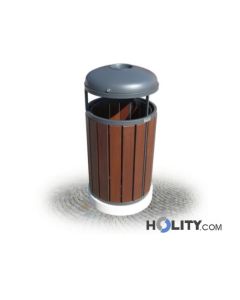
Wooden and steel litter bin for public spaces with roof and removable ashtray. Dimensions: 50 x 50 x 105 h. Capacity: approx. 120 lt.
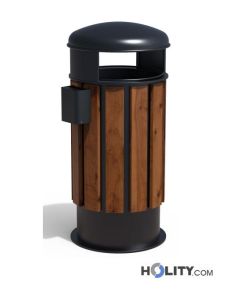
Nordic pine wood waste bin with ashtray. Capacity: 85 lt. Dimensions: H.102 x D.45 x W.53 cm.
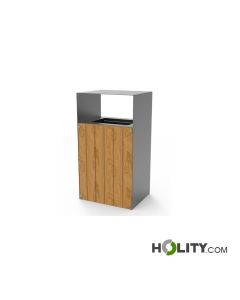
25L waste bin in steel and EN351 certified wooden slats. Structure with oxiron primer for urban furniture and green areas.
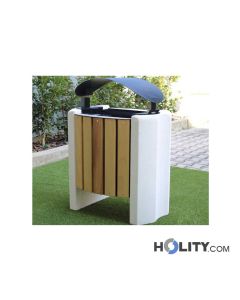
Concrete and wooden slat waste bin ideal for outdoor areas. Equipped with internal container with handles for extraction.
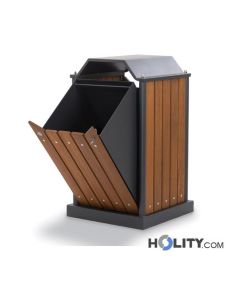
Outdoor waste bin with walls covered in Iroko wood slats. Capacity: 96 lt. Dimensions: 550 x 550 x h.960 mm.
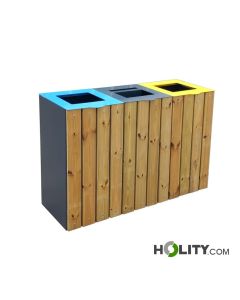
Kit of 3 x 120L bins in galvanized steel and Nordic pine (120x44x90 cm). Elegant solution for outdoor waste sorting with integrated ashtray.
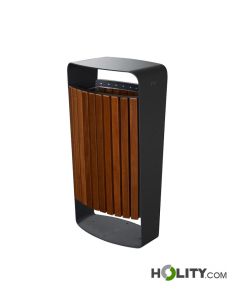
Wooden and metal waste bin with swinging body and 75L capacity. Dimensions: W.490 x D.365 x H.975 mm.
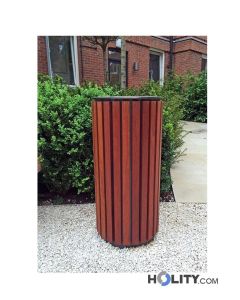
50-liter waste collection bin made of certified wood slats. Dimensions: Ø 400 x h.850 mm.
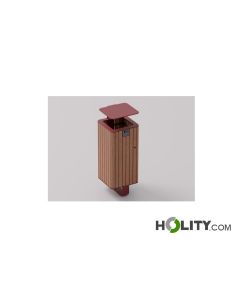
h140_545 waste bin in galvanized steel and 50L Okumè wood. 53kg self-supporting structure with integrated ashtray for urban furniture.
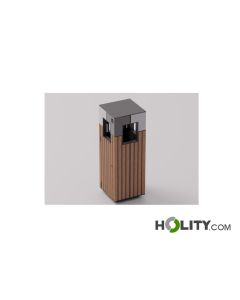
Urban furniture bin in galvanized steel and Okumè wood, 38L capacity, with integrated ashtray and security lock for public spaces.
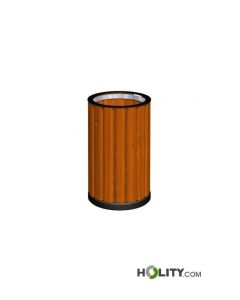
Urban bin in Scandinavian pine and galvanized steel, 80L capacity with concrete base. Ideal for aesthetic integration in parks and green areas.
Wooden outdoor waste bins represent a consolidated solution for waste management in public spaces, combining practical functionality with aesthetic integration into the landscape context. Made with galvanized steel structures covered with natural wood slats, these containers effectively adapt to parks, gardens, condominium walkways, and urban furniture areas, meeting both capacity needs and resistance to atmospheric agents. The choice of wood as a facing material stems from the need to maintain a balance between technical durability and visual harmony with the surrounding environment, an aspect particularly relevant in green zones and historical contexts where aesthetic impact plays a significant role.
The market offers a diversified range of models, from compact solutions of 25-27 liters up to large 120-liter bins, each designed to respond to specific pedestrian traffic contexts and emptying frequencies. Fixing systems vary between wall-mounted installations, inground post versions, and tilting versions with protective roofs, allowing public administrators and private space managers to select the most suitable configuration for the site’s characteristics. Resistance to bad weather, ease of maintenance, and management costs in the medium-to-long term make these containers a strategic choice for entities requiring operational reliability without compromising on environmental quality.
The choice of a wooden outdoor waste bin offers tangible advantages from both a management and environmental perspective. Visual integration with natural landscapes and urban contexts characterized by green elements represents the first qualitative benefit: unlike plastic or painted metal containers, wood maintains an aesthetic continuity that reduces the perceived impact of waste infrastructure. On the practical side, the internal galvanized steel structure guarantees significant structural resistance, capable of withstanding repeated stress and adverse weather conditions without failure. The volumetric capacity suitable for busy public spaces allows for a reduction in emptying frequency, resulting in logistical and operational cost benefits for administrators.
In urban furniture areas, wooden bins prove particularly effective in containing vandalism and aesthetic deterioration due to exposure. A well-designed bin with smooth surfaces and treated materials resists accidental scratches and intentional damage attempts better, maintaining a well-kept appearance over time. The possibility of customization through protective paints, specific finishes, and wood variants (Nordic pine, exotic wood, teak) allows public administrations to create visual coordination between different elements of urban furniture. Furthermore, many models include a protective roof or a lid with a locking system, elements that not only improve the thermal-hygienic insulation of the contents but also act as a deterrent to unauthorized access.
The available range is divided into three main categories based on construction and functional characteristics. Compact bins, from 25 to 27 liters, represent the ideal solution for areas with moderate user flow such as small condominium gardens, trails in rural areas, and confined spaces where footprint is a limiting factor. These models come in both wall-mounted and inground versions, with heights ranging between 48 centimeters and 120 centimeters depending on whether the post is short or extended. Large bins, from 40 to 120 liters, are intended for high pedestrian traffic contexts: urban parks, transit stations, and rest areas busy during holidays. These containers usually require a more robust fixing structure, often with an enlarged base or a deep inground post, and feature dimensions ranging from 41x41x80 centimeters up to 50x50x85 centimeters.
A significant construction variant concerns the presence of a roof or lid: versions equipped with upper protection ensure better tightness during rain and reduce the accumulation of stagnant water inside, a critical aspect for maintaining hygiene in areas subject to frequent precipitation. Opening systems vary from simple tilting bases, which facilitate manual emptying, to locks with hex keys for contexts where access must be restricted. The material of the covering wood differs between Nordic pine, the most economical and widespread choice for its natural resistance to parasites, and exotic woods like teak, preferred in high-end contexts where multi-year durability justifies the higher investment. The internal structure can be made of galvanized steel sheet with different thicknesses, influencing both longevity and the total weight of the container.
The selection of the appropriate bin requires a systematic evaluation of six fundamental parameters. The first is the estimation of the daily waste volume: spaces with high pedestrian traffic (over 500 daily passages) require minimum capacities of 40-60 liters, while secondary areas with moderate transit are satisfied with 25-27 liters. The second parameter is the scheduled emptying frequency: if the public operator can guarantee daily service, a lower capacity remains acceptable; if emptying is weekly, it is necessary to oversize by at least 30% relative to the rough estimate. The third criterion is the fixing system available at the site: spaces with compact ground and the possibility of excavation tolerate deep inground solutions; paved areas or strict landscape constraints require wall-mounted models with robust mechanical supports. The fourth aspect is exposure to weather: mountain areas with heavy snow or coastal areas with salt spray require pre-treated woods and high-quality hot-dip galvanized steels.
The fifth criterion concerns hygiene and protection needs: sensitive contexts such as school areas, playgrounds, or zones where the presence of wildlife is documented require lids or closed roofs to prevent access by animals and the spread of unpleasant odors. A sixth factor, often underestimated, is the maintenance budget over the expected life cycle: a teak bin requires treatment every 3-4 years but maintains structural characteristics for 15-20 years; an economical Nordic pine model needs annual checks and possible partial replacements after 8-10 years of exposure. The most common errors consist of undersizing the capacity (source of overflows and public dissatisfaction), choosing insufficiently treated materials for the specific climate (rapid aesthetic deterioration), and using inadequate fixing systems for the expected traffic (oscillations and structural failure).
The urban furniture sector, although not having a unified Italian regulation dedicated exclusively to waste bins, is subject to a series of technical standards and widespread safety requirements. The UNI EN 840 standard defines construction specifications for waste containers in general, including aspects of mechanical resistance, structural stability, and ease of handling during collection operations. Bins intended for public spaces must meet road safety requirements according to Legislative Decree 81/2008, which provides for the absence of sharp edges and stability in case of accidental impacts. The use of wood as a cladding material implies compliance with European phytosanitary standards (ISPM 15) to prevent the transport of plant pathogens; the woods used must come from certified suppliers or undergo documented heat treatments.
Regarding environmental impact and sustainability aspects, public administrations acquiring wooden outdoor bins must verify FSC (Forest Stewardship Council) certification or equivalent to guarantee provenance from responsibly managed forests. PEFC certification is also widespread in Europe and attests to sustainable forest management standards. In some municipalities, tender specifications for the purchase of urban furniture explicitly require the use of certified woods and non-toxic preservative treatments. The galvanized steel used internally must conform to UNI EN ISO 1461 for hot-dip galvanizing, a guarantee of a minimum anti-corrosion protection of 85 micrometers in thickness. The protective paints applied to the slats must be non-toxic and suitable for environmental contact, often certified according to low VOC (volatile organic compounds) standards.
Explore all products in the category and compare available solutions to find the one best suited to your operational context. Carefully evaluate volumetric capacity, fixing system, wood type, and protective finishes based on the specific characteristics of the public or private space where you intend to install the bin.
For high pedestrian traffic areas (urban parks, stations), a capacity of 40-60 liters allows for weekly emptying without risk of overflow. For trails and small gardens with moderate traffic, 25-27 liters are sufficient with collection every 2-3 days. The estimate should also consider seasonality: in summer, the volume of waste increases by up to 40-50% in green areas.
Treated wood has a more uniformly dark or greenish color due to antifungal preservatives applied under pressure; untreated wood maintains variable natural tones. Always check the technical documentation specifying the type of treatment (impregnation, painting) and the estimated protection duration. Exotic woods like teak do not require chemical treatment thanks to their natural density.
Treated Nordic pine maintains structural performance for 8-10 years in temperate climates, with regular maintenance. Natural teak offers 15-20 years of durability without treatments, but with initial costs 2-3 times higher. The choice depends on the lifecycle cost budget and the specific climatic context.
Yes, maintenance varies by wood type. Pine models require annual inspection, seasonal deep cleaning, and paint touch-ups every 2-3 years. Teak bins have longer maintenance cycles (3-4 years for preventive painting). The internal steel must be checked for oxidation at the joints.
Installation requires an excavation at least 30-40 centimeters deep, basal drainage with gravel to avoid stagnation, and backfilling with compacted sand. The ground must have adequate bearing capacity; paved surfaces require alternative mechanical fixings. Always check the depth of underground utilities before proceeding.
Yes, the lid reduces the accumulation of rainwater (a source of odors), prevents access by rodents and birds, and protects waste during heavy rain. In contexts with high wildlife density or in coastal areas subject to heavy rain, the lid becomes an almost mandatory element to maintain acceptable hygienic standards.
 English
  Italian
 French
 German
 Spanish