mon-fri 9-13 / 14.30-18.30
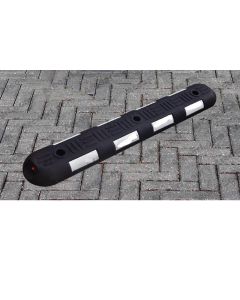
Pack of 20 pieces
€399.00 VAT excl.Garage wheel stops in recycled PVC. Dimensions: W70 x D16 x H10 cm.
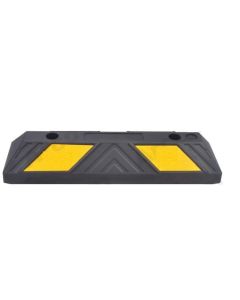
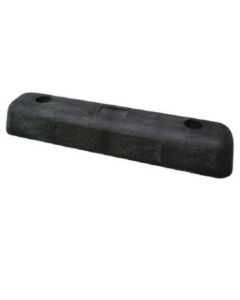
Vulcanized rubber wheel stops black with yellow reflective strips. Length: 550 mm.
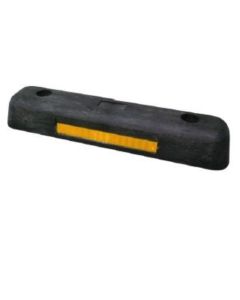
Pack of 20 pieces
€546.00 VAT excl.PVC wheel stops for parking. Equipped with reflective inserts. Dimensions: W70 x D16 x H10 cm.
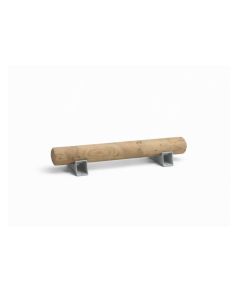
Car parking wheel stop h729_59 (small model) made of rot-resistant Class 4 pressure-treated pine wood. Equipped with an 80 mm diameter and galvanized steel ground fixing brackets. Dimensions: L 66 x D 15.5 x H 11 cm.
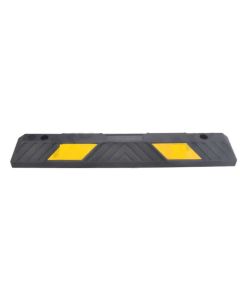
Vulcanized rubber wheel stop. Length 900 mm. for parking lots and garages.
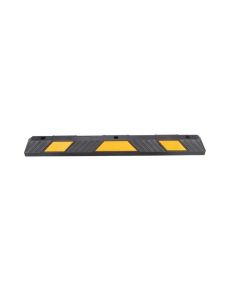
Wheel stop for car parks and garages in vulcanised rubber. Colour: black with yellow reflective strips. Dimensions: L.1220 x D.150 x h. 100 mm.
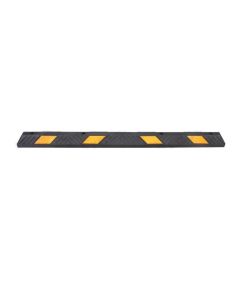
Wheel stop in vulcanized rubber. Length: 1830 mm
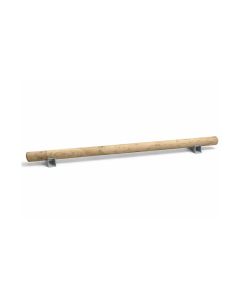
Car wheel stop for parking h729_60 (large model) made of Class 4 autoclave-treated pine wood resistant to rot. Equipped with an 80 mm diameter and galvanized steel ground fixing brackets. Dimensions: 110x155x2000 mm.
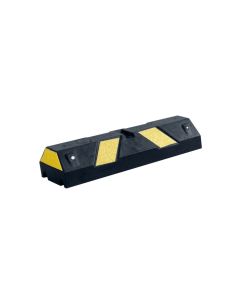
Recycled rubber wheel stop with reflectors and cable guides. Dimensions: L 50 x W 15 x H 10 cm.
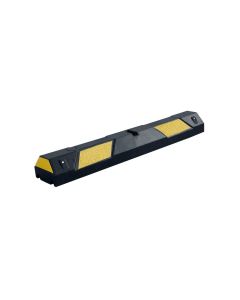
Professional recycled rubber wheel stop, 915x150x100 mm. Class 1 high visibility, integrated cable channels and asphalt fixing kit included.
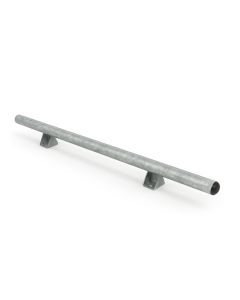
Straight wheel stop h729_46 in galvanized steel (Ø60 mm). 200 cm multi-purpose safety barrier: protects walls from vehicles and acts as a life-saving curb for disabled ramps (PRM).
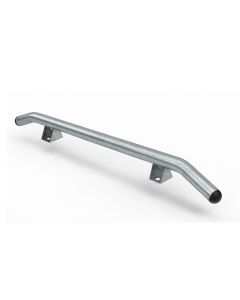
Curved wheel stopper h729_48 in galvanized steel (Ø60 mm). 200 cm safety barrier for infrastructure protection and safety curb for disability ramps (PRM). Weight 6.50 kg.
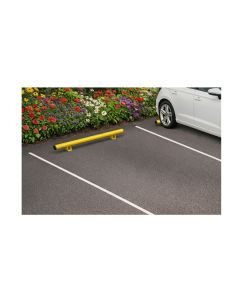
Straight wheel stop h729_49 in galvanized and painted steel (Ø60 mm). Available in RAL 7016 Grey or High Visibility Yellow. 200 cm multi-functional barrier for wall protection and PRM ramp safety.
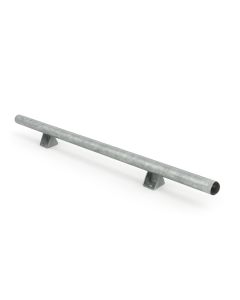
Professional straight wheel stop h729_47 in heavy galvanized steel (Ø76 mm). 200 cm multi-purpose safety barrier for wall protection and life-saving curb for disabled ramps (PRM).
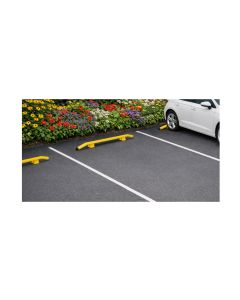
Curved wheel stop h729_51 in galvanized and painted steel (Ø60 mm). Ergonomic design, available in Anthracite Grey RAL 7016 or High Visibility Yellow. Protection for infrastructure and PRM ramp safety.
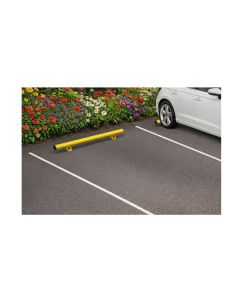
Straight wheel stop h729_50 in galvanized and painted steel (Ø76 mm). Available in Grey RAL 7016 or High visibility Yellow. Heavy 200 cm barrier for wall protection and wheelchair ramp safety (PRM).
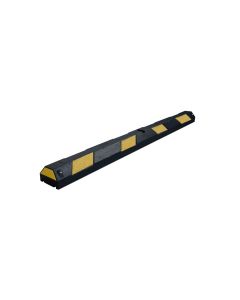
Recycled rubber wheel stop, visible and resistant. Dimensions: L 183 x W 15 x H 10 cm.
Wheel stops for parking lots represent an essential solution in managing parking spaces and delimiting parking areas. These devices control vehicle positioning, preventing encroachment beyond parking limits and protecting adjacent structures from potential impacts. Available in various material configurations and sizes, wheel stops adapt to varying contexts: private parking lots, garages, public facilities, and circulation areas. Their versatility makes them indispensable tools for organizing urban vehicle traffic and ensuring safety in environments with a high concentration of cars.
Fundamental technical characteristics concern mechanical resistance, visibility, and durability over time. The choice of material and shape directly determines performance under intensive use conditions, influencing both the load absorption capacity and the required maintenance. Rubber, PVC, and galvanized steel models represent the most common solutions, each meeting specific operational needs and budgets. The presence of reflective inserts or high-contrast bands improves visibility at night and in low-visibility conditions, thus contributing to the general safety of the area.
Installing wheel stops represents a structural investment in the orderly management of parking spaces, with benefits that extend beyond simple stall marking. These devices prevent economically significant damage to walls, columns, adjacent structures and protect vehicles themselves from accidental bumps. In public or semi-public parking contexts, wheel stops reduce disputes between users regarding parking space boundaries, minimizing damage reports and complaints. From an operational standpoint, they facilitate the orderly circulation of vehicles by preventing the chaos resulting from disorganized positioning. For garage owners, hospital facilities, hotels, and commercial areas, they represent an economical and durable solution compared to more complex architectural interventions.
The psychological component of physical delimitation should not be underestimated: the simple presence of a wheel stop curb induces more cautious driving behavior and more regular positioning. In parking lots with high vehicle turnover, this feature contributes to reducing maneuver times and improves the overall efficiency of the space. Furthermore, many modern models integrate additional functions: some operate as safety curbs for access ramps intended for people with reduced mobility (PRM), others serve as lane delimiters for bicycle/pedestrian paths or as protection against unauthorized access in restricted traffic zones. Versatility of use allows the investment to be amortized over multiple applications simultaneously, especially in urban contexts where spaces must serve multiple functions.
The range of wheel stops on the market is mainly distinguished by construction material, dimensions, and geometric configuration. Vulcanized rubber wheel stops represent the traditional and most widespread solution: they offer excellent shock absorption, resistance to atmospheric agents, and long operational life even with minimal maintenance. They generally feature lengths ranging from 500 millimeters to 1,830 millimeters, effective heights around 100 millimeters, and depths between 150 and 160 millimeters. Often completed with yellow or white reflective bands, they guarantee high visibility even in nighttime conditions. Recycled PVC models offer an economical and sustainable alternative, ideal for temporary installations or limited budgets. Typically available in multiple packs (20 pieces), they feature standardized dimensions around 700 x 160 x 100 millimeters and reduced weight that facilitates manual transport and installation.
Galvanized steel wheel stops represent the most robust solution, suitable for high-traffic environments and critical conditions. Available with tubular diameters of 60 or 76 millimeters and lengths up to 2 meters, they can be installed in both straight and curved configurations. These models are frequently painted in standard RAL colors (Grey RAL 7016, High Visibility Yellow) to comply with specific urban standards. Galvanized steels offer superior anti-corrosion protection, making them ideal for coastal areas or high humidity. Some recycled rubber models combine sustainability and performance, integrating reflectors and cable management channels to facilitate the management of underground systems. The choice between these materials must consider expected traffic intensity, weather conditions, investment budget, and aesthetic constraints of the environment.
Selecting the appropriate wheel stop starts with analyzing the specific operational conditions of the installation site. The first criterion concerns the expected vehicle traffic: parking lots with slow and moderate turnover are adequately served by rubber or PVC wheel stops, while areas with intense traffic require galvanized steel solutions with larger diameters. The second criterion concerns the available dimensions: in narrow parking lots with limited space, compact wheel stops of 500-550 millimeters may be sufficient; in larger spaces, it is preferable to opt for models of 900 millimeters or more to ensure effective protection. Soil composition matters: on uneven surfaces, frequently wet or subject to freeze-thaw cycles, vulcanized rubber wheel stops offer superior stability thanks to greater flexibility compared to rigid models.
The third criterion concerns visibility and regulatory compliance: in public areas, it is mandatory to have high-visibility signaling elements, which is why models with reflective bands or yellow painting are prescribed. In closed garages with controlled lighting, this priority decreases. Common mistakes include underestimating the actual load (heavier vehicles than initially estimated erode the life of wheel stops made of soft materials), choosing models that are too short and do not effectively delimit the stall, and purchasing low-cost solutions for contexts that require professional performance. An often overlooked aspect concerns compatibility with cleaning systems: very low wheel stops can obstruct mechanical broom passage, while those that are too high prevent cleaning under their surface. Evaluating these connected factors helps avoid poor operational performance and premature replacements.
The wheel stop sector is regulated by a set of technical standards that vary based on the context of use and jurisdiction. In Italy, the UNI CEN/TS 15649 standard provides requirements for curbs and delimitation barriers, including specifications on impact resistance, stability, and durability. For parking lots in compliance with accessibility requirements for persons with reduced mobility, the UNI 11904 standard and Ministerial Decree 236/1989 dictate specific standards: in these contexts, some wheel stops function as safety curbs for access ramps, requiring specific geometric configurations (height, rounded vertices, absence of dangerous protrusions). The minimum prescribed mechanical resistance varies depending on use: solutions for light parking must support lower static loads than those intended for high-traffic commercial or industrial zones.
Fire safety represents a crucial aspect in underground spaces and closed garages: materials must comply with European directives on reaction to fire (Euroclass). Verifying that the product has non-flammability certifications is essential before installation in sensitive contexts such as underground parking lots of hospitals or structures with a high concentration of people. For installations in public areas, it is necessary to respect local municipal regulations that often prescribe colors, heights, and minimum distances from sidewalks. The presence of reflective inserts must comply with retroreflection criteria defined by technical road standards (EN 1382 or equivalent), ensuring that the device is visible from a specified minimum distance under standard lighting conditions. Before purchasing, consulting the supplier's technical specifications and verifying the availability of conformity certifications to the main reference standards represents a recommended practice to ensure legal compliance and optimal performance.
Explore all products in the category and compare the available solutions to find the one best suited to your operational context. The catalog includes models in vulcanized rubber, recycled PVC, and galvanized steel, with versatile dimensions and configurations capable of meeting the needs of private and public parking lots, hospital facilities, and high-traffic areas.
Vulcanized rubber wheel stops absorb impacts better and require minimal maintenance, making them ideal for parking lots with moderate traffic. Galvanized steel ones offer superior strength and extended durability in high-intensity traffic environments, coastal areas, and severe weather conditions. The choice depends on expected traffic, budget, and aesthetic constraints.
Wheel stops vary considerably: compact models measure 500-550 millimeters, while professional ones reach 1,830 millimeters. The typical effective height is around 100 millimeters. The length must completely cover the width of the parking stall to ensure effective delimitation and protection of adjacent structures.
Recycled PVC models offer good resistance for installations in parking lots with light and moderate traffic, but have a shorter lifespan compared to vulcanized rubber wheel stops in high-traffic or harsh climate environments. They represent an economical solution for temporary situations or tight budgets, frequently available in packs of 20 pieces.
In public areas and parking lots subject to local regulations, high-visibility elements are often mandatory. In closed garages with controlled lighting, this requirement may not apply. Always check local regulations before installation; yellow or white reflective strips significantly improve night-time perception and visibility in low-light conditions.
Yes, some galvanized steel models are specifically designed as safety curbs for PRM ramps, complying with standard UNI 11904 and Ministerial Decree 236/1989. These wheel stops feature specific geometric configurations (standardized heights, rounded vertices, absence of dangerous protrusions) and operate simultaneously as delimiters and protections for people.
Vulcanized rubber wheel stops range between 25 and 160 euros per unit depending on length and specifications. Recycled PVC models start from approximately 20 euros per unit available in 20-piece packs (total price around 487-666 euros). Volume purchasing reduces the unit cost and represents the ideal solution for large parking lots or urban projects.
Installation varies: lightweight rubber or PVC models require only positioning and simple mechanical anchoring; galvanized steel ones need more robust fixing using anchors or bolts. Maintenance for rubber wheel stops is minimal (periodic visual inspection); steel models require paint inspection and anti-corrosion treatments in particularly aggressive environments.
 English
  Italian
 French
 German
 Spanish