mon-fri 9-13 / 14.30-18.30
The management of sacred areas and spaces intended for the worship of the deceased requires an approach that combines the solemnity of the place with the maximum functionality of the structures. Professional cemetery furniture includes a wide range of equipment and accessories designed to ensure decorum, order, and safety within cemeteries and family chapels. Choosing specific technical products means relying on materials capable of withstanding prolonged exposure to atmospheric agents, maintaining aesthetics and structural solidity over decades. Every element, from ladders for burial niches to monumental planters, is designed to facilitate maintenance operations and accessibility for visitors.
In this sector, operational efficiency merges with respect for the context: cemetery equipment must meet rigorous occupational safety standards, especially regarding load handling and reaching the upper rows of columbaria. The use of noble materials such as bronze, stainless steel, and die-cast aluminum ensures superior resistance to corrosion and oxidation, critical factors in open environments. Proper planning of cemetery furniture allows for the transformation of the cemetery into a welcoming and safe place, where the functionality of technical supplies supports the recollection of relatives in a dignified and perfectly maintained environment, elevating the quality standard of municipal and private cemetery services.
The utility of technical cemetery furniture lies primarily in the ability to offer long-lasting solutions in often extreme environmental conditions. Cemetery spaces are constantly exposed to rain, frost, and UV rays; the use of non-specific furnishings would lead to rapid deterioration, compromising the decorum of the sacred site. Professional cemetery equipment is instead tested to ensure very long life cycles with minimal maintenance. Furthermore, the safety of visitors, often elderly people, is guaranteed by the ergonomics of seating, handrails, and ladders equipped with braking systems and non-slip surfaces, drastically reducing the risk of accidental falls during visits to loved ones.
From a management perspective, the adoption of compliant equipment facilitates the task of cemetery operators and funeral homes. Professional coffin trolleys, niche lifters, and warehouse ladders allow burial and routine maintenance operations to be carried out in total compliance with occupational safety laws (D.Lgs 81/08). The visual order guaranteed by specific waste bins and coordinated benches contributes to maintaining an atmosphere of respect and serenity, avoiding the accumulation of waste or the degradation of resting areas. Choosing high-quality cemetery furniture therefore represents an act of responsibility towards the community and a far-sighted investment for the architectural conservation of the city's monumental heritage.
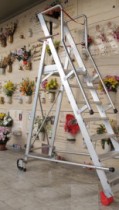
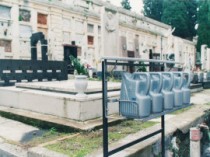
The range of products intended for the funeral and cemetery sector is extremely stratified to cover every logistical and ornamental need. A fundamental section concerns cemetery ladders, available in warehouse, cantilever, or rail-sliding versions, equipped with large work platforms and safety railings to reach the highest niches. Alongside mobile equipment, cemetery urban furniture includes cast iron or stone benches, bins for the separate collection of floral remains, and cast iron fountains in classic or modern designs, essential for the care of burials. These types are designed to integrate harmoniously into both historic monumental cemeteries and modern structures.
Regarding funeral ornamentation, the offer includes vases, planters, votive lamps, and photo frames made with lost-wax casting techniques or precision mechanical processing in steel and bronze. These accessories are available in different aesthetic lines to adapt to the different styles of gravestones and monuments. Another crucial type is represented by technical equipment for handling, such as hydraulic trolleys and supports for ceremonies, which guarantee maximum solemnity during the farewell rite. Finally, there is no shortage of cemetery signage systems and information boards, indispensable for orienting visitors within often very vast and complex areas, always maintaining a sober and institutional visual language.
The selection of cemetery furniture must be based primarily on the evaluation of the architectural and climatic context of the area. In seaside locations, for example, it is mandatory to opt for AISI 316 stainless steel or anodized aluminum, materials that resist salt spray and galvanic corrosion. For historic cemeteries, the choice should fall on cast iron or bronze furnishings, capable of aging gracefully without clashing with period monuments. A fundamental technical decision criterion concerns the safety of mobile equipment: ladders must be equipped with automatic locking systems and stabilizers, always verifying the maximum load capacity declared by the manufacturer to avoid dangerous overloads during maintenance operations.
Another critical factor is ease of installation and resistance to vandalism or theft, unfortunately frequent in isolated areas. Many vases and votive lamps feature concealed fixing systems that make unauthorized removal difficult. It is also necessary to evaluate the maintainability of surfaces: smooth finishes and anti-fingerprint or anti-stain treatments facilitate the removal of wax, organic residues, and dust, ensuring constant decorum with minimal effort. Finally, regarding internal urban furniture, it is appropriate to choose benches and fountains with ergonomic but robust designs, prioritizing models that offer comfortable support for the elderly, with seats that do not retain moisture and armrests that facilitate standing up, ensuring a dignified and safe visiting experience.
Cemetery furniture and equipment must comply with very precise technical and health-hygiene regulations, regulated at the national level by D.P.R. 285/90 (Mortuary Police Regulation). Mobile ladders and platforms must be certified according to UNI EN 131 standards, guaranteeing stability and structural resistance under stress. It is essential that votive lighting devices comply with CE regulations on electrical safety, especially regarding the IP protection rating for outdoor use (resistance to rain and dust). The use of non-toxic and recyclable materials is also encouraged by recent European directives on the environmental sustainability of urban and cemetery furniture.
In the public sphere, occupational safety requires the use of equipment with CE marking and detailed use and maintenance manuals, necessary for the training of cemetery personnel. General requirements also include the absence of dangerous sharp edges and the use of epoxy powder coatings that do not release harmful substances into the surrounding environment. Compliance with accessibility standards (removal of architectural barriers) is equally high priority, ensuring that fountains and rest areas are usable by all citizens, including those with motor disabilities. Compliance with these technical standards is not only a regulatory obligation for municipal administrations and private managers, but represents a guarantee of quality and safety that protects both the physical integrity of visitors and the dignity of the place of worship.
Explore all products in the category and compare the available solutions to find the one best suited to your operational context.
The materials of excellence for outdoor cemetery furniture are bronze, stainless steel, and die-cast aluminum. These materials guarantee absolute resistance to corrosion and do not deteriorate under the action of solar rays or frost, maintaining the original shine and structural solidity necessary for funeral monuments exposed to the elements.
Yes, professional cemetery ladders are designed according to the UNI EN 131 standard and are equipped with wide non-slip steps, side handrails, and landing platforms protected by railings. Many models integrate automatic braking systems that activate as soon as the user climbs the steps, guaranteeing total stability even for people with reduced mobility.
Cast iron is an extremely durable material but requires periodic maintenance to prevent surface oxidation. It is recommended to clean the surfaces with water and neutral soap and to check the state of the protective coating every two years. In case of scratches, it is appropriate to intervene with specific outdoor epoxy paints to seal the metal and prevent rust.
Votive lighting must be implemented in compliance with CE standards. In family chapels, it is essential to use fixtures with an IP44 protection rating or higher if exposed to moisture. Furthermore, transformers and cables must be certified for continuous use and positioned so as not to constitute an obstacle or electrical risk for visitors and maintenance personnel.
For burial in niches located in the upper rows, hydraulic or electric niche lifter trolleys are indispensable. These devices allow the coffin to be raised to the desired height in a smooth and controlled manner, reducing the physical effort of the operators and ensuring maximum safety and solemnity during the operation, avoiding accidental impacts to the columbarium structure.
Cemetery bins must have an adequate capacity for floral remains and plastic pots. It is preferable to choose models with lids to avoid the dispersion of odors and waste caused by wind or animals. Materials such as galvanized steel or high-density polyethylene are best for resisting acids resulting from plant decomposition.
 English
  Italian
 French
 German
 Spanish