mon-fri 9-13 / 14.30-18.30
Restaurant dining room accessories represent a fundamental element in the operational management of a dining space, influencing both service efficiency and the customer experience. These items cover a wide range from beverage service tools to complements for dish presentation, as well as organizational solutions that facilitate the work of the floor staff. The correct choice of accessories directly impacts the quality of the service offered, long-term durability, and compliance with hygiene and food safety standards required by European and Italian regulations. In a competitive sector like catering, attention to detail and the quality of materials used become differentiating elements for both luxury establishments and casual venues.
Selecting professional accessories for the dining room brings significant operational advantages that go beyond aesthetics. A quality corkscrew, for example, not only ensures safe opening of wine bottles without damaging the cork but also reduces service times and conveys professionalism to the customer. Champagne coolers and ice buckets maintain beverages at the correct temperature during service, a crucial element for enhancing the organoleptic characteristics of the wines and cocktails offered.
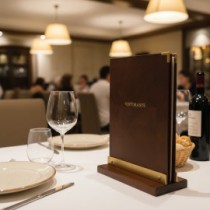
Menu holders, bill folders, and condiment organizers streamline the workflow in the dining room, allowing staff to focus on interaction with customers rather than searching for scattered materials. Wooden serving boards and other presentation accessories add perceived value to the dishes and contribute to the establishment's visual identity. Furthermore, crumb collectors and other hygiene tools keep the service clean and orderly, a fundamental aspect for food safety and maintaining high image standards.
Investing in accessories specifically designed for the catering context means reducing waste, increasing staff efficiency, and differentiating the offer from the competition. A restaurant that uses professional equipment communicates to the customer an attention to detail and a commitment to excellence. Quality accessories also have superior durability, reducing replacement costs in the long run and ensuring greater operational sustainability.
Establishments that prefer accessories made with resistant and certified materials also benefit from simpler inventory management, as product turnover is lower and maintenance is facilitated. This aspect is particularly relevant for those managing multiple catering points and needing to standardize the accessories used across all locations.
The catalog of restaurant dining room accessories is divided into several functional categories, each meeting specific service needs. Professional corkscrews are divided into lever, screw, and pressure models, each with different ergonomics and extraction speed characteristics. Champagne coolers and ice buckets vary in material (stainless steel, wood, composite materials), thermal capacity, and design, from the classic chrome line to more contemporary models. Menu holders are offered in leather, wood, plexiglass, or aluminum versions, with different configurations for single or fold-out menus, suitable for formal or casual restaurants. Condiment sets include oil, vinegar, salt, and pepper in various material combinations: glazed ceramic, glass, stainless steel, or porcelain.
Wooden serving boards for catering come in different wood varieties (beech, oak, acacia), with sizes ranging from single portions to large presentation boards. Bill folders range from compact wallet versions to more structured solutions with clips and check protectors. Crumb collectors include models in painted metal, chromed brass, or stainless steel, with blades in various widths. Some accessories combine multiple functions, such as trolleys with compartments for drinks, condiments, and service accessories, generally made of stainless steel or solid wood. The variety allows for building an assortment consistent with the style of the venue and specific operational requirements.
Functional differences between types are often linked to the context of use and the volume of service. A fine dining restaurant requires precision corkscrews and high-aesthetic-quality menu holders, while a casual or fast-food structure prioritizes robust and easy-to-sanitize accessories. Materials play a crucial role: stainless steel dominates where maximum hygiene and washability are required, solid wood gives warmth and tradition but requires more careful maintenance, and composite materials offer compromises in terms of durability and aesthetics.
The choice between automatic, manual, or pressure models for corkscrews, for example, affects service speed and the training required for staff. Insulated buckets maintain temperature better than non-insulated ones, but at a higher cost. Rigid menu holders protect documents better from daily wear and tear, while flexible ones take up less space and are easier to transport. Understanding these technical-functional variants is essential for making informed choices that align with the real needs of the operation.
The selection of the correct accessories for the dining room starts with an honest analysis of operational flows and the customer profile. First, the type of service practiced must be evaluated: a restaurant with formal table service has different needs than a pizzeria or an osteria. The daily volume of covers influences the choice of materials and the required robustness; a venue that handles 100 covers a night needs accessories that maintain performance even with intensive use. The aesthetics of the environment is a significant decision criterion but must not prevail over functionality: a designer menu holder that does not adequately protect documents or is easily damaged represents a failed investment.
A common mistake is choosing accessories based solely on the initial purchase price, ignoring the total cost of ownership. An inexpensive corkscrew might require frequent replacement, while a professional model amortizes the higher cost over time. Similarly, non-insulated ice buckets might seem convenient but lead to ice waste during service, increasing operational costs. Ease of cleaning and sanitization is a critical element often underestimated: accessories must be easily washable in the dishwasher or with simple procedures, as poor hygiene creates risks for food safety.
A structured approach to choice involves first listing the specific functions required in the dining room (beverage service, dish presentation, billing management, hygiene), then identifying the relative necessary accessories, evaluating materials suitable for the climatic context and volume of use, and finally comparing the options available on the market based on durability, maintainability, and aesthetic consistency. It is useful to involve the floor staff in the evaluation, as they are the ones who will use the accessories daily and can provide valuable feedback on ergonomics and practicality.
When choosing stainless steel accessories over wood, for example, depends on the level of ambient humidity, the frequency of washing, and the desired degree of formality. Stainless steel is ideal for very humid environments or where sanitization is extremely frequent, while solid wood remains preferable for more traditional atmospheres but requires conscious maintenance. A frequent mistake consists in undersizing bill folders or menu holders relative to the number of covers managed simultaneously, causing service delays. The overall budget evaluation must also consider the purchase of easily available spare parts, as some accessories subject to wear (crumb collector blades, corkscrew springs) need periodic replacement.
Restaurant dining room accessories, although not directly food handling tools, are subject to a series of regulatory and hygiene requirements that guarantee food safety. The most relevant Italian and European regulation is EC Regulation 1935/2004, which establishes safety requirements for materials and articles intended to come into contact with food. This means that even accessories like serving boards, presentation plates, and utensils must be made of materials that do not release harmful substances during use. Wooden materials used for serving boards must come from certified suppliers and cannot contain dangerous chemical treatments. The stainless steel used must comply with UNI EN 10088 standards to ensure the absence of corrosion and the release of unwanted substances. Glass and ceramics must be free of lead and cadmium, with specific certifications for food use.
HACCP (Hazard Analysis and Critical Control Points) regulations integrated into EC Regulation 852/2004 require that all tools and accessories used in the dining room be easy to clean and sanitize. This means that accessories must have smooth surfaces, free of sharp corners where bacteria could hide, and must be compatible with the cleaning methods used by the restaurant. Menu holders, bill folders, and other accessories that come into frequent contact with hands must be sanitized at least daily, preferably with mechanical methods in the dishwasher or with approved disinfectants. Champagne coolers and ice buckets must not contain stagnant water residues where microorganisms could develop.
ISO (International Organization for Standardization) standards provide further guidelines on the quality and durability of professional accessories, although they are not mandatory for retail sale. Many ISO 9001 certified manufacturers offer guarantees on the compliance of their accessories with these standards. Compliance with regulations also involves management responsibility: the catering business owner must verify that suppliers provide documentation of compliance (declarations of conformity, material certificates) for the purchased accessories, creating traceability useful in case of health inspections. Local authorities may carry out inspections to verify that the accessories used in the dining room do not constitute hygiene risks.
An often overlooked aspect is the scheduled maintenance of accessories: wooden serving boards need periodic oiling to maintain anti-spore properties, corkscrews should be checked regularly to ensure the extraction mechanism is not compromised, and insulated buckets should be inspected to verify that the internal insulation has not deteriorated. The documentation of this maintenance becomes part of the venue's HACCP management and can be requested during health inspections. Some accessories, such as leather menu holders, must undergo periodic antimicrobial treatments to maintain hygienic compliance, especially if used in high-volume establishments.
Explore all products in the category and compare the available solutions to find the one best suited to your operational context. Our selection includes professional quality restaurant dining room accessories, from beverage service to hygiene and presentation, with certified materials and functional design.
A lever corkscrew utilizes the mechanical effect of the lever to extract the cork with concentrated force, reducing effort and speeding up the operation; the screw model requires more controlled manual rotation, offering greater precision in pressure dosing and reducing the risk of crumbling the cork in fine wines.
 English
  Italian
 French
 German
 Spanish