
mon-fri 9-13 / 14.30-18.30
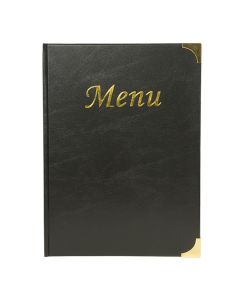
Pack of 5 pieces
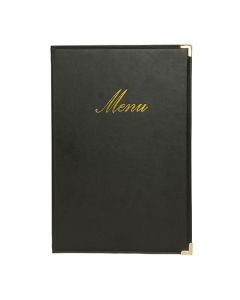
€25.85 VAT excl.A4 / A5 menu holder with printed gold lettering. Special menu holder with protective metal corners and fixed inserts included. Color: black.
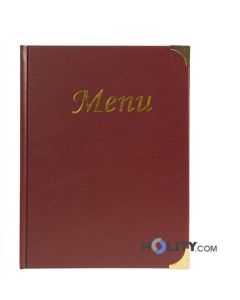
Pack of 5 pieces
€31.50 VAT excl.A4 menu holder with printed gold lettering. Special menu holder with protective metal corners and fixed inserts included. Color: burgundy red.
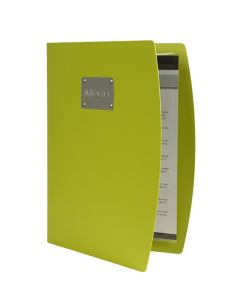
Pack of 5 pieces
€35.05 VAT excl.Particular menu holder in polypropylene with screen-printed stainless steel label. Available in various colors. Easy to clean.
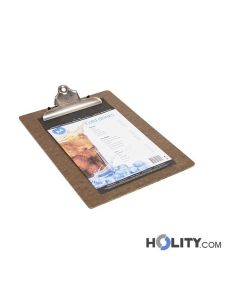
Pack of 6 pieces
€51.42 VAT excl.Menu holder for pubs, bars and restaurants with stainless steel spring clip. Wooden surface. Dimensions: 34x23x4 cm.
Pack of 5 pieces
€45.15 VAT excl.Particular faux leather menu holder available in the following formats: A5 / A45 / A4. Metal protected corners and finished edges. Color: black
Pack of 4 pieces
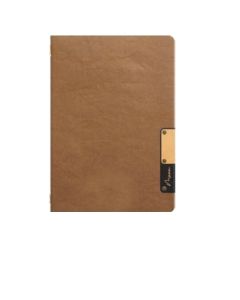
€36.52 VAT excl.100% natural fiber menu holder, waterproof. Dimensions: h.24.9 xW.17.5 cm.
Pack of 5 pieces
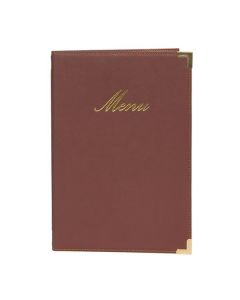
€48.40 VAT excl.Restaurant menu holder available in different formats: A4 / A5 / A45. Color: wine red. Metal-protected corners and finished edges.
Pack of 4 pieces
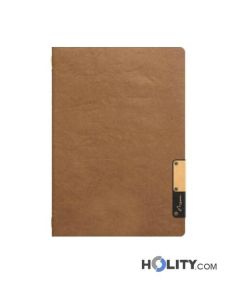
€43.00 VAT excl.Menu holder in waterproof natural fiber for A4 inserts: Dimensions: h.34 x W.24.5 cm.
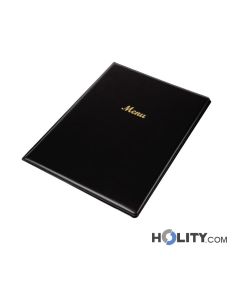
Pack of 4 pieces
€43.60 VAT excl.Menu holder for restaurants made of PVC. Black color. Available for A4 or A5 size sheets.
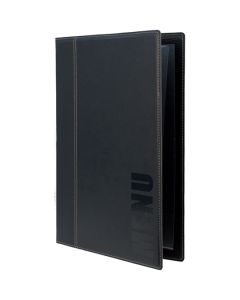
Pack of 5 pieces
€55.25 VAT excl.A5 / A45 / A4 menu holder made of faux leather with embossed lettering. Menu with finished edges. Color: black. Optional: bill holder and wine list.
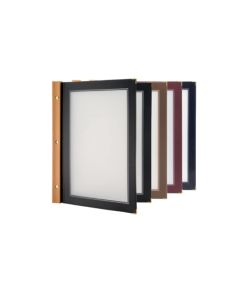
Pack of 5 pieces
€51.45 VAT excl.Wooden restaurant menu holder with anti-reflective satin-effect insert. Available formats: A5 / A4. Available in different colours. Easy to clean.
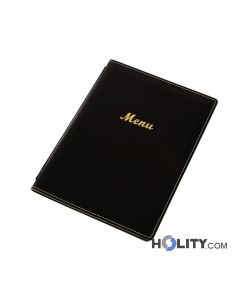
Pack of 4 pieces
€51.76 VAT excl.Leather-effect menu holder for restaurant dining rooms. Suitable for A5 sheets. Equipped with four sides. Colour: black
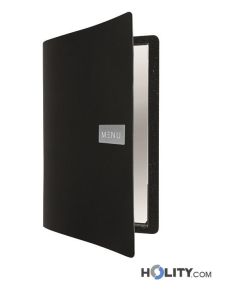
Pack of 5 pieces
€98.50 VAT excl.Restaurant menu holder made of eco-leather with a metal plate. Size: A4. Available in various colors. 100% Made in Italy.
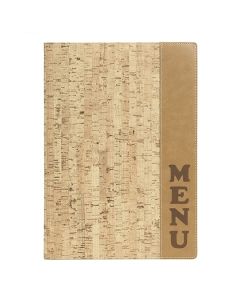
Pack of 5 pieces
€100.60 VAT excl.Distinctive A4 menu holder made of faux leather with unique and elegant patterns. Available in various designs.
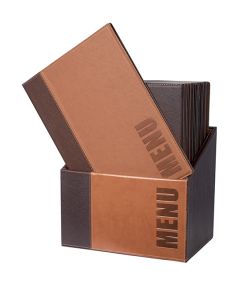
Imitation leather menu holder box with embossed lettering and finished edges. Menu format: A4. Available in various colors.
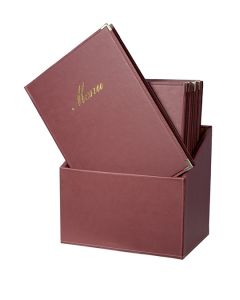
Box with 20 A4 menus. Faux leather menu holder for restaurants with golden “menu” lettering and metal protective corners. Available in different colors.
Menu holders represent an essential tool in the daily operations of restaurants, bars, hotels, and catering facilities. These dining room accessories allow for the presentation of food and beverage lists in an orderly and professional manner, while protecting printed sheets from wear, humidity, and potential stains. The choice of the right menu holder directly impacts customer perception and the durability of documentation, which is why the catalog offers various solutions in terms of materials, formats, and finishing levels to adapt to every catering context and available budget.
Available solutions range from budget-friendly PVC and polypropylene models, ideal for high-turnover environments, to faux leather, wood, and eco-leather menu holders for establishments focusing on a more elegant and durable presentation. Each type offers specific advantages: synthetic materials guarantee ease of cleaning and low costs, while leather and wood solutions provide a more refined and luxury appearance, while maintaining excellent durability over time. Available formats (A5, A4, A4/5) adapt to different space needs and the number of covers served by the establishment.
Professional menu holders solve multiple operational criticalities in managing a restaurant dining room or a bar. Mechanical protection of printed sheets significantly extends their lifespan, reducing the need for frequent reprinting and maintenance costs. A quality menu holder prevents yellowing, deterioration, and the absorption of stains caused by condensation, food, and accidentally spilled drinks. Furthermore, the visual presentation of the menu is amplified when contained in supports that convey professionalism: customers in medium-to-high-end venues perceive greater attention to detail when the menu is presented in faux leather, wood, or eco-leather, positively influencing the overall experience and spending predisposition.
From a practical-operational point of view, menu holders simplify documentation management during service. Versions with stainless steel clips allow for quick sheet changes without the need for tools, while models where the insert is fixed guarantee stability and uniform presentation. Versatility in formats allows the support to be adapted to the type of venue and the amount of information: a bar might choose the compact A5 format, while a fine dining restaurant might prefer A4 for a broader and more detailed presentation. Menu holders with minimal thickness (about 1 cm) ensure stackability for ease of storage in service carts, while versions equipped with metal protective corners offer mechanical protection against frequent impacts.
The range of menu holders in the catalog includes several construction solutions, each oriented to a specific market segment. PVC and polypropylene models represent the budget entry-level: made of easy-to-clean synthetic materials, they are ideal for high-traffic environments (snack bars, chain restaurants, corporate canteens) where dryability and impact resistance prevail over aesthetic considerations. These materials allow for competitive pricing for packs of 4-6 units. Faux leather versions represent the mid-premium segment: they visually imitate real leather with satin and matte finishes, offer superior protection compared to simple synthetics, and allow for customizations such as printed gold lettering, unique patterns, and finished edges. They are particularly appreciated in mid-range restaurants and hotels desiring a balance between cost and visual impact.
Wooden menu holders provide a natural and warm aesthetic, often with satin-effect anti-reflective inserts that reduce light reflections on the printed paper, improving readability. Available in various shades (natural, dark, walnut), they adapt well to rustic-elegant restaurants or bistros. Eco-leather solutions represent the top of the range: made with sustainable materials, they offer a premium tactile experience and a perception of luxury that justifies higher prices, ideal for Michelin-starred or fine dining restaurants. Models with stainless steel clips complete the range with a functional approach, prioritizing rapid insert changes; often used in contexts where the menu changes frequently (pubs, wine bars, restaurants with seasonal menus). Some menu holders are also offered in multiple boxes (20-25 units per box), reducing the unit cost for volume purchases and simplifying logistics for chains and managers of multiple venues.
The choice of menu holder must first consider the operational context and customer segment. An informal venue (pizzeria, tavern, fast-food restaurant) benefits from robust, easy-to-clean materials with low unit costs, such as PVC or polypropylene; in these environments, the frequency of menu changes is high and impact resistance is prevalent. A medium-to-high-end restaurant, on the other hand, benefits from faux leather or wood, materials that convey attention to detail without being excessive. A common mistake is underestimating the cleaning frequency: if the venue performs frequent cleaning with standard detergents, synthetic materials are preferable to natural ones that could stain. Regarding the format, A4 is universal and suitable for medium-long menus; A5 is recommended for bars and venues with limited menus; A4/5 offers flexibility if variability in the number of covers served is expected.
A second decision criterion concerns customization and visual identity. If the venue has an established brand, choosing menu holders with embossed lettering, metal inserts, or silk-screen printing helps strengthen recognition and aesthetic consistency. Clip models allow for rapid insert changes, useful in contexts where the menu changes daily (different lunch and dinner menus, seasonal menus). The quality of the anti-reflective insert is often overlooked but crucial for the user experience: a satin insert reduces visual fatigue during reading, especially in LED-lit environments. For high-end venues, eco-leather offers multi-year durability and an impression of luxury that justifies the initial investment. Finally, for establishments with a high number of covers or chains with multiple locations, purchasing in boxes (20+ units) reduces the unit cost by 15-20% compared to standard packs, optimizing warehouse management and ensuring aesthetic consistency across different locations.
Menu holders for food use must comply with hygiene and safety regulations applicable in the food contact zone. The main regulation is represented by EC Regulation 1935/2004, which governs materials and objects intended to come into contact with food, including paper and plastic inserts contained in menu holders. This means that the synthetic materials used (PVC, polypropylene, faux leather) must be suitable for food contact and must not release harmful substances under ordinary conditions of use. Any adhesives, coatings, and dyes used for printing and decorations must also comply with these standards. In Italy, control is the responsibility of the manufacturer; therefore, it is advisable to check that suppliers guarantee declarations of conformity to this regulation in their menu holders.
A second regulatory aspect concerns mechanical safety and suitability for use. Materials must not contain sharp edges, unstable elements that could detach during use, or parts that could constitute a choking hazard if fragmented (mainly relevant for contexts where guests handle the menu). Metal protective corners must be robustly fixed, and stainless steel inserts must be resistant to corrosion and mechanical wear. Regarding cleaning, materials must be compatible with washing temperatures up to 60-70°C and common disinfectants (alcohol, diluted bleach); natural wood materials can absorb liquids if not treated, so it is advisable to check for any protective treatments. There are no specific regulations on standard sizes, but A5 (14.8 x 21 cm) and A4 (21 x 29.7 cm) formats are universally recognized for compatibility with printed sheets and digital archives.
Explore the complete catalog of menu holders and compare the different solutions in terms of material, format, customization, and price ranges to identify the most suitable product for your establishment's profile and operational priorities.
Faux leather is a synthetic imitation of leather, made of polyurethane or plastic materials, cheaper and easier to clean but with lower durability over time (5-7 years). Eco-leather is an advanced synthetic material free from animal derivatives, more resistant to wear (10+ years), with a more refined aesthetic and lower environmental impact. Both are waterproof; the choice depends on the budget and the luxury level of the venue.
A wooden menu holder should be cleaned with a damp cloth and neutral detergent, avoiding stagnant water that could swell the material. Do not use bleach or pure alcohol, which could damage the finish. If the wood is treated with protective varnish, cleaning is simplified. Always dry immediately with a cloth to avoid moisture absorption and permanent stains.
For a bar or pub, the A5 format (14.8 x 21 cm) is recommended, which offers enough space for drink lists and light dishes without taking up too much table space. If the menu is more extensive, A4 is still feasible. Models with stainless steel clips are particularly suitable because they allow for quick sheet changes if the offerings change frequently.
Yes, if they comply with EC Regulation 1935/2004. PVC is a waterproof synthetic material, easy to disinfect with alcohol or standard solutions, and does not absorb odors or stains. It is ideal for high customer turnover environments. Always check that the manufacturer declares compliance with food regulations on the technical sheet.
Lifespan varies based on material and use. PVC/polypropylene menu holders: 3-5 years. Faux leather: 5-7 years. Treated wood: 7-10 years. Eco-leather: 10+ years. Durability depends on cleaning frequency, customer handling, and the quality of the protective finish. A well-maintained menu holder extends its useful life by 1-2 years.
Yes, many models allow customization via silk-screen printing, embossing, or engraving. Faux leather and eco-leather menu holders allow for very elegant gold or silver printing. Check with the supplier for production times and customization costs (generally starting from a minimum of 20-25 units).
 English
  Italian
 French
 German
 Spanish