
mon-fri 9-13 / 14.30-18.30
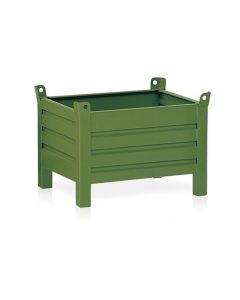
Industrial metal container. Dimensions: L. 80 x D. 60 x h. 41 cm. Capacity: 600 kg.
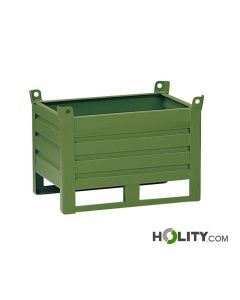
Industrial sheet steel container 80x60x40 cm, load capacity 800 kg. Reinforced structure with skids for intensive storage and stackability.
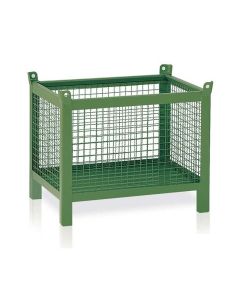
Industrial electrowelded mesh container. Equipped with boxed feet. Dimensions: W. 100 x D. 80 x h. 65 cm.
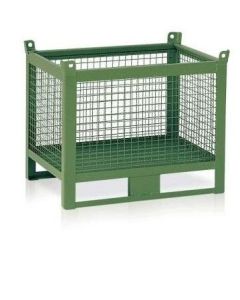
Industrial metal container with skids. Capacity: 1000 kg. Dimensions: mm. 1000Wx800Dx650H + foot 130H.
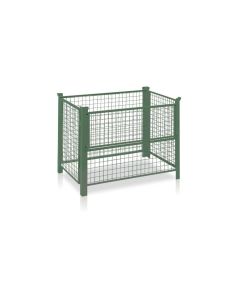
Folding metal container for the industrial sector. Capacity: 1000 kg. Open dimensions: L.1215 x D.815 x H.800 mm.
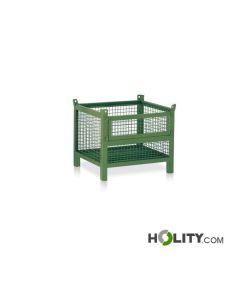
Metal container for the industrial sector without runners. Dimensions: mm. 1000Lx800Dx650H + feet 130H.
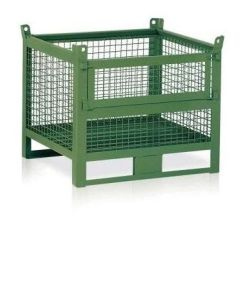
Industrial sheet metal container with runners. Load capacity: 1000 kg. Dimensions: 1000Lx800Px650H mm + 130H foot.
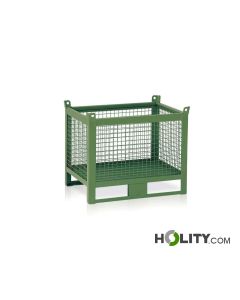
Electrowelded mesh container with skids. Capacity: 1000 kg. Dimensions: mm. 1200Lx800Dx650H + foot 130H.
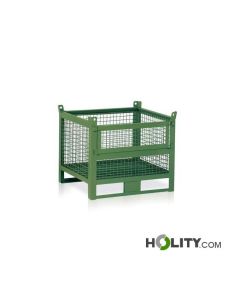
Metal container for the industrial sector with skids and door. Dimensions: W.1200 x D.800 x H.650 + foot H.130 mm.
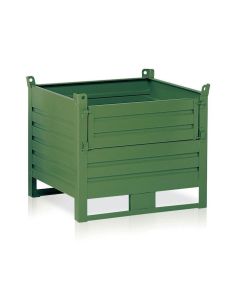
Metal container for the industrial sector. Dimensions: W. 120 x D. 80 x H. 65 cm. Equipped with skids.
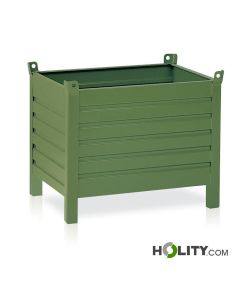
Metal container for the industrial sector. Dimensions: W. 100 x D. 80 x H. 65 cm. Capacity: 800 kg.
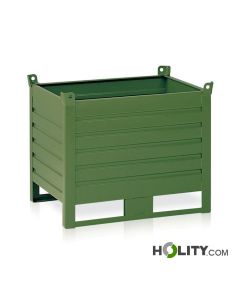
Industrial metal container with skids. Dimensions: W. 100 x D. 80 x H. 65 cm.
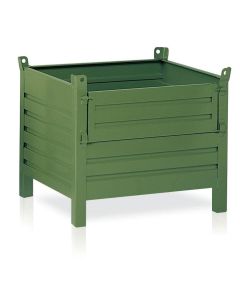
Industrial metal container with boxed feet and drop-door. Dimensions: W. 100 x D. 80 x h. 65 cm.
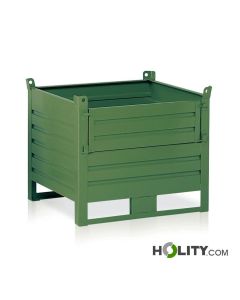
Metal container for the industrial sector. Equipped with skids and gate. Dimensions: W. 100 x D. 80 x h. 65 cm.
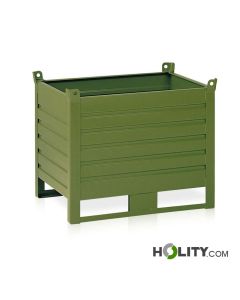
Metal container for the industrial sector. With skids. Dimensions: W. 120 x D. 80 x h. 65 cm.
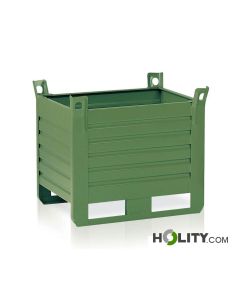
Metal pallet box with skid. Dimensions: W. 100 x D. 80 x h. 65 cm. Capacity: 2000 kg.
Industrial metal containers represent a fundamental structural solution for the handling, storage, and transport of materials in high-impact professional environments. Made of shaped sheet steel or electro-welded mesh, these systems combine robustness, durability, and operational reliability, ensuring constant performance even under intensive working conditions. The choice of an industrial metal container directly determines logistical efficiency, personnel safety, and the optimization of available space, making them indispensable in the construction, food, pharmaceutical, textile, and manufacturing sectors.
The available variants range from compact models for small volumes to large pallet cages with load capacities reaching 2000 kg, allowing every operator to identify the most suitable solution for their production context. Stackability, accessories such as skids and gates, and finishes in different colors for commodity classification make metal containers a versatile and intelligent organization tool in the professional logistics landscape.
Industrial metal containers offer concrete and measurable benefits in every work environment characterized by intensive goods handling. The steel structure resists impacts, vibrations, and dynamic loads typical of daily operations, ensuring a long-term durability that pays back the initial investment through years of reliable operation. Structural stability is particularly relevant when dealing with repeated operations using pallet jacks, forklifts, or mechanized handling systems, where even minimal deformation can compromise safety or slow down logistical flows. Shaped sheet metal containers are ideal for construction sites, where the dispersion of waste and debris represents a constant risk, while electro-welded mesh containers find natural application in sectors where content visibility accelerates picking and quality control procedures.
In addition to the primary function of containment, these products significantly contribute to warehouse space organization. The ability to stack containers when empty or even loaded (depending on the structure's strength) allows for the utilization of available height in warehouses, reducing the required floor footprint and increasing storage density. Differentiated colors—blue, orange, green—transform containers into visual coding tools that facilitate inventory management, rapid identification, and the segregation of incompatible materials. Versatility combined with operational safety makes industrial metal containers a standard choice in professional logistics operations, regardless of company size or handling volume.
The industrial metal container catalog is structured around two main construction categories: shaped sheet metal models and electro-welded mesh models. Sheet metal containers offer total closure of the stored material, protecting it from atmospheric agents, dust, and environmental contaminants; this feature makes them preferable when dealing with moisture-sensitive materials or when protection from external visibility is a requirement. Standard dimensions start from compact configurations around 80x60 cm base, extending to pallet cages of 120x80 cm, with heights varying from 41 cm up to 65-80 cm. Load capacities are a distinguishing element between models: ranging from 600 kg for smaller, lighter containers up to 2000 kg for reinforced pallet cages, a criterion that must necessarily guide the choice based on the actual weights to be handled. Electro-welded mesh models, on the other hand, allow full visibility of the content, better ventilation, and reduced weight for the same volume; they are particularly appreciated in the food, pharmaceutical, and textile sectors where ease of inspection is an operational and regulatory advantage.
Among the accessories and construction variants, skids represent a recurring element: these are box profiles welded to the container base that offer two simultaneous advantages—they allow lifting via manual pallet jack (where the forks insert into the skid spaces) and guarantee a free space under the container useful for alternative handling and for the outflow of fluids in environments where water or other liquids may accumulate. Practical gates add further convenience, allowing partial access to the content without having to lift or tip the entire structure, a solution appreciated when access times must be minimized. Boxed feet, different from skids, raise the container from the ground ensuring safe handling even with simpler manual trolleys, while maintaining a stable base. The choice between these variants strictly depends on the handling methods available in the company and the frequency of access.
Selecting the appropriate industrial metal container requires a precise evaluation of four critical parameters: base size, useful height, maximum load capacity, and accessory configuration. Before proceeding, it is essential to know the average weight and volume of the material to be stored, as well as the dimensions of individual pieces, as a container with insufficient dimensions does not represent a saving but an operational inefficiency that repeats daily. A frequent error is undersizing the declared load capacity: accumulating loads beyond the nominal limit not only compromises personnel and material safety but also damages the metal structure, drastically reducing its lifespan and turning a medium-to-long-term investment into a recurring expense. The base configuration—80x60, 100x80, 120x80 cm—must align with existing storage modules in the warehouse; an oversized container creates inefficiencies in stacking and in the movement of handling equipment.
A second level of choice concerns the decision between sheet metal and electro-welded mesh. If the material is fragile, requires protection from moisture, or visibility (such as high-value components or sensitive goods), sheet metal is the mandatory choice; conversely, if immediate visibility of the content accelerates the workflow—frequent in food warehouses where product rotation is rapid—electro-welded mesh offers significant operational advantages. The vertical dimension (height) must be reconciled with the available height in storage systems; a 65 cm high container might be stackable a maximum of three times in a 2-meter space, while lower models (41 cm) offer greater flexibility, even if they reduce unit volume. Finally, the presence of skids, gates, or feet must be consistent with the available handling infrastructure: companies equipped with pallet jacks and forklifts will derive maximum value from integrated skids, while contexts where manual loading predominates might prefer lighter configurations with boxed feet.
Industrial metal containers, like all equipment intended for material contact and transport in work environments, must comply with a series of technical and regulatory standards that guarantee operational safety. The ISO 1161 standard regulates the basic dimensions and construction characteristics for logistical containers, establishing dimensional tolerances and structural solidity criteria; although not mandatory for all sectors, it represents a de facto reference for system compatibility. The CE marking, where applicable, certifies that the product meets the essential requirements of the machinery directive (2006/42/EC) if the container is part of an integrated handling system. In the food sector (ATECO 10-11), containers in indirect contact with food must be made of materials that do not release harmful substances; this means that the paint or coatings used must comply with European EN 10149 standards for steel and, where present, plastic components must comply with regulations on articles in contact with food (Regulation (EC) 1935/2004).
In the context of occupational safety, Legislative Decree 81/08 (Consolidated Law on Safety) requires the employer to use handling equipment in safe conditions and to keep it in a perfect state of repair; a deformed, rusted container or one with loose components does not meet this requirement and must undergo maintenance or be disassembled. Maximum load capacity labels must be clearly visible and durable over time; the lack of a legible label represents a risk of involuntary overloading. In environments with specific hazards—chemical, pharmaceutical sectors, or with anti-static needs—additional compliance with specific technical industry standards may be required (e.g., EN 61340-5-1 for ESD environments - Electrostatic Discharge). Regular visual inspection of the structure (checking for cracks, deformations, corrosion) is an implicit obligation for the employer and a best practice for predictive maintenance.
Explore all the products in the category and compare the available solutions to find the one best suited to your operational context. Every container is selected for reliability, regulatory compliance, and long-lasting performance.
An industrial metal container is a shaped steel or mesh structure designed for the storage and transport of materials in high-load professional environments. It is used in logistics, construction sites, food, pharmaceutical, and textile warehouses. Its structural robustness makes it suitable for intensive handling with pallet jacks and forklifts, ensuring goods protection and warehouse space organization.
The sheet metal container offers total closure, protecting the material from atmospheric agents and dust, ideal for moisture-sensitive goods. Electro-welded mesh allows immediate visibility of the content, better ventilation, and reduced weight; it is preferable in the food, pharmaceutical, and textile sectors where rapid inspection accelerates logistical flows.
The capacity must be chosen based on the average weight of the material to be stored, with a safety margin. Undersizing the capacity exposes you to safety risks and damages the structure. Models vary from 600 kg up to 2000 kg; evaluate the real weight of the goods and always choose a capacity higher than the expected load.
Skids are boxed profiles at the base that allow lifting with a manual pallet jack and guarantee free space under the container. They offer stability during ground storage, facilitate mechanized handling, and allow the outflow of fluids in humid environments. They are essential if the company uses pallet jacks and forklifts.
Stackability depends on the structural strength of the specific model. Reinforced sheet metal containers (load capacity 1000-2000 kg) are generally stackable even when loaded, allowing you to exploit the height of the warehouse. Always check the manufacturer's instructions; unauthorized stacking compromises the safety and durability of the structure.
Industrial metal containers are available in blue, orange, green, and other standard colors. This chromatic variety facilitates visual coding of goods, accelerates recognition during picking, and allows for the segregation of incompatible materials. Color is an organizational element that reduces operational errors and improves logistical efficiency.
 English
  Italian
 French
 German
 Spanish