
mon-fri 9-13 / 14.30-18.30
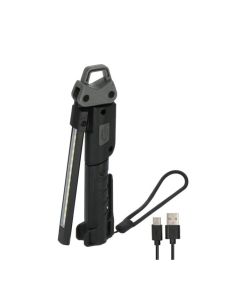
Rechargeable LED lamp in plastic and metal, 400 lumens, folding head with 3 magnets and hook. Ideal for technical inspections and workshop use.
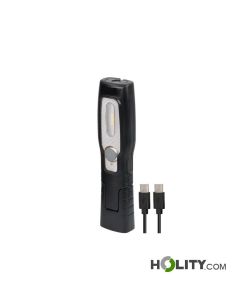
Folding LED workshop lamp in impact-resistant plastic, 250 lm, USB-C charging and 360° hook. Ideal for maintenance and inspections in tight spaces.
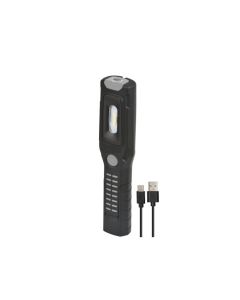
Rechargeable LED workshop lamp in impact-resistant plastic, 500 lumens, with articulated magnetic base and 360° hook for professional use.
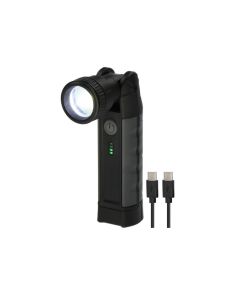
1000 lm SMD LED inspection torch in shockproof rubberized plastic. Adjustable focus, replaceable 18650 battery and IP54 rating. Dim. 4.7x4.7x20.5 cm.
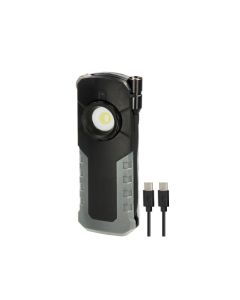
Professional 1000 lumen rechargeable LED lamp, IK08 shockproof rubberized plastic body (7.7x18.2 cm), with replaceable 18650 battery.
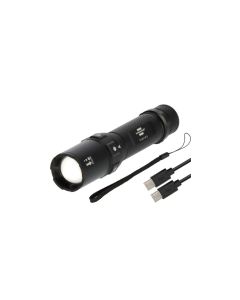
Professional aluminum rechargeable LED flashlight, 800 lumens, 230m range with quick selection ring for industrial and outdoor contexts.
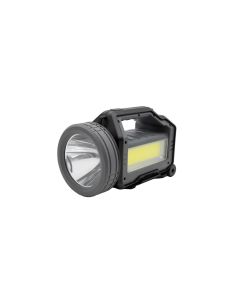
Rechargeable portable lamp in shockproof ABS, 2400 lumens, dual LED source and 530m range. Designed for rescue and industrial maintenance.
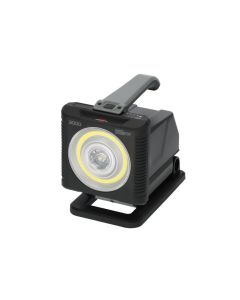
Professional portable LED lamp, multi-brand 18V Multi Battery system, dual source 2160 lm, IP54/IK08 protection for intensive construction site use.
Portable workshop lamps and torches represent a fundamental tool in environments where visibility is critical and working conditions are demanding. These rechargeable LED devices guarantee powerful, constant, and adaptable lighting for multiple operational situations, from precision maintenance to the inspection of confined spaces. The evolution of LED technology has transformed the professional lighting sector, allowing for light intensities exceeding 1000 lumens with lightweight batteries and long autonomy, while simultaneously reducing energy consumption compared to traditional solutions. In workshops, construction sites, industrial plants, and emergency contexts, professional portable lamps are now indispensable to guarantee efficiency and safety at work.
A well-chosen portable workshop lamp or torch offers concrete advantages that directly impact productivity and safety. Adequate lighting reduces operational errors, decreases eye fatigue, and prevents accidents, especially in contexts where every detail is important. Modern LED solutions allow for longer working times with autonomies exceeding 8-10 hours, eliminating frequent interruptions for recharging. Furthermore, shockproof construction and moisture resistance (often with IP54 certification or higher) guarantee durability in hostile environments. Integrated magnets and 360-degree adjustable hooks free up hands during intervention, significantly improving work ergonomics and execution precision.
The adoption of rechargeable lamps also represents an economically advantageous choice in the medium-to-long term. Unlike torches with disposable batteries, rechargeable lithium models reduce operational costs and environmental impact. Many professionals choose multi-compatible lamps that use standard system batteries (such as 18V multi-brand or 18650 batteries), facilitating the management of spare parts and interoperability with other power tools already in use. The adjustable light intensity also allows the energy consumption to be adapted to the specific situation: concentrated beam for details, wide diffusion for large areas. Extreme portability also allows these lamps to be easily integrated into emergency kits, first aid kits, and specialized rescue equipment.
Portable workshop lamps and torches are divided into several categories based on light power, power supply type, and shape. LED torches with replaceable 18650 batteries represent a compact and very common solution, with powers ranging from 400 to 1000 lumens and contained lengths (15-25 cm), ideal for inspections in confined spaces and for those who must transport the torch frequently. Folding LED lamps or those with an adjustable head offer greater positioning versatility, available in shockproof plastic for general applications and in aluminum for more demanding industrial contexts. Articulated magnetic base workshop lamps, with powers up to 2400 lumens, are designed for stationary use on workbenches or metal surfaces, leaving the operator’s hands completely free. Models with dual LED sources (COB and spotlight combined) offer both wide diffusion and a concentrated beam in the same unit, increasing versatility. Some professional devices use the 18V multi-brand Multi Battery system, allowing batteries to be shared with drills, screwdrivers, and other tools, optimizing the investment in rechargeable batteries.
The choice between the different types depends on the predominant use. Compact torches with 18650 batteries excel in mobility and durability (often IK08 certified for impact resistance), with an IP54 protection rating that makes them suitable even for humid contexts. Folding plastic lamps are preferable for those who alternate between the office and the construction site, offering a good compromise between lightness and functionality. Solutions with a magnetic base and 360° joint dominate when the lamp must remain stationary in one position for prolonged periods, guaranteeing absolute stability thanks to the integrated magnets. Models with a quick selection ring, typical of aluminum torches, are reserved for expert users who need to quickly switch from a narrow beam to wide dispersion during the same intervention. SMD (Surface Mounted Diode) technology offers homogeneous brightness over the entire emissive surface, while COB (Chip on Board) systems guarantee maximum concentration in the central point, suitable for detail work.
Selecting a portable workshop lamp or torch requires evaluating at least five critical factors. The light power (expressed in lumens) must be proportional to the environment and the type of work: detailing and detailed inspection operations require a minimum of 400-500 lumens with a concentrated beam, while maintenance work in open spaces benefits from 800-1000 lumens. Autonomy duration is essential if the lamp must operate for entire shifts without recharging; a quality lithium battery offers 8-12 hours of continuous use at medium intensity. The type of battery deserves attention: standard 18650 solutions are widespread and inexpensive, but tie you to a specific ecosystem, while 18V multi-brand allows you to share chargers and batteries with other professional tools already owned. Mechanical resistance (IK08 certification for drops from 1.5 meters) is fundamental if the lamp operates on construction sites or environments with a high risk of impact; aluminum models resist extreme stress better than plastic, although they are heavier.
A recurring error is underestimating the importance of integrated accessories. The presence of sufficiently strong magnets, folding hooks, and 360° rotating pivots transforms a simple lamp into an ergonomic tool that allows for hands-free operation, reducing fatigue during long interventions. IP54 protection (water splash and dust resistance) is almost mandatory in any industrial context; higher certifications (IP67, completely waterproof) are necessary only in submersible environments or with high-pressure water jet cleaning. The ability to adjust light intensity is often overlooked but essential: an adjustable beam allows you to both save battery in sufficient light conditions and maximize visibility at critical points. Finally, evaluate the charging time (ideally 2-4 hours for full autonomy) and compatibility with the charging systems available in the workshop to avoid wasting time and operational frustrations. Models with USB-C ports are preferable for versatility, as they accept universal chargers now present in any professional environment.
Portable workshop lamps and torches intended for professional use must comply with specific regulations that guarantee safety, performance, and durability. The IEC 61547 certification (electromagnetic compatibility) ensures that the device does not interfere with other instruments, a critical aspect in industrial environments with sensitive equipment. Protection from mechanical stress is regulated by IK (International Protection Mechanical) standards that classify impact resistance: IK07 indicates resistance to drops from 1 meter, IK08 from 1.5 meters, IK09 from 2 meters. For a standard workshop, IK08 is the minimum acceptable. The IP (Ingress Protection) classification for water and dust resistance must be at least IP54 (protection against dust and water splashes in any direction); harsher environments require IP65 or higher. Integrated lithium batteries must comply with European Directive 2006/66/EC on waste batteries and accumulators, guaranteeing responsible disposal and recycling, an aspect increasingly controlled by certification bodies.
Operational safety also includes compliance with regulations on the prevention of accidents at work (such as Legislative Decree 81/08 in Italy), which establishes minimum visibility standards in workplaces. Lamps that meet ANSI (American National Standards Institute) specifications for minimum illuminance also ensure compliance with international standards, favoring the portability of devices between different markets. Electrical safety certifications (CE mark, FCC for North American markets) indicate that the product has passed rigorous tests on insulation, contact voltage, and the absence of sharp or toxic parts. For high explosive risk environments or with the presence of gas, specific ATEX (Atmosphères EXplosibles) certifications exist; although rare in common workshops, they are mandatory in oil, mining, and chemical plants. The CE declaration of conformity must always accompany the product; its absence is often a sign of an unverified and potentially dangerous product. Check that the manufacturer also provides the user guide in English or the local language, drafted according to technical documentation standards (EN 61010-1 and subsequent).
Explore all the products in the category and compare the available solutions to find the one best suited to your operational context. Whether you work in a mechanical workshop, construction site, or industrial plant, our catalog offers reliable tools tested to withstand the most demanding working conditions.
LED lamps consume up to 70% less energy than filament solutions, offer 3-4 times higher autonomy with the same batteries, do not generate heat, guarantee constant light throughout the duration of the charge, and resist impacts better. Traditional torches produce heat that makes them uncomfortable during long interventions and they age quickly in vibrating environments.
For detailed inspections and precision work, 400-500 concentrated lumens are sufficient. For general maintenance on medium-sized components, 800 lumens guarantee optimal visibility. To illuminate large work areas or very dark spaces, 1000-1200 lumens are recommended. Intensities higher than 1500 lumens are rarely necessary in normal indoor contexts.
Yes, completely. Many models are specifically certified for outdoor environments, with an IP54 or higher protection rating that ensures resistance to rain and dust. Aluminum torches with a selection ring and concentrated beam (200+ meters range) are ideal for night construction sites. Always check the IP certification and mechanical robustness (IK08 minimum).
A quality lithium battery lasts 300-500 full charge cycles, equivalent to 2-3 years of average professional use. The autonomy per cycle depends on the light intensity: at low intensity, 10-12 hours; at medium, 6-8 hours; at maximum, 2-4 hours. Low temperatures reduce performance by up to 15-20%.
Yes, but only if they are compatible. Standard 18V multi-brand batteries (DeWalt, Milwaukee, Makita, etc.) work on lamps designed for that system. 18650 batteries are not interchangeable between different manufacturers. Always check the technical data sheet for the compatible battery model before purchasing.
IP54 is the minimum acceptable for contexts with occasional water splashes and dust. If the workshop is subject to cleaning with water jets or is exposed to frequent rain, choose IP65 (protection against direct water jets) or IP67 (temporary immersion). Do not exceed the specifications indicated by the manufacturer to avoid risk of damage.
 English
  Italian
 French
 German
 Spanish