
mon-fri 9-13 / 14.30-18.30
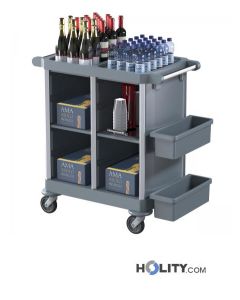
Hotel minibar replenishment trolley with Ø 125 mm wheels. Material: plastic. Dimensions: W.99 x D.62 x h.105 cm.
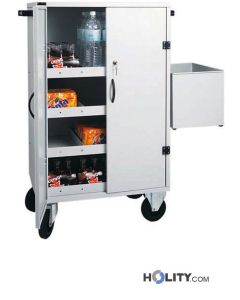
Minibar restocking trolley made of painted sheet metal equipped with three adjustable intermediate shelves. Dimensions: W.80 x D.50 x h.118 cm.
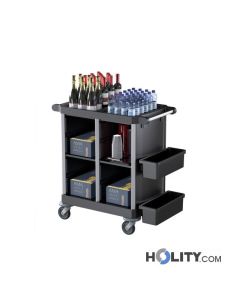
Minibar restocking trolley in recycled copolymer polypropylene: RE USE.
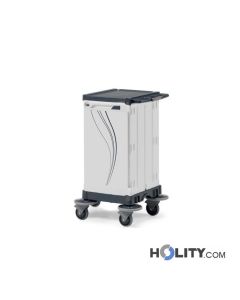
Minibar replenishment trolley in polypropylene copolymer. Dimensions: 65 x 64 x 103.5 cm.
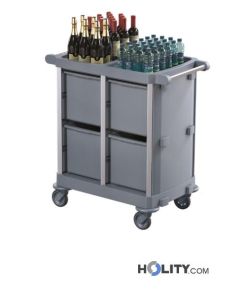
Minibar restocking trolley with plastic base. Dimensions: H.105 x D.62 x L.99 cm.
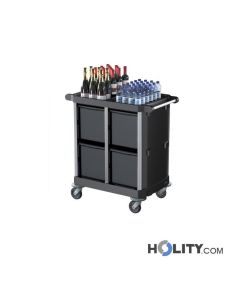
Minibar restocking trolley made of certified recycled plastic.
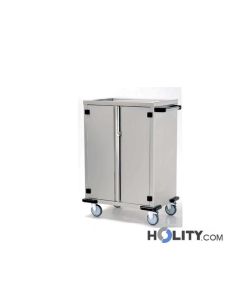
Minibar replenishment trolley for hotel rooms in stainless steel with two hinged doors. Dimensions: W. 800 x D. 550 x H. 1350 mm.
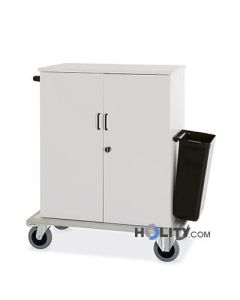
Minibar restocking trolley in sheet steel consisting of three height-adjustable intermediate shelves. Dimensions: W.100 x D.62 x h.119 cm.
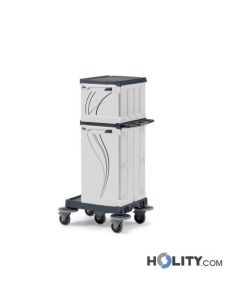
Minibar restocking trolley made of recyclable materials. Dimensions: 81x64x142.5 cm.
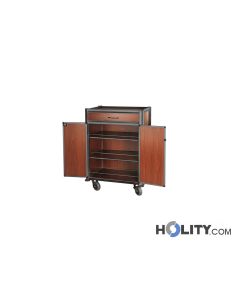
Minibar replacement trolley available in different colors. Dimensions: W.84 x D.60 x H.135 cm.
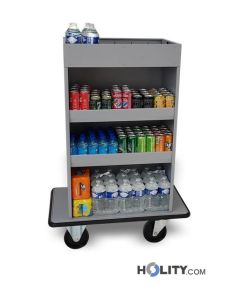
Minibar restock trolley. Dimensions: W. 83 x D. 54 x h. 117 cm
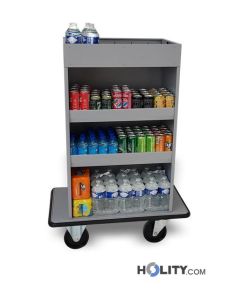
Aluminium minibar restocking trolley. Dimensions: W. 93 x D. 54 x h. 117 cm.
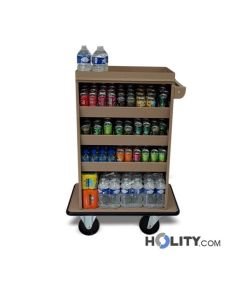
Aluminum trolley for minibar replenishment. Dimensions: W. 83 x h. 117 cm.
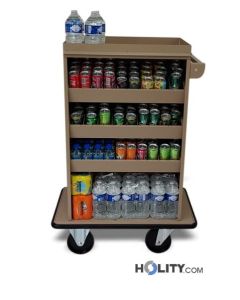
Minibar restocking trolley for hotels. Dimensions: W. 75 x h. 117 cm.
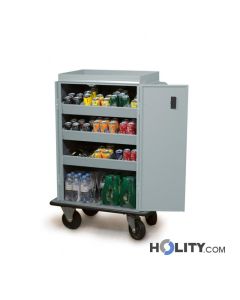
Minibar restocking trolley. Dimensions: W. 83 x D. 51 x h. 117 cm.
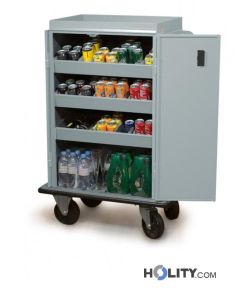
Minibar restocking trolley. Dimensions: W. 93 x D. 51 x H. 117 cm.
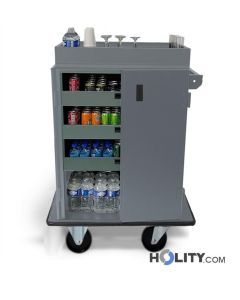
Minibar restocking trolley. Dimensions: W. 83 x D. 54 x h. 124 cm.
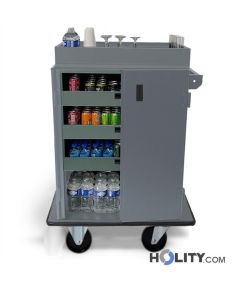
Minibar restocking trolleys. Dimensions: W. 93 x D. 51 x H. 117 cm.
Minibar restocking trolleys represent a crucial logistical tool for the efficiency of the housekeeping and food & beverage departments within high-level hospitality facilities. These mobile units are not simple transport carts, but real itinerant inventory stations, designed to systematically manage the supply of drinks, snacks, and courtesy products directly in the rooms. Minibar management requires meticulous precision to avoid stock discrepancies and to ensure that the guest always finds a complete and fresh assortment; for this reason, a professional minibar trolley must offer a rational subdivision of spaces, allowing staff to visually monitor stock levels during the route.
Adopting these specialized tools allows for the transformation of a repetitive and potentially slow operation into a fluid and organized process. Thanks to ergonomic structures and resistant materials, the trolleys facilitate the movement of considerable weights, such as glass bottles and cans, reducing the physical effort of operators and minimizing the risk of accidental breakage in hotel corridors. The refined aesthetics and silent maneuvering ensure that the restocking service takes place with maximum discretion, respecting the privacy and rest of the clientele. Choosing a superior quality trolley means investing in equipment capable of withstanding daily wear and tear, while ensuring impeccable hygiene standards and optimized management of human resources and food products.
The integration of specific minibar trolleys within the workflows of a resort or a business hotel responds to needs for management efficiency and cost control. The primary advantage is the multi-use capability: these devices are not only used to transport new stock, but serve as a collection station for empties, packaging, and waste generated during room restoration. This integrated approach allows the restocking and cleaning cycle to be completed in a single pass, avoiding double routes and optimizing the working time of the floor staff. The presence of dedicated compartments prevents contamination between new products and used containers, maintaining a constant level of professional decorum even in public passage areas.
Furthermore, the use of trolleys equipped with drawers and sliding guides significantly improves inventory accuracy. Staff can organize snacks and beverages by type and expiration date (FIFO logic), reducing food waste and facilitating the reporting of consumption by guests. Security is another determining factor: models equipped with a key lock or locking systems prevent unauthorized removal of goods during trolley stops in the corridors, protecting company assets. Ultimately, the use of a professional trolley elevates the perceived quality of service, ensuring that every room is restocked methodically and that the operator has everything needed to perform their task with ergonomic dignity and execution speed.
The range of minibar restocking trolleys is divided into various configurations that vary in size, load capacity, and structural complexity. The most compact models are ideal for hotels with narrow corridors or historic structures where maneuverability is limited; these usually feature two or three open shelves for immediate access to the most requested products. Conversely, closed-structure trolleys offer superior protection for goods and a more orderly visual impact, hiding products and waste containers from the guests’ sight. Many versions include pull-out drawers mounted on silent guides, perfect for housing miniature liquor bottles, tea and coffee sachets, or fragile snacks that require extra protection from shocks.
For large accommodation facilities such as resorts and villages, high-capacity trolleys made of stainless steel and advanced technopolymers are available, materials that combine exceptional structural resistance with a lightness that facilitates pushing even when fully loaded. Some types are specifically designed with an eco-sustainable perspective, using certified recycled plastics that maintain high mechanical and sanitizing properties. There are also configurations equipped with side bins for the separate collection of glass and plastic empties, or models with integrated document holders for managing paper consumption sheets or tablets for real-time digital stock updates.
The selection of the ideal professional trolley requires a detailed analysis of the hotel layout and the volume of rooms to be managed for each shift. A fundamental decision criterion concerns the quality of the wheels: in structures with carpeted floors, it is essential to opt for swivel wheels with smooth treads and high-precision ball bearings that reduce friction and noise. If the hotel has ramps or slopes, the presence of at least two wheels equipped with brakes becomes a non-negotiable safety requirement to prevent accidental movement. It is also important to evaluate the height of the trolley, which must allow for ergonomic pushing without straining the operator’s lumbar area, regardless of the load carried.
Another critical factor is internal modularity: the possibility of having adjustable shelves allows the trolley to be adapted to different types of packaging, from half-liter water bottles to more voluminous snack packs. For structures that place a strong emphasis on security, choosing a model with lockable doors and a lock is essential to prevent inventory shortages during phases when staff are away from the mobile station. Finally, the ease of maintenance must be considered; trolleys with smooth surfaces and no sharp corners facilitate daily cleaning operations with disinfectant detergents, ensuring that the equipment is always presentable and compliant with hygiene regulations. Underestimating these technical aspects can lead to the purchase of tools that, while being economical, are inefficient or exhausting for staff in the medium to long term.
Trolleys intended for restocking minibars must meet precise regulatory standards, especially regarding workplace safety and food hygiene. Compliance with HACCP directives is mandatory, as the trolley transports food and drinks that must be protected from external contamination and dust; therefore, construction materials must be certified for food contact and resistant to chemical sanitization processes. The use of stainless steel and antibacterial plastics is highly recommended to ensure aseptic surfaces. From an accident prevention perspective, the equipment must respect the stability parameters provided for manual load handling, avoiding tipping risks even when the trolley is unbalanced by the weight of the empties collected in the side bins.
The CE marking certifies that the trolley has been designed and built following European safety requirements, including the absence of sharp edges that could injure the operator or damage corridor walls. For companies committed to sustainability, compliance with minimum environmental criteria and the use of recycled materials represents a certifiable added value. Scheduled maintenance, aimed at checking the efficiency of locking systems and the smoothness of the wheels, ensures that the minibar restocking trolley maintains its performance over time. Investing in compliant equipment not only legally protects hotel management but also guarantees a safe and stimulating work environment for employees, reflecting positively on the quality of service offered to the guest and the longevity of the technical investment made.
Explore all the products in the category and compare the available solutions to find the one best suited to your operational context.
The key lock ensures maximum security during floor service. It prevents unauthorized removal of drinks or snacks by third parties when the trolley is temporarily left unattended in the corridors, protecting the hotel’s inventory and reducing warehouse discrepancies at the end of the shift.
Professional minibar restocking trolleys are designed with separate compartments. However, for hygiene reasons compliant with the HACCP protocol, it is recommended to use the trolley primarily for food products and related empties. If necessary, small cleaning kits can be placed in isolated and closed compartments to avoid contamination.
Absolutely yes. High-end hotel models are equipped with swivel wheels in soft rubber or non-marking polyurethane. These materials reduce friction on the carpet, ensuring smooth and silent pushing that does not damage the carpet fibers and does not disturb the peace of guests in the rooms.
The main materials include stainless steel for structural components subject to load and high-density plastic materials (such as polypropylene or ABS) for shelves and walls. Many modern models use certified recycled plastics, which offer resistance, lightness, and ease of constant sanitization.
Efficient organization involves using adjustable shelves and drawers to divide products by category: heavy drinks at the bottom for stability, snacks and miniatures in the upper drawers for visibility. External side bins should be reserved exclusively for collecting empties and packaging to maintain internal order.
Capacity depends on the size of the trolley and the minibar assortment. A standard medium-sized model can usually cover the complete restocking of 15-20 rooms. For resorts or very large hotels, high-capacity models with reinforced bases are recommended to maximize the number of interventions per single load.
 English
  Italian
 French
 German
 Spanish