
mon-fri 9-13 / 14.30-18.30
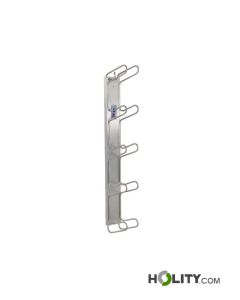
Professional vertical electric boot dryer for 5 pairs. Dimensions: W 29 x D 48 x H 200 cm
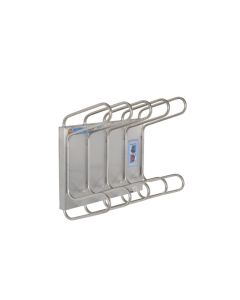
Professional horizontal boot dryer for 5 pairs, in stainless steel with timer. Dimensions: W 69 x D 48 x H 89 cm.
Wall-mounted shoe dryer for 5 pairs in stainless steel, hot water system. Dimensions: W 29 x D 48 x H 200 cm.
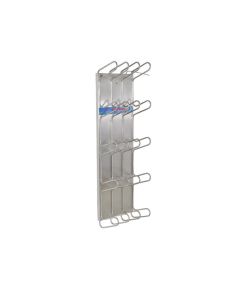
Professional vertical boot dryer for 10 pairs, in stainless steel. Dimensions: W 61 x D 48 x H 200 cm.
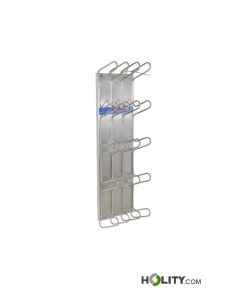
Professional wall-mounted shoe dryer for 10 pairs, in stainless steel. Dimensions: W 61 x D 48 x H 200 cm.
Vertical boot dryer for 15 pairs, in stainless steel with timer. Dimensions: W 86 x D 48 x H 200 cm.
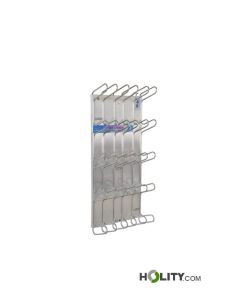
Professional wall-mounted shoe dryer for 15 pairs, in stainless steel. Dimensions: W 86 x D 48 x H 200 cm.
Professional vertical boot dryer for 20 pairs, in stainless steel with timer. Dimensions: W 116 x D 48 x H 200 cm.
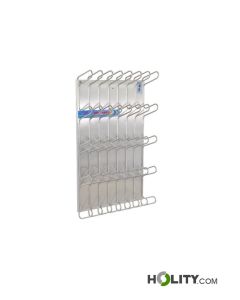
Professional wall-mounted shoe dryer for 20 pairs in stainless steel. Dimensions: W 116 x D 48 x H 200 cm.
The adoption of professional footwear drying systems represents a strategic investment for all those operating environments where hygiene, staff comfort, and the maintenance of personal protective equipment are absolute priorities. These are not simple heating devices, but machines engineered to manage flows of warm or ambient air in a controlled manner, guaranteeing the total removal of residual moisture accumulated during work shifts or intense sporting activities.
In industrial, medical, or hospitality contexts, footwear undergoes constant thermal and organic stress; without adequate dehumidification treatment, materials degrade rapidly and the proliferation of pathogens is encouraged. These tools intervene precisely to stabilize the internal microclimate of the shoe, extending its life cycle and ensuring that every operator can start their activity in conditions of maximum ergonomic and sanitary well-being.
The integration of a professional drying system within company changing rooms or hospitality facilities responds to a precise technical need: to counteract the formation of bacterial biofilms caused by sweat and external humidity. In a professional environment, damp footwear is not just an inconvenience for the user, but a health risk factor for the foot, potentially causing mycosis, dermatitis, and persistent bad odors that compromise the work environment. The use of channeled air flows allows reaching critical points of the footwear, such as the toe and the inner insole, which would hardly dry naturally in a short time, especially in cold or poorly ventilated environments.
Beyond the hygienic aspect, there is a strong economic savings component linked to the preservation of materials. Safety footwear or technical boots are made with breathable membranes and leathers that, if left wet for prolonged periods, lose their structural and insulation properties, becoming stiff or subject to premature detachment. A controlled drying process, which does not use excessive temperatures harmful to glues and synthetic fibers, allows the integrity of the PPE (Personal Protective Equipment) to be maintained for a significantly longer time, quickly amortizing the cost of the drying equipment itself through the reduction of shoe turnover.
The landscape of professional solutions is mainly divided between wall-mounted systems, self-supporting modules, and closed cabinets, each designed for specific workloads. Wall-mounted models are ideal for optimizing space in medium-sized changing rooms, offering shaped heated arms that accommodate individual pairs of shoes or boots, allowing warm air to circulate forcedly inside the footwear cavity. These devices are often made of stainless steel or high-resistance thermoplastic materials, ensuring durability even in environments with high atmospheric humidity or the presence of light chemical vapors.
There are also more complex solutions such as shoe dryer cabinets, which often integrate advanced sanitization technologies, such as UV-C lamps or ozone generators. These variants do not just remove water, but actively act on the microbial load, neutralizing bad odors at a molecular level. Modular versions instead allow the installation to be scaled based on the number of operators, connecting multiple units together and managing drying cycles via centralized timers that optimize energy consumption, avoiding waste during hours when the equipment is not needed or when the moisture load is minimal.
Choosing the correct drying system must start from a quantitative analysis of the staff and the type of footwear used during the activity. If the need concerns heavy boots or rubber boots typical of the agricultural or food sector, it is essential to focus on models with long and reinforced support arms, capable of supporting the weight and channeling air to the toe of the boot. A common mistake is underestimating the ventilation power relative to the number of stations: an undersized system will not be able to guarantee complete drying between one shift and another, making the investment partially ineffective.
Another critical factor is heat management. For technical footwear equipped with Gore-Tex type membranes or gel inserts, it is preferable to opt for devices that offer the possibility of low-temperature drying or natural ventilation only. Excessive heat can indeed crystallize glues or damage microporous membranes, voiding the shoe’s waterproofing. It is also necessary to evaluate the presence of timer systems: a good shoe dryer must be able to operate autonomously for defined cycles (for example 2 or 4 hours), switching off automatically to ensure fire safety and electrical savings, especially if installed in rooms unattended during the night.
Equipment intended for professional drying must meet rigorous electrical safety standards, especially considering that they often operate in the presence of water and high humidity. CE compliance is the basic requirement, but in many industrial contexts, compliance with specific IP protection ratings is required to prevent the entry of liquids or dust into the internal circuits. Furthermore, in sectors linked to food processing or in the medical field, construction materials must be easily sanitizable and resistant to corrosion processes, making AISI 304 stainless steel the choice of excellence to ensure compliance with HACCP protocols and current hygiene regulations.
From the point of view of workplace safety, the provision of systems for drying PPE falls under good practices for maintaining the health and safety requirements of workers, as provided for by Legislative Decree 81/08. Ensuring that a worker operates with dry footwear is not just a matter of comfort, but reduces the risk of slipping inside the shoe and prevents pathologies related to prolonged standing in humid environments. The technical documentation accompanying the product must always certify energy consumption and noise emissions, fundamental parameters for a correct integration of the machinery within the risk assessment of the work environment.
Explore all the products in the category and compare the available solutions to find the one best suited to your operational context.
Drying times vary significantly based on the humidity level and the technology used by the device. On average, a heated forced ventilation system takes between 60 and 120 minutes for damp footwear. For boots completely soaked with water, extended cycles of up to 4 hours may be necessary to ensure total removal of internal moisture.
High-quality professional systems are designed to operate at moderate temperatures, usually between 35 and 45 degrees Celsius. This thermal range is specifically studied to be effective without compromising the integrity of technical membranes, structural glues, or rubber parts, thus preserving the waterproofing and breathability properties of the footwear over time.
Yes, most professional models are built with corrosion-resistant materials, such as stainless steel or high-density polymers. However, it is essential to check the IP protection rating indicated in the technical data sheet to ensure that the electrical components are adequately shielded against water splashes and the condensation typical of changing rooms or underground technical rooms.
The integration of UV-C lamps or ozone generators allows for a drastic reduction in the bacterial and fungal load responsible for bad odors. While the air dries the material, the sanitizing action neutralizes the microorganisms that proliferate in sweat, ensuring an internal shoe environment that is not only dry but hygienically safe for the operator, reducing the risk of skin infections.
Energy consumption is relatively low and depends on the number of stations. A module for 5 pairs of shoes usually has an absorption ranging between 300 and 600 Watts. The use of integrated timers allows for further optimization of costs, limiting the system activation only for the time strictly necessary to achieve the desired degree of dehumidification.
Contemporary professional models use centrifugal or axial fans designed to minimize noise impact. Generally, the noise level emitted is between 40 and 55 decibels, comparable to normal domestic background noise, making installation possible even in areas adjacent to transit zones or offices without causing significant disturbance.
Certainly, there are versions equipped with long vertical supports, called boot-holder arms, designed to accommodate footwear that reaches the knee or groin. These supports ensure that the air flow reaches the bottom of the boot directly, preventing moisture from remaining trapped in the toe area, where natural air circulation is practically zero.
 English
  Italian
 French
 German
 Spanish