
mon-fri 9-13 / 14.30-18.30

Perforated 120-liter Cargopallet in HDPE (80x60x41 cm). Certified for food with skin, ideal for aeration and professional handling.
240-liter perforated industrial HDPE container. Dimensions 120x80x41 cm, certified for food with peel and stackable for professional use.
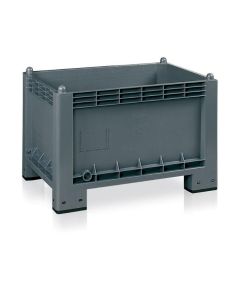
Industrial plastic container. Dimensions: W. 100 x D. 70 x h. 65 cm. Capacity: 300 lt.
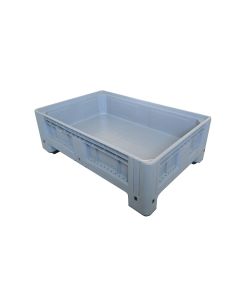
Industrial low-profile HDPE pallet box, 200 liters capacity, 120x80x40 cm. Closed structure, food-grade certified and highly stackable.
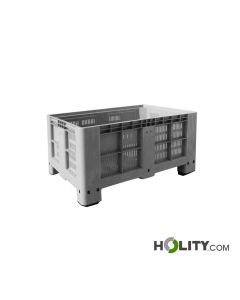
Low industrial pallet box in HDPE, 120x80x60 cm. Perforated structure for constant ventilation and certified for direct food contact.
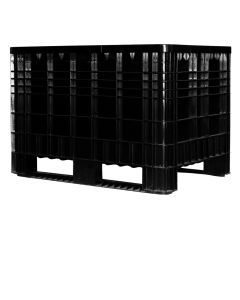
Industrial black HDPE pallet box, 525 liters, 1160x800x800 mm. Solid wall structure with 2 runners for maximum stability and protection.
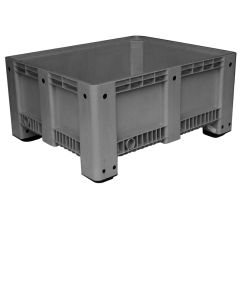
Rectangular perforated grey HDPE pallet box, 500 lt, 1200x1000x580 mm. Designed for heavy industrial loads with drainage preparation.
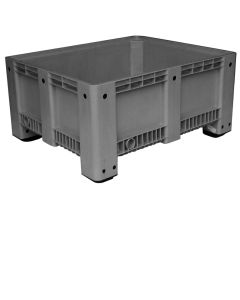
500-liter industrial HDPE container, 1200x1000x580 mm. Closed version suitable for food contact and prepared for a drain tap.
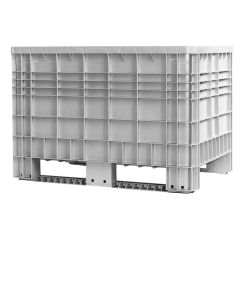
Grey 525-liter HDPE cargopallet with solid walls and 2 base runners, suitable for food contact for storage and industrial logistics.
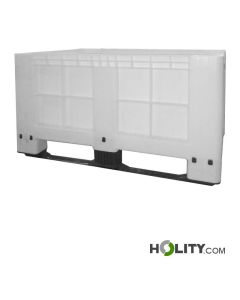
350-liter HDPE pallet box, 1200x800x600 mm. Solid walls, 2 skids at the base, and food-grade certified for industrial and logistical use.
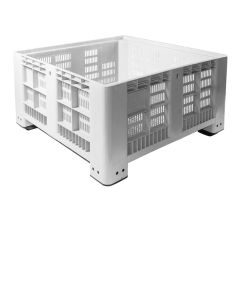
Square perforated HDPE pallet box, 1130x1130x580 mm, capacity 500 lt. Suitable for food contact and designed for load ventilation.
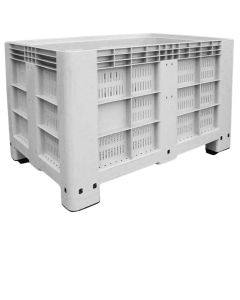
Grey 525 lt HDPE cargo pallet, perforated version (1200x800x800 mm). Solid and ventilated industrial structure for heavy storage and logistics.
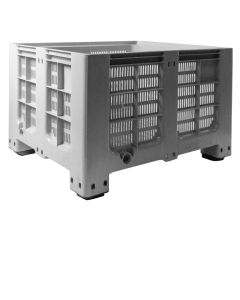
700 lt HDPE pallet box, perforated walls, 1200x1000 mm. Suitable for food contact and prepared for the installation of a drain tap.
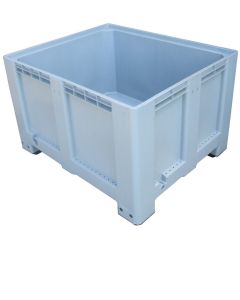
700 lt HDPE cargopallet, solid walls, 1200x1000 mm. Certified for food use and designed for a drainage tap.
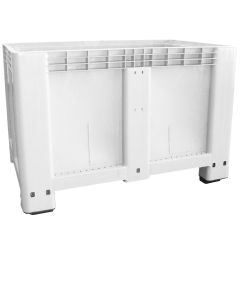
525 lt HDPE cargo pallet, 1200x800x800 mm. High-strength closed structure for industrial storage and handling of heavy loads.
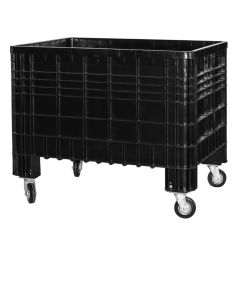
525-liter black HDPE cargo pallet with solid walls and Ø 125 mm wheels. Dimensions 1160x800x950 mm, ideal for safe industrial handling.
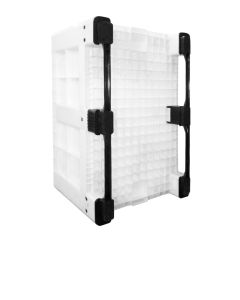
525 lt industrial HDPE cargopallet, 1200x800x800 mm. Structure with 2 skids and closed walls, suitable for heavy loads and food use.
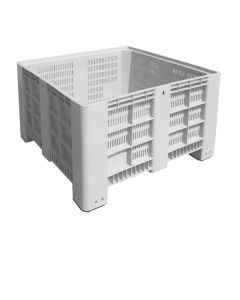
Industrial perforated HDPE cargo pallet, 1130x1130 mm, capacity 700 liters. Suitable for food use and ventilated storage in professional environments.
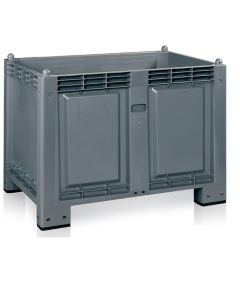
Industrial cargo pallet in polypropylene. Dimensions: W. 120 x D. 80 x H. 85 cm. Capacity: 570 lt.
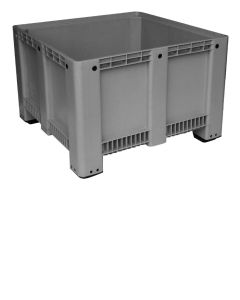
700-liter HDPE industrial cargo pallet with closed walls. 1130x1130 mm square structure certified for food use and heavy loads.
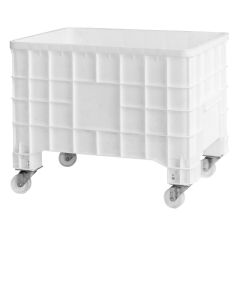
Food-grade white HDPE pallet box, 525 liters, closed walls and Ø 125 mm wheels. Robust and hygienic for intensive industrial handling.
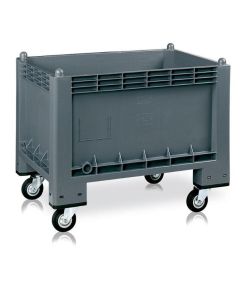
Industrial plastic container. Dimensions: W. 100 x D. 70 x h. 80 cm. Capacity: 300 lt.
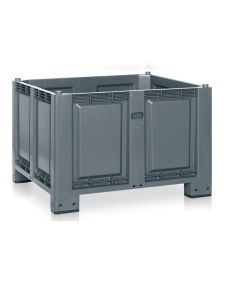
Industrial cargo pallet. Dimensions: W. 120 x D. 100 x h. 83 cm. Capacity: 680 lt.
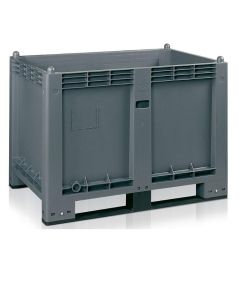
Industrial plastic container. Dimensions: W. 120 x D. 80 x h. 85 cm. Capacity: 570 lt.
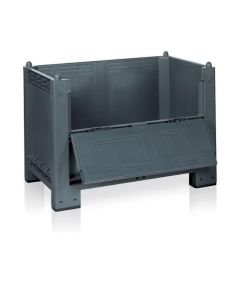
Industrial container for material transport and storage. Dimensions: W. 120 x D. 80 x h. 85 cm. Capacity: 570 lt.
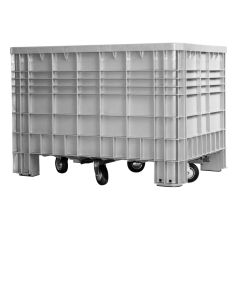
525 lt HDPE pallet box with solid walls and Ø 125 mm wheels on iron frame. Food-grade for logistics and goods storage.
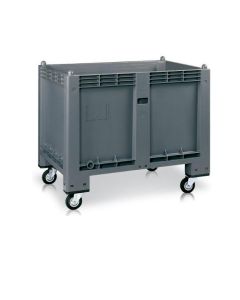
Industrial plastic container. Dimensions: W. 120 x D. 80 x h. 100 cm. Capacity: 570 lt.
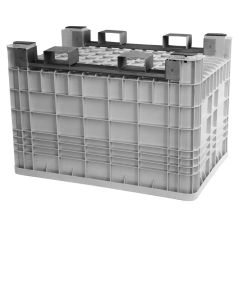
Industrial HDPE cargopallet in grey, 1000x630x650 mm. Rigid structure with closed walls and stainless steel bars for tipping. Suitable for food contact.
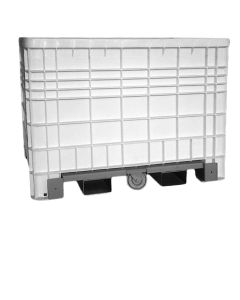
280-liter industrial HDPE container with wheels, closed walls and iron reinforcement frame, suitable for food contact and tiltable.
Industrial cargo pallets represent a fundamental solution for the transport, storage, and handling of goods in HoReCa, logistics, and manufacturing environments. Made predominantly of HDPE (high-density polyethylene) or polypropylene, these containers combine structural lightness with mechanical robustness, offering capacities ranging from 120 liters up to 700 liters. Their versatility allows them to adapt to various operational needs: from perforated crates for the transport of fruit and vegetable products to closed models for chemical and industrial applications. Each configuration is designed to maximize logistical efficiency while reducing handling costs.
Industrial pallet containers offer numerous operational advantages that make them indispensable in modern logistical contexts. The chemical resistance of HDPE ensures compatibility with aggressive substances without material deterioration, a critical aspect for the food, chemical, and pharmaceutical industries. The stackable construction allows for optimizing warehouse space vertically, reducing the footprint on the ground by up to 70% compared to traditional systems. The reduced weight facilitates manual and mechanical handling, decreasing operational fatigue and ergonomic risks. The well-distributed load capacity, generally between 300 and 700 liters, allows for standardizing logistical processes on European pallets (120x80 cm) and non-European ones, adapting to any company layout.
From an economic standpoint, these containers have virtually zero maintenance costs compared to metal or wood solutions, which require painting, replacement of deteriorated elements, and anti-parasitic treatments. The multi-decade durability of polyethylene ensures a significant return on investment over time. Models with internal runners or iron frames offer superior structural rigidity for concentrated loads, while perforated versions facilitate air circulation during the refrigerated transport of fresh food. Variants equipped with wheels (Ø 125 mm) further automate internal flows, making pallet trucks unnecessary in tight spaces.
The range of industrial cargo pallets is divided into four main construction variants. The **perforated** models (perforated wall version) prioritize breathability and are specific for fruit and vegetables, dairy, and fresh products that require drainage and air recirculation. The **closed** models (waterproof walls) contain liquids, powders, and substances that need insulation from the external environment, making them ideal for the chemical and packaged food sectors. Versions with **internal runners** reinforce the structure for concentrated loads, allowing stacking at greater heights without sagging. The **wheeled** pallets integrate industrial tires (usually in polyurethane Ø 125 mm) for autonomous movement on horizontal surfaces, eliminating the need for handling tools in the warehouse.
Significant differences also emerge in the materials: standard black HDPE offers UV resistance and long-term durability in outdoor environments, polypropylene (PP) ensures lower weight and better thermal insulation for refrigerated applications, while gray HDPE represents a compromise between aesthetics and performance. Volumetric capacities are distributed in standardized ranges: 120-240 liters for light or parcelled goods, 300-350 liters for medium loads, 500-525 liters for standard palletized transport, and 700 liters for high-density applications. Some models include stainless steel bars for mechanical tipping, simplifying automated unloading operations in modern production lines.
Selecting an industrial cargo pallet requires analyzing at least five fundamental decision parameters. The first concerns dimensional compatibility with the company layout: European pallets (120x80 cm) integrate into standard racks, while square (113x113 cm) or rectangular (120x100 cm) versions adapt to specific warehouses. The second parameter is the type of goods to be contained: if perishable (fruit, vegetables, fish), choose a perforated version with drainage; if liquid or powdery, opt for the closed model. The third aspect concerns the expected load: light loads (50-150 kg) on small 120-liter pallets; medium loads (150-300 kg) on 300-350 liters; heavy loads (300-500 kg) on 525-700 liters with runners. The fourth element is handling: if dynamic (continuous movement), prefer wheels; if static (warehouse stacking), the economical base version is sufficient.
Common errors lie in volumetric over-dimensioning (buying 700 liters when 300 is enough), which generates unnecessary purchase costs and bulk, or under-dimensioning, which forces more loads and more handling. A critical element often overlooked is thermal compatibility: if the operating environment exceeds 50°C (curing rooms, near ovens), verify that the material does not deform; if below -18°C (freezing rooms), choose specific HDPE for low temperatures. Food certification (“peel mark”) is mandatory for transporting fruit, vegetables, and dairy products, while not required for non-edible goods. A final decision factor is the budget: base models (120-150 liters perforated) start from 66 euros + VAT, while premium versions with stainless steel bars and iron frames exceed 460 euros + VAT; the choice must balance initial cost with the expected life cycle.
Industrial cargo pallets must comply with specific regulations depending on the sector of application. For the food sector, the EN 1520 standard regulates plastic containers intended for indirect contact with food, requiring materials to be non-toxic and resistant to migration. The “food grade with peel” certification indicates suitability for direct transport of fruit and vegetables without contamination. The ISO 1161 standard standardizes the dimensions of the attachments for handling systems (side slots), ensuring compatibility with pallet trucks and moving carts. For chemical applications, the REACH regulation limits the use of certain plastic substances, while the ADR (Agreement concerning the International Carriage of Dangerous Goods by Road) directive establishes safety requirements for the transport of dangerous materials, including specific construction characteristics for containers.
Regarding structural safety, the maximum permitted load must never be exceeded: manufacturers indicate the limit for both static stacking and dynamic handling. A relevant aspect concerns fire resistance: although HDPE is self-extinguishing, it is not suitable for environments with explosion risks (ATEX classes) without special certification. Responsibility for compliance falls on the distributor and user: before purchasing, always request technical documentation (REACH sheets, food suitability certificates, CE declarations of conformity). Periodic inspection is recommended every 2-3 years to check for cracks, permanent deformations, or chemical degradation, particularly in environments exposed to direct UV or extreme temperatures.
Explore all the products in the category and compare the available solutions to find the one best suited to your operational context.
An industrial cargo pallet is a plastic container (HDPE or polypropylene) designed for palletized transport and storage, with standardized dimensions (120x80 cm or variants) and capacity between 120 and 700 liters. Unlike standard containers, it is optimized for vertical stacking, mechanical handling, and integration into automated logistics lines, ensuring universal compatibility with pallet trucks and warehouse racks.
The perforated cargopallet (perforated walls) allows for breathability and drainage, ideal for fresh fruit and vegetables, fish, and dairy products that require air circulation. The closed model (impermeable walls) contains liquids, powders, and aggressive substances, suitable for the chemical and packaged food sectors. The choice depends on the nature of the goods: fresh=perforated, non-perishable or chemical=closed.
The choice depends on the expected load: light loads up to 150 kg choose 120-240 liters, medium loads (150-300 kg) opt for 300-350 liters, heavy loads (300-500 kg) require 525-700 liters with internal runners. Also evaluate the ground footprint: 120x80 cm pallets integrate onto standard European racks, while square versions (113x113 cm) optimize space in specific warehouses.
Yes, but only specifically certified models. Check for the “food grade with peel” marking and compliance with the EN 1520 standard, which guarantees the absence of toxic migration. Not all cargo pallets are suitable for fresh food; the distributor must provide REACH documentation and a CE certificate of conformity before purchase.
A high-quality HDPE cargo pallet lasts 15-20 years with minimal maintenance. Maintenance consists of annual visual inspections to check for cracks or deformations, cleaning with water and neutral detergent (avoid solvents that degrade the material), and protection from prolonged UV exposure in outdoor environments. If stored in a climate-controlled indoor warehouse, the lifespan extends further.
No, exceeding the stacking limit (generally indicated by the number of stacked pallets) causes structural failure, permanent deformation, and collapse risks. Always check the manufacturer’s technical sheet and respect the maximum static and dynamic load. For high loads, choose versions with internal runners that support higher stacking.
No, models with wheels are optimal for internal movement on horizontal and smooth surfaces (warehouses, cells, preparation areas), but unsuitable for irregular terrain, steep slopes, or frequent movements on stairs. The wheels (Ø 125 mm in polyurethane) require periodic maintenance and cleaning to avoid blockages caused by debris, especially in dusty environments.
The transport of dangerous materials is regulated by the ADR (Agreement concerning the International Carriage of Dangerous Goods by Road) directive and the European Union’s REACH regulation. Not all cargopallets are suitable for chemical applications; request specific certification from the supplier for chemical compatibility and material resistance. Also verify thermal compatibility if the goods require extreme temperatures.
 English
  Italian
 French
 German
 Spanish