
mon-fri 9-13 / 14.30-18.30
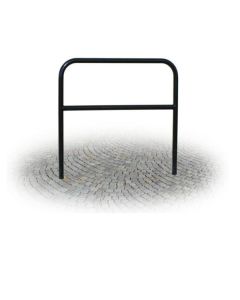
Pedestrian safety barrier for urban furniture in round galvanized steel tube. Dimensions: L100 x H120 cm
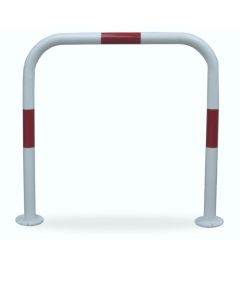
Pedestrian barrier for public spaces. Dimensions: W.100 x h.100 cm. With reflective strips.
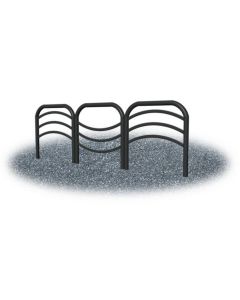
Galvanized steel pedestrian barrier with central crossbars. Dimensions: W100 x H120 cm
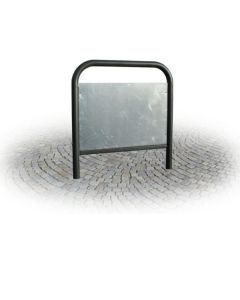
Pedestrian barrier in galvanized steel equipped with advertising panel. Dimensions: W100 x H120 cm
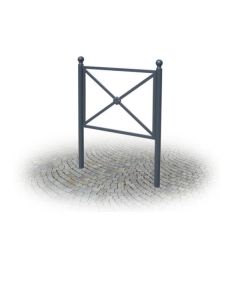
Galvanized steel boundary barrier with central flower-shaped decorative element. Dimensions: W100 x H128 cm
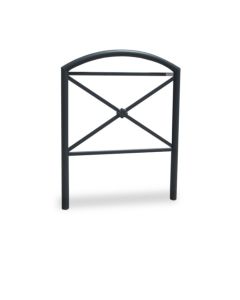
Pedestrian guardrail for urban furniture. Dimensions: W100 x H125 cm. Fixing: to be buried by 20 cm.
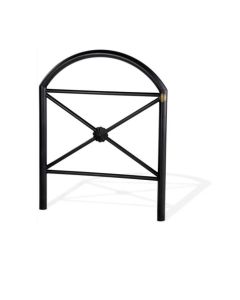
Galvanized steel pedestrian barrier, ideal for delimiting and embellishing urban areas. With decorative element. Color: gunmetal gray.
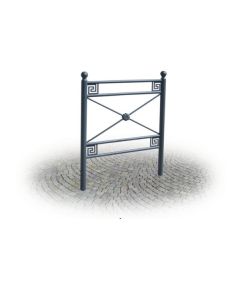
Galvanized steel boundary barrier with decorative elements at the corners and in the center. Dimensions: L100 x H128 cm
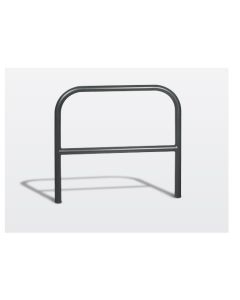
Galvanized and powder-coated barrier. Equipped with upright extensions for in-ground installation. Micaceous grey colour.
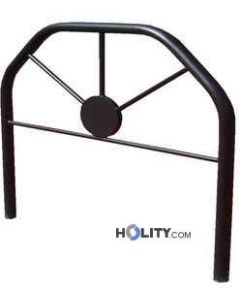
Galvanized steel boundary barrier with a central disk usable as a logo holder to apply the crest of the municipality or the relevant authority.
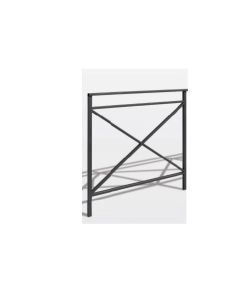
Pedestrian barrier for urban furniture to be buried in rectangular section tubular steel. Height above ground: 100 cm. Color: micaceous grey.
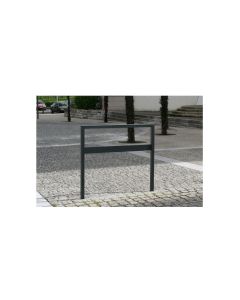
40x40 mm steel pedestrian barrier with internal reinforcement. Dimensions 500x900 mm, high-resistance anthracite powder coating for urban furniture.
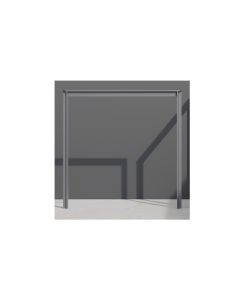
TB30 steel pedestrian barrier (100x100 cm) with shaped crossbeam. Gunmetal grey anti-corrosive coating and inground installation.
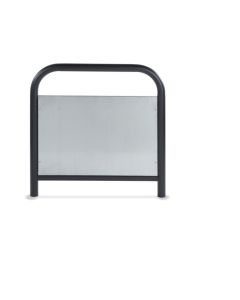
Galvanized steel pedestrian barrier h350_85. Dimensions in mm: L.980 x D.60 x H1000 mm.
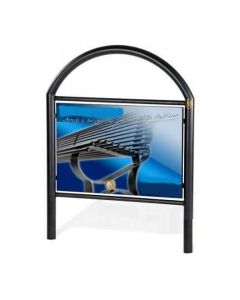
Galvanized steel pedestrian barrier, with removable advertising panel.
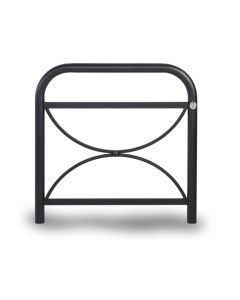
Pedestrian barrier for urban furniture with decorative element. Dimensions: W100xD.6xH.100 cm.
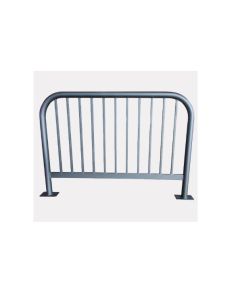
Pedestrian barrier for urban furniture galvanized painted finish. Surface mounted. Dimensions: L.1500 x h. 1060 mm.
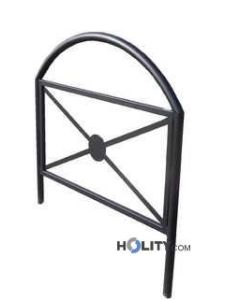
Pedestrian barrier made of galvanized steel. The arched shape allows for the delimitation of the areas concerned in a refined and elegant manner.
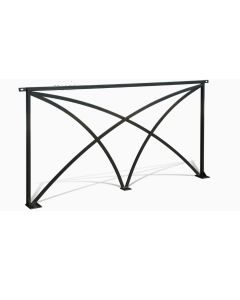
Urban furniture barrier in galvanized steel. Dimensions W.199xh. 100 cm.
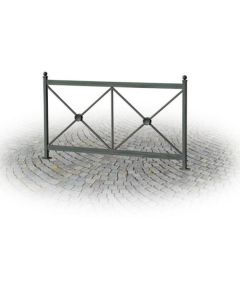
Boundary barrier with tubular steel posts and decorative elements in cast steel and forged steel. Dimensions: W200 x H120 cm

Galvanized steel pedestrian barrier Ø102 mm (100x90 cm). High-visibility yellow RAL 1018 finish, specifically for traffic calming.
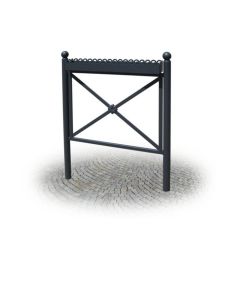
Pedestrian barrier with planter for urban furniture. Dimensions: L100 x H128 cm. Fixing: to be buried.
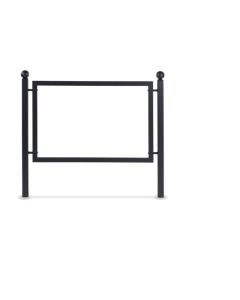
Pedestrian barrier for ground mounting h350_86. Dimensions: W 1170 x D 70 x H 1090 mm
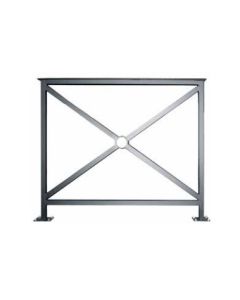
Pedestrian barrier made of a perimeter frame and central cross with square tubular elements.
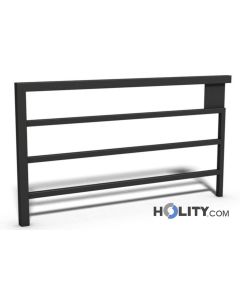
Galvanized steel barrier available in several finishes. Fixing with posts in the subsoil. Dimensions: height 100 cm x width 180 cm.
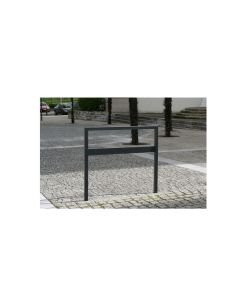
Painted steel pedestrian barrier 1000x900mm. Round tube structure with flat internal reinforcement, ideal for urban furniture and public areas.
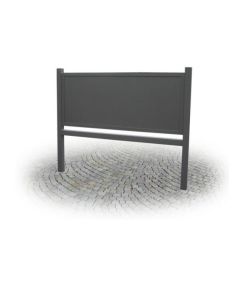
Pedestrian barrier designed for the insertion of an advertising panel. Dimensions: W150 x H120 cm
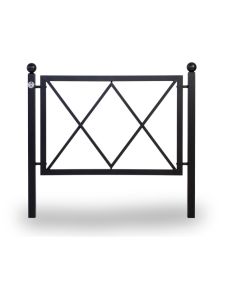
Pedestrian barrier with ornamental tube cover. Dimensions: 117x5xh.108+(12 cm to be buried).
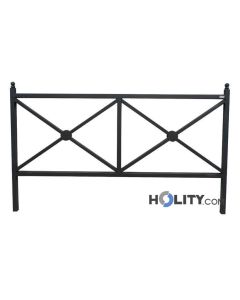
Pedestrian boundary barrier in galvanized steel. Fixing: to be embedded. Dimensions: L.1000 x h1255 mm.
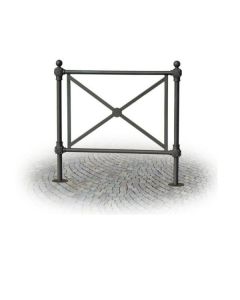
Pedestrian barrier for urban furniture in galvanized steel to be buried. Dimensions: W100 x H120 cm
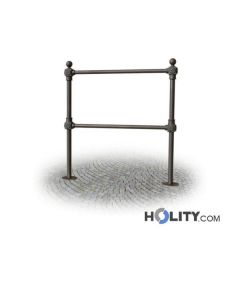
Galvanized steel pedestrian barrier for in-ground mounting. Dimensions: W100 x H120 cm
Painted steel pedestrian barrier 1500x900 mm, with internal flat reinforcement, ideal for delimitation in historic centers and LTZ areas.
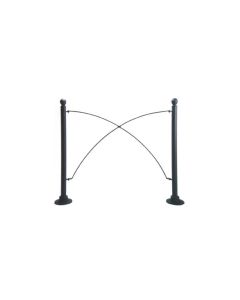
Steel and cast iron barrier, 100x108 cm, with decorative crossed arches. Bolt-down fixing, ideal for high-quality urban delimitation.
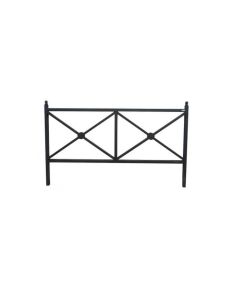
Pedestrian barrier for urban furniture, galvanized steel. Fixing: to be embedded. Dimensions: L.2000 x h1255 mm.
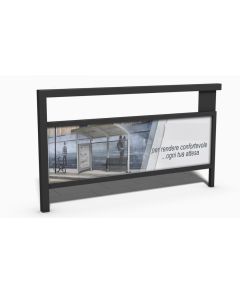
Pedestrian barrier for urban furniture in steel with space for advertising posters.
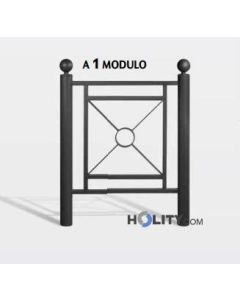
Structure in galvanized and powder-coated tubular steel. Colour: micaceous grey. L. 86 x H. 112 cm.
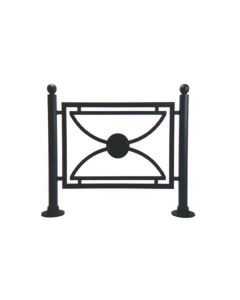
Decorative barrier h744_45 in galvanized steel and cast iron (100x108 cm). Ideal for historical centers thanks to the ornamental frieze and removable installation.
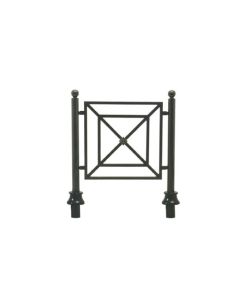
Ornamental steel and cast iron barrier, 100x108 cm. Central decorative panel and in-ground fixing for the protection of historic centers and squares.
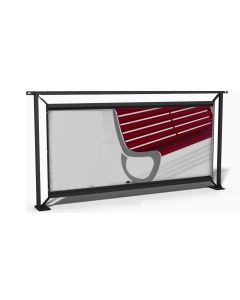
Pedestrian barrier for urban furniture with panel for advertising posters. Dimensions: W.2000 x 1000 mm.
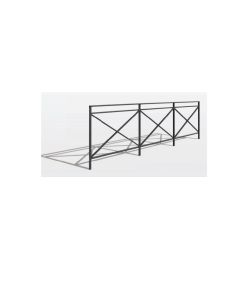
Pedestrian barrier for urban furniture length 3 meters.
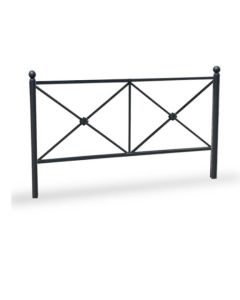
Pedestrian barrier for outdoor furnishing. Dimensions: W.200 x h.128 cm. Material: galvanized steel.
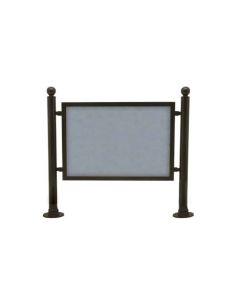
Hot-dip galvanized steel pedestrian barrier, dimensions 100x108 cm, with central panel and decorative spheres. Stable fixing via expansion bolts.
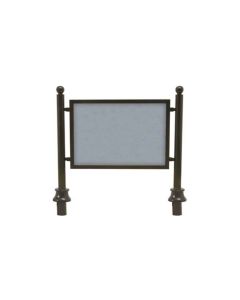
Urban furniture barrier in cast iron and galvanized steel, 100x108 cm. Module with decorative spheres for pedestrian delimitation and sidewalk protection.
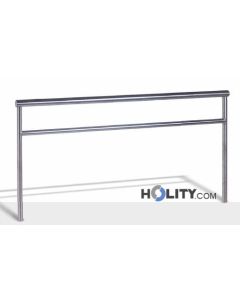
Pedestrian barrier made of AISI 304 stainless steel tubular with a satin finish. Available in two versions: straight or bent at 90°.
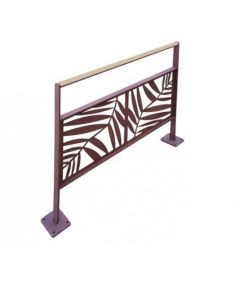
Corten steel pedestrian barrier, 100x11x90 cm, with laser-cut decorative plant motif. Resistant, durable and ideal for urban furniture.
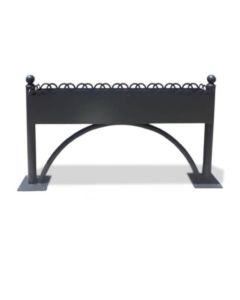
Pedestrian barrier for public spaces. Material: galvanized steel. Dimensions: L200 x D15 x H90 cm.
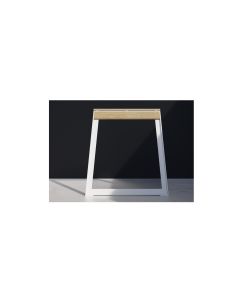
Urban furniture barrier in steel and Nordic pine 100x100cm. Trapezoidal design with integrated bicycle parking function on both sides.
Steel pedestrian barrier with T-profiles (80x100 cm). Features provision for advertising panels for safety and urban communication.
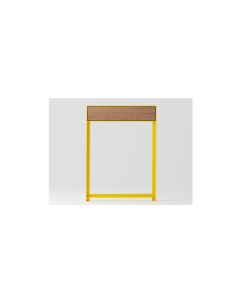
Urban steel barrier with T-profiles and scratch-resistant wooden slats. Dimensions 100x80 cm, ideal for space delimitation and bicycle support.
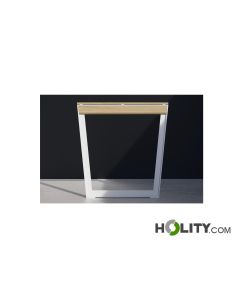
Pedestrian barrier in steel and Nordic pine, 100x100 cm. Double-sided trapezoidal design with integrated bicycle support function.
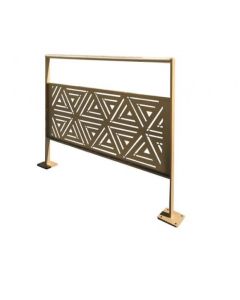
High-resistance steel pedestrian barrier, 100x90 cm, exotic wood effect finish for safe and aesthetic urban delimitation.
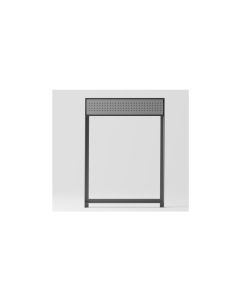
H140_554 barrier fence in galvanized steel with perforated sheet metal panel. Dimensions 80x100 cm, fixed by ground cementation.
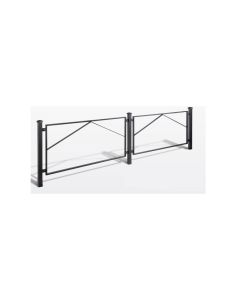
Urban furniture barrier with tubular steel frame. Galvanized and powder-coated structure. Fixing: to be buried. Height above ground: 108 cm.
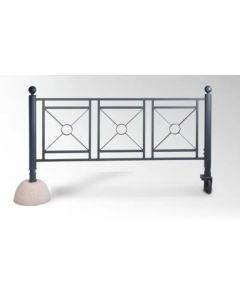
360° swivel pedestrian barrier with manual opening, extremely easy to handle. Color: micaceous grey.
Pedestrian barriers represent a fundamental component in the design of contemporary public spaces, acting as a physical and visual separation element between pedestrian flows and vehicular traffic. Their function is not merely aesthetic but responds to specific road safety and urban path management needs, ensuring the safety of citizens and the protection of sensitive points such as intersections, sidewalks, and protected pedestrian areas.
These structures must combine mechanical resistance, durability against atmospheric agents, and a design capable of harmoniously integrating into the surrounding architectural context, whether it be a prestigious historical center or a modern industrial area. The adoption of bollards and barriers compliant with current standards allows for a drastic reduction in the risk of accidental roadway incursions or improper maneuvers by bicycles and motorcycles, establishing a clear boundary that guides the behavior of road users in an intuitive and orderly manner.
The installation of pedestrian barriers in complex urban contexts responds to the primary need to delimit safety boundaries between spaces intended for soft mobility and those reserved for motor vehicles. In addition to physical protection against accidental impact, these structures act as psychological deterrents that discourage illegal parking on sidewalks, a recurring problem that limits accessibility and compromises visibility at intersections.
Choosing professional products guarantees superior resistance to mechanical stress and corrosion, critical factors for installations destined to remain exposed for decades to atmospheric pollution and de-icing salts. Investing in quality barriers means reducing long-term maintenance costs and ensuring that the infrastructure maintains its structural and aesthetic characteristics, actively contributing to urban decor and the perception of order and care of public space by the citizenship.
The effectiveness of these devices is particularly evident in high-traffic areas, such as the vicinity of educational institutions, hospitals, or shopping centers, where the orderly management of lines and mandatory passages is essential to prevent accidents. Steel or cast iron pedestrian barriers offer the solidity necessary to resist even medium-sized impacts, protecting not only people but also surrounding furnishings and delicate infrastructure.
Integrating these elements within a sustainable urban mobility plan facilitates the creation of limited traffic zones and protected green areas, favoring harmonious coexistence between different types of users. The advisory aspect in choosing these items is decisive, as each context requires a specific balance between robustness and visual impact, so that safety is not perceived as an insurmountable barrier but as a reassuring guide in the city fabric.
The landscape of pedestrian delimitation solutions includes a wide variety of models that differ in materials, design, and fixing methods. St. Andrew's cross pedestrian barriers are among the most widespread due to their iconicity and ability to adapt to historical centers and parks, offering excellent visibility thanks to their geometric structure.
Alternatively, linear tubular models present a more minimal and modern aesthetic, ideal for new construction zones or industrial redevelopments where functionality must prevail over decorativeness. The most commonly used materials include hot-dip galvanized steel, often powder-coated for extra protection, and stainless steel, chosen for maritime contexts or high-prestige areas where resistance to salinity and a polished finish are essential requirements for the client.
In addition to material differences, it is fundamental to distinguish between fixed barriers, intended for permanent installation via embedding in concrete, and removable or fold-down ones. The latter are indispensable in areas where it is necessary to allow the occasional transit of emergency or maintenance vehicles, allowing operational flexibility without sacrificing constant protection.
There are also variants equipped with integrated advertising panels or spaces for posting informational signage, which transform the barrier into a functional communication tool. Each type has specific strengths: while cast iron versions are unsurpassed for stability and classic style, modern solutions in composite materials or technopolymers offer advantages in terms of lightness and impact absorption, reducing damage in the event of an accidental collision with light vehicles.
Selecting the correct pedestrian barrier requires an in-depth analysis of the installation site and expected stresses. The first decision criterion concerns the method of anchoring to the ground: if the existing pavement does not allow for deep excavation, it is necessary to opt for models with a base plate to be bolted down, while for new projects, direct burial guarantees maximum structural stability.
One must carefully evaluate the height of the barrier, which must be sufficient to prevent climbing over but must not obstruct the view of drivers, especially near pedestrian crossings or tight curves. A common error is neglecting the surface treatment of the metal: in areas subject to high humidity or salinity, simple painting is not enough and must always be preceded by a deep hot-dip galvanizing process to prevent the onset of rust that would compromise safety over time.
Another critical factor is the modularity of the chosen system: it is preferable to choose products that allow for easy replacement of individual components in case of damage, thus avoiding having to remove entire sections of furniture. The choice of color and finish must follow the guidelines of the municipal color plan or the architectural context, favoring shades that still guarantee a chromatic contrast with the asphalt to be easily identified even in low light conditions.
Frequently asked questions from users often concern the compatibility of bollards with passages for the disabled; it is essential that the arrangement of the barriers respects the minimum distances provided for the transit of wheelchairs and strollers, eliminating any possible architectural barrier. Finally, consider the possibility of integrating reflective strips or LED lighting elements to increase safety during night hours, a technical precaution that makes a difference in preventing urban road accidents.
Pedestrian barriers must respond to precise technical requirements defined by the Highway Code and relevant implementation regulations, which establish the characteristics of restraint and deterrence devices. In particular, compliance with UNI EN 1317 standards for road safety barriers is a parameter often required in public tenders, ensuring that the product has been tested to withstand certain levels of impact energy.
It is fundamental that the surfaces of the barriers are free of sharp edges or cutting parts that could cause injury to pedestrians in case of accidental contact, respecting the criteria of ergonomics and passive safety. Material certification, such as the traceability of steel and compliance of galvanizing processes, represents an essential quality guarantee for the public entity or private individual making the purchase.
Furthermore, the installation must take into account regulations on the removal of architectural barriers, ensuring that the positioning of the bollards does not hinder tactile paths for the visually impaired or reduce the useful width of sidewalks below the permitted limits. The CE marking, where applicable, certifies that the product meets the essential safety requirements provided by European directives.
Aspects related to maintenance are not secondary: the regulation provides that safety devices be kept in full efficiency, therefore the choice of products with high standards of chemical-physical resistance simplifies periodic verification procedures and guarantees the persistence of the compliance requirements declared by the manufacturer at the time of installation.
Explore all products in the category and compare the available solutions to find the one best suited to your operational context.
A pedestrian barrier is a longitudinal structure designed to create a continuous boundary and protect pedestrians along sidewalks. A parking bollard is usually a point element, such as a post or a concrete block, primarily used to prevent vehicle parking in specific areas without creating a closed fence.
Hot-dip galvanizing guarantees full protection against oxidation because the metal is immersed in molten zinc, creating a resistant alloy. This process prevents rust formation even in the presence of deep scratches, extending the useful life of the barrier up to twenty years without the need for major structural interventions.
For optimal hold, it is recommended to bury the posts in concrete plinths at a minimum depth of 20 or 30 centimeters. Alternatively, for installations on already finished paving, base plates with steel expansion bolts are used, ensuring that the substrate is solid and free of structural failures.
While not always legally mandatory in every urban context, the inclusion of class one or two reflective films is strongly recommended to increase nighttime visibility. This technical measure reduces the risk of collisions by drivers and improves the general safety of the pedestrian path in low light conditions.
Absolutely yes, there are specific models in cast iron or steel with classic decorations and colors such as anthracite gray or moss green designed to integrate into historical centers. These solutions respect the aesthetic constraints of heritage authorities while offering the robustness and protection required by modern road safety regulations.
Modular professional barriers allow for the replacement of a single panel or damaged post without having to remove the entire fence line. It is important to intervene promptly to restore the continuity of protection and verify that the ground anchoring has not suffered trauma that could have compromised the stability of adjacent modules.
 English
  Italian
 French
 German
 Spanish