
mon-fri 9-13 / 14.30-18.30
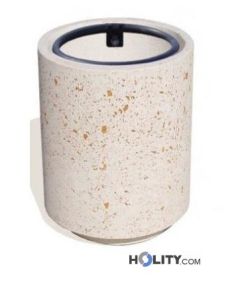
Circular concrete waste bin for urban furniture. Dimensions: diameter 50 cm x height 70 cm
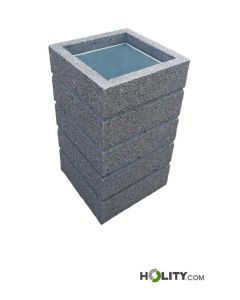
Waste bin for waste collection consisting of 4 grooves complete with internal basket. Available in different finishes. Dimensions: 41 x 41 x h.73 cm.
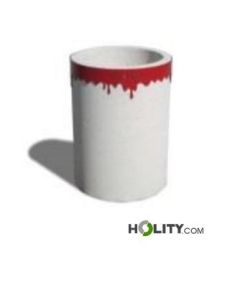
Concrete container for waste collection. Dimensions: Ø50 x h.70 cm. Capacity: 90 lt. Weight: 120 kg.
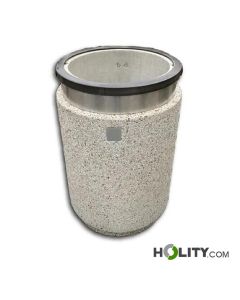
Concrete litter bin with aluminum-colored band. Dimensions: W. 55 x h. 76 cm. Available in different finishes.
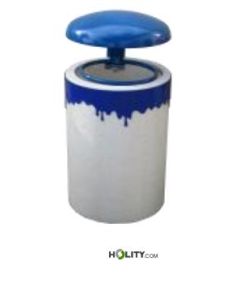
Concrete waste bin for public spaces. Dimensions: Ø50 x h.100 cm. With lid available in different colors.
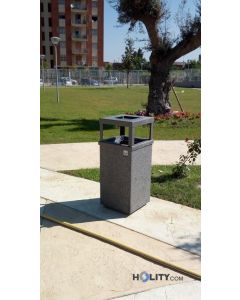
Large waste bin in anti-degradation treated concrete complete with sheet metal ashtray. Dimensions: W.410 x D.410 x h.970 mm.
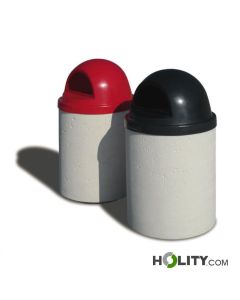
Concrete litter bin for public spaces. Available in various finishes. Capacity: 140 liters.
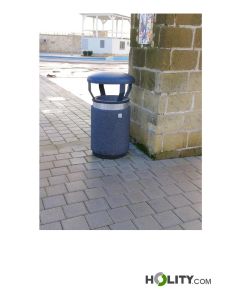
Concrete litter bin for urban furniture. Dimensions: W. 65 x h. 100 cm. Available in various finishes.
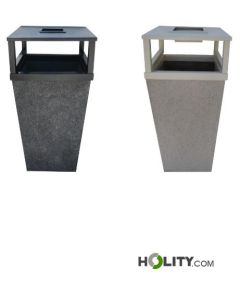
Waste collection bin in concrete equipped with a lid with ashtray. Dimensions: W.50 x D.50 x h.100 cm. Available in two different finishes.
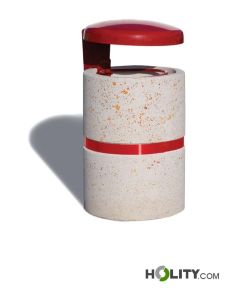
Bin for street furniture. Material: concrete. Capacity: 90 liters.
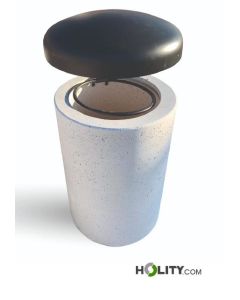
Concrete litter bin. Dimensions: Ø50 x h.100 cm. With tilting roof and bag holder ring.
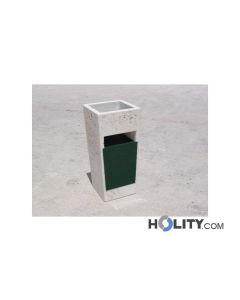
Concrete waste bin with galvanized sheet metal inner liner for urban furniture. Available in various finishes. Dimensions: W.41 x D.41 x h.90 cm.
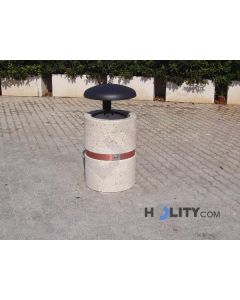
Concrete waste bin with galvanized and painted steel lid. Equipped with bag holder ring. Available in different finishes. Made in Italy.
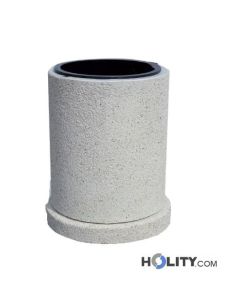
Large white concrete waste bin for waste collection. Capacity: 105 liters. Dimensions: Ø 60 x h. 80 cm.
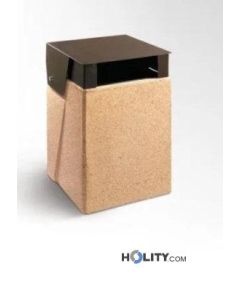
Waste bin with lid made of concrete. Available in various finishes. Capacity: 70 lt. Dimensions: W.46 x D.46 x h.70 cm.
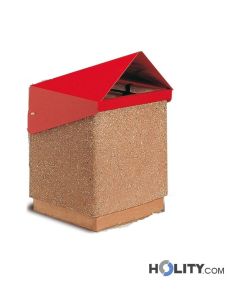
Waste bin in reconstructed stone. Available in different colours. Capacity: 80 litres. Dimensions: L.47 x D.47 x h.80 cm. Made in Italy.
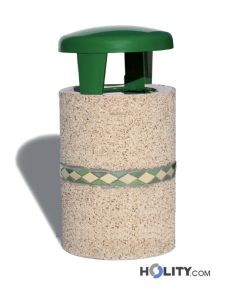
White concrete litter bin with decorative Greek fret. Capacity: 90 liters. Dimensions: Ø 50 x h.100 cm.
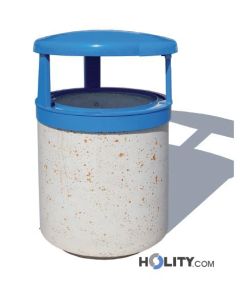
Outdoor waste bin in white concrete with sheet steel flap lid. Capacity: 145 lt. Dimensions: Ø 65 x h.108 cm.
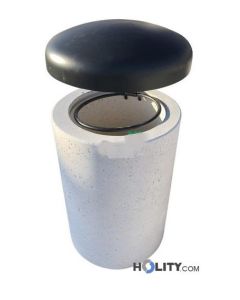
Concrete waste paper bin for urban furniture with steel roof. Dimensions: diameter 60 cm x height 100 cm
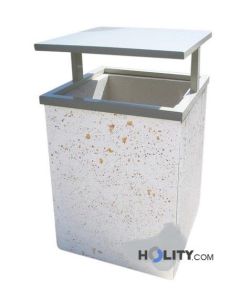
Concrete waste bin for urban furniture with tilting roof. Dimensions: L60 x D 60 x H100 cm
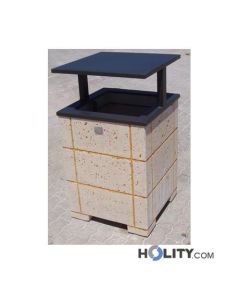
Outdoor waste bin made of concrete. Tilting roof in galvanized steel. Available in different finishes and colors. Made in Italy.
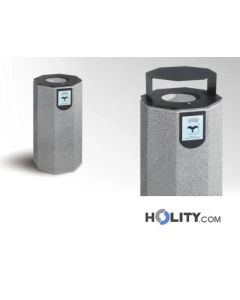
Waste bin made of cement conglomerate and marble grit. Capacity: 75 lt. Equipped with mouth reduction plate.
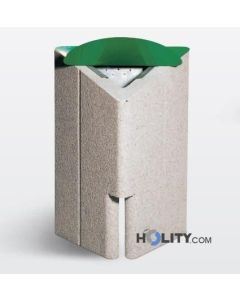
Triangular-shaped waste collection container with lid and bag-holder ring. Material: concrete conglomerate. Capacity: 30 liters.
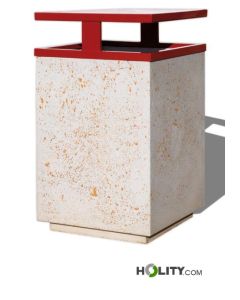
Concrete container for waste collection. Capacity: 65 lt. Dimensions: W.63 x D.63 x h.106 cm.
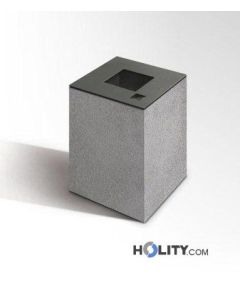
Waste bin for urban furniture. Material: concrete. Capacity: 120 liters. Dimensions: L.57 x W.57 x h.75 cm. Available in various finishes.
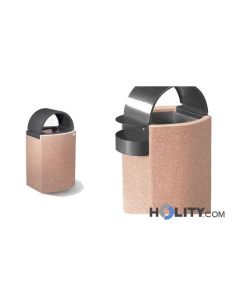
Concrete bin for waste collection also available with an ashtray. Made of concrete and marble grit. Dim: 50x50 x 93H cm. Capacity 90 lt
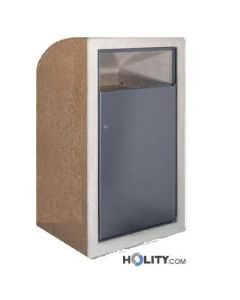
Waste collection container in concrete conglomerate and marble chips complete with steel front door. Capacity: 150 liters.
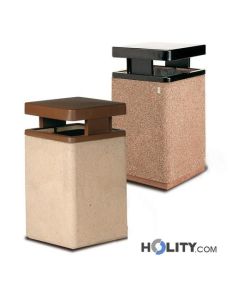
190-liter litter bin made of reconstituted stone. Available in different finishes. Dimensions: 60x60xh.105 cm. Italian product.
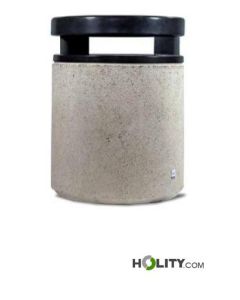
Waste container in reconstituted stone available in various finishes. Capacity: 210 liters. Dimensions: Ø 70 x h.105 cm. Made in Italy.
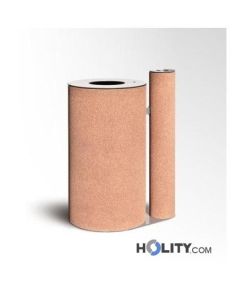
Waste collection container complete with cigarette disposal. Material: cement conglomerate with marble grit. Capacity: 130 liters.
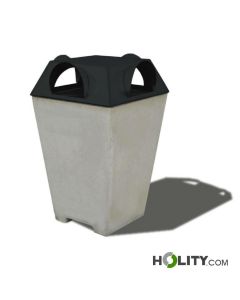
Outdoor concrete litter bin. Available in different finishes. Capacity: 180 liters.
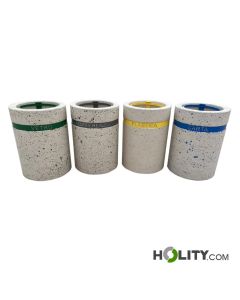
Set of 4 concrete bins for waste collection. Single bin dimensions: Ø50 x 100 cm.
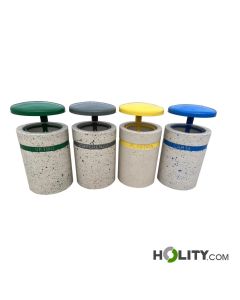
Set of 4 concrete waste bins with roof, for urban furniture. Dimensions of single bin: Ø 50 x 100 cm. Available in different finishes.
Concrete waste bins represent the most reliable solution for waste management in public spaces and outdoor areas of commercial, administrative, and tourist facilities. Made of concrete conglomerate, these containers combine structural durability, urban aesthetics, and weather resistance, ensuring an effective waste collection service for years without the need for excessive maintenance. Their mass and solidity make them suitable for countering acts of vandalism and ensuring stability even in conditions of intense pedestrian traffic, a fundamental characteristic for historical centers, public parks, and high-traffic areas.
The choice of concrete containers responds to concrete needs: protection of urban decor, hygiene of common spaces, and compliance with waste management regulations. Each model available in the catalog is designed to integrate into urban furniture while maintaining practical functionality and ease of use for those managing the collection.
Outdoor concrete bins offer significant technical advantages over other solutions. The mechanical resistance of the material ensures that the container maintains structural integrity despite impacts, repeated pressure, and intentional damage attempts, a frequent phenomenon in public areas. Concrete does not deform easily, does not rust like untreated metal, and does not degrade rapidly like plastic exposed to prolonged UV rays. A concrete bin installed in a park, a square, or a shopping center continues to perform its waste containment function without losing efficiency over time.
From an aesthetic and functional point of view, these containers adapt to different urban contexts: available in smooth finishes, with fretwork decorations, with chrome or painted metal inserts, they easily integrate into existing furniture without creating visual disharmony. The considerable mass of the concrete (ranging from 120 to 200 kg depending on the model and dimensions) provides natural stability, eliminates the need for complex anchoring, and reduces the risk of accidental tipping, a critical aspect in areas with intense pedestrian traffic or the presence of children. Many models include a bag holder ring that facilitates the insertion and extraction of waste bags, increasing the operational efficiency of those managing the collection.
The catalog of outdoor concrete bins is divided into several construction variants, each responding to specific contexts of use. The basic models consist of a cylinder or a parallelepiped in raw or polished concrete, with a top opening and, in some cases, with a galvanized sheet metal core to facilitate waste extraction. Capacities vary from 30 liters for compact containers to 140-150 liters for large bins intended for areas with a high flow of people. More sophisticated models include hinged lids in galvanized or painted steel, which protect the contents from rain, snow, and animals, while maintaining accessibility for the end user.
A specific category is represented by bins with an integrated ashtray, an additional sheet metal element mounted on the lid or the top of the container, intended to collect cigarette butts and tobacco. These models are particularly common in urban centers and tourist areas where smoking is tolerated. Other models feature decorative finishes, such as reconstituted marble inserts, colored concrete, or relief decorations, ideal for historical or prestigious contexts where urban furniture must meet high aesthetic criteria. Some bins combine concrete and metal, creating a hybrid structure that exploits the solidity of concrete and the practicality of removable metal components for maintenance.
Choosing the most appropriate bin depends on well-defined technical and contextual variables. The first parameter is the estimation of the waste flow: a public park with moderate pedestrian density (100-300 people per day) requires 50-70 liter containers, while a central square or a shopping center needs 100-140 liter bins with frequent emptying. Undersizing the capacity causes overflows and disorder; oversizing leads to unjustified economic burdens and difficulties in aesthetic integration into the available space.
The second criterion concerns atmospheric agents and maintenance. In areas subject to frequent rain, a model with a hinged lid is mandatory to prevent water stagnation and the proliferation of odors. In areas with adjacent vehicular traffic or a history of vandalism, it is preferable to choose a massive bin (150+ kg) without easily removable components. The surface finish affects the ease of cleaning: a smooth surface is easier to wash than a decorative one with deep grooves where dust and dirt accumulate. Finally, evaluate compatibility with local recycling standards: some models have internal dividers to separate paper, plastic, and residuals, improving the efficiency of the upstream phase of waste management.
The construction and installation of outdoor concrete waste bins must comply with a series of technical and administrative regulations. In Italy, the main reference is the municipal legislation on waste management and urban furniture, which establishes maximum dimensions, positioning, permitted materials, and maintenance standards. UNI standards and ANCI (National Association of Italian Municipalities) guidelines provide technical indications on minimum capacity, emptying frequency, and distance from commercial and residential entrances. A waste container must facilitate access without obstacles, guarantee static stability, and allow the extraction of the internal bag without risk of injury to the operator.
Structural safety is governed by standards on the solidity of materials: the concrete used must meet specifications for compressive strength and durability, with anti-degradation treatments to prevent salt efflorescence and accelerated deterioration. Air quality and odor regulations require that the container be suitable for containing organic waste without causing significant hygiene problems; therefore, a lid or ventilation system is often prescribed by municipal regulations. Accessibility according to inclusion regulations (D.M. 236/1989) provides that the door or opening of the bin be usable by people with reduced mobility, an aspect that affects the positioning and optimal height of the container. Always check with the local administration for specific local regulations before purchase and installation.
Explore all the products in the category and compare the available solutions to find the one best suited to your operational context. Each model in the catalog is selected to ensure durability, regulatory compliance, and harmonious integration into public and private spaces.
A simple bin offers direct access to waste, ideal where rain is rare and traffic is orderly. With a lid, the container protects from weather, animals, and odors, and is recommended in central squares and high-traffic areas. The lid increases the price by 50-150 euros but improves hygiene and urban decor.
Evaluate the daily pedestrian flow and the available emptying frequency. Low traffic areas: 50-70 liters. Moderate traffic: 90-100 liters. Busy central areas: 120-150 liters. Undersizing causes overflows; oversizing increases costs and affects aesthetics.
Yes, concrete is one of the most resistant materials to vandalism compared to plastic and unanchored metal. A 120+ kg concrete bin does not tip over easily and does not deform with normal hits. However, a chisel can damage it: in high-risk areas, choose massive models with steel inserts.
Yes, the integrated ashtray collects cigarette butts effectively and reduces fire risk compared to scattered waste. These models are standard in tourist squares and smoking areas. They require weekly cleaning to avoid bad odors and the proliferation of insects.
Quality concrete includes stabilizing and protective agents against salt efflorescence and water penetration. Some models receive water-repellent or sealing treatments. Regular maintenance (annual washing) extends the useful life beyond 20 years while maintaining aesthetics and functionality.
Many manufacturers offer standard finishes: natural gray, white, colored concrete, and fretwork decorations. Extensive customizations (specific RAL colors, special processes) are possible on order with increased price margins and delivery times. Contact the seller to check available options.
Massive concrete does not require fixed anchoring thanks to its natural weight. Installation consists of placing the container on a flat and stable surface. If exposed to strong winds or repeated impacts, expansion anchoring is recommended. Always check municipal regulations on the method of fixing.
In high-traffic areas, empty every 2-3 days to maintain hygiene. Clean monthly with a water jet and neutral detergent. Inspect lids, bag holder rings, and surfaces annually for wear or damage. A well-maintained bin remains efficient and presentable for 15-25 years.
 English
  Italian
 French
 German
 Spanish