
mon-fri 9-13 / 14.30-18.30
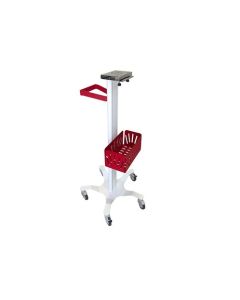
Medical equipment trolley with 400 x 360 mm shelf, adjustable height. Dimensions: W 600 x D 600 x H from 750 to 1150 mm.

Monitor trolley for hospital use. Dimensions: W. Ø 53 x h. from 85 to 110 cm.

Hospital monitor trolley. With one shelf. Shelf dimensions: 26 x 26 cm.

Monitor trolley for hospital use. Equipped with one shelf (26 x 26 cm).

Monitor trolley for hospital use. With two shelves. Dimensions: 26 x 26 cm

Medical monitor cart with handle and shelf. Shelf dimensions: 26 x 26 cm.

Medical monitor trolley with one shelf. Shelf dimensions: 26 x 26 cm.

Hospital monitor trolley. Equipped with 2 shelves. Shelf dimensions: 26 x 26 cm.

Medical monitor trolley with handle and shelf. Trolley dimensions: W. 47 x D. 42 x h. 102 cm.

Multiparameter monitor trolley with 2 shelves, featuring monitor and keyboard support. Capacity per shelf: 35 kg.
Multiparameter monitor trolleys represent a fundamental structural solution in modern healthcare facilities, where the mobility of monitoring systems is critical for operational efficiency. These medical trolleys are specifically designed to serve as a stable and maneuverable platform for vital signs monitoring devices, allowing healthcare professionals to move monitors quickly and safely between departments, wards, and different diagnostic environments. Functional versatility and configurability represent the primary strengths of this category of hospital furniture, as each model is equipped with specific plates, adjustable shelves, and accessories that adapt to the operational needs of each department. Practicality of use, combined with ease of sanitization and structural solidity, makes these trolleys indispensable in environments where sterility and speed of movement are non-negotiable requirements.
The implementation of dedicated trolleys for multiparameter monitors offers multiple operational advantages within hospitals, private clinics, and care facilities. Firstly, these furnishings allow for the optimization of available space in wards, eliminating the need for fixed structures and allowing for a dynamic reconfiguration of environments based on contingent clinical needs. Structured mobility ensures that healthcare operators can position the monitor at the right height and distance from the patient’s bed, reducing muscle fatigue and improving the ergonomics of the workstation during extended shifts.
In addition to ergonomic aspects, these trolleys significantly facilitate cleaning and sanitization procedures, a critical aspect in hospital environments where infection control is an absolute priority. The materials used in their construction, generally aluminum and stainless steel, resist the most aggressive chemical detergents and disinfection procedures without deteriorating. The configuration with lockable wheels ensures stability during data acquisition and vital signs recording, while the height adjustment system allows operators to adapt the support to different physical needs and various operational protocols within the same department.
In the landscape of multiparameter monitor trolleys, there are several construction configurations that meet specific needs. Base models include a single support shelf sized to house the monitor, often accompanied by an adjustable mounting plate that allows the visual angle of the device to be modified. Subsequently, we find variants with double and triple shelves, which allow for the addition of auxiliary elements such as keyboards, mice, external recording modules, or small diagnostic devices connected to the main monitoring system. Some trolleys include pull-out drawers for storing cables, connectors, chart paper, and other consumables directly on the structure, avoiding taking up additional space in the ward.
Functional differentiations also concern the adjustment system: trolleys with a fixed column suitable for stable and dedicated workstations, or models with fully adjustable height using rack or gas systems, ideal for contexts where the same trolley serves multiple workstations. The load capacity per shelf generally varies between 25 and 35 kilograms, a fundamental parameter when the monitor must be paired with heavy accessory devices. Some models also feature an integrated IV pole or side supports for fixing additional oxygen cylinders, transforming the trolley into a true multifunctional monitoring station for complex clinical situations.
Choosing the most appropriate trolley begins with the precise identification of the monitor model to be supported, as each trolley is designed with mounting plates compatible with specific brands and screen resolutions. Verifying the monitor’s dimensions in width, depth, and weight is the first essential step, followed by the analysis of surrounding space needs: if the environment is cramped and the trolley must move frequently between rooms, a compact structure with swivel wheels facilitates maneuverability; if, instead, the context is spacious and the trolley remains positioned for long periods, a wider and more stable base becomes a priority. Evaluating the number of shelves needed is an often underestimated but critical aspect: an intensive care unit might need three shelves to house monitors, keyboards, and recording modules, while an ordinary inpatient ward might only require a single support surface.
A further consideration concerns height adjustability: operators of different heights or workstations that require a monitor positioned at variable levels need quick and fluid adjustment systems. Ease of cleaning represents a non-negotiable criterion in a healthcare environment—prefer trolleys with minimal joints, hypoallergenic materials, and smooth coatings that do not trap dust or liquids. The weight of the trolley itself affects the practicality of daily movement: lightweight aluminum models are preferable in frequent transport contexts, while sturdier steel structures are indicated when stability and durability are priority factors. Common errors include underestimating the cumulative weight of the monitor plus any accessories, or choosing a trolley without beforehand verifying compatibility with the disinfection procedures provided by the hospital protocol.
Multiparameter monitor trolleys, although they are medical furnishings and not actual active medical devices, must still comply with construction and hygiene standards defined by Italian and European regulations. The UNI EN 60601-1 standard and subsequent editions establish electrical safety criteria for medical environments, a compliance that becomes relevant if the trolley is equipped with integrated charging systems or auxiliary power outlets. Standards relating to biocompatible materials require that surfaces in potential contact with patients or operators are made of materials that do not release harmful substances, preferably plastics and metals certified for medical use. The wheels must be sized so as not to damage hospital floors and must feature reliable brakes, a requirement normatively supported by safety guidelines in healthcare facilities.
From a hygienic-sanitary perspective, the ISO 14644 standard on cleanroom area classification provides guidance on the permeability and ease of decontamination of the materials used. Surfaces must be able to be disinfected with solutions based on ethyl alcohol, sodium hypochlorite, and other common chemical agents without undergoing degradation; this requires the use of resistant coatings and the minimization of spaces where bacteria and viruses could proliferate. Legislation on the management of special waste implies that the trolley is easily dismantled or recyclable at the end of its useful life, an aspect increasingly monitored by hospital accreditation commissions. Furthermore, periodic maintenance and cleaning checks must be documented according to ISO 9001 protocols, ensuring the traceability of the hygienic treatments carried out.
Explore all the products in the category and compare the available solutions to find the one best suited to your operational context. Each configuration has been selected based on the real needs of hospitals, specialist departments, and care facilities, ensuring construction quality and regulatory compliance.
A multiparameter trolley is an autonomous mobile structure equipped with lockable wheels, height adjustment, and multiple shelves, which allows for rapid movement between environments. A table stand is fixed and requires a dedicated station. The trolley is essential in departments where the monitor must serve multiple workstations or where space optimization is critical.
Each trolley is equipped with specific mounting plates for certain brands and monitor sizes. When configuring the order, it is necessary to indicate the exact monitor model (brand, resolution, screen size) to receive the trolley with the correct plate. Holity provides technical assistance during the selection phase to ensure full compatibility.
The standard load capacity is 35 kilograms per shelf in triple-shelf models, and up to 50 kg in single-shelf models. The structural weight of the trolley varies between 12 and 18 kilograms depending on the configuration and materials used. Consult the technical specifications of each model for precise data.
Most trolleys use a rack system with quick locking via a pneumatic or manual lever. Typical height travel ranges from 75 centimeters up to 150 centimeters, allowing the monitor to be adapted to different workstations and operators of varying heights without the need for additional tools.
The trolleys are made of structural aluminum and AISI 304 stainless steel, materials resistant to common chemical detergents used in the healthcare sector. The smooth surfaces allow cleaning with ethyl alcohol or chlorine-based solutions. It is recommended to avoid abrasives and direct pressurized steam on the joints.
Yes, many trolley models are configurable with pull-out drawers, cable management, keyboard supports, and IV poles. Accessories can be ordered together with the trolley or installed later according to the department’s needs. Holity has a complete catalog of compatible additional components.
Wheels should be checked every six months for wear and locking brakes checked quarterly. Swivel wheels have an average lifespan of 3-5 years in high-traffic hospital environments. Brakes must be serviced at least annually. No special lubricants are needed except for height adjustment components.
The trolleys comply with UNI EN 60601-1 standards for medical environments, ISO 14644 for hygiene in controlled areas, and ISO 9001 for quality production processes. Each model includes certified technical documentation and declarations of conformity required by hospital accreditation commissions.
 English
  Italian
 French
 German
 Spanish