mon-fri 9-13 / 14.30-18.30
The furnishing of a place of worship requires a particular sensitivity that knows how to combine the sacredness of spaces with the functional needs of welcoming and involving the faithful. Church furniture does not just represent a supply of material goods, but is configured as a choice of architectural and liturgical elements that must respect centuries-old traditions and, at the same time, guarantee durability and comfort in contexts often characterized by particular microclimates, such as the humidity typical of historic buildings or intensive use during celebrations. The selection of materials and design directly affects the perception of the environment, making it essential to adopt solutions that reflect dignity and decorum through a production of high professional craftsmanship.
Integrating new furnishing elements into an existing context, whether it be an ancient cathedral or a modern chapel, requires a deep knowledge of the dynamics of use and the management needs of the clergy and parish officials. From seating to the management of order in sacred spaces, every component must be designed to last over time, minimizing maintenance interventions and maximizing user safety. Our proposal focuses on equipment that meets high quality standards, selected to satisfy the requests of religious communities, ecclesiastical bodies, and professionals in the sector looking for technical reliability and aesthetic respect for the liturgical and architectural tradition of sacred buildings.
Investing in professional quality church furniture means guaranteeing the preservation of the identity of a place that hosts community life daily. The choice of specific furnishings does not only respond to an aesthetic need, but resolves practical issues related to space management and the stability of the elements. In many cases, places of worship have irregular floor surfaces or historical constraints that prevent invasive anchoring; for this reason, professional furnishings are designed with self-supporting bases, calibrated weights, and protection for delicate surfaces such as marble or ancient stones. The use of noble materials such as solid wood or treated metals ensures that natural wear does not degrade the object, but enhances its value over the decades, making the investment sustainable and effective in the long term.
In addition to physical resistance, the utility of these products lies in their ability to facilitate participation in religious functions. An ergonomic design of the seating and a correct arrangement of supports for texts and liturgical objects significantly improve the experience of the faithful, reducing distractions and favoring contemplation. Furthermore, many modern furnishings allow for organizational flexibility previously unthinkable, such as the possibility of quickly reconfiguring naves for special events, concerts, or assemblies, thanks to discrete movement systems or stackable structures. The ability to adapt, combined with stylistic consistency, makes these furnishings indispensable for modern parishes that must meet various pastoral needs while maintaining the order and decorum required by the sacred environment.
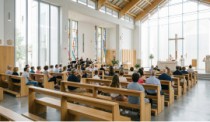
The range of solutions for furnishing sacred spaces is extremely varied and is divided into several sub-categories designed for specific areas of the building. Among the main types, we find seating, ranging from classic wooden pews to modern chair models with coupling systems, ideal for ensuring perfect alignment in the naves. There are also elements for the sanctuary, where solemnity is paramount: lecterns, ambos, and supports for sacred vestments represent the operational heart of the celebration. Each variant is available in different finishes, from natural oak to burnished bronze, to harmonize with pre-existing decorations or to create contemporary contrasts sought in minimalist architecture, always ensuring that each piece is functional and respectful of current liturgical canons.
There are also types of furniture intended for accessory areas, such as the sacristy or the church entrance, where the need for storage and communication becomes a priority. Specific cabinets for the safekeeping of chalices and sacred garments, bulletin boards for parish notices, and collection boxes for offerings represent indispensable elements for the daily logistics of the community. Particular attention is also paid to mobile accessories, such as candle holders and votive lamps, which require safe power systems (electric or wax) and easy-to-clean structures. The differentiation in materials, which includes precious woods, wrought iron, and stainless steel, allows for finding the ideal technical solution for both indoor environments and cloisters or outdoor areas, guaranteeing constant resistance to thermal shocks and high workloads.
The selection of church furniture must be guided by a rigorous analysis of the dimensions of the space and the frequency of use. A common mistake is to underestimate the visual impact of proportions: a pew that is too massive in a side chapel can stifle the environment, while seating that is too thin in a large central nave might appear inadequate for the solemnity of the place. It is essential to consider the flow of movement of the faithful, ensuring that aisles are wide and that the furnishings do not obstruct access for the disabled or exit routes in case of emergency. The decision criteria must therefore be based on objective technical data, such as the capacity of the materials, the ease of sanitizing surfaces, and aesthetic compatibility with the architectural era of the sacred building, trying to avoid overly standardized solutions that could strip the place of its uniqueness.
Users often wonder about the choice between wood and metallic or synthetic materials; in this case, the answer depends on the climatic context and the specific intended use. In very humid environments, wood must be treated with specific water-repellent paints to avoid deformation, while for outdoor use or high-traffic areas, metal or high-quality resins offer superior resilience. Attention must also be paid to future maintenance: choosing furnishings with easily replaceable parts or with surfaces that do not hold dust and dirt is a winning strategy to reduce the operational costs of the parish. Avoiding the purchase of non-certified products is essential to avoid problems of stability or emissions of harmful volatile substances in often poorly ventilated environments, thus ensuring a healthy and safe environment for the whole community.
Church furniture is not exempt from complying with strict technical regulations and safety standards, particularly regarding the fire reaction of materials. In buildings open to the public, fire regulations require that seating, curtains, and coverings be certified according to the resistance classes provided by law, to prevent the spread of flames in case of an accident. Furthermore, the structural stability of the furnishings is a fundamental requirement: pews and heavy furniture must be designed not to tip over even in case of accidental impact or overcrowding, respecting the current regulations regarding safety in places of assembly. Compliance with these parameters is not only a legal obligation but a moral responsibility towards regular attendees and occasional visitors to sacred places.
In addition to safety aspects, general requirements include compliance with the guidelines issued by ecclesiastical authorities and superintendencies for cultural heritage. Any renovation or addition in buildings subject to historical protection must follow criteria of reversibility and material compatibility, avoiding the use of aggressive chemicals that could damage the original structures. It is necessary to consult professionals in the sector who know the authorization procedures and who are able to provide products that meet E-E-A-T (Experience, Expertise, Authoritativeness, Trustworthiness) standards. Choosing certified furnishings also guarantees the absence of toxic treatments in the wood and the use of ecological glues, respecting the health of the faithful and the integrity of the architectural heritage in which the new elements are inserted.
Explore all the products in the category and compare the available solutions to find the one best suited to your operational context.
For historic buildings, the use of solid wood is preferred, such as oak or walnut, treated with matte or wax finishes. These materials guarantee natural breathability and superior resistance to thermal variations, integrating perfectly with the monumental aesthetics of ancient structures without altering their original visual balance.
Yes, since places of worship are spaces open to the public with variable inflow, it is essential that the seating be certified in Class 1IM for fire reaction. This requirement ensures that the materials are self-extinguishing, minimizing risks in case of fire and ensuring full compliance with safety regulations in force in community buildings.
The calculation must provide a space of approximately 50-60 linear centimeters for each member of the faithful, leaving side and central aisles of at least 120 centimeters for safe passage. It is essential to also consider the spacing between rows to allow for comfortable kneeling, thus optimizing capacity without compromising comfort or escape routes.
Many professional solutions offer the possibility of height adjustments or dimensional variations to adapt to the proportions of the sanctuary. Customization allows the furniture to be aligned with the specific needs of the officiant and the acoustic characteristics of the building, ensuring that the liturgical element is functional for visibility and the correct proclamation of the word during celebrations.
Linkable chairs offer superior logistical flexibility, allowing the space to be quickly cleared for processions, extraordinary cleaning, or cultural events. Thanks to the lateral joining systems, they maintain a rigorous and orderly alignment similar to that of pews, while being easy to stack and store in limited spaces when not needed.
Maintenance requires the use of soft cloths and specific non-abrasive products to avoid removing protective patinas or causing scratches. For elements exposed to frequent contact, such as offering boxes or holy water fonts, anti-fingerprint treatments and periodic cleaning operations with neutral solutions that do not attack metal alloys or surface galvanic treatments are recommended.
Certainly, contemporary production offers furnishings characterized by essential lines and innovative materials such as satin steel, plexiglass, or light woods treated with modern techniques. These solutions focus on sobriety and light, avoiding excessive decorations to enhance the surrounding architecture and favor a climate of meditation closer to current aesthetic sensitivity.
 English
  Italian
 French
 German
 Spanish