mon-fri 9-13 / 14.30-18.30
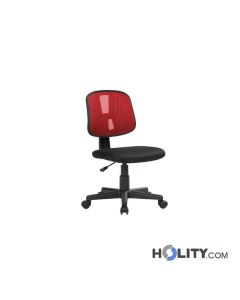
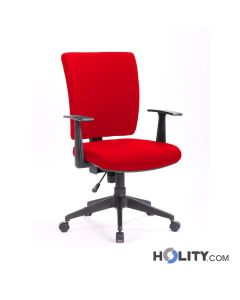
Office task seat with nylon base and swivel castors. Available in different colors. Adjustable height from 81 to 93 cm.
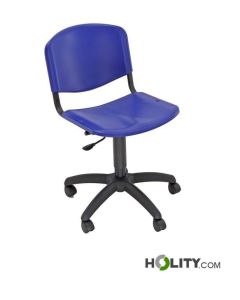
Office task chair for offices with fixed backrest. Load capacity: 110 kg.
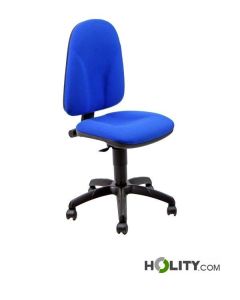
Task chair for offices with height and depth adjustable backrest. Load capacity: 110 kg. Class 1 fire-retardant upholstery.
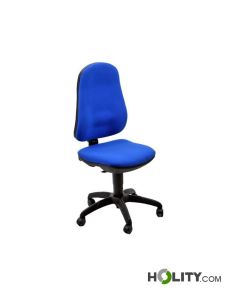
Swivel task chair with shaped backrest and ergonomic adjustments. Dimensions: D 63 x H from 108 to 120 cm.
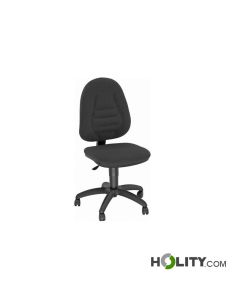
Task chair with adjustable shaped backrest and gas lift. Dimensions: D 63 x H from 104 to 115 cm.
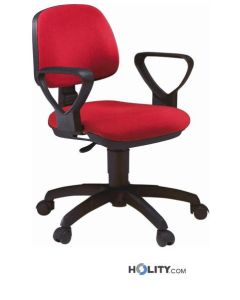
Swivel chair for offices and secretarial workstations. Adjustable height from 82 to 94 cm. Available in several colors.
Office chair with lockable tilt mechanism and steel base with swivel wheels. Adjustable height: 89-98 cm.
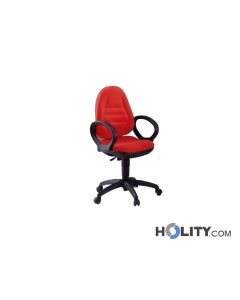
Swivel task chair ideal for office with polypropylene upholstery. Adjustable height: 95-106 cm. Available in various colors.
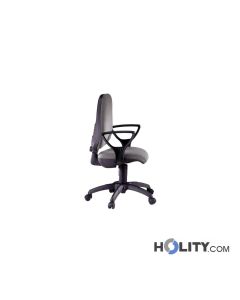
Office task chair available in various colors. Adjustable height: 95-108 cm.
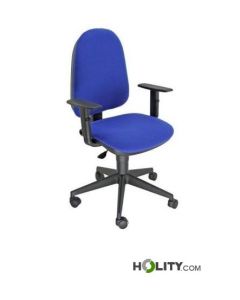
Office chair upholstered in Sky with adjustable backrest. Dimensions: W 45 x D 60 x H from 96 to 107 cm.
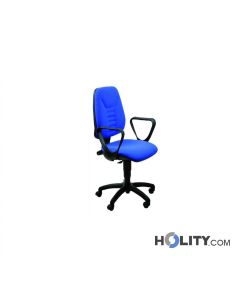
Office task chair with fire-retardant fabric, featuring adjustable backrest and height. Dimensions: W.47 x D.60 x H.95-108 cm.
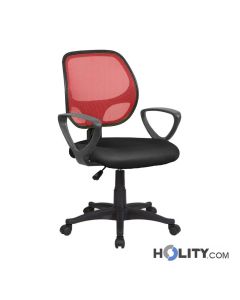
Desk chair for offices. With armrests. 57 x 55.5 x H 88/100 cm.
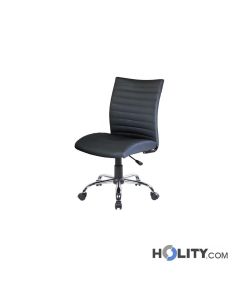
Office task chair with PU upholstery featuring a steel base and swivel castors. Adjustable height: 90-100 cm. Available in various colors.
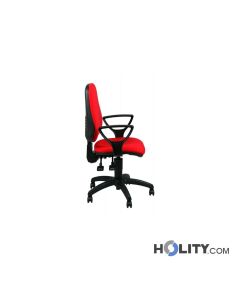
Swivel task chair for offices with height-adjustable polypropylene backrest. Available in various colors.
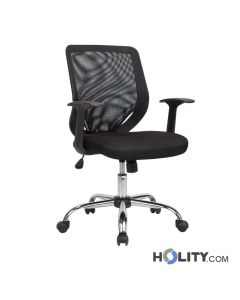
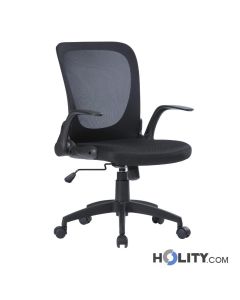
Office task chair with armrests. Black fabric and mesh upholstery.
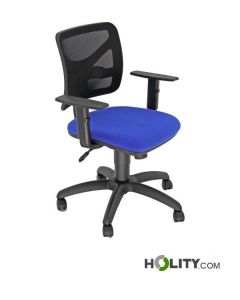
Swivel office chair with gas lift. Mesh backrest and eco-leather seat. Available in multiple colors.
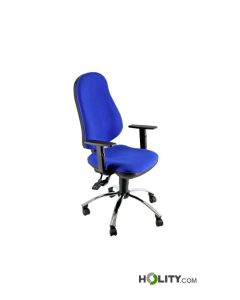
Task chair with contoured backrest, chrome base and gas lift. Dimensions: D 63 x H from 107 to 119 cm.
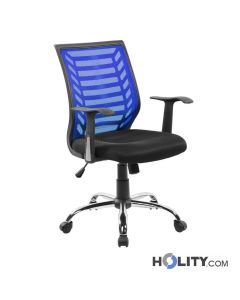
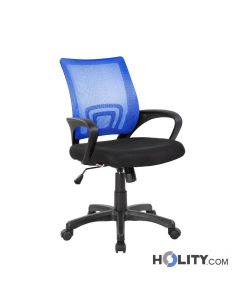
Office task chair fabric and mesh upholstery. Blue and black color.
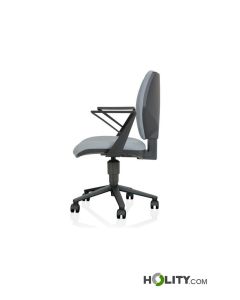
Size L office chair with adjustable backrest. Dimensions: 70 x 70 x H 95 - 106 cm.
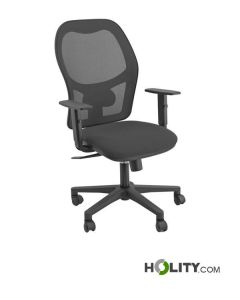
Ergonomic chair for office desk. Capacity: 120 kg. With gas lift.
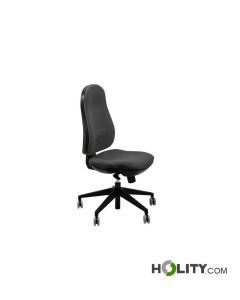
Task chair with shaped backrest, synchro mechanism and certified gas lift. Dimensions: D 68 x H from 107 to 119 cm.
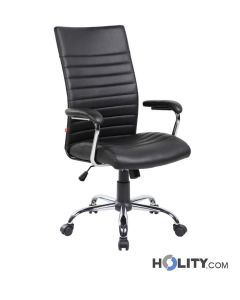
Office chair with high backrest and armrests. Dimensions: W.65 x D.93 x h.108/118 cm. Color: black.
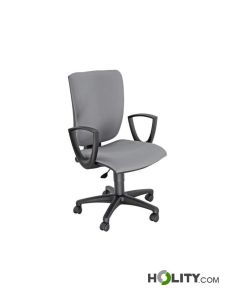
Padded chair for intensive use, fireproof and certified. Dimensions: 68 x 64 x H 96 - 108 cm.
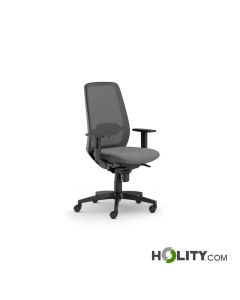
Task chair with mesh backrest and lumbar support. Dimensions: 70 x 68 x H 100 to 112 cm.
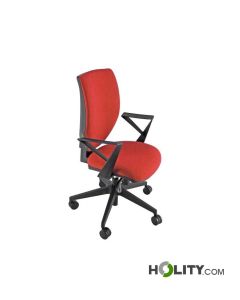
Work chair size L with padded backrest. Dimensions: 70 x 70 x H 105 - 116 cm.
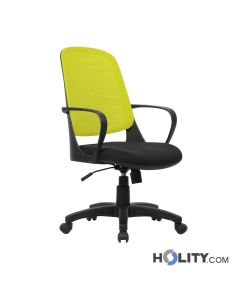
Mesh and fabric office task chair. Green and black color. 60 x 61 x H 98/108 cm
Office task chair with reinforced polypropylene backrest and permanent contact mechanism. Total height: 96 cm.
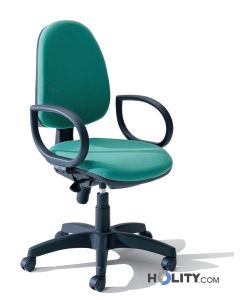
Office task chair with padded seat and backrest. Without armrests. Swivel base on wheels and reclining backrest
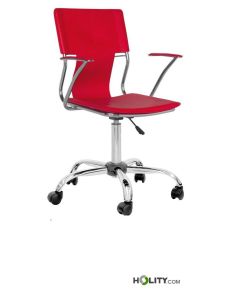
Office task chair in metal and eco-leather. Height adjustable from 84 to 92 cm.
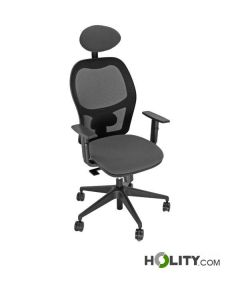
Task chair for office desks. Gas lift 118-129 cm. With headrest.
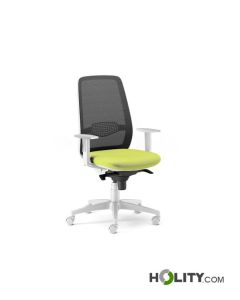
Office chair with adjustable lumbar support. Dimensions: 70 x 68 x H 100 to 112 cm.
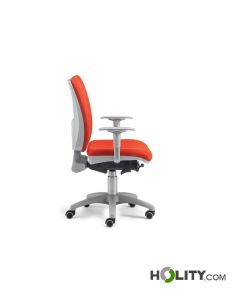
Office chair size M with armrests included. Dimensions: 63 x 66 x H 111 to 123 cm.
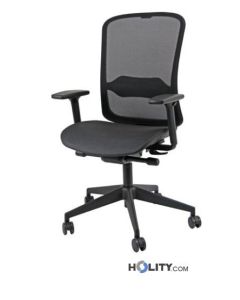
<p>Swivel task chair for office desk. Gas lift elevation. Available in multiple colors.</p>
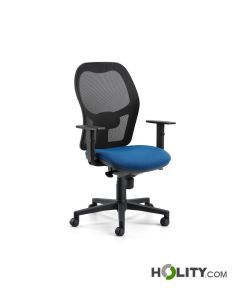
Ergonomic task chair without headrest, equipped with a breathable mesh backrest and height-adjustable armrests. Dimensions: W 66 x D 68 x H from 94 to 112 cm.
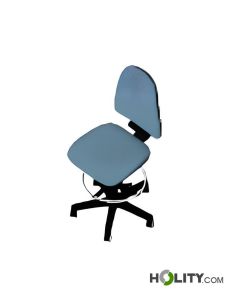
Stool with medium backrest, black nylon base and light blue faux leather upholstery. Dimensions: approx. W 600 x D 620 x H from 1060 to 1310 cm.
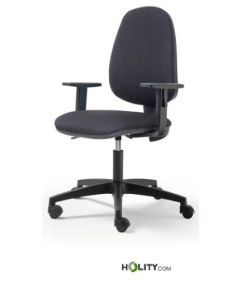
Office task chair with backrest, height and armrests adjustable in height. Dimensions: W. 60 x D. 60 x H. from 92 to 102 cm.
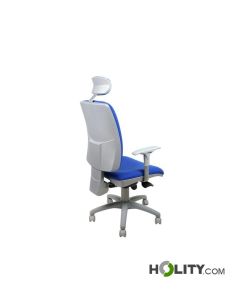
Chair with armrests included and padded backrest. Dimensions: 63 x 66 x H 95 to 107 cm.
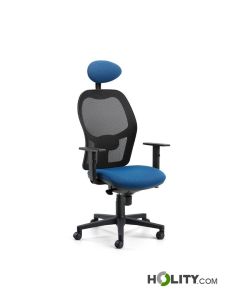
Ergonomic task chair with 100 % black polyester mesh backrest, adjustable headrest and armrests. Equipped with a mechanism with a locking point in 5 positions. Dimensions: W 66 x D 68 x H from 110 to 118 cm.
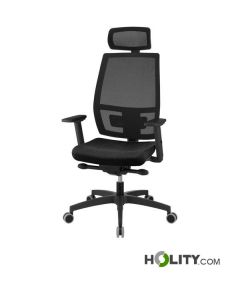
Office task chair for offices with mesh backrest. Load capacity: 140 kg. With gas lift seat height adjustment from 42 to 54 cm.
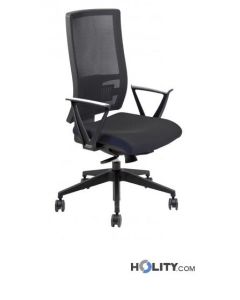
Office desk task chair. Adjustable height and backrest. Seat available in various colors.
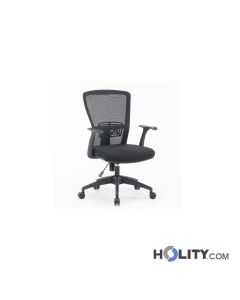
Black polypropylene office task chair with fixed armrests. Adjustable height: 98-108 cm.
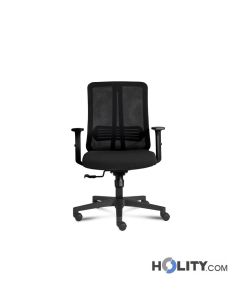
Office task chair with mesh backrest and black nylon base. Total height 96 cm.
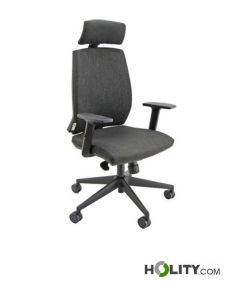
Ergonomic office desk chair. With adjustable backrest and adjustable lumbar support. Available in multiple colors.
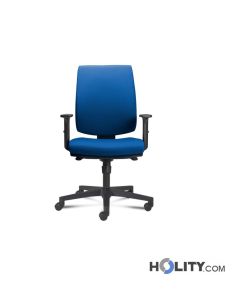
Office chair in polypropylene and gas lift system. Base footprint: 70 x 70 cm. Available in two colors.
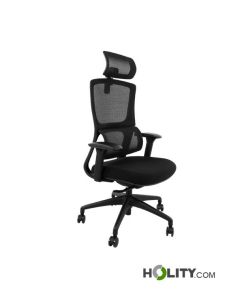
Ergonomic chair with adjustable headrest and lumbar support. Dimensions: W 52 x D 65 x h 116-126 cm.
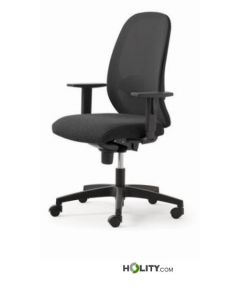
Task chair with mesh backrest, adjustable lumbar support and height-adjustable armrests. W. 68 x D. 68 x h. adjustable 99 to 111 cm.
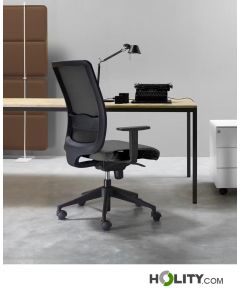
Office task chair for desk with adjustable lumbar support and height-adjustable armrests. W. 70 x D. 70 x h. 103-113 cm.
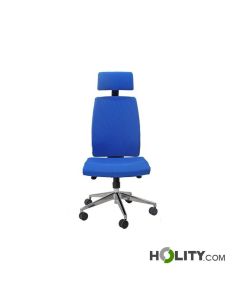
Ergonomic and swivel task chair, with gas lift and synchro mechanism between seat and backrest. Up-down adjustable backrest, anti-shock function and Ø 60 mm nylon wheels. Maximum load capacity: 150 kg.
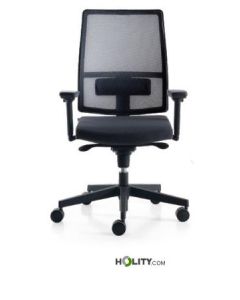
Ergonomic task chair, black color. With lumbar support and adjustable armrests. Dimensions: W. 68 x D. 45 x H. 100-110 cm.
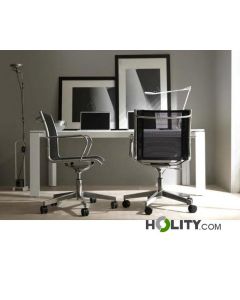
Office desk task chair in chromed steel. W. 45 x D. 70 x h. 86-96 cm. Seat and backrest in black PVC mesh.
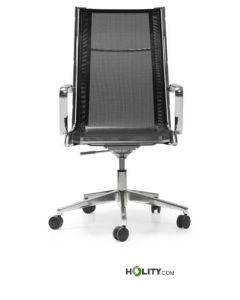
Single-shell task chair in chrome-plated steel. Black self-supporting mesh. Dimensions: W. 45 x D. 70 x h. 102-112 cm.
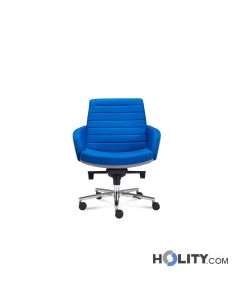
Office chair with fully upholstered curved plywood shell. Total height: 95 cm.
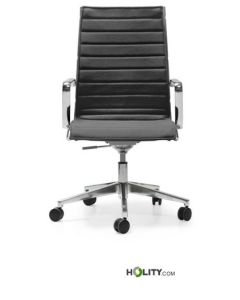
Executive task armchair in chrome-plated steel and black leather. Dimensions: W. 45 x D. 70 x h. 102-112 cm.
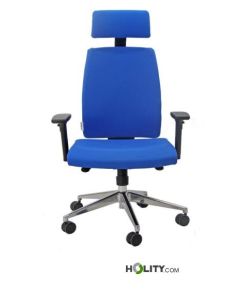
Ergonomic office chair with adjustable height. Available in multiple colors. Capacity: 150 kg.
Office task chairs represent one of the most critical elements in the furnishing of professional workspaces, whether they are open spaces, secretarial offices or professional studios. A quality seat directly affects productivity, the psychophysical well-being of employees and the reduction of absenteeism related to postural disorders. In addition to ergonomic aspects, task chairs must comply with specific safety and fire-retardancy regulations, especially in contexts such as public offices, healthcare facilities and high-traffic environments. The choice of the right solution depends on multiple factors: the intensity of use, the type of activity performed, the available space and the budget allocated to the furniture chapter.
A professional task chair represents a strategic investment for any work environment. The impact on workers’ health is documented: an ergonomic seat reduces spinal compression, promotes correct posture and minimizes the risk of musculoskeletal pathologies which constitute the majority of occupational health problems in offices. Furthermore, a quality chair conveys a professional image to clients and visitors, creating a work environment that reflects company standards. From an operational point of view, modern chairs are designed to adapt to different body types and ways of working, allowing adjustments in height, backrest tilt and seat depth. This reduces the need for frequent changes and allows for customization of the workspace.
The tangible benefits also include a reduction in corporate healthcare costs, a decrease in turnover due to physical discomfort and a general improvement in team morale. Modern task chairs also integrate innovative materials that offer breathability even during long hours of sitting, preventing thermal fatigue. The choice of certified seats compliant with international regulations also guarantees regulatory protection for the company and legal protection in case of disputes.
Office task chairs are divided into different categories based on structure, materials and functionality. The main distinction concerns the type of backrest: fixed, height-adjustable, depth-adjustable, or completely contoured with lumbar support. Seats with a fixed backrest represent the most economical solution and are suitable for occasional workstations or for contexts with frequent turnover needs. Adjustable backrests, on the other hand, allow the seat to be adapted to different body heights and are the most versatile choice for environments with diverse personnel. Contoured backrests, characterized by an anatomical shape that follows the natural curvature of the spine, are intended for intense and prolonged use. As for the covering materials, they range from fire-retardant technical fabric to nylon mesh, from PU leather to eco-leather, up to innovative materials such as Sky fabric. Each solution presents compromises between comfort, durability and ease of cleaning.
Another important dimension is represented by the maximum capacity of the seat, which typically varies between 110 and 150 kg depending on the structure and the lifting mechanism. Folding seats and those with removable armrests represent particular options for environments where space is limited or where reconfiguration flexibility is required. The base of the chair can be in nylon or chromed steel, with the latter guaranteeing greater stability and longevity. Swivel wheels are almost universal in modern task chairs, although in some professional contexts (for example medical studios) fixed bases are used. Finally, the elevation mechanism can be manual lever or gas, with the latter representing the standard in most professional products.
The selection of the appropriate task chair requires systematic consideration of several interconnected factors. The first decision criterion concerns the intensity of use: for full-time workstations, where the operator remains seated for 8+ hours daily, it is essential to opt for a seat with an adjustable or contoured backrest, synchro mechanism and lumbar support. For part-time or occasional use, a basic solution with a fixed backrest is sufficient. The second factor is compatibility with the desk height: since the total height of the seat (measured from the floor level to the seat level) must allow for a correct posture when the operator uses the keyboard and mouse, it is essential to verify that the seat is adjustable in the correct range. Most products offer ranges from 82-95 cm for standard seats, while for elevated workstations or for significantly taller operators, “oversize” seats with heights up to 116-119 cm are necessary.
A frequent error is underestimating the importance of covering materials in relation to the context. In high-traffic open-space offices, where the seat is used by multiple people during the day, it is preferable to opt for fire-retardant technical fabrics that are easy to clean rather than eco-leather. In healthcare environments or with stringent regulatory requirements, fire-retardant certification (class 1 IM) becomes mandatory. The seat width is another often underestimated variable: standard seats have widths around 45-47 cm, while “L” seats reach 70 cm and are recommended for tall operators or for workstations where space allows for a more generous seat. Finally, the choice between fixed, adjustable or removable armrests depends on the type of activity: for jobs that require frequent lateral movements or access from the side of the desk, adjustable armrests are preferable to fixed ones.
Office task chairs are subject to a complex regulatory architecture that varies according to the context of use and jurisdiction. In Italy and the EU, the main reference is the EN 1335-1/2/3 standard, which specifies safety and functional requirements for swivel office chairs. This standard prescribes tests for mechanical resistance, durability of mechanisms, stability of the base and dynamic load tests. Parallel to this, the Machinery Directive 2006/42/EC requires that products be accompanied by a declaration of conformity and CE marking. Regarding fire safety, the EN ISO 12922 standard defines the fire-retardancy criteria: fabrics must pass specific tests so as not to fuel the propagation of flames. In contexts of public health, public administrations and public structures in general, class 1 IM fire-retardant certification (not immediately flammable) frequently becomes a non-negotiable contractual requirement.
Further reference standards include EN 527-1 for desks and EN ISO 4871 for the ergonomics of workstations, although these latter provide guidelines rather than binding requirements. At the national level, Legislative Decree 81/2008 (Consolidated Law on Safety) contains provisions on risk prevention in the workplace, and art. 174 places the obligation on the employer to ensure adequate and compliant furnishings. Regulatory compliance entails not only the safety of users but also represents legal protection for companies in case of litigation. Many public tenders also include specific clauses related to environmental sustainability and material provenance certifications, particularly in the healthcare and administrative sectors. Before purchasing, it is therefore advisable to verify the availability of certifications and declarations of conformity, as well as compatibility with any specific technical specifications of the body or commissioning company.
Explore all the products in the category and compare the available solutions to find the one best suited to your operational context. Each seat is described in detail with technical specifications, dimensions, materials and adjustable height intervals, allowing you to make an informed choice based on your practical needs.
The task chair is designed for standard workstations with adjustable height between 80-110 cm, medium-high backrest and simple mechanisms. The office armchair has a higher backrest, often more generous armrests, and more pronounced lumbar supports; it is intended for executive workstations or occasional use with frequent short sittings.
The correct height is calculated: seat = desk height minus 28-32 cm. If the desk is at 74 cm, the seat must be between 42-46 cm from the ground. Always verify that the chair is adjustable in the necessary interval before purchasing, as not all models cover all heights.
Fire-retardant technical fabrics and nylon mesh are the most practical solutions: they resist washing with a damp cloth, do not absorb liquids and maintain fire-retardant properties over time. Eco-leather is less resistant to wear but more elegant; standard fabric is less suitable for high-traffic environments where it is used by multiple people.
No, it is mandatory in public offices, healthcare facilities, kindergartens and in high-crowd public environments. In private offices closed to the public, fire-retardant certification is not binding but is still recommended for safety reasons. Always check the specific requirements of your regulatory context before purchasing.
Check for: smooth height adjustment, depth-adjustable backrest, lumbar support, height and width adjustable armrests, stable base with at least 5 spokes, silent wheels. For intense use, the synchro mechanism (which synchronizes seat and backrest tilt) represents an important added value.
Standard capacity is 110-120 kg; reinforced models reach 150 kg. Capacity affects not only the safety of the user but also the durability of the chair: a seat used beyond its limits deteriorates more rapidly. Always choose a capacity higher than the operator’s weight to guarantee a safety margin.
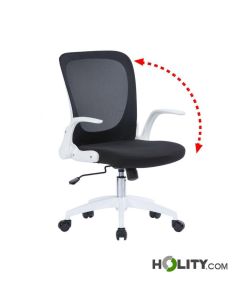
Folding chairs are a solution for environments with limited space or where spaces need to be reconfigured frequently. However, the folding mechanism reduces overall durability. They are ideal for occasional workstations or meetings; for long-term fixed workstations, a standard non-folding chair is preferable for stability and longevity.
Height adjustment allows the lumbar support to be positioned at different body heights. Depth adjustment allows the backrest to be moved further or closer to the torso. A permanent contact mechanism keeps the support constant during movement; the synchro mechanism automatically synchronizes the position of the seat and backrest for optimal ergonomics during oscillation.
 English
  Italian
 French
 German
 Spanish