
mon-fri 9-13 / 14.30-18.30
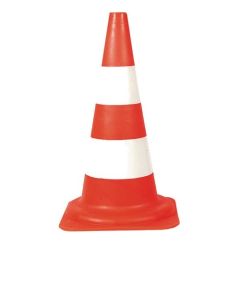
Pack of 28 pieces
€164.64 VAT excl.Traffic signaling cone. Height: 50 cm. Material: polyethylene.
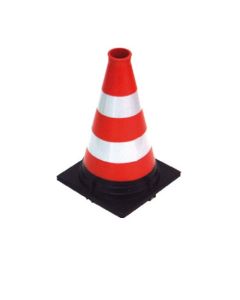
Pack of 20 pieces
€149.00 VAT excl.30 cm rubber signaling cone with two reflective bands, ideal for delimiting emergency areas and temporary road construction sites.
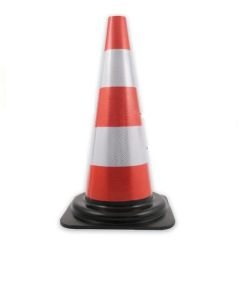
Pack of 16 pieces
€148.96 VAT excl.PVC traffic cone. Height: 54 cm. With white and red reflective bands.
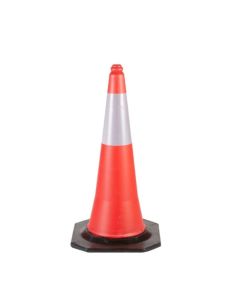
Pack of 18 pieces
€200.34 VAT excl.75 cm blown polyethylene traffic cone, non-reinforced rubber base, with reflective band for greater visibility. Weight: 4.95 kg.
Pack of 11 pieces
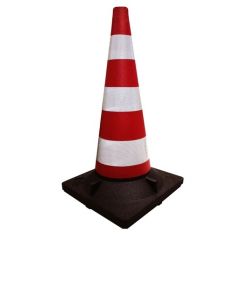
€145.53 VAT excl.Approved construction cone. Material: rubber. Height: 54 cm.
Pack of 10 pieces
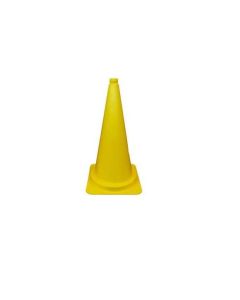
€143.90 VAT excl.Signage cone for use on construction sites. Height: 50 cm. Material: PVC. Available in yellow or blue.
Pack of 10 pieces
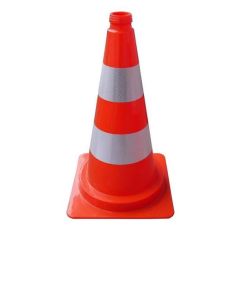
€151.20 VAT excl.PVC traffic cone, height 50 cm, with reflective strips. Durable and stackable, ideal for the delimitation of private areas and parking lots.
Pack of 10 pieces
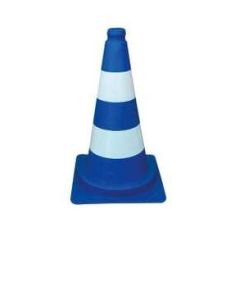
€174.90 VAT excl.PVC construction cone. Color: blue with white stripes. Height: 50 cm.
Pack of 10 pieces
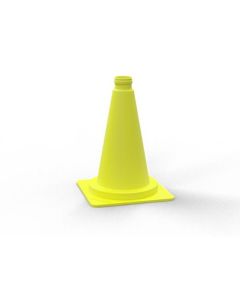
€287.10 VAT excl.Yellow traffic cone h503_41 in durable PVC (H 320 mm). Daylight fluorescent, stackable and anti-tip for logistics areas.
Pack of 18 pieces
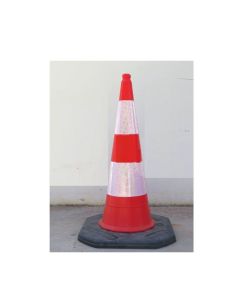
€521.10 VAT excl.75 cm road cone in blown polyethylene with reinforced rubber base and double reflective band for maximum visibility. Dimensions: Ø 43 x H 75 cm.
Pack of 10 pieces
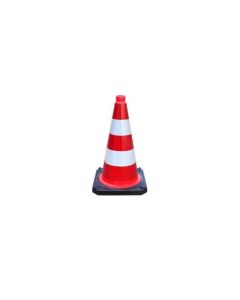
€379.10 VAT excl.Traffic cone with class RA1/A reflective film. Height: 50 cm.
Pack of 5 pieces
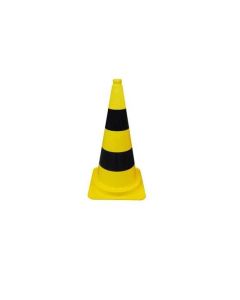
€195.85 VAT excl.PVC signaling cone. Color: yellow with black stripes. Height: 75 cm.
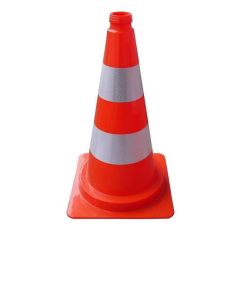
Pack of 5 pieces
€201.10 VAT excl.Signaling cone with white reflective stripes. Color: red with white stripes. Height: 75 cm.
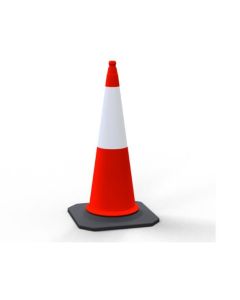
Pack of 10 pieces
€511.80 VAT excl.Orange/white traffic cone (H 1000 mm) in LDPE with PVC base (5.5 kg). Equipped with reflective strip, ergonomic grip and stackable design.
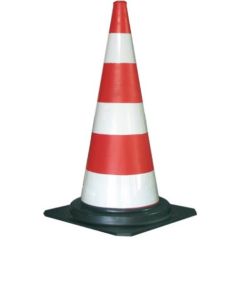
Pack of 10 pieces
€519.40 VAT excl.Rubber construction cone with reflective strips. Height: 75 cm.
Pack of 5 pieces
€336.55 VAT excl.Road cone tested according to weight class 3 TL and compliant with STVO. Height: 75 cm.
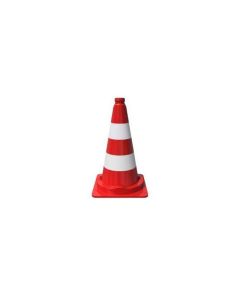
Pack of 5 pieces
€453.60 VAT excl.Traffic road cone equipped with RA2/B reflective film. Height: 75 cm.
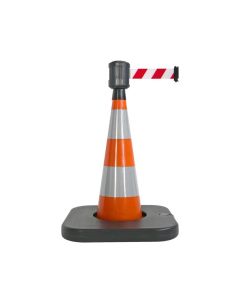
Professional PVC/ABS traffic cone, height 85 cm, ballastable base and 2-meter retractable belt with integrated anti-panic system.
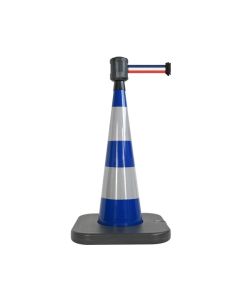
Blue signaling cone h972_129 in PVC/ABS, height 105 cm. Ballastable base and 2m tricolour retractable strap with anti-panic release system.
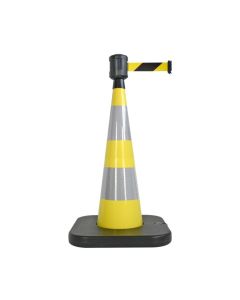
Professional traffic cone h972_127 in PVC and ABS, height 105 cm, ballastable base and 2-meter retractable belt with anti-panic system.
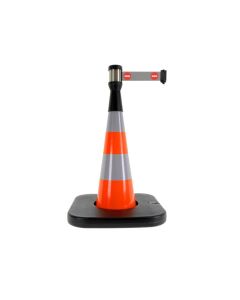
Traffic cone h972_126 in PVC/ABS with 4m retractable strap "No Entry". Ballastable base and integrated panic safety system.
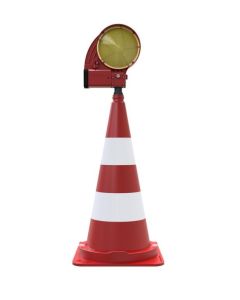
Pack of 10 pieces
€1,744.50 VAT excl.Road signaling set TL compliant: 750 mm one-piece cone (RA1/A film), adapter, unidirectional yellow flashing light and battery. Dimensions: W 400 × D 400 × H 750 mm.
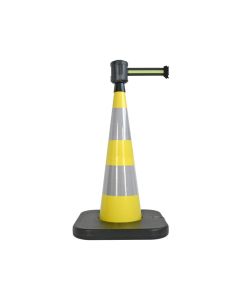
Professional signaling cone in PVC and ABS with a 4-meter retractable belt and ballastable base for the safe delimitation of work areas.
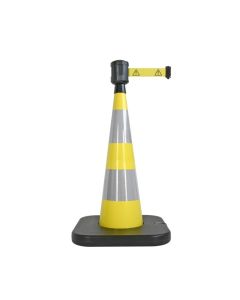
Professional signaling cone in PVC/ABS, height 1050 mm, with 4 m retractable "DANGER" belt and ballastable base for construction sites and industrial areas.
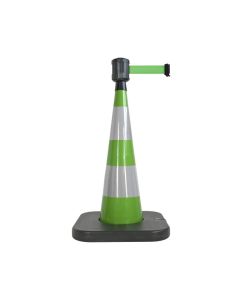
Professional green signaling cone in PVC/ABS, height 1050 mm, with 4-meter retractable belt and ballastable base for maximum outdoor stability.
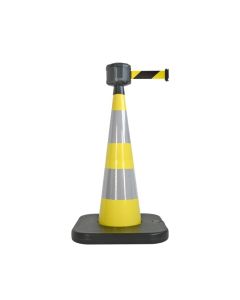
Professional PVC/ABS traffic cone with 10-meter retractable belt and ballastable base. Ideal for extensive outdoor delineations.
Traffic cones represent an essential solution for road safety management, construction site perimeter marking, and traffic organization in urban and rural environments. These devices play a critical role in road maintenance operations, construction work, and any situation requiring hazard warnings or restricted area demarcation. Their effectiveness depends on visibility, stability, and compliance with current regulations—factors that vary based on construction materials, dimensions, and the presence of reflective elements.
Selecting traffic cones is not a trivial decision: every operational context requires specific characteristics regarding height, weight, retroreflective capacity, and weather resistance. An inadequate cone can compromise the safety of workers and road users, whereas a well-calibrated solution ensures regulatory compliance and long-lasting protection.
Traffic cones offer immediate and recognizable visibility in any operational setting, both day and night. Their conical shape, combined with standardized colors such as orange, yellow, and red, facilitates quick identification by drivers and pedestrians. On construction sites, during roadworks, or in traffic diversion operations, these devices create a physical and psychological barrier that deters entry into dangerous zones. Their ease of setup and removal makes them ideal for temporary, high-frequency needs. In the HoReCa sector and public spaces, cones help direct pedestrian traffic, mark off outdoor areas, and visually define private property boundaries. Investing in quality cones translates to reduced accidents, regulatory compliance, and corporate liability protection.
The operational versatility of traffic cones extends beyond emergency or construction site scenarios: they are used in parking lots, public events, logistics warehouses for space organization, and any situation requiring instant visual signaling. Cones with reflective bands offer extra protection at night, while weighted-base models ensure stability even in moderate wind or on uneven surfaces. Their stackable design simplifies storage and transport—a crucial feature for companies managing equipment fleets.
The market offers traffic cones in various material and construction categories, each designed for specific needs. Blow-molded polyethylene cones represent the lightest and most economical solution, ideal for frequent use and easy transport; they provide sufficient visibility and are simple to handle. PVC cones, on the other hand, offer superior mechanical resistance and longer durability, better withstanding extreme temperatures and UV rays. Rubber cones constitute the premium tier: they deliver exceptional stability, resist tipping, and feature a weighted base that compensates for minor terrain irregularities. Sizes range from 30 cm (compact cones for indoor use or parking lots) to 105 cm (cones for high-traffic roads), with weights varying from a few hundred grams up to 5–6 kg for heavy-duty models.
A key differentiator involves reflective banding: basic cones feature plain red-and-white stripes, while advanced models use Class RA1 or RA2/B retroreflective sheeting, complying with European night-visibility standards. Some cones include integrated contrasting straps (black/yellow, blue/white/red) or retractable belts extending up to 10 meters, ideal for cordoning off large areas. Choosing between a standard and fully equipped cone depends on the environment: controlled, enclosed spaces require less reflective coverage, whereas high-traffic open roads benefit from maximum visibility, especially at night or in low-light conditions.
Selecting the correct traffic cone begins with analyzing the environmental context and operational constraints. For urban construction sites with low traffic speeds, a 50 cm polyethylene cone with standard reflective stripes is often adequate and cost-effective. For high-speed open roads, larger models (75–105 cm) made of rubber or heavy-duty PVC with EN-compliant reflective sheeting are required. Weather conditions are also critical: windy areas demand weighted-base cones to prevent tipping, while heavy rainfall zones benefit from waterproof materials like PVC or rubber that retain structural integrity without absorbing moisture. A common oversight is underestimating visibility: near intersections or curves, taller cones with wider reflective bands provide an added margin of safety. Consider usage frequency as well: daily setup demands lightweight, stackable cones for operational efficiency, whereas occasional use justifies a higher upfront investment in maximum durability.
Local regulations and compliance requirements are another critical factor: some authorities require specific reflectance classes (RA1, RA2/B) for certain road types, while others mandate cones approved under standards such as the German StVO or European EN 13422. Checking regional requirements before purchasing avoids fines and ensures legal operation. Fleet composition is another consideration: companies managing diverse jobsites benefit from a mixed cone inventory, while those in uniform environments can standardize on a single model. Comparing unit costs against expected lifespan and replacement frequency helps identify the optimal cost-to-quality ratio without compromising safety.
Traffic cones are subject to European standards governing materials, dimensions, reflectivity, and stability. Standard EN 13422 defines requirements for temporary traffic control devices, specifying visibility classes (V0, V1, V2, V3) and reflectance classes (RA1, RA2/B). Cones with reflective sheeting must demonstrate retroreflection performance measured in cd·lx-1·m-2, essential for guaranteeing visibility beyond 200 meters in low-light conditions. Dynamic stability is tested under TL (Traffic Load) weight classes: low-speed urban cones may comply with Class 1, whereas highway-grade cones must pass wind stability tests exceeding 50 km/h, typically required for Class TL3. In Italy, the Highway Code (Legislative Decree 285/1992) and relevant technical guidelines (PGTU) mandate CE-certified devices with compliance documentation for roadworks.
Beyond European standards, many local authorities and contract awarders require additional certifications: German StVO regulations mandate specific TL test classes for cones, while French and British authorities enforce variations of EN 13422. Structural safety depends on material rigidity: overly brittle cones break easily, while poorly weighted bases lead to tipping, negating warning effectiveness. Cones featuring reinforced rubber bases or internal weighting typically meet the strictest stability standards. Regular maintenance and fleet inspections are required by law in many jurisdictions; periodically checking reflective sheeting integrity, structural cracks, and color vibrancy is recommended to ensure compliance and mitigate corporate liability.
Explore all products in this category and compare available options to find the ideal solution for your operational needs. From material selection, height, and reflectance levels to logistics and regional compliance, our catalog offers comprehensive choices for construction sites, traffic management, and area demarcation.
 English
  Italian
 French
 German
 Spanish