
mon-fri 9-13 / 14.30-18.30
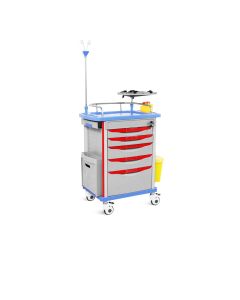
High-resistance emergency trolley. Equipped with 5 drawers. Dimensions: 75 x 47.5 x 92 cm.
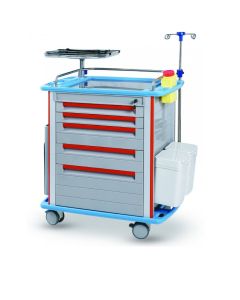
Hospital emergency trolley with cylinder holder and 5 drawers. Dimensions: W.85xD.52xH.96cm
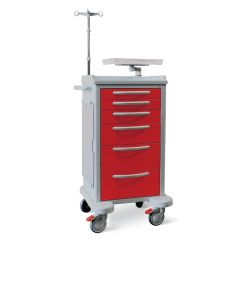
Emergency trolley with 6 configurable drawers, waste bin and emergency accessories. Dimensions: W. 650 x D. 600 x h. 1110 mm.
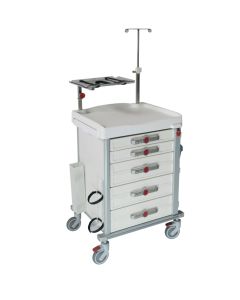
Emergency trolley with IV pole, defibrillator tray and cardiac massage board. Dimensions: 620 x 600 x h.1010 mm.
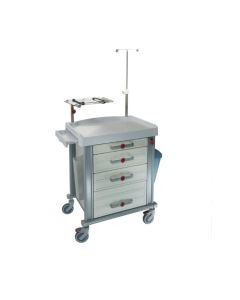
Emergency trolley with IV pole, defibrillator shelf and cardiac massage board. Dimensions: 770x600x1010h mm
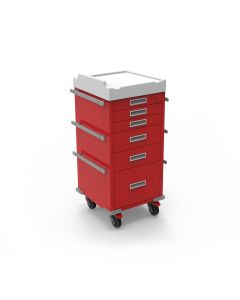
Emergency trolley with 6 drawers of different sizes. Material: steel sheet. Sturdy and easy to handle.
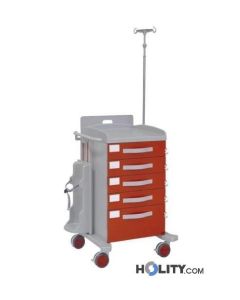
Medical emergency trolley equipped with an IV pole and oxygen cylinder holder. Drawers and inserts available in different colors. Cardiac massage board and safety lock available as options.
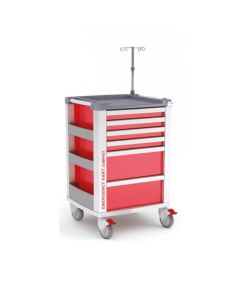
Emergency trolley with 6 drawers: Dimensions: W.655 x D. 605 x h. 970 mm.
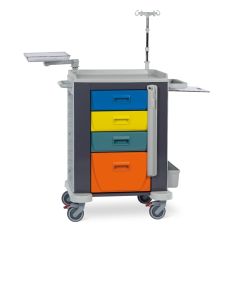
Emergency trolley with 4 drawers, IV pole and oxygen tank support. Dimensions: W75 x D65 x H106 cm.
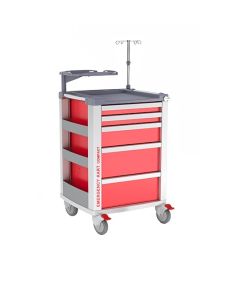
Emergency trolley in aluminum with drawers, handles, wheels, IV pole, oxygen cylinder shelf.
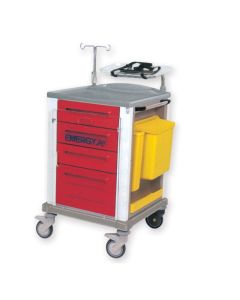
Emergency trolley in painted steel with IV pole and waste bin. Dimensions: 67 x 64 x 100h cm.
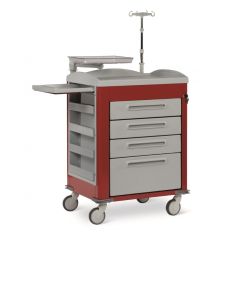
Hospital emergency trolley equipped with the necessary accessories for patient emergency and resuscitation. Dimensions: W85 x D60 x H106 cm
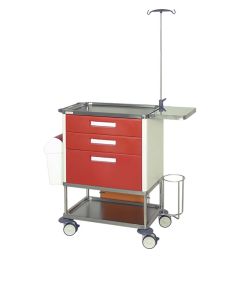
Emergency trolley for hospital facilities. Made of ABS and stainless steel. Dimensions: W75 x D49 x H100 cm.
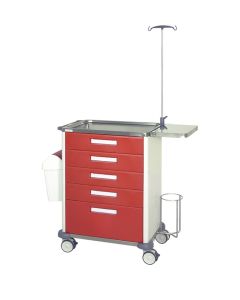
Hospital emergency trolley with 5 drawers. Dimensions: 750 x 490 x 1000 mm
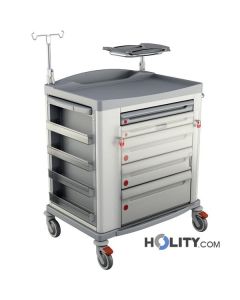
Hospital emergency trolley supplied with defibrillator holder and IV pole. Dimensions: 760 x 714 x h 1,022 mm.
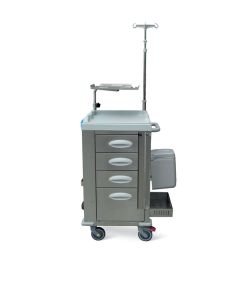
Emergency trolley in AISI 304 steel. Dimensions: W.680xD.630xH.1100 mm
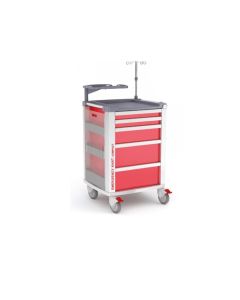
Medium-sized emergency trolley. Dimensions: W.805xD.605xH.975 cm
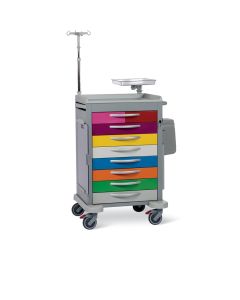
Pediatric emergency trolley. Dimensions: 800x640xh.1680 mm
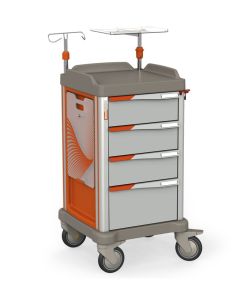
Emergency trolley with 4 plastic drawers, stainless steel IV pole and defibrillator shelf. Dimensions: 571x594x1010 mm.
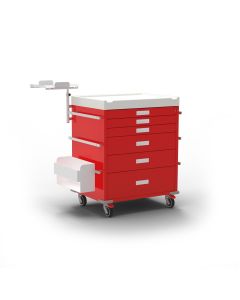
Hospital emergency trolley made of steel sheet. Spacious and easy to handle.
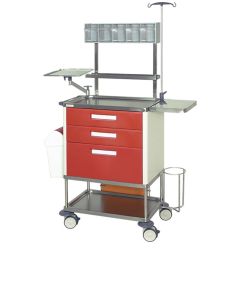
Multifunction emergency trolley. Material: ABS and stainless steel. With 3 drawers. Dimensions: W75 x D49 x H100 cm.
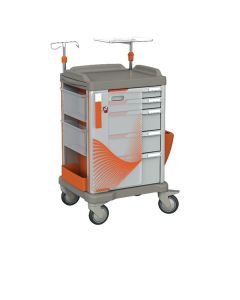
Emergency trolley for hospitals and clinics with 5 drawers, waste bin and other accessories. Dimensions: W78 x D59.4 x H101/125 cm
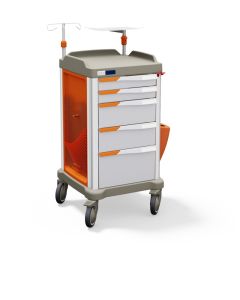
Hospital trolley for emergency interventions complete with all the necessary equipment and accessories. Dimensions: W57.1 x D59.4 x H105 cm
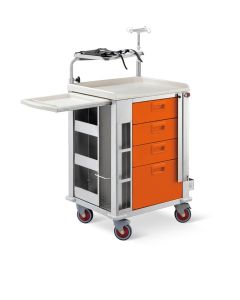
Emergency trolley with AISI 304 stainless steel body. Dimensions: 890x630xh.1040 mm.
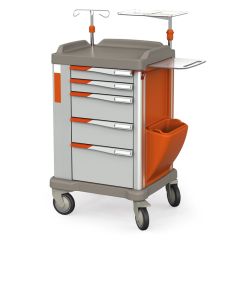
Emergency trolley for hospitals and first aid equipped with IV pole, defibrillator shelf and pull-out cardiac board.
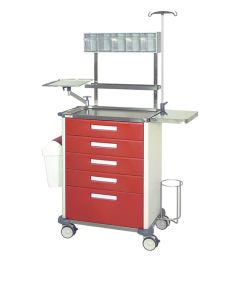
Professional emergency trolley. Supplied complete with accessories and 5 drawers. Dimensions: W75 x D49 x H100 cm.
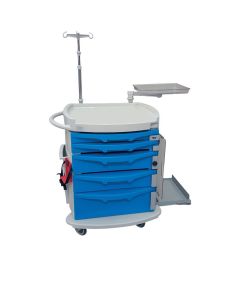
Emergency trolley in painted steel. Dimensions: 800x620xh.930 mm.
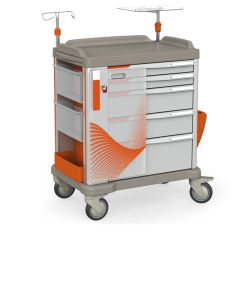
Large-sized emergency trolley, equipped with all accessories for patient treatment. Dimensions: W97.3 x D59.4 x H101/125 cm.
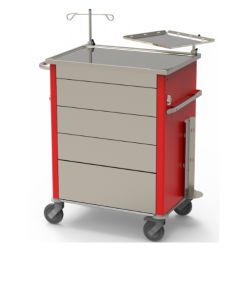
Stainless steel hospital emergency trolley. Dimensions: W.83.3 x D.54.6 x H.99.5 cm. With 5 drawers with "push" opening.
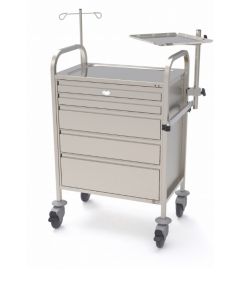
Hospital emergency trolley. Material: stainless steel. With 5 drawers of different sizes.
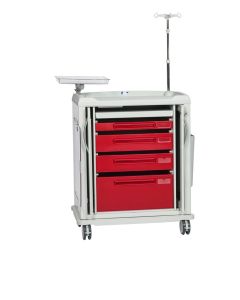
Emergency trolley for resuscitation rooms, first aid, emergency interventions, hospitals. Dimensions: W. 880 x D. 620 x h. 1200 mm.
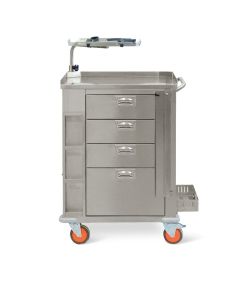
Emergency trolley in non-magnetic AISI 304 stainless steel. Dimensions: W.890xD.630xH.1040 mm
Emergency trolleys represent a fundamental element in modern healthcare facilities, hospitals, clinics, emergency rooms, and medical centers. These mobile devices are designed to contain and organize essential tools, drugs, and equipment during first aid and resuscitation interventions. A well-structured emergency trolley guarantees immediate access to defibrillators, oxygen cylinders, IV drips, and life-saving drugs, reducing response times in critical situations. The constructional versatility allows it to adapt to different hospital contexts, from ordinary inpatient areas to intensive care units, up to extra-hospital emergency transport.
Choosing an emergency trolley involves complex technical evaluations: storage capacity, material resistance, operational ergonomics, compliance with health regulations, and ease of sanitization. Each model in the Holity catalog meets specific international standards, guaranteeing reliability and durability even under constant operational pressure. The trolleys differ in the number of drawers, types of integrated accessories (defibrillator holder, IV pole, cylinder supports), construction materials, and dimensions, thus allowing for customization based on the needs of the healthcare facility and the medical staff who will use them daily.
A modern emergency trolley offers significant operational advantages during cardiopulmonary resuscitation maneuvers and emergency management. The immediate availability of every tool reduces the cognitive load of the medical team, allowing staff to focus entirely on patient stabilization. Professional models include ergonomic supports for heavy equipment such as oxygen cylinders, dedicated areas for high-criticality temporary devices like automatic defibrillators, and easily removable drawers for quick access to medications and consumables. Mobility is a crucial aspect: superior quality wheels, robust handles, and appropriate dimensions ensure that the trolley can be moved quickly even in confined spaces and under intense operational stress conditions.
On a management and logistical level, a well-organized emergency trolley allows for standardization of restock protocols and reduces errors of non-availability of critical drugs. The visual traceability of materials, allowed by transparent or labeled drawers, improves efficiency in stock management. Furthermore, the use of materials such as AISI 304 stainless steel and ABS facilitates the rigorous sanitization required by hospital infection control protocols. In extra-hospital emergency contexts, such as ambulances or medical transport services, compact yet capacious emergency trolleys allow for maintaining operational autonomy even far from fixed facilities, resulting in essential for safe stabilization and transfer of the patient.
The range of emergency trolleys is divided into different construction configurations, each optimized for specific operational contexts. Compact models with 4-5 drawers are ideal for departments where space is limited or for facilities with a low influx of emergencies, while still maintaining quick access to essential materials. 6-drawer trolleys represent the reference standard in medium-sized hospitals, offering a balance between capacity, maneuverability, and footprint. Higher-end models, often made of stainless steel or ABS-steel combinations, include integrated accessories such as a removable defibrillator holder, adjustable IV pole, specific shelves for oxygen cylinders, and removable waste bins. Some trolleys feature pediatric versions, with reduced heights and dimensions for facilities specialized in pediatric emergencies.
Material differences significantly affect durability, weight, and compatibility with sterilization protocols. Painted steel sheet trolleys represent an economical solution but require regular anti-corrosion maintenance, while those in AISI 304 stainless steel guarantee high biological resistance and require only standard chemical-mechanical sanitization. Lightweight aluminum models, frequently combined with ABS inserts, reduce overall weight and are preferable in contexts where movement frequency is high. The internal configuration also varies: some trolleys feature completely removable and interchangeable drawers, allowing for layout reorganization according to local protocols, while others maintain a fixed structure to guarantee intrinsic stability.
The selection of an emergency trolley requires a preliminary analysis of the context of use, the average frequency of critical interventions, and the availability of storage space in the department. A hospital with a high-traffic emergency room needs robust trolleys, easily sanitizable, and equipped with sufficient drawers so as not to require frequent restock during long shifts. Facilities specialized in cardiology or intensive care will benefit from trolleys with a robust IV pole, a stable defibrillator shelf, and priority access to drugs specific to the pathology. Medical centers and local clinics can opt for compact models, saving space without compromising critical functionality. It is essential to check that the trolley is compatible with local drug storage protocols (controlled temperature, separation by therapeutic families) and that the dimensions allow for agile passage in real environments: an on-site measurement is always advisable.
Frequent errors in evaluation include underestimating the necessary capacity (often discovered insufficient only after months of use), choosing cheap models with low-quality wheels (which compromise maneuverability), and failing to verify regulatory compliance for accredited facilities. A critical decision criterion is the future availability of spare parts and additional accessories: reliable manufacturers guarantee continuity of supply for at least 10-15 years. Consider also the number of drawers effectively used by the medical team: an oversized trolley occupies space unnecessarily, while an undersized one generates operational frustrations. Finally, evaluate the ease of sanitization: drawers with rough internal finishes or areas difficult to clean generate hidden operational costs over time.
Hospital emergency trolleys must comply with construction and safety standards defined at European and national levels. The EN ISO 14971 standard establishes risk management criteria for medical devices, ensuring that every component of the trolley is designed and tested to minimize hazards during emergency maneuvers. Specifically, emergency trolleys fall into the category of non-critical medical devices but are still subject to CE certification, attesting to compliance with European directives on safety, electromagnetic compatibility (if they include active fastening systems), and environmental sustainability. For hospital facilities, it is necessary to ensure that emergency trolleys are subjected to periodic preventive maintenance and documented functional verification, according to specific regulations on the management of biomedical technology.
Recurring regulatory aspects include the control of structural stability under dynamic loads, the verification of non-toxic and biocompatible materials for surfaces in indirect contact with patients, and compatibility with fire-fighting and medical waste disposal systems. HACCP certification, although primarily food-related, also informs hospital trolley sanitization protocols, requiring easily sterilizable materials and work surfaces resistant to high-concentration disinfectants. Facilities with research laboratories or experimental procedures must ensure that trolleys also meet international GCP (Good Clinical Practice) protocols. Always check with the supplier for the availability of specific certifications for the target market, complete technical documentation, and compliance with accident prevention regulations (UNI ISO 12100) for the safety of personnel during movement and use.
Explore all the products in the category and compare the available solutions to find the one best suited to your operational context. Each emergency trolley has been selected based on proven technical specifications and operational reliability verified over time.
An emergency trolley is a mobile device structured to contain drugs, equipment, and diagnostic tools necessary during resuscitation and first aid interventions. In a hospital, it allows the medical team to quickly access defibrillators, oxygen cylinders, IV drips, and life-saving drugs, reducing response times in critical situations and standardizing the material layout according to local protocols.
The number of drawers depends on the context: compact trolleys have 4-5, ideal for clinics and departments with limited space; standard models include 6 drawers, representing the standard in medium-sized hospitals. Facilities with a high influx of emergencies opt for 7+ drawers. The decision should be based on the frequency of necessary restock and the availability of physical space in the department.
AISI 304 stainless steel offers maximum biological resistance and ease of chemical sanitization; painted sheet metal is economical but requires regular anti-corrosion maintenance; aluminum combined with lightweight ABS reduces weight, favoring frequent movement. The choice depends on the frequency of use, available budget, and sterilization protocols of the healthcare facility.
Sanitization requires dismantling the removable drawers and cleaning with high-concentration disinfectants (alcohol, diluted chlorine). Drawers must dry completely before restocking. Stainless steel surfaces resist well; porous materials or those with rough finishes can retain contaminants. Check with the manufacturer for specific recommendations for the model owned.
Pediatric trolleys have reduced heights and dimensions, designed for facilities specialized in pediatric emergencies. Furthermore, drug dosages and accessory sizes (catheters, defibrillator pads) are calibrated for child patients. Hospitals with pediatric departments should evaluate this need separately even if they possess standard adult trolleys.
The price varies from about 700 euros for compact models in painted steel up to 2,500+ euros for professional stainless steel trolleys with complete integrated accessories. Determining factors are construction material, number and quality of drawers, included accessories (defibrillator holder, IV pole), brand, and certifications. Always evaluate the total cost of ownership considering future maintenance.
Usually, emergency trolleys include a 1 to 3-year warranty on construction defects and hidden flaws. Some specialized manufacturers guarantee the availability of spare parts for 10-15 years, a critical element for facilities requiring operational continuity over time. Always check specific terms with the supplier before purchasing.
 English
  Italian
 French
 German
 Spanish