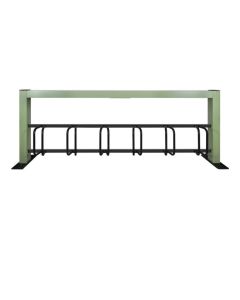
mon-fri 9-13 / 14.30-18.30
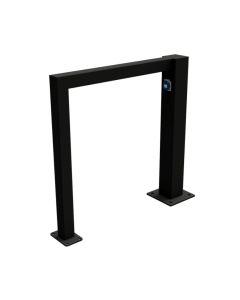
Single charging station for e-bikes in galvanized and black steel. Hoop model without box, with 230V IP67 socket and base plates.
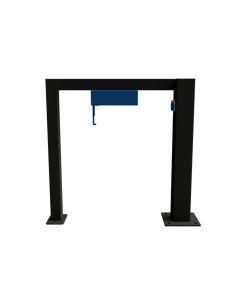
Single charging station for e-bikes in galvanized and black painted steel with 230V socket, lockable box and base plates.
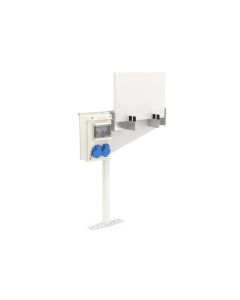
E-bike charging station h1023_16 in galvanized and powder-coated steel. With IP44 sockets, FI-LS protections and folding shelf. Light grey.
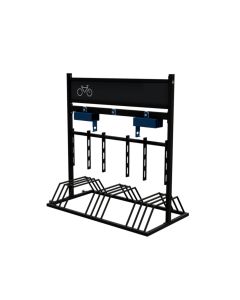
Mobile bike rack charging station on wheels in galvanized and black RAL 9005 steel with a 1230x254 mm customizable advertising panel. Accommodates 3 to 6 bikes, equipped with 3 IP54 sockets and 2 charger supports.
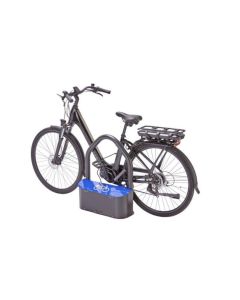
Single charging station for electric bicycles and scooters with rubber-coated arch Ø 50 mm and battery box protected by key lock. Dimensions: 57 x 26 x 73 h cm.
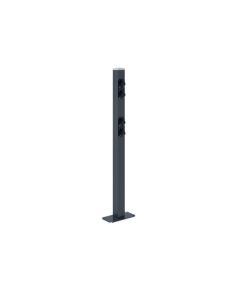
E-Bike charging station in galvanized and painted aluminium. Dimensions: W 39 x D 34 x H 146 cm.
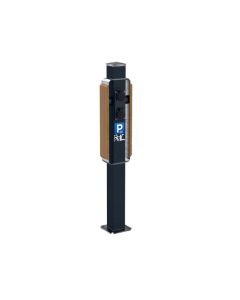
Station for 2 E-Bikes with integrated socket and oak cladding. Dimensions: W 18 x D 15 x H 102 cm.
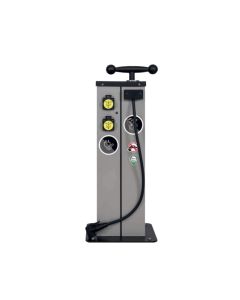
Electric bike inflation and charging station. Available in various colors.
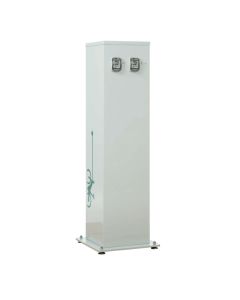
E-bike charging column. Number of sockets: 2. Available in different finishes.
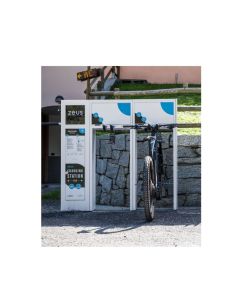
E-bike charging station consisting of a column and 2 modules. With 1x Schuko 16 A / 1x USB 1.5 A / up to 2x optional e-bike charging plugins per single module. Total dimensions: W 1600 x D 300 x H 1550 mm.
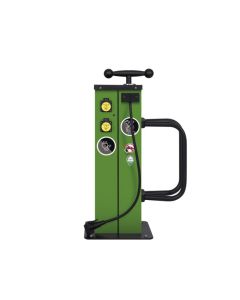
E-bike charging station, complete with tire inflation pump and a bike rack. Available in various colors.
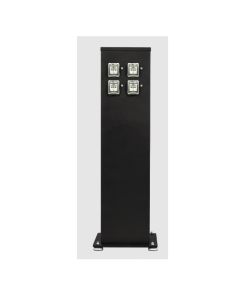
E-bike charging station for public spaces. Available in various colors. Dimensions: W.390XD.390XH.1200 mm.
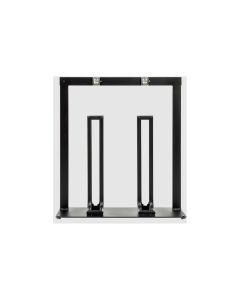
Bike parking rack with charging sockets. Dimensions: W.1180xD.390x H.1300 mm.
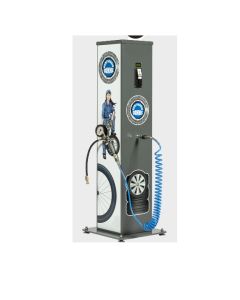
Coin-operated tyre inflation post. Dimensions: W.390xD.390xH.1200 mm.
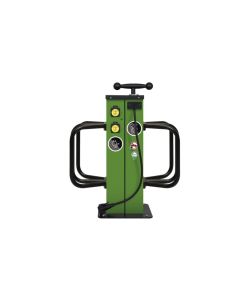
Electric bike charging column. Complete with tire inflation pump. Equipped with two single bike racks per side.
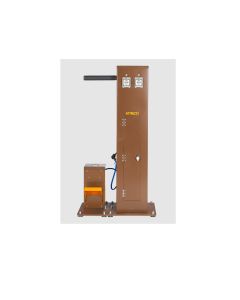
Bike charging station with maintenance kit and tire inflator. Dimensions: W.390+250XD.390XH.1200 mm.
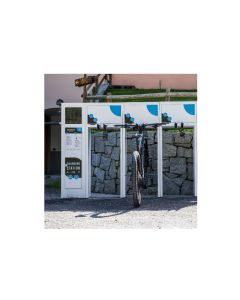
E-bike charging station consisting of a column and 3 modules. With 1x Schuko 16 A / 1x USB 1.5 A / up to 2x optional e-bike charging plugins per single module. Total power supply: 4 KW three-phase. Total dimensions: L 2200 x D 300 x H 1550 mm.
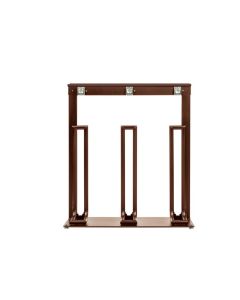
3-place electrified bicycle rack. Available in various colors. Dimensions: W.1180xD.390x H.1300 mm.
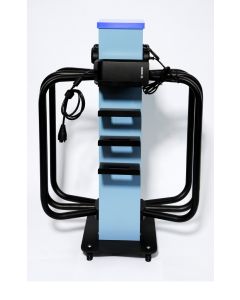
Charging station for electric bikes. With 4 stations and 4 SCHUKO sockets. Dimensions: W58.7 x D33.7 x H80.4 cm.
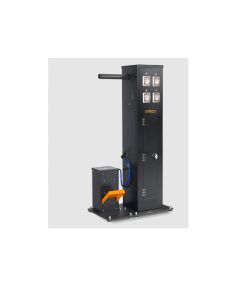
Bike charging totem with 4 sockets, maintenance kit and bike rack bar. Dimensions: L.390+250xD.390xH.1200 mm.
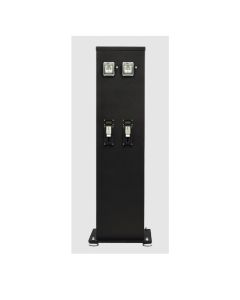
E-bike charging totem with coin-operated socket activation. Available in various colors.
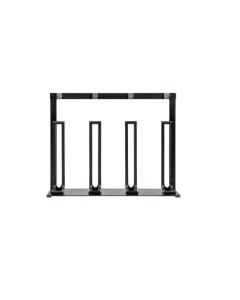
Bike racks with 4 sockets. Available in different colors. Dimensions: W.1650 X D.390 X H.1300 mm.

Remote-managed charging station h987_05 for e-bikes and scooters in galvanized steel. Includes 4 modules with 27L compartments and maintenance tool set.
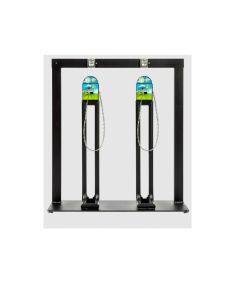
E-bike rack with charging outlets and slots with chain. Dimensions: W.1180xD.390x H.1300 mm.
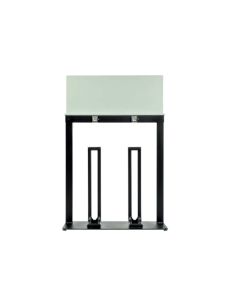
E-bike charging station with graphic panel. Available in various colors. Dimensions: W.1180 x D.390 x H.1800 mm.
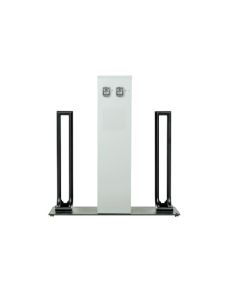
Bike charging station with 2 stalls for ebikes. Available in various finishes. Dimensions: W.1180XD.390XH.1200 mm.
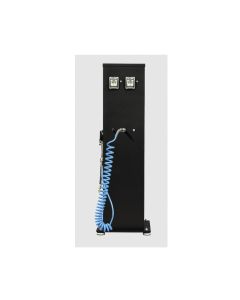
Bicycle charging station with compressor. Available in different finishes. Dimensions: W 39 x D 39 x H 120 cm.

Bicycle parking rack with sockets and graphic panel. Dimensions: W.1180xD.390x H.1800 mm.
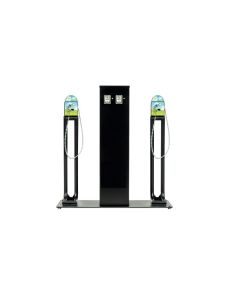
E-bike charging column with 2 sockets and bike racks. Dimensions: 1180 x 390 x H.1200 mm.

Scooter rack with charging sockets. Available in various colors. Dimensions: W.1180xD.390xH.1300 mm.
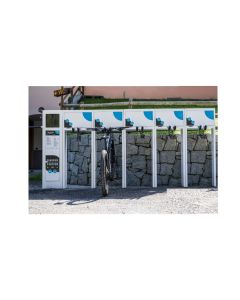
E-bike charging station consisting of a column and 5 modules. With 1x Schuko 16 A / 1x USB 1.5 A / up to 2x optional e-bike charging plugins per single module. Total power: 6 KW three-phase. Total dimensions: W 3400 x D 300 x H 1550 mm.

Charging station for electric scooters with 3 sockets. Dimensions: L.1180 X D.390 X H.1300 mm.
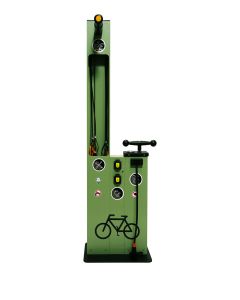
E-bike charging station with 2 Schuko sockets and maintenance kit. Available in various colors.
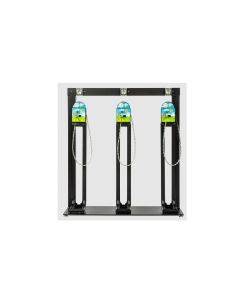
Bike rack with electrical outlets and stalls with chains. Dimensions: W.1180xD.390x H.1300 mm.
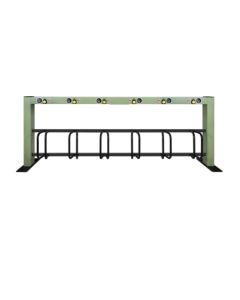
6-position electric bike charging rack. Material: aluminum. Length: 2.7 m.
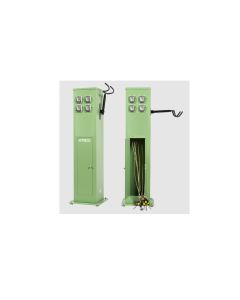
E-bike charging station. Available in various colors. Dimensions: W.390 x D.390 x H.1400 mm.
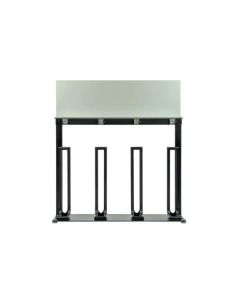
Bike rack with 4 sockets and graphic panel. Available in various colors. Dimensions: W.1650xD.390x H.1800 mm.
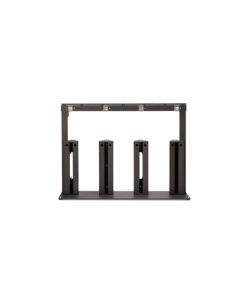
Electrified rack with bike stall. Dimensions: W.1650XD.390XH1300 mm. Compatible with fatbikes.
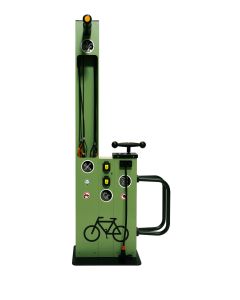
Electric bike charging station with 1 bike rack. Material: galvanized aluminum. Available in various colors.
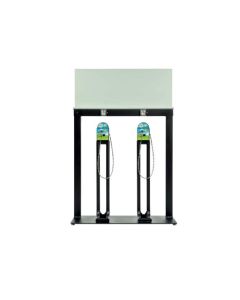
Electrified bike rack with sockets and stalls. Available in various colors. Dimensions: W.1180xD.390x H.1800 mm.
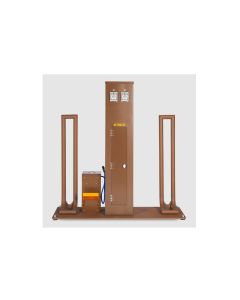
Charging station with tools and 2 bike stalls. Dimensions: L.1180xD.390xH.1200 mm.
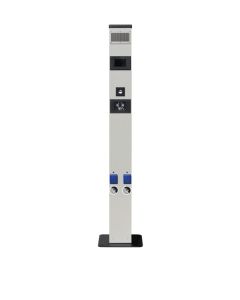
Smart E-Bike charging station, equipped with 2 Schuko sockets. Includes sensors for air PM detector and people counter. Dimensions: W. 300 x D. 300 x h. 1500 mm.
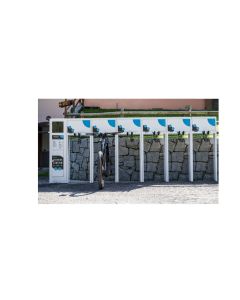
E-bike charging station consisting of a main column and 6 modules. With 1x Schuko 16 A / 1x USB 1.5 A / up to 2x optional e-bike charging plugins per individual module. Total power supply: 7 KW three-phase. Total dimensions: W 4000 x D 300 x H 1550 mm.
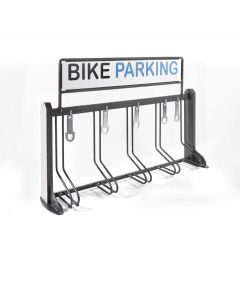
Charging station for electric bikes. Spaces: 5. Dimensions: W215 x D50 x H145 cm.
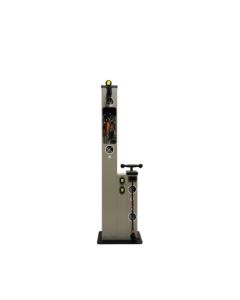
Electric maintenance, inflation and charging station for plus bikes 230 volts. Available in several color variants. Retractable tool set. Material: anticorodal aluminum.
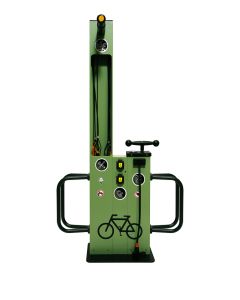
Electric bike charging station, complete with 2 lateral bike racks. Dimensions: W74 x D30 x H150.4 cm.
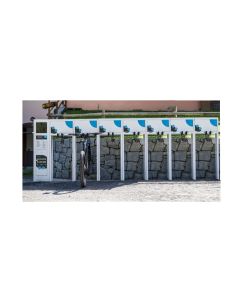
E-bike charging station consisting of a pillar and 7 modules. With 1x Schuko 16 A / 1x USB 1.5 A / up to 2x optional e-bike charging plugins per single module. Total power supply: 8 KW three-phase. Total dimensions: W 4600 x D 300 x H 1550 mm.

Bike charging rack with graphic panel. Available in various colors. Dimensions: W.1180xD.390x H.1800 mm.
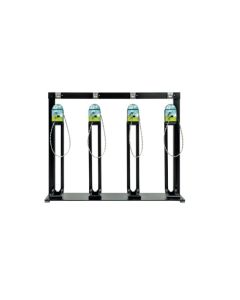
Electrified bike rack with charging sockets. Dimensions: W.1650 X D.390 X H.1300 mm.
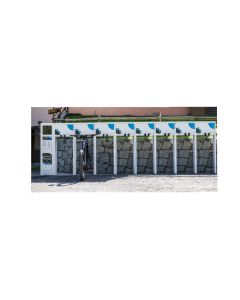
E-bike charging station consisting of a column and 8 modules. With 1x Schuko 16 A / 1x USB 1.5 A / up to 2x optional e-bike charging plugins per single module. Total power supply: 9 KW three-phase. Total dimensions: W 5200 x D 300 x H 1550 mm.

Compact e-bike charging station for 2 bikes, in IP54 impact-resistant plastic. Wall-mounted, compliant with IEC62196. Dimensions 380x182x635 mm.
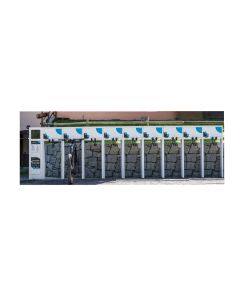
E-bike charging station consisting of a column and 9 modules. Featuring 1x Schuko 16 A / 1x USB 1.5 A / up to 2x optional e-bike charging plugins per individual module. Total power supply: 10 KW three-phase. Total dimensions: L 5800 x W 300 x H 1550 mm.
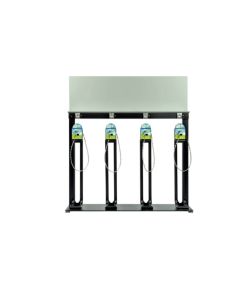
Charging station for electric bikes with stalls and chains. Dimensions: W.1650 X D.390 X H.1800 mm.
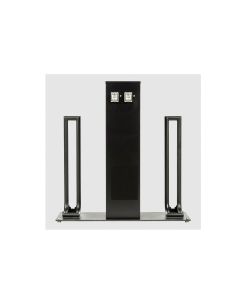
Charging station for electric bikes with racks. Payment by credit card. Dimensions: L.1180 X D.390 X H.1200 mm.

Electric bike charging rack with 3 Schuko sockets and 3 chargers. Number of spaces: 6.
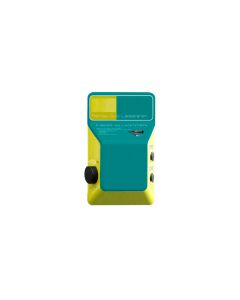
Intelligent wall-mounted charging station for 2 e-bikes and 1 electric car W.380 mm. UV-resistant IP54 structure with display.
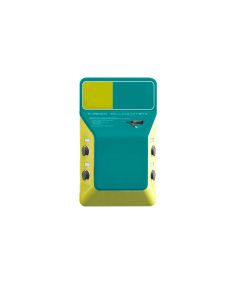
Compact charging station for 4 e-bikes, made of IP54 impact-resistant plastic for outdoor use. Wall installation, IEC62196 compliant. Dimensions 380x182x635 mm.
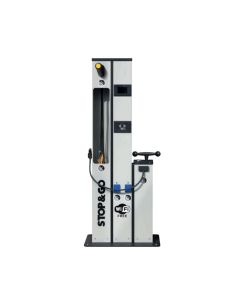
E-bike maintenance and charging station with support arm. Dimensions: W 61 x D 34 x H 150.6 cm.
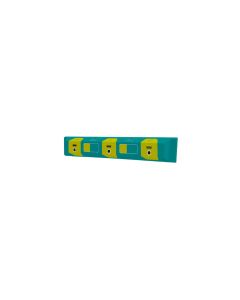
Wall-mounted charging station for 3 e-bikes in impact-resistant plastic W.1665 mm. Compact and weather-resistant solution produced in Austria.
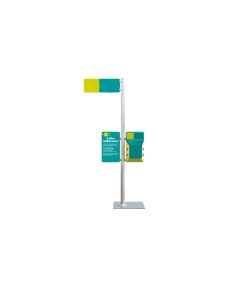
Charging station for 4 e-bikes on a 2650 mm high stainless steel column. IP54 waterproof structure.

6-station charging station for electric bikes with integrated chargers of your choice. Length: 2.7 m.
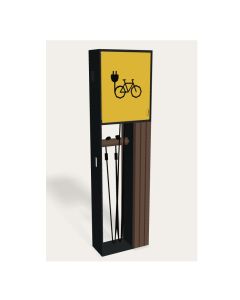
Electric bike charging station h1022_01, smart solution for sustainable urban mobility. Equipped with 4 charging points, online management system and ultra-resistant materials like painted steel and recycled plastic.
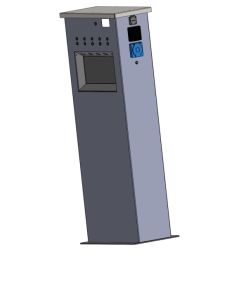
E-bike charging station with 5 automatically retractable outlets. Dimensions: W. 550 x D. 365 x H. 1445 mm.
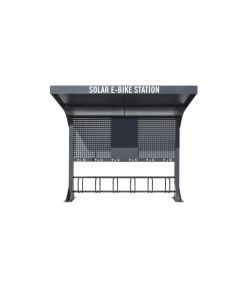
Aluminum shelter with e-bike charging, solar panels, UV painted. Dimensions: 273 x 223 x 239.7 cm
Electric bike charging stations represent an increasingly strategic infrastructure in urban, public, and commercial environments where a growing number of e-bike users circulate. These systems allow for the recharging of assisted-pedal vehicle batteries while maintaining high standards of practicality, safety, and order in common spaces. An e-bike charging station is not just an electrical outlet, but an integrated system that combines user protection, ease of access, rainwater drainage, structural robustness, and compliance with specific technical regulations. Available solutions range from modular posts to racks with electrical integration, including remote-managed systems with access control and energy consumption monitoring.
A dedicated charging station for electric bikes transforms the way public entities, companies, and hospitality facilities manage sustainable mobility. The added value lies in the reduction of traffic congestion, the encouragement of bicycle use as an ecological means of transport, and the generation of a positive user experience that encourages repeated visits to the facility. Users benefit from a professional infrastructure where they can recharge their battery without improvising precarious solutions or searching for an available socket in unsuitable corners. From a management perspective, a station offers traceability of energy consumption, protection from the elements thanks to prefabricated and certified structures, as well as a modern and environmentally conscious image that communicates important values to visitors and customers.
Modular charging stations also allow the solution to be adapted to the actual traffic volume: from compact solutions with 2 sockets up to multi-module installations with over 6 stations and intelligent load control. Public structures such as railway stations, shopping centers, universities, and healthcare facilities have found an increase in user satisfaction when charging is easily accessible, well-signposted, and protected from atmospheric agents. The strategic positioning of a station also contributes to defining movement flows in open spaces, improving general organization.
Electric bike charging stations differ according to a variety of construction and functional characteristics. Modular posts represent the most common solution and are vertical structures in galvanized aluminum, stainless steel, or painted galvanized steel, sized to integrate into public spaces without excessive bulk. Each module houses 2 to 4 standard Schuko 16A sockets, often associated with USB ports for charging mobile devices. Alternatively, racks with integrated sockets combine mechanical support for bicycles with charging functions, offering dedicated stations where the vehicle can be anchored while its battery is powered. There are also combined stations that include tire inflation pumps, basic maintenance tool kits, and even spaces for the temporary storage of accessories. Remote-managed solutions represent a further evolution, with controlled access systems (cards, smartphones, QR codes), real-time monitoring of electrical loads, energy accounting per module, and sometimes integration with dedicated apps.
Construction materials vary depending on the installation context: aluminum is preferred for environments where weight is logistically relevant and where aesthetics must express modernity; galvanized steel guarantees greater robustness in high-traffic contexts and superior resistance to impacts. Many installations also include weather protection systems such as polycarbonate roofs or composite material covers, essential in rainy climates. Some manufacturers also offer customizable colors and specific finishes (RAL 7016 anthracite, for example) to harmonize with the visual identity of the surrounding space. Energy capacity varies from 16 amps single-phase for compact solutions up to 7 kW three-phase for more complex installations with 6 modules, a critical aspect when simultaneous use of multiple stations is expected.
The selection of a charging station requires a preliminary analysis of the expected demand, considering factors such as the average number of daily users, the simultaneous usage rate, local weather conditions, and available space. The first aspect to evaluate is size and modularity: a parking space at a railway station will have very different needs from a parking lot in a medium-sized hospitality facility. If the traffic volume is low (up to 20-30 accesses per day), a compact solution with 2-4 sockets might be sufficient; conversely, high-traffic contexts require multiple modules, sometimes up to 6-8 stations. A common mistake is underestimating electrical capacities: if a margin is not planned in the loads, peak loads risk tripping protections and frustrating the user. The nominal power of the main connection must allow for at least two simultaneous charges without saturation.
A second criterion concerns the usage profile and the desired level of control. Free public installations require superior construction robustness and a certain resistance to vandalism; in this case, standard Schuko 16A sockets are preferable to proprietary connectors, as they allow for greater flexibility of use. Conversely, in controlled private or corporate contexts, remote-managed systems with identity verification and cost tracking can offer significant administrative advantages. Protection from the elements is mandatory in continental or alpine climates where snow and frost accelerate degradation; in dry climates, a simple canopy may suffice. Finally, consider whether to integrate additional functions such as an inflation pump (frequently requested by users) or basic maintenance kits: these elements increase the value of the station but also the cost and maintenance complexity.
Every electric bike charging station must comply with well-defined technical and safety standards to guarantee user protection and system durability. The CEI 64-8 standard (Electrical installations for users) represents the main reference in Italy, regulating the correct design and construction of low-voltage distribution systems, including service sockets. Schuko 16A sockets used in public stations must have a minimum protection class of IP44 (protection against water splashes) if exposed in outdoor environments, rising to IP55 for installations in areas where water can flow directly onto the socket. Grounding and connection with residual current devices (RCD) sensitive to leakage currents are mandatory: this protects against the risk of electric shock in case of accidental contact with damaged conductive parts.
From a structural side, posts and racks must meet criteria for mechanical stability and resistance to stress caused by wind, loads from bicycle leaning, and, in certain contexts, the accidental contribution of people leaning on the structure. Technical standards such as UNI EN 15463 (bicycle parking) provide references on anchoring dimensions, bicycle support angles, and load capacity per station. Installations in public spaces must also respect accessibility according to Legislative Decree 236/1989 and accident prevention safety regulations; socket heights, access depth, and maneuvering areas must comply with these standards. Many ISO 9001 certified manufacturers offer stations already designed according to these constraints, reducing the risk of non-compliance during the administrative authorization phase with municipalities.
Explore all the products in the category and compare available solutions to find the one best suited to your operational context, considering user volume, local climate conditions, and construction budget.
It is an infrastructural facility consisting of one or more charging posts/racks equipped with standard Schuko electrical sockets. The user connects their e-bike charger to the socket and recharges the battery, generally in 2-4 hours depending on the capacity. Many modern solutions also include tire inflators and maintenance tool kits.
The modular post is a standalone vertical structure with electrical sockets, suitable for spaces where the volume of bicycles is limited. The rack with sockets integrates mechanical support to anchor bikes, allowing simultaneous charging and parking, ideal for high-traffic areas where space is limited.
A post with 4 Schuko sockets can charge up to 4 bikes in parallel. Multi-module solutions with 6-8 stations support up to 8 simultaneous charges. The overall capacity depends on the power of the main connection, commonly 3-7 kW for public installations.
Sockets must have at least IP44 protection against water ingress, connection with a residual current device sensitive to leakage currents, certified grounding, and compliance with the CEI 64-8 standard. These measures protect the user from accidental shocks and dangerous contacts in outdoor environments.
Yes, most manufacturers offer customized painting according to RAL standards and specific color codes. Anodized aluminum or painted galvanized steel structures allow harmonization with the visual identity of public entities, companies, and hospitality facilities without compromising technical performance.
In addition to the charging sockets, these solutions include dedicated pumps for tire inflation, bike holders to support the bicycle during charging, and basic tool kits (screwdrivers, hex keys). This increases the perceived value of the infrastructure while reducing service times.
A compact post requires a space of 1-1.5 square meters; larger modular racks occupy 5-8 square meters. It must be positioned on a stable and draining surface, preferably covered from the elements, with easy access for users and regular maintenance. Check local urban planning constraints and the need for municipal authorizations.
Remote-managed systems offer real-time monitoring of loads, energy tracking per station, access control (cards/apps), automatic cost accounting, and waste reduction. They are ideal for private corporate contexts and facilities where vandalism prevention is a priority.
 English
  Italian
 French
 German
 Spanish