
mon-fri 9-13 / 14.30-18.30
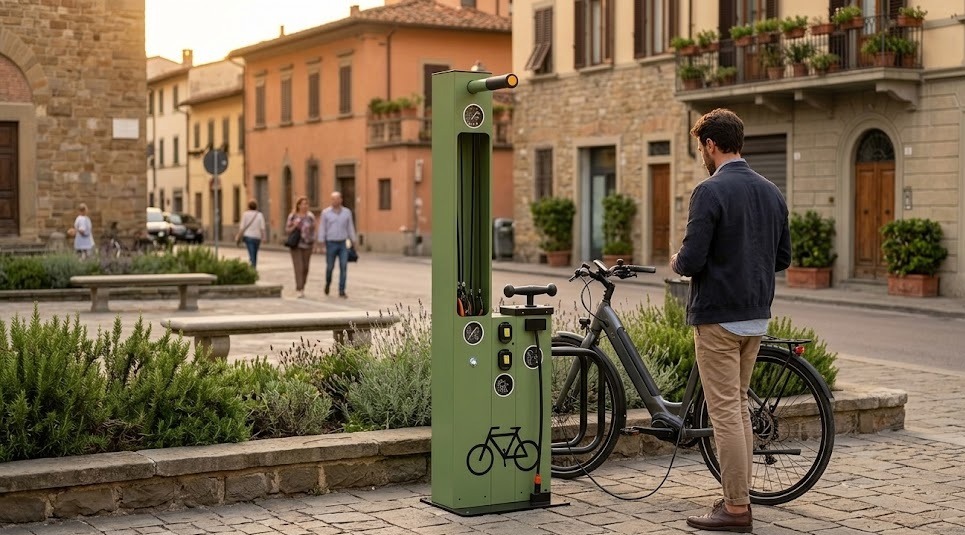
The unstoppable spread of electric micro-mobility and the boom in cycle tourism are requiring a profound logistical overhaul in the design of public spaces, business hubs, and accommodation facilities. Integrating e-bike charging stations is no longer a simple courtesy service, but rather a targeted infrastructural intervention aimed at intercepting green mobility flows, rationalizing the storage of pedal-assisted vehicles, and redeveloping urban areas. A bike park without controlled power points risks premature obsolescence, forcing users to resort to makeshift and haphazard solutions. This buying guide thoroughly analyzes the technological options, access systems, and service modules available in our assortment on Holity.co.uk, helping you configure the ideal station based on user volume and spatial constraints.
The first discriminating parameter in choosing a charging infrastructure concerns the energy use policy and the level of control that the manager intends to exercise over the station. Our catalogue is divided into three operating philosophies:
The electrical sizing of the station must be planned by analyzing the concurrency use index, i.e. how many bicycles are expected to need to be powered simultaneously during peak use. The modularity of our catalogue allows us to cover every logistical scenario in detail:
Modern street furniture lines go beyond the concept of a simple "plugging point", integrating mechanical and pneumatic accessories that transform the charging station into a real protected maintenance workshop. Based on the specific needs of your project, you can select models equipped with precise structural pluses:
The geometric planning of the parking area must be connected to the road levels and pedestrian transit corridors, ensuring compliance with universal accessibility regulations (Legislative Decree 236/1989). The dimensions of our modules allow for millimetric insertion into furnishing layouts:
The installation of electrical lines in outdoor environments exposed to bad weather, frost or street washing requires the adoption of rigorous insulation parameters, governed in Italy by the CEI 64-8 standard. The 16A Schuko sockets integrated into our stations have spring-loaded doors with minimum protection ratings of IP44 or IP55, which protect the electrical contacts from direct splashes and jets of water. The internal technical compartments house dedicated residual current circuit breakers (RCDs) for each module, instantly isolating the individual line in the event of a short circuit or power leakage, protecting the physical safety of the user even in the presence of high humidity or heavy rain.
Public squares, historic centers and municipal bicycle parking areas: The choice must be oriented towards free-access models in galvanized steel or stainless steel (RAL 7016 anthracite finish), equipped with built-in bike racks and vandal-proof doors. They must guarantee maximum resistance to mechanical impacts and immediate use for citizens without the need for digital intermediations.
Bike Hotels, Agritourism and Beach Resorts: In this scenario, the service must be premium to attract cycle tourist flows. We recommend using multifunctional stations equipped with both inflation kits and integrated maintenance tools. Offering a coordinated "workshop point" for charging significantly increases the facility's rating on industry tourism portals.
Corporate Centers, Universities, and Exchange Hubs: In these environments with predictable and prolonged traffic flows, systems activated via an app or for a fee are optimal. They allow for the tracking of energy consumption, the enabling of charging only for employees or students via dedicated credentials, and intelligent power management to avoid overload peaks on the building's network.
Actively encourage sustainable mobility in your spaces, offer a technically impeccable service to cyclists, and redevelop your rest areas with Holity.co.uk's professional solutions. Our online assortment is structured to meet any spending constraint, moving within a flexible economic range that ranges from a minimum of €272.00 for accessories up to €1166.00 for high-capacity cabinet multifunction stations.
Use our side filters to select the appropriate operating mode (free access, paid or with APP), the number of sockets required for your traffic and the ideal mechanical strengths for your urban layout. Contact our customer service today to receive detailed technical data sheets, dimensioned outline drawings and a personalized quote tailored to your project.
How do APP-activated remote management systems optimize electrical load balancing when up to 9 bikes are connected simultaneously?
Advanced charging stations equipped with an APP-activated module communicate in real time with an intelligent power management control unit. When the station detects high simultaneous usage (up to 9 chargers active in parallel), the algorithm does not interrupt the line, but dynamically distributes the available current between the modules based on the residual charge state of the individual batteries. This dynamic balancing prevents the overall absorption from exceeding the nominal contractual power of the structure, preventing the inadvertent disconnection of the main switch.
What fluid-dynamic insulation constraints and IP protection ratings differentiate the installation of sockets 750 mm from the ground compared to 2000 mm high totems?
The positioning height of Schuko sockets directly affects the risk of water infiltration from external agents. In the low 750 mm models, the proximity to the ground exposes the electrical components to the phenomenon of raindrops bouncing off and street water flows; for this reason, the sockets must adopt an IP55 protection rating with watertight perimeter seals. In vertical totems up to 2000 mm high, the sockets are placed at a raised ergonomic height (approximately 1100-1300 mm from the ground), a position naturally protected from foot traffic flows that allows the safe use of IP44 protections, facilitating the insertion of the connector.
How is the mechanical protection of the steel cables engineered in the 17 models equipped with maintenance tools to prevent their theft or malicious cutting?
The 17 models configured with mechanical first aid tool kits adopt a highly resistant passive protection system. Each tool (hex keys, screwdrivers, tire levers) is secured to the metal chassis by nautical-grade stainless steel cables, covered in an anti-chafing polymer sheath. The cables are internally connected to a system of counterweights or retractable return springs that keep the tools tensioned inside the column when not in use, protecting the filaments from malicious cutting attempts with common shears and eliminating the risk of vandalism in unattended areas.
Which structural characteristics of the galvanized sheet metal and RAL 7016 paint guarantee the inalterability of the frame against electrochemical corrosion phenomena in maritime areas?
Stations intended for outdoor street furniture are subject to the combined attack of humidity, temperature variations and salt spray in coastal locations. The hot-dip galvanized steel frames are subjected to a chemical passivation process and subsequently coated with epoxy powders polymerized in an oven at over 180°C (like the standard RAL 7016 anthracite finish). This armored coating creates a homogeneous plastic film, free of micro-porosities, which completely isolates the underlying metal. By preventing direct contact with oxygen and chlorides, the onset of electrochemical corrosion and latent rust is eliminated, maintaining the mechanical rigidity of the stall intact.
How does geometric compliance with cycle parking (UNI EN 15463 standard) define the parking distance in the 16 models equipped with built-in bicycle racks?
The 16 models equipped with built-in mechanical bicycle racks are designed following the dimensional parameters of the UNI EN 15463 standard, which regulates the geometry of public cycle parking. The spacing between the individual wheel insertion slots is calibrated to safely accommodate both standard city tires and the wider tires of modern e-MTBs (up to 2.5-3 inches wide). The linear spacing prevents the handlebars and pedals of parked bicycles from tangling, ensuring that each user can complete the docking and electrical connection maneuvers without risking hitting or damaging adjacent vehicles.
How does the catalog's price range (€272.00 - €1166.00) correlate with the thickness of the metals and the integration of protected battery compartment systems?
The modularity of the prices responds mathematically to the material density and the level of technology integrated into the chassis. The entry-level prices (starting from €272.00) map the spare parts packages, the basic single-sided electrical modules or the individual perimeter restoration accessories. The mid-range segment includes vertical aluminum or steel columns with 4 to 6 sockets. The top-of-the-line price (up to €1,166.00) includes large, heavy-duty multifunction stations or models equipped with a protected battery compartment: complex structures featuring thicker, shatterproof metal sheets, combination or coded electronic locks, and internal wiring in sealed enclosures, essential for continuous professional contract use.
 English
  Italian
 French
 German
 Spanish