
mon-fri 9-13 / 14.30-18.30
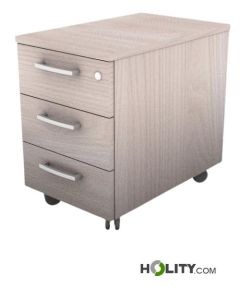
Office drawer unit with wheels and 3 drawers. Dimensions: W.34 x D.56 x h.51 cm. Material: wood conglomerate.
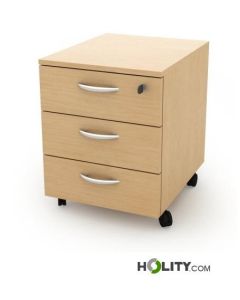
3-drawer chest of drawers on wheels in scratch-resistant and anti-reflective bilaminate melamine. Dimensions: W. 41 x D. 50 x H. 52.2 cm.
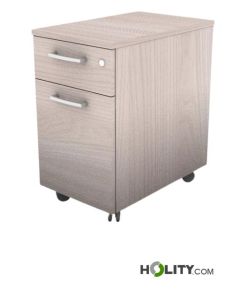
Drawer unit for offices and secretariats. With 1 stationery drawer and 1 storage compartment. Dimensions: W.34 x D.56 x H.61 cm.
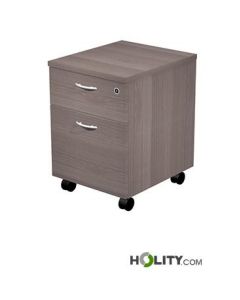
Wooden drawer unit equipped with 1 drawer and 1 file drawer. Drawer with lock. Dimensions: W. 43 x D. 52 x h. 59.5 cm.
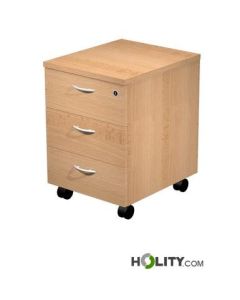
3-drawer office drawer unit, with wheels. Dimensions: W. 43 x D. 52 x H. 59.5 cm. Available in various finishes.
Office drawer unit in sheet steel with 3 drawers and a small stationery drawer. Dimensions: W. 39 x D. 52.6 x H. 60 cm.
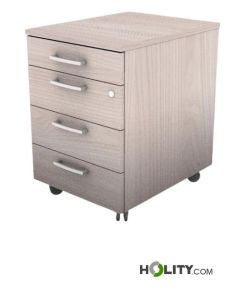
Chest of drawers for offices and professional studios. Dimensions: W.42 x D.56 x H.51 cm. Material: wood conglomerate.
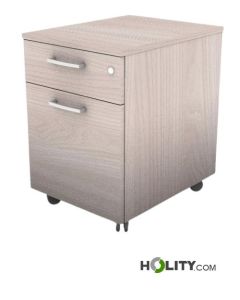
Pedestal with 1 stationery drawer and 1 filing drawer. Dimensions: W.42 x D.56 x h.61 cm.
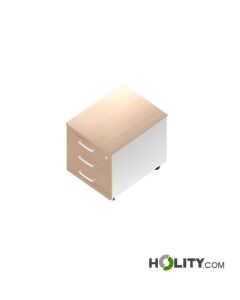
Drawer unit with 3 drawers for the office, in light oak and white casing. Dimensions: W 420 x D 560 x H 510 mm.
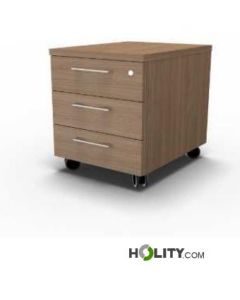
Office chest of drawers with wheels and 3 drawers. Dimensions: W.42 x D.56 x h.59. Simultaneous locking of drawers.
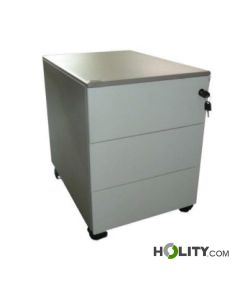
3-drawer office drawer unit. Equipped with wheels. Color: grey Ral 7035.
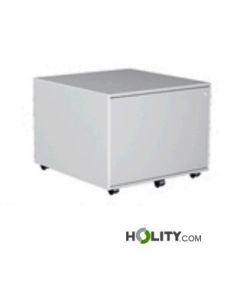
Metal office pedestal with 1 filing drawer. Dimensions: W.41 x D.58 x H.39.3 cm. With wheels.
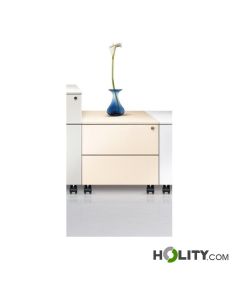
Drawer unit for offices, libraries with 2 drawers. Dimensions: W. 41 x D. 58 x h. 39.3 cm
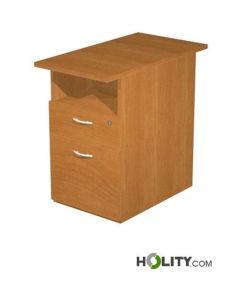
High drawer unit with open compartment, 1 drawer with lock and 1 filing drawer. Supplied disassembled. Dimensions: W. 43 x D. 80 x h. 72 cm.
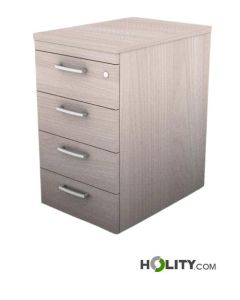
Desk-height office pedestal with open compartment on the visitor side. Dimensions: W.42 x D.60 x h.74 cm. Number of drawers: 4.
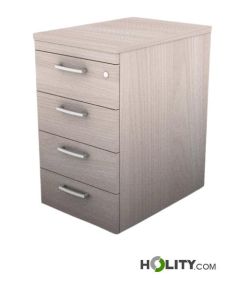
Load-bearing 4-drawer pedestal. Dimensions: W.42 x D.60 x H.74.5 cm. With open compartment on the visitor side.
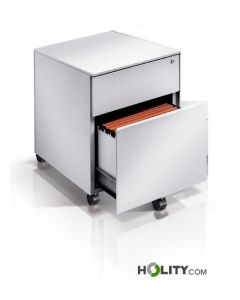
Mobile drawer unit for offices. Material: sheet steel. No. of drawers: 2, including one filing drawer. Dimensions: W.41 x D.58 x h.55.3 cm.
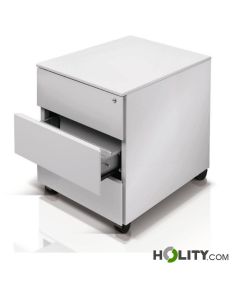
Office drawer unit on wheels with 3 drawers. Dimensions: W. 41 x D. 58 x H. 55.3 cm.
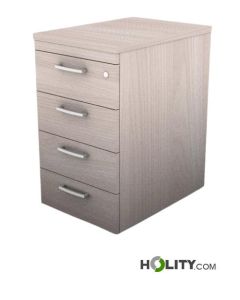
Coplanar office drawer unit with 4 drawers and open compartment on visitor side. Dimensions: W.42 x D.70 x h.74 cm. Available in multiple finishes.
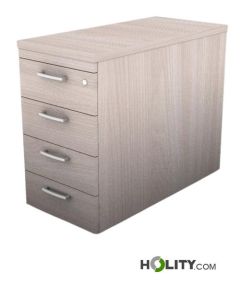
Coplanar 4-drawer chest, with open compartment on the visitor side. Top thickness: 30 mm. Dimensions: W.42 x D.70 x h.74.5 cm.
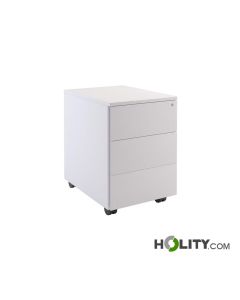
Metal pedestal on wheels with 3 drawers and lock. Dimensions: W 42 x D 58 x H 57 cm.
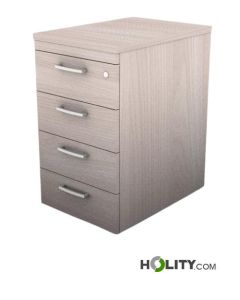
Coplanar drawer unit with open compartment on the visitor side. Dimensions: W.42 x D.80 x h.74 cm. Number of drawers: 4.
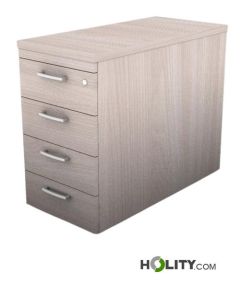
Coplanar drawer unit for offices with 4 drawers and rear open compartment. Dimensions: W.42 x D.80 x h.74.5 cm.
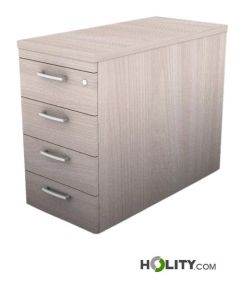
Desk-height drawer unit with 4 drawers and rear open compartment. Dimensions: W.42 x D.80 x h.74.5 cm. Available in multiple finishes.
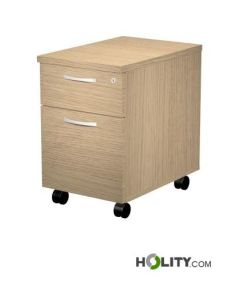
Assembled chest of drawers with wheels and central locking. 1 drawer + 1 filing drawer. Dimensions: W. 44 x D. 60 x h. 60 cm.
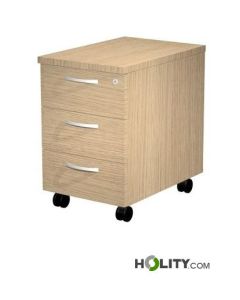
Office cabinet with wheels and 3 drawers. Available in different finishes. Centralized locking. Supplied assembled.
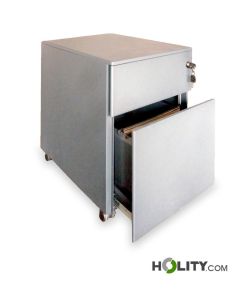
Drawer unit for office furniture with 2 drawers and wheels. Dimensions: W.42 x D.58 x h.57.5 cm. Lock with centralized closure.
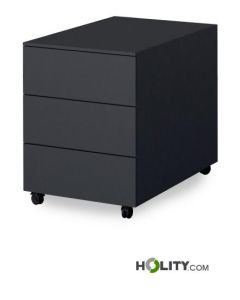
3-drawer office drawer unit on wheels. Dimensions: W.42 x D.58 x h.57.5 cm. Material: recyclable metal.
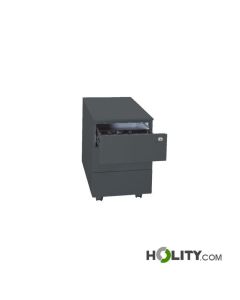
Black office drawer unit made of metal with 3 drawers. Dimensions: W. 40 x D. 59 x H. 54 cm.
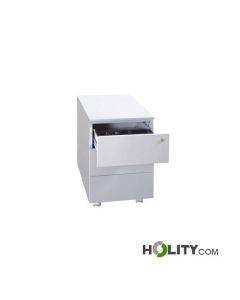
Grey office drawer unit with wheels and 3 drawers. Dimensions: W. 40 x D. 59 x H. 54 cm.
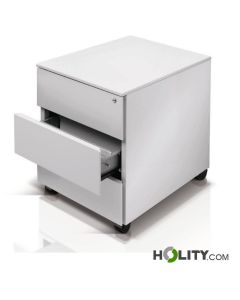
Mobile drawer unit with 4 drawers, ideal for offices. Dimensions: W. 41 x D. 58 x H. 55.3 cm.
Metal office chest of drawers on wheels with 3 drawers and soft-closing. Dimensions: W 38 x D 45 x H 53 cm.
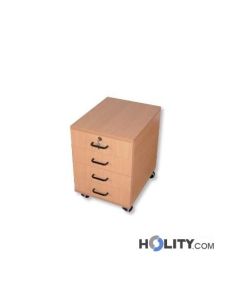
Wooden chest of drawers for offices. Equipped with 4 wheels and a drawer with lock. Dimensions: 40 x 50 x H 55 cm.
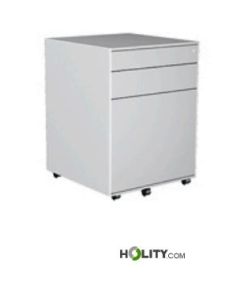
Metal drawer unit with 3 drawers, including 1 standard, 1 for stationery and 1 filing drawer. Dimensions: W.41 x D.58 x h.57 cm.
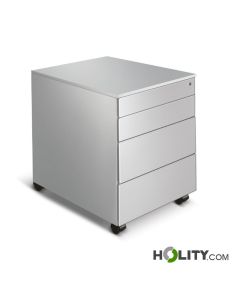
Office drawer unit on wheels with 3 drawers + 1 stationery drawer. Dimensions: W. 41 x D. 58 x h. 57 cm
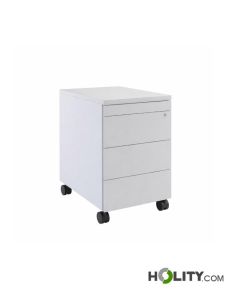
Metal chest of drawers on wheels with 3 drawers and 1 stationery drawer. Dimensions: W 42 x D 58 x H 63 cm.
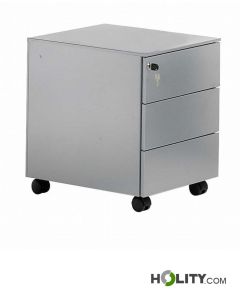
Metal chest of 3 drawers on wheels. Dimensions: W. 43 x D. 54 x h. 56 cm. Centralized locking with key.
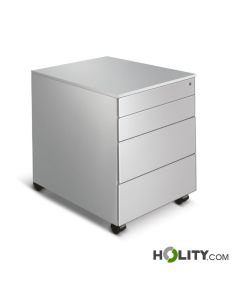
Mobile drawer unit with 4 drawers + 1 stationery drawer. Dimensions: W. 41 x D. 58 x h. 57 cm.
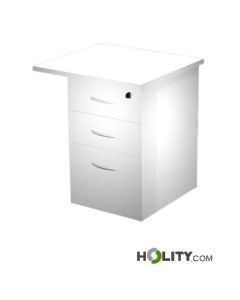
Tall drawer unit with top 65 x 60 cm. Equipped with 2 drawers and 1 filing drawer for folders. Dimensions: W. 65 x D. 60 x h. 73 cm.
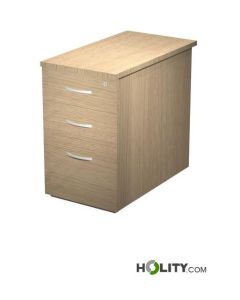
High chest of drawers with 2 drawers plus 1 filing drawer. Centralized locking. Depth: 80 cm. Available in white or oak versions.
Office drawer units represent an essential solution for the organization of workspaces, ensuring immediate accessibility to documents, stationery, and everyday objects. Available in various configurations, materials, and sizes, professional drawer units adapt to any desk layout, from corporate environments to professional studios, secretariats, and libraries. The choice of the right drawer unit involves technical evaluations of load capacity, the number and type of drawers, as well as mobility via casters or stable fixing. A well-sized storage unit improves operational efficiency and reduces search times, positively impacting overall productivity.
Professional drawer units offer concrete advantages in workspace management, allowing for a clutter-free and organized desk. Unlike makeshift solutions or items placed on shelves, a dedicated drawer unit optimizes vertical storage, freeing up valuable work surface. Locking drawers ensure protection for confidential documents, contracts, and sensitive material, a critical aspect in fields such as law firms, consultancy, and administrative structures. Mobility on casters allows for quick repositioning of furniture according to tidying or maintenance needs, while fixed versions provide stability when the unit must support significant weights or integrate with other storage units.
In addition to functional aspects, drawer units contribute to the professional image of the space: finishes in wood, laminate, or steel match consistently with the surrounding decor, creating visually orderly and welcoming environments. In sectors such as administrative healthcare, banks, and public entities, the reliability and regulatory compliance of the drawer units impact perceived credibility. The variety of configurations (from 1 to 4 drawers) allows for scaling the investment based on actual organizational needs, avoiding costly oversizing.
Office drawer units are primarily distinguished by the number of drawers, materials, and opening mechanics. Solutions with 1-2 drawers are intended for single workstations with limited storage needs, while 3-4 drawer versions represent the standard for a complete desk. The most commonly used materials include bi-laminated wood conglomerate (resistant to daily wear), laminated steel (greater durability and suitability for humid environments), and solid wood with oak or walnut finishes (elegance and aesthetic versatility). Flush-mounted units, equipped with an open compartment facing the visitor, reduce the perceived height and facilitate communication in front-office stations. Models on casters guarantee mobility, useful when the space must be frequently reconfigured; fixed models, on the other hand, offer absolute stability and greater load capacity.
Other variants concern closing systems: synchronized central locking allows all drawers to be opened and closed simultaneously with a single action, simplifying access. Filing drawers, specifically shaped for hanging folders, find application in high-volume documentation environments such as archives and secretariats. Versions with integrated stationery drawers meet the needs of operational stations where stationery must always remain within reach. Each configuration presents compromises between capacity, footprint, and ease of use, requiring an assessment contextual to the available space and workflow.
Selecting the appropriate drawer unit starts with measuring the available space: width, depth, and height must be verified, also considering the need for full drawer opening and access to surrounding areas. A frequent mistake is underestimating the useful depth: the nominal depth (e.g., 56 cm) does not correspond to the actual internal space, which is smaller due to the structure. It is also essential to quantify the expected load: documents, files, samples, or equipment require different internal reinforcement configurations. In stations where the drawer unit is frequently moved (studios with numerous staff, temporary environments), casters are indispensable; where the layout is stable, fixing reduces the risk of accidents. The number of drawers should reflect the actual usage curve: 3 drawers represent a balance between capacity and ergonomic height for most contexts, while 4 drawers are justified only if vertical space is sufficient and access to the highest drawers remains comfortable.
Aesthetic evaluation is not secondary: drawer units in RAL 7035 gray steel integrate into modern and neutral environments, bi-laminated melamine finishes adapt to standardized corporate contexts, natural woods convey professionalism in studios and consultancies. The choice of material also affects maintenance: laminated steel is easier to clean in high-traffic environments, while wood requires specific treatments to prevent stains. Always check if the drawer unit is supplied assembled or in a kit: disassembled versions involve lower transport costs but require on-site assembly, possibly with technical support. Finally, consider the availability of spare parts and after-sales assistance, particularly for locking mechanisms and drawer slides.
Office drawer units intended for the European market must comply with the EN 1023-1 standard (stability of office furniture), which prescribes stability tests, structural durability, and sliding mechanism performance. Particular attention is paid to the declared load capacity per drawer and behavior under concentrated loads, especially for models without an anti-tilt locking system. For public environments (administrative offices, banks, hospitals), drawer units must pass fire safety assessments according to local directives; in Italy, the regulatory reference is the Fire Reaction Classification according to Euroclass classes (mainly B-s2, d0 for office furniture). The materials used must comply with formaldehyde constraints (CARB regulation in the USA, European CE standards for VOC emissions), ensuring a healthy indoor environment. If the drawer unit is intended for workstations with hygiene requirements (healthcare facilities, laboratories), stainless steel finishes or certified antibacterial coatings are required.
A frequently overlooked regulatory aspect concerns ergonomics: the height of the drawer unit must allow access to the upper drawers without excessive spinal extension (ISO 11070). The depth of the drawers should not exceed 60-70 cm to avoid difficulty in retrieving objects placed at the back. Furthermore, drawer units positioned next to desks in front-office stations must respect the minimum circulation spaces established by the Italian Decree 626 on safety in the workplace. The CE declaration of conformity and stability certifications must accompany every product; the lack of technical documentation is a sign of poor quality and structural reliability over time.
Explore all the products in the category and compare the available solutions to find the one best suited to your operational context. The drawer units presented in our catalog comply with international safety and robustness standards, supporting a wide range of dimensional configurations and materials.
A 3-drawer unit generally reaches a height of 50-61 cm, favoring ergonomic access to the upper shelves without excessive extension. A 4-drawer unit exceeds 70 cm in height, increasing total capacity but requiring more vertical space and greater effort to reach the top drawers. The choice depends on the size of the space and the frequency of access to the various levels.
Drawer units on casters are stable if equipped with mechanical locks and wide-diameter bases. However, fixed versions without casters offer absolute stability and greater load capacity, recommended when the drawer unit remains in a permanent position and must support significant weight. Casters are ideal for environments where the layout changes frequently.
Laminated steel represents the maximum durability, resisting impacts, humidity, and daily wear; it requires minimal maintenance. Bi-laminated wood conglomerate balances strength and cost, suitable for standard offices. Solid wood offers elegance but requires periodic treatments to prevent stains and cracks. The choice should consider the environment and available budget.
A lock is essential in environments where confidential documents, personal data, or sensitive material must be protected, such as law firms, consultancies, and healthcare facilities. In open-space offices with low risk of theft or unauthorized access, a lock is optional. Always check company policies on data privacy.
In addition to the nominal dimensions of the drawer unit, it is necessary to provide at least 70-80 cm at the front to allow for full drawer opening and access to documents. Laterally, at least 10-15 cm to ensure maneuverability and ventilation. Vertical space must consider the height of the drawer unit plus 30-40 cm of upper clearance for easy access to the top drawers.
Synchronized central locking allows all drawers to be opened and closed simultaneously with a single lever, saving time and reducing effort in high-volume transaction environments. However, it involves additional costs and complicates repairs. It is recommended only if the operational flow fully justifies it.
In front-office stations where interaction and speed are priorities, casters facilitate repositioning during the shift and allow for rapid cleaning of the space. If the station is stable and space is limited, a fixed drawer unit reduces the risk of accidents and maximizes load capacity. Always check company safety procedures before choosing.
Common depths are 50-58 cm for standard desks and 60-100 cm for professional or flush-mounted configurations. Excessive depth complicates the retrieval of objects placed at the back; insufficient depth limits overall capacity. Measure the space behind the desk and consider the minimum required circulation space before ordering.
 English
  Italian
 French
 German
 Spanish