
mon-fri 9-13 / 14.30-18.30
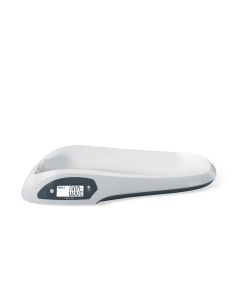
Baby scale for medical offices. Capacity: 25 kg. Division: 5 g. Weighing tray dimensions: W.60.4 x D.36 x H.8.9 cm.
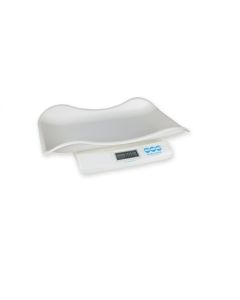
Pack of 3 pieces
€198.51 VAT excl.Digital scale for children and infants. Removable tray.
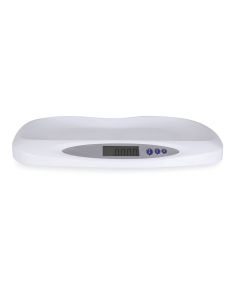
Baby scale. Dimensions: W. 28.5 x D. 42.5 x H. 8.5 cm. Max capacity: 20 kg.
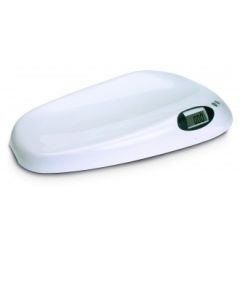
Baby scale with maximum load 20 kg. Dimensions: W. 600 x D. 340 x H. 85 mm.
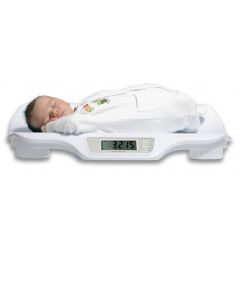
Baby scale with plastic shell. Maximum load: 20 kg. Dimensions: W. 600 x D. 380 x h. 100 mm.
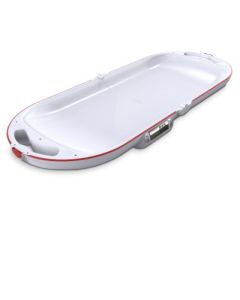
Folding baby scale. Maximum load: 15 kg. Dimensions open: W. 740 x D. 315 x h. 53 mm.
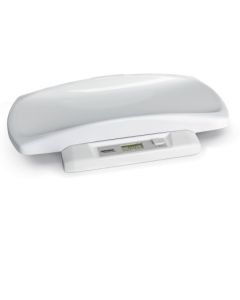
Baby scale with removable tray. Maximum load: 20 kg. Dimensions: W. 601 x D. 346 x h. 92 mm.
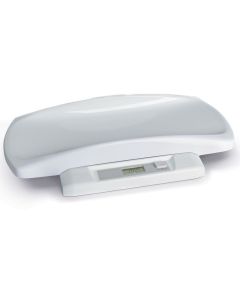
Digital scale for infants and babies. Battery operated. Capacity: 20 kg.
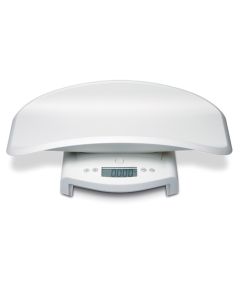
Baby scale suitable for both infants and children. Dimensions: W55.2 x D15.6 x H33.2 cm. Capacity: 20 kg.
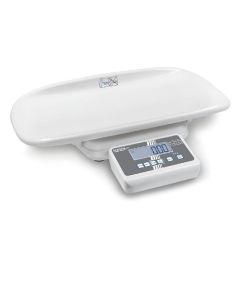
<p>Professional baby scale. Capacity: 20 kg. Division: 0.01 kg</p>
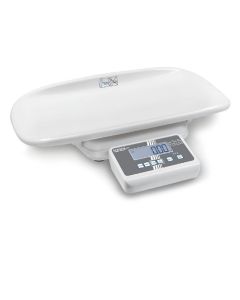
Baby and child scale. Capacity: 6/15 kg. Graduation: 0.002 kg/0.005 kg
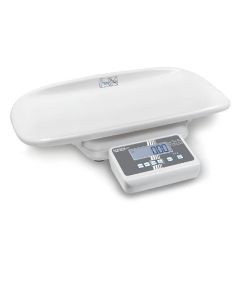
Professional baby scale. Ergonomic, safe and easy to use. Capacity: 20 kg. Division: 0.01 kg.
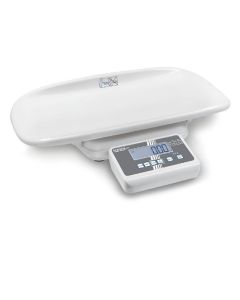
Baby scale certified for medical use and medical diagnostics. Capacity: 6/15 kg. Division: 0.002 kg/0.005 kg
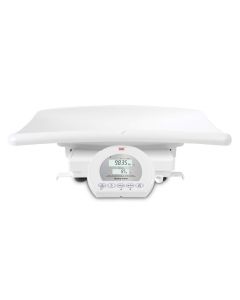
Medical baby scale. Capacity: 10/20 kg. Division: 0.005/0.01 kg
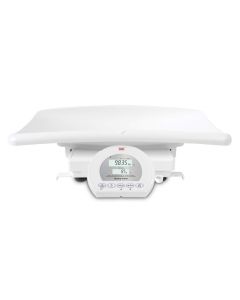
Baby scale for medical use. Capacity: 6/15 kg. Division: 0.002/0.005 kg
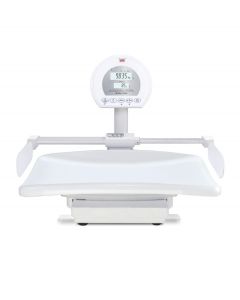
Pediatric baby scale. Capacity: 10/20 kg. Division: 0.005/0.01 kg
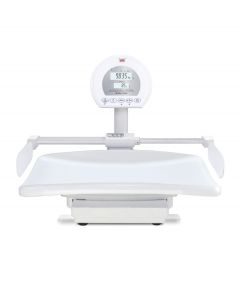
Professional baby scale. Capacity: 6/15 kg. Division: 0.002/0.005 kg
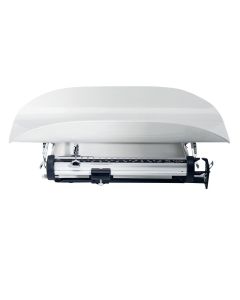
Baby scale with curved weighing tray. Capacity: 16 kg. Dimensions: 55 x 18 x 29 cm.
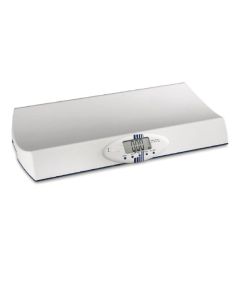
Pack of 5 pieces
€1,953.00 VAT excl.Professional medical baby scale. Max capacity 15 kg.
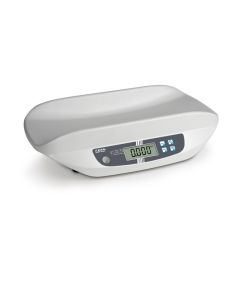
Professional baby scale. Capacity: 15 kg. Graduation: 0.005 kg. Dimensions: W60 x D36 x H14.1 cm
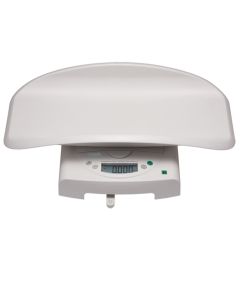
Medical scale for infants and children. Capacity: 20 kg. Dimensions: W55.2 x D15.6 x H33.2 cm.
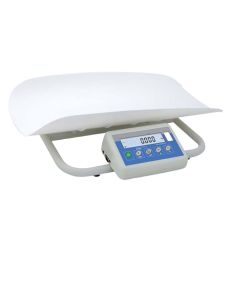
Baby scale with LCD display. Max capacity: 10/20 kg. Division: 5/10 g.
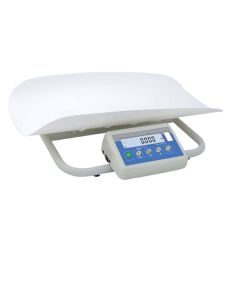
Electronic baby scale. Capacity: 6/15 kg. Division: 2/5 g. Backlit LCD.
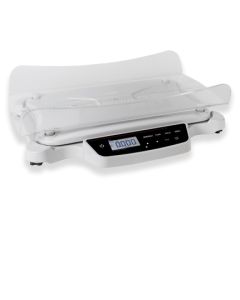
Baby scale. Maximum load: 15 kg. Dimensions: W. 610 x D. 446 x H. 160 mm.
Baby scales represent an essential tool in medical, pediatric, and obstetric-gynecological environments, where weight monitoring during the first months of life is crucial for assessing growth and the child’s general state of health. These devices combine metrological precision, ease of use, and safety—indispensable characteristics in contexts where the reliability of measurements influences clinical decisions and pediatric evaluations. Available in multiple configurations and load capacities, infant scales adapt to the needs of hospitals, clinics, pharmacies, and private medical offices.
The choice of the right scale depends on the required load capacity, the precision of the metrological division, and the ergonomic features needed to ensure comfort and safety during the weighing of the child. Modern solutions offer removable trays, backlit digital displays, battery operation, and folding structures, designed to optimize usability in dynamic and high-traffic environments.
A dedicated scale for infants is the most suitable tool for tracking weight evolution in the first years of life, a critical period where even modest weight variations can indicate conditions of malnutrition, dehydration, or metabolic issues. Unlike generic scales, these devices are designed to provide high-resolution readings over limited weight ranges, usually between 5 and 25 kg, ensuring a metrological division (sensitivity) ranging from 5 grams down to 2 grams depending on the model.
The regular and systematic use of a certified infant scale is particularly relevant in hospital settings during admissions, in neonatology departments, and neonatal intensive care units, where clinical tolerance margins are extremely narrow. Pediatric facilities, family clinics, and general medicine offices rely on these instruments to generate reliable longitudinal data, necessary for tracking growth paths according to standardized percentiles. The precision and repeatability of the measurements build an objective clinical picture that supports therapeutic decisions and preventive interventions. The ease of reading, facilitated by modern digital displays, reduces interpretation errors and speeds up outpatient procedures, improving the operational efficiency of the departments.
The catalog of infant scales is divided into several categories based on technology, physical structure, and contexts of use. Traditional mechanical scales, characterized by removable plastic or metal trays, represent the entry-level solution, economical and particularly robust, ideal for facilities with high weighing volumes and limited budgets. These models operate without electrical power, minimizing management costs, but require periodic calibration and offer a less immediate reading compared to digital counterparts.
Digital scales, equipped with backlit LCD displays, load sensors, and electronic processors, guarantee superior precision and instantaneous readability of the weight value. Many digital models include advanced functions such as dynamic weighing (which stabilizes the value during the child’s movement), data memory, Bluetooth or USB connectivity for integration with hospital IT systems, and battery power, allowing for increased portability. Folding scales, equipped with collapsible and lightweight structures, meet the mobility needs characteristic of home care services, mobile clinics, and facilities where space is limited. Some combined solutions allow for weighing both infants (on a specific tray) and children up to 20-25 kg, offering operational versatility that extends the useful life cycle of the equipment. The choice between mechanical and digital, between fixed and mobile, depends on the frequency of use, patient volumes, availability of dedicated spaces, and the regulatory requirements of the facility.
The selection of the appropriate scale requires a systematic analysis of technical and operational parameters. The first criterion is the maximum load capacity, which must be consistent with the weight range to be monitored: for exclusive infants, a capacity between 15 and 20 kg is sufficient; if use is extended to children up to three or four years old, it is advisable to opt for models with a capacity of 25 kg. The metrological division (granularity of the reading) is critical especially in neonatal departments and in diagnostic contexts where the documentation of daily variations is fundamental; a resolution of 5 grams represents a compromise between practicality and sensitivity, while lower resolutions (2-1 gram) are necessary only in specialized environments such as neonatal intensive care units.
The material and geometry of the weighing tray directly influence the safety and comfort of the child: curved soft plastic trays or removable steel trays are preferable to flat, rigid surfaces. Electrical versus mechanical power represents a trade-off between operational ease and reliability: a battery-powered digital model requires charging management and periodic replacements, while a mechanical one does not run these risks but is slower in data acquisition. Environments with a high frequency of weighing (maternity wards, clinics with high influx) benefit from the speed of digital models, while occasional use situations can tolerate mechanical solutions. Metrological certification, attested by initial calibration certificates and re-calibration periods defined by national regulations, is non-negotiable in hospital and diagnostic environments; this feature must always be verified before purchase, as well as the availability of technical assistance and preventive maintenance services.
In Italy, infant scales used in the medical-diagnostic field must comply with the UNI EN 45501 standard (Legal metrology - non-automatic weighing instruments), which establishes requirements for accuracy, repeatability, thermal stability, and mechanical robustness. Furthermore, the measuring instruments in use in healthcare facilities fall under the competence of the Regional Metrology Office, which exercises periodic checks and can order repairs or replacements in case of deviations from the allowed tolerances. The scale category (from I to IV, increasing in terms of allowed tolerances) influences the possibilities of diagnostic use: class I or II scales are suitable for precise clinical examinations, while classes III and IV are suitable for screening or home monitoring tasks.
Every healthcare facility is required to register its scale with the competent bodies, keep its metrological documentation, and subject the device to scheduled checks according to calendars defined by regional regulations, generally every 12-24 months. In addition to metrological regulations, scales must comply with Directive 2014/32/EU (MID - Measuring Instruments Directive), which establishes requirements for CE marking, user manual in Italian, declaration of conformity, and traceability of the production chain. In the pediatric field, there are also recommendations from international health bodies (WHO, UNICEF) and national ones (Ministry of Health) regarding weighing methods, monitoring frequency, and data documentation, elements that must be integrated into the operating protocols of the facilities that acquire these instruments. Electrical safety, for mains-powered models, is governed by the CEI EN 60601-1 standard and its variants, in order to guarantee the absence of risks of electric shock or overheating.
Explore all the products in the category and compare the available solutions to find the one best suited to your operational context, considering load capacity, metrological precision, construction materials, and specific regulatory requirements of your facility.
The metrological division is the minimum weight value that the scale can detect and display. For example, a division of 5 grams means that the scale distinguishes weight variations from that value upwards. In pediatrics, resolutions of 2-5 grams are standard for infants, while 10 grams for older children.
The capacity depends on the use: 15-20 kg for exclusive monitoring of infants up to 12 months; 25 kg if also used for children up to three years. Scales with dual capacity (6/15 kg and 10/20 kg) offer versatility for mixed pediatric departments, adapting sensitivity to the subject’s weight.
Mechanical scales are robust and do not require power, but the reading is slower and subject to visual parallax. Digital scales offer immediate display, tare and memory functions, and greater precision, but require batteries or power and need more frequent electronic maintenance.
The child must be completely naked (or with only a diaper according to protocol), gently positioned in the center of the tray. The scale must be zeroed (tared) before each weighing. If digital, wait for the reading to stabilize; if mechanical, read the value at the end of the needle’s movement. Always record the time and conditions.
An initial calibration certificate, CE declaration of conformity, user manual in the local language, and a registered serial number must be present. The facility must keep periodic re-calibration certificates (every 12-24 months according to regional regulations) and document any maintenance work performed.
Class III and IV scales, which are less precise, can be used at home for informal growth monitoring. Class I-II scales, which are medically certified, are specific for hospital and diagnostic environments. However, even at home, a reliable and reproducible solution is preferable if monitoring is frequent or for patients with pathologies.
Basic mechanical solutions start from 47-100 euros; entry-level digital scales range between 66-220 euros; professional medically certified models vary between 310-800 euros depending on the brand, technology, and integrated functions such as data memory and wireless connectivity.
No, if properly certified. Folding scales maintain the same metrological precision and certification as fixed versions; the collapsible structure makes them ideal for mobile services, mobile clinics, and limited space situations. However, they require more attention to transport and protection from impacts.
 English
  Italian
 French
 German
 Spanish