mon-fri 9-13 / 14.30-18.30
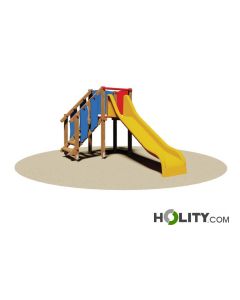
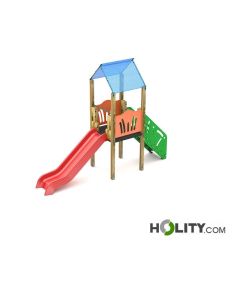
Play tower with slide and climbing ladder. Age 2-8 years.
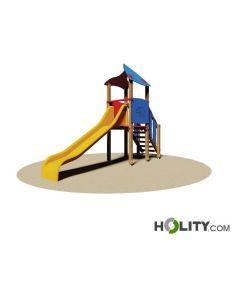
Play composition for public parks with tower with roof, access ladder and slide. Age 2-8 years.
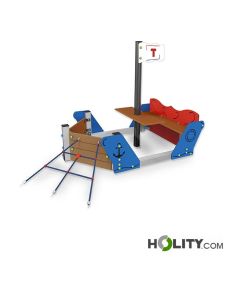
Multi-play structure for playground. Recommended age: 2-6 years
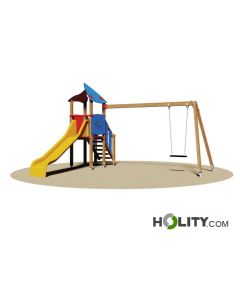
Multi-play composition for parks with tower, ladder, swing and slide. Age 2-8 years.
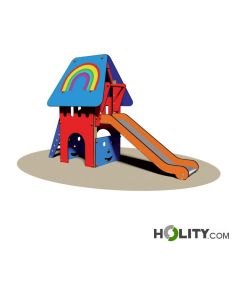
Play tower for parks with slide and climbing ladder. Age: 2-6 years. Minimum space 624x400.
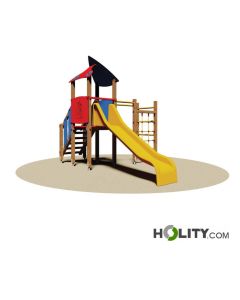
Multi-play tower with roof, climbing ladder, gym unit, slide. Age: 2-8 years.
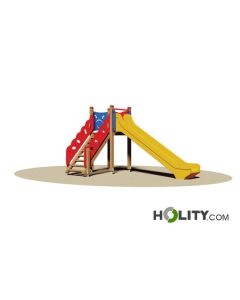
Multi-play tower for parks, with slide and climbing ladder. Age 3-12 years.
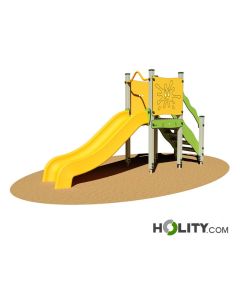
Play set with slide tower and climbing ladder. Age: 2-8 years
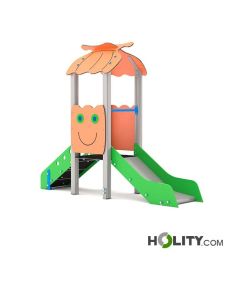
Mini tower for playground, with slide and climbing platform.
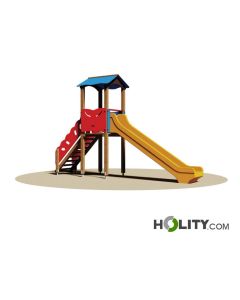
Multi-play composition with tower with roof, climbing ladder, slide. Age: 3-12 years
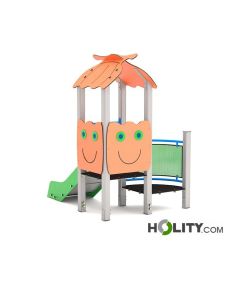
Multi-play tower with slide and step. Recommended age: 2-6 years.
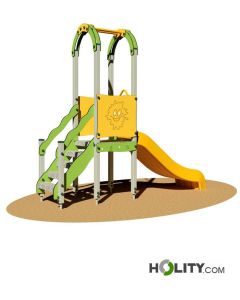
Multi-play tower with slide and climbing ladder. Age: 2-8 years.
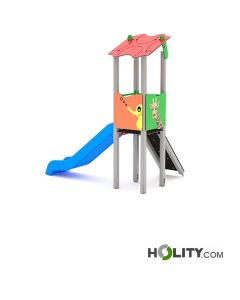
Single multi-play tower with stone climbing. Age: 3-12 years.
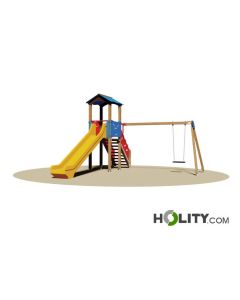
Multi-play tower with climbing ladder, slide and swing. Age 3-12 years.
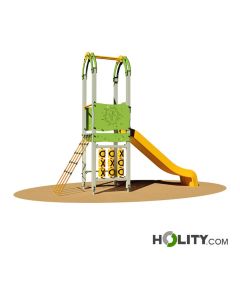
Inclusive play tower with rope climbing ladder, tic-tac-toe game panel and slide.
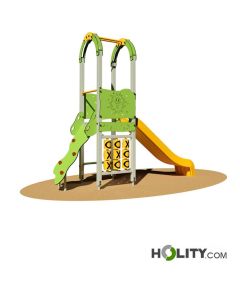
Multi-play composition with tower, ramp with holds, tic-tac-toe panel and slide. Age 3-8 years.
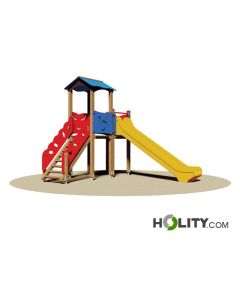
Playground tower with slide and climbing ladder. Age: 3-12 years
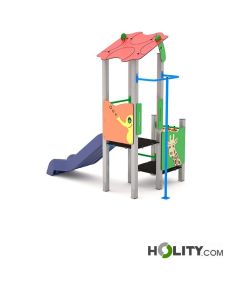
Single tower for playground. Recommended age 2-12 years.
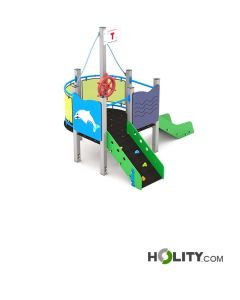
Multi-play composition 2-6 years. Dimensions: 236x264xh243 cm.
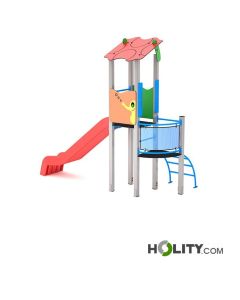
Multi-play tower with sheet metal railing, circular step ladder and slide. Age 3-12 years.
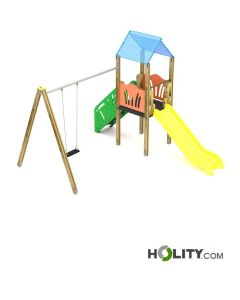
Tower with slide and swing. Age of use: 3-12 years
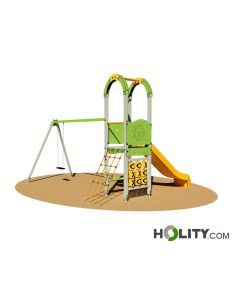
Playground structure for parks with slide, tower, swing and climbing net. Inclusive. Age 3-8 years
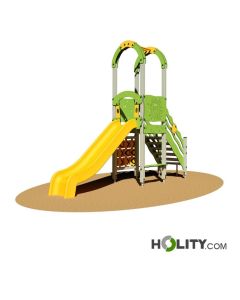
Inclusive multi-play structure with tower, climbing ladder, tic-tac-toe game panel, slide. Age: 2-8 years.
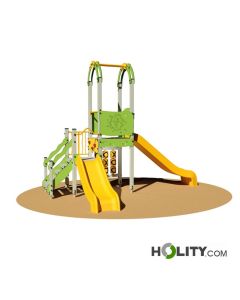
Inclusive multi-play structure accessible to all. Age: 2-8 years
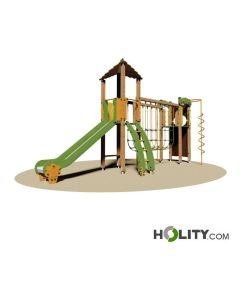
Multi-play village with tower with roof, climbing ladder, bridge with climbing wall, 2 poles, wall with handholds, slide and bench.
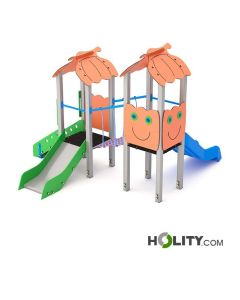
Double multi-play tower with climbing platform and two slides.
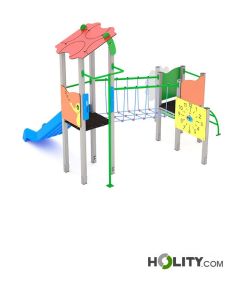
Multi-play composition with double tower. Age 3-12 years.
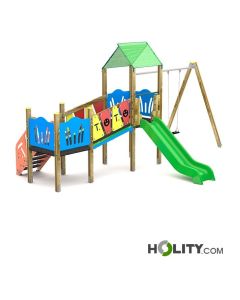
<p>Multi-play composition with towers, swing, slide. Recommended age: 2-8 years </p>
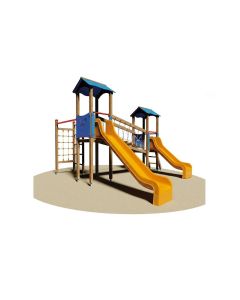
Play structure with 2 towers, 2 slides, climbing ladder, gymnastic unit and swinging bridge. Recommended age: 3-12 years
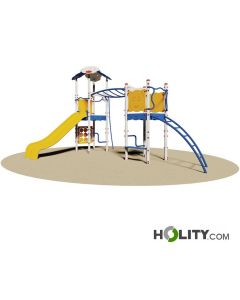
Inclusive multi-play composition in electro-galvanized steel. Age: 5-12 years.
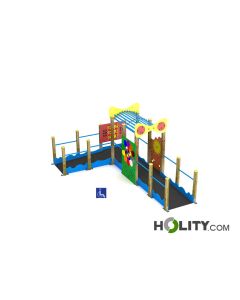
Inclusive trail in wood and steel with multilingual educational panels to stimulate cognitive skills. Dimensions: 310 x 485 x H 224 cm.
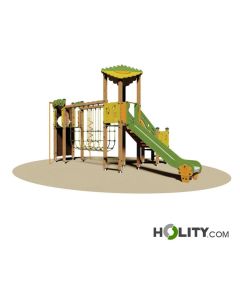
Multi-play compositions with a turret with roof, 1 open turret, climbing ladder, bridge with climbing feature, 2 poles, 1 wall with handholds, slide and bench.
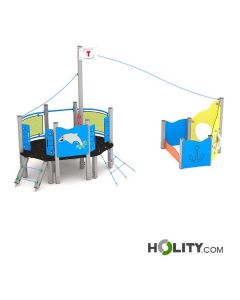
Play structure for parks with slide and sandpit. Age: 2-6 years
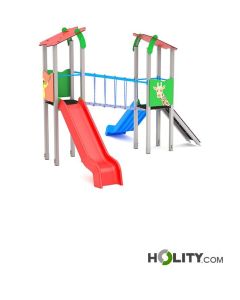
Multi-play towers with rope passage, climbing platform and 2 slides. Age 3-12 years.
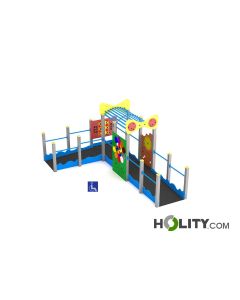
Playground path with multilingual educational panels, made of aluminum and HDPE. Dimensions: 310 x 485 x H 224 cm.
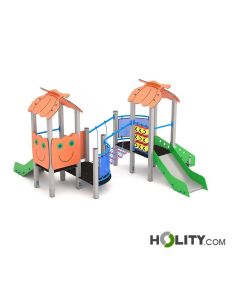
Double tower with step for playground. 2 slides, climbing platform.
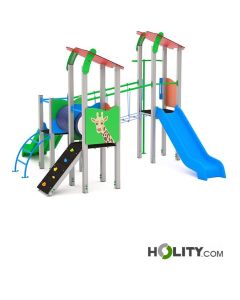
Playground play composition with three towers, tunnel passage, and rope, balustrades 2 slides.
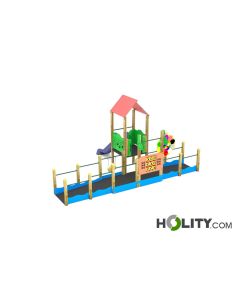
Inclusive path with tower, slide h. 90 cm, educational games and non-slip platforms. Dimensions: 454 x 610 x H 320 cm.
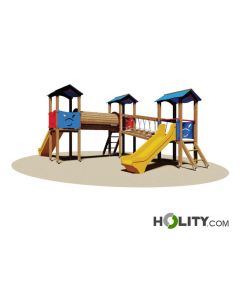
Multi-play composition with 3 towers with roof, 1 swinging bridge, 1 tunnel, and 2 climbing ladders, 2 slides.
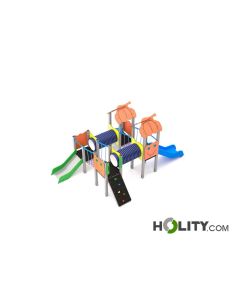
Multi-play composition for parks equipped with 4 towers, with rope passages and tunnels. Dimensions: 400 x 539 x H. 264 cm.
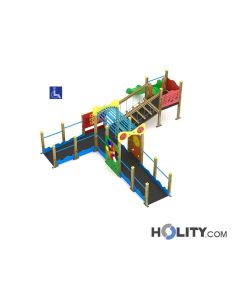
Inclusive play composition. Dimensions: 623x692xh.224 cm. Age: 2-12 years.
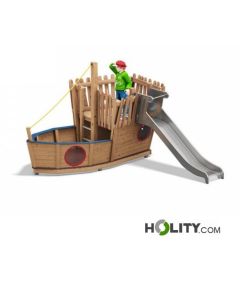
Multi-play sailboat-shaped composition. Material: wood. Dimensions: W.345 x D.370 x h.235 cm.
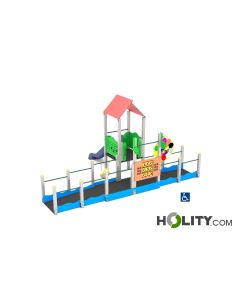
Inclusive path with tower and slide h.90 cm, educational games and non-slip platforms. Dimensions: 454 x 610 x H 320 cm.
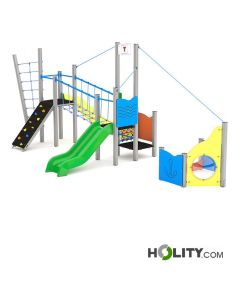
Multi-play composition with slide, climbing nets, sandbox.
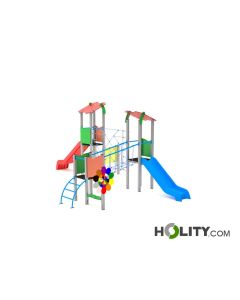
Playground tower with two straight rotational-moulded polyethylene slides (h. 120 cm and h. 150 cm). Dimensions: 497 x 804 x h. 337 cm.
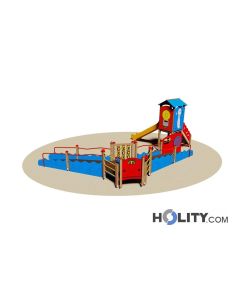
Wooden playground set. Dimensions: L865 x W550 x H315 cm. Accessible to children with disabilities.
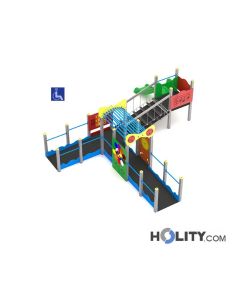
Inclusive multi-play path with tower. Dimensions: 623x692xh.224 cm. Age: 2-12 years.
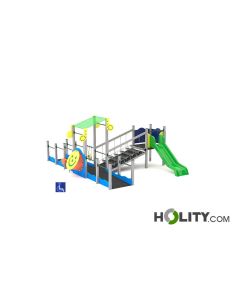
Inclusive trail with musical theme, slide and interactive games. Made of aluminum and HDPE. Dimensions: 485 x 610 x H 247 cm.
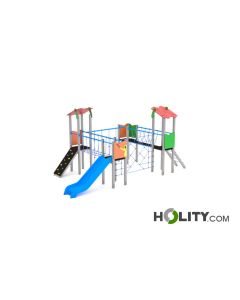
Playground tower with climbing platform, rocks, rope ladder and slide. Dimensions: 680 x 370 x h. 317 cm.
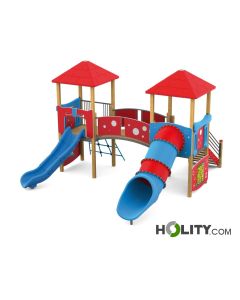
Multi-play towers for parks, with a wooden structure equipped with slides, climbing nets and play panels. Age of use: 3 +. Height: 350 cm.
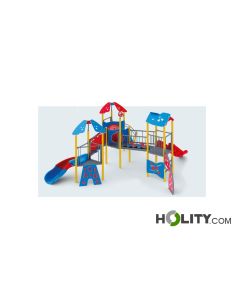
Multi-play composition for parks and gardens consisting of slides, climbing structures, tunnels and bridges. Age of use: 3-12 years. Dimensions: W.540xD.520xH.310 cm.
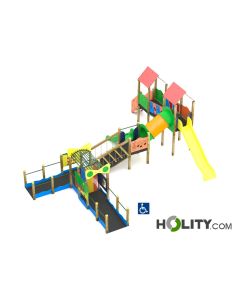
Inclusive course in Nordic pine wood and HDPE with slides, educational panels, and interactive games. Dimensions: 847 x 881 x H 360 cm.
Multi-play structures with towers represent a complete and versatile solution for creating safe and stimulating play areas in public parks, community spaces, and recreational areas. These systems integrate structural towers, slides, swings, climbing ramps, and various types of ascents, designed to develop motor skills, coordination, and social interaction in children of various age groups. Made from durable materials such as electro-galvanized steel, aluminum, and treated wood, the multi-play towers guarantee long-term durability and reliability even in adverse weather conditions. Their modularity allows the structures to be adapted to spaces of different sizes, from small play areas to large public spaces, while maintaining high safety standards according to European regulation EN 1176.
Multi-play towers offer significant benefits for children’s psychomotor development and represent a strategic investment for public administrations and community space managers. The integration of multiple play elements within a single structure allows children to experience different modes of movement, from climbing to sliding, from balancing to swinging, stimulating balance, muscle strength, and motor coordination. The presence of structural towers, often equipped with roofs and decorative panels, creates a visual focal point in public spaces, increasing the attractiveness of the play area. These systems also promote social inclusion, allowing children with different motor skills to interact and play together, particularly in inclusive versions with facilitated access and low-difficulty elements. From an operational standpoint, multi-play structures reduce the need to install multiple separate pieces of equipment, optimizing both maintenance costs and the management of available space.
Practical applications for multi-play towers range from urban parks to school recreational areas, from public gardens to residential structures, up to community spaces and tourist facilities. Construction versatility allows structures to be customized based on the context, choosing specific materials, colors, and configurations that integrate with the surrounding environment. Managers of public parks particularly appreciate these solutions as they distribute wear across multiple components, extending the useful life of the overall system. Furthermore, multi-play structures reduce installation times compared to positioning multiple single pieces of equipment, favoring rapid park operation. The possibility of adding complementary elements, such as sandboxes, rope courses, or educational panels, allows the play space to evolve over time without the need for total dismantling, representing a significant economic advantage for long-term planning.
The catalog of multi-play structures with towers features a wide variety of configurations designed to meet specific needs. Single towers represent the basic solution, characterized by a central tower with a slide and climbing ladder, ideal for limited spaces and children in the 2-8 age group. Double and triple towers expand the possibilities for simultaneous play and offer alternative climbing paths, making them particularly appreciated in areas with high user traffic. Many structures integrate lateral swings, single or double swing sets, multiplying play activities within the same area. Climbing ramps vary significantly: there are classic metal ladders, rope nets, platforms with artificial stones, and ramps with grips, each offering different levels of difficulty and motor stimulus. Structural materials range from galvanized steel, preferred for durability and reduced maintenance, to treated Nordic wood, appreciated for its natural aesthetics, to aluminum, chosen in contexts where low weight is a priority.
Some structures include specialized elements such as interactive play panels, educational tic-tac-toe, sensory paths, and integrated sandboxes, transforming the tower into a multi-sensory play hub. Inclusive versions represent a growing segment, equipped with ramped access, ergonomic ladders, low-height elements, and certified non-slip surfaces, complying with accessibility regulations. Slides have important construction variants: those made of rotational polyethylene offer greater grip and warmth to the touch, while steel ones guarantee consistent speed and easier cleaning. The useful height of the products varies significantly, from 2.5 meters for compact models to 5-6 meters for monumental structures, allowing adaptation to different regulatory limits and available spaces. The choice between models with roofs, windscreens, or open elements depends on climatic considerations and the need for sun protection in high-insolation areas.
Selecting the appropriate multi-play structure requires a preliminary evaluation of several parameters. Available space represents the first constraint: each model requires a minimum free surface around the structure, usually between 600 and 1,000 square meters, measured according to EN 1176 safety standards. It is necessary to verify both the horizontal footprint of the tower and the useful height, considering any overhead obstacles such as tree branches or power lines. The target age group significantly influences the choice: models intended for children aged 2-6 feature limited heights and low-difficulty elements, while those for the 3-12 age group offer greater motor complexity and structural height. Managers must also consider the user base: spaces with high visitor density benefit from double/triple tower structures, which reduce waiting times, while less crowded areas find greater economic convenience in single models.
Maintenance represents a critical factor often underestimated in the initial evaluation. Electro-galvanized steel requires regular visual checks and minimal preventive maintenance, making it ideal for public structures with limited budgets. Wood, while offering superior aesthetics, needs periodic treatments and more frequent inspections to check for moisture infiltration. Aluminum combines ease of cleaning and lightness but requires attention to joint points where dirt might accumulate. Polyethylene slides require regular cleaning to maintain non-slip properties, while metal ones, though more resilient, can heat up in hot climates. It is advisable to check the availability of spare parts from the manufacturer, particularly for components subject to wear like slides and HDPE panels. Choosing inclusive structures involves higher initial costs but offers significant social and regulatory benefits, complying with provisions on equal access in public spaces. Common mistakes include overestimating internal maintenance capacity, underestimating drainage needs in the area surrounding the structure, and choosing models oversized for the actual needs of the population served.
All multi-play structures intended for public spaces must comply with the European standard EN 1176 - Playground equipment, which regulates critical aspects of structural safety, fall spaces, safety distances, and maintainability. This standard establishes that the height of the structure must not exceed certain limits in relation to the thickness of the absorbent subfloor, typically sand, bark, or certified synthetic materials. The minimum depth of these materials is calculated based on the maximum predicted fall height, ensuring protection in case of accidental impact. The regulation also imposes specific horizontal safety distances between the structure and peripheral elements, generally equal to 2 meters from the base of the tower. The initial inspection of the structure must certify compliance before opening to the public, while periodic inspections, usually monthly or quarterly depending on the level of use, are mandatory to maintain the operating license. The civil liability of the managing body includes the obligation for clear signage of recommended age groups, via visible signs, and maintaining the safety surface in appropriate conditions.
Technical safety requirements include the absence of sharp edges, controlled width of entrapment spaces (it must not allow body parts to get stuck), the strength of fixings, and overall structural stability. All metal components must undergo effective anti-corrosion treatments, verified by specific technical details declared by the manufacturer. Wood must undergo protective treatments against fungi, insects, and rot, with environmental compliance certification according to international voluntary standards. Preventive maintenance is a legal obligation: detailed inspection logs, documentation of maintenance interventions, and periodic load tests must be archived and available for inspections. In some municipalities, multi-play structures also require an environmental impact assessment if installed in protected contexts, and an acoustic assessment if located near residential areas. The CE certification of the structure guarantees compliance with construction requirements and represents a mandatory element for purchase and installation in European public spaces.
Explore all the products in the category and compare the available solutions to find the one most suitable for your operational context. Carefully evaluate available spaces, target age groups, maintenance needs, and local regulatory specifications for a conscious and long-lasting choice.
A multi-play structure with towers is an integrated system that combines one or more central towers with complementary play elements such as slides, swings, climbing ramps, and platforms. Designed according to EN 1176 standards, it offers multiple activities in a contained space, stimulating motor development and social interaction in children of different age groups.
The structures are available in specific versions for 2-6 years, 2-8 years, and 3-12 years. The choice depends on the height of the tower, the difficulty of the climbing elements, and the exposure of the subfloor. Models for younger children feature lower heights and simplified paths, while those for 12-year-olds offer greater motor complexity.
Electro-galvanized steel guarantees maximum durability with minimum maintenance, ideal for public environments. Treated Nordic wood offers natural aesthetics but requires periodic checks. Aluminum combines lightness and ease of cleaning. The choice depends on the available maintenance budget and specific local climatic conditions.
Single towers optimize contained spaces and initial costs, suitable for low-traffic areas. Double towers increase the number of children who can play simultaneously, reducing waits and conflicts. They require a larger surface but offer a better cost-benefit ratio in public parks with high traffic.
Space depends on the useful height of the tower and the horizontal extension of the structure. Generally, 600-1,000 square meters of free space around the structure are required, measured according to EN 1176. Free fall zones of around 2 meters represent the minimum to avoid injuries in case of accidental impact.
Inclusive structures feature ramped access instead of just stairs, low-height elements usable by children with reduced mobility, and certified non-slip surfaces. Compliant with accessibility regulations, they allow participation for different abilities. They involve higher initial costs but offer significant social and inclusive value.
 English
  Italian
 French
 German
 Spanish