
mon-fri 9-13 / 14.30-18.30
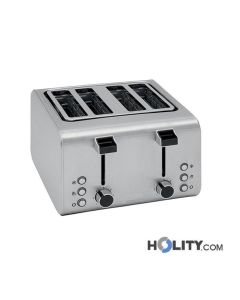
Classic 4-slice toaster without tongs. Crumb tray. Weight: 3 Kg. Dimensions: L27.3 x D28.2 x H18.6 cm.
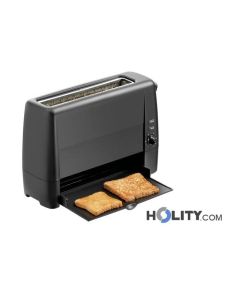
Multifunctional toaster with closable toast output flap.
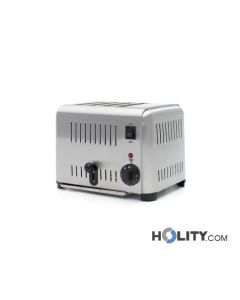
Stainless steel toaster for 2 or 4 slices. Timer 1-5 min, crumb tray. Dimensions: W 29 x D 25 x H 22 cm.
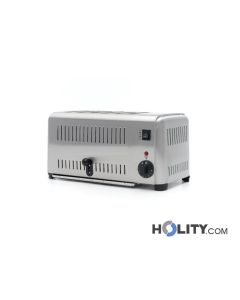
Professional stainless steel 6-slice toaster with timer and crumb tray. Dimensions: W 43 x D 25 x H 22 cm.
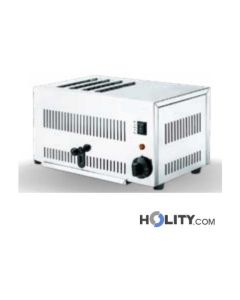
Toaster for holiday homes. Capacity: 4 slices. Dimensions: W. 30 x D. 21 x h. 22.5 cm.
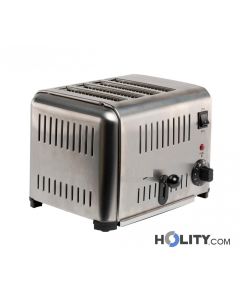
4-slice toaster for small hotel facilities. Power: 1.8 kW. Material: stainless steel.
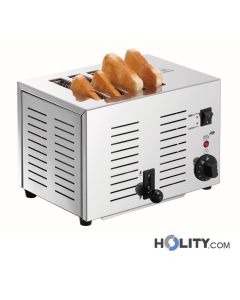
Toaster for hotels and holiday homes. Capacity: 4 slices. Dimensions: W30 x D25 x H22 cm.
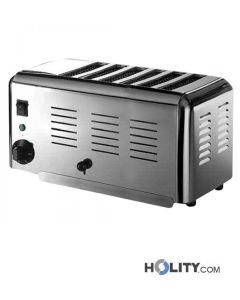
6-slot electric toaster equipped with a removable crumb collection tray. Power: 2500 W. Dimensions: W.410 x D.270 x h.220 mm.
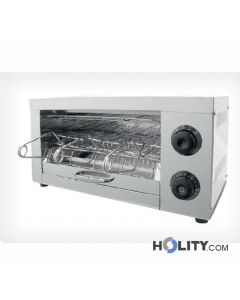
Stainless steel toaster. Equipped with quartz heating elements. Dimensions: 47.5 x 23 x 25 cm
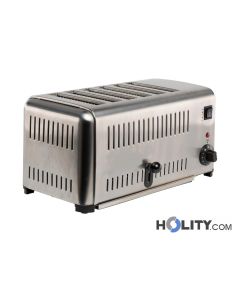
Professional hotel buffet toaster suitable for 6 slices. Power: 2.5 kW. Dimensions: W.420 x D.260 x h.220 mm.
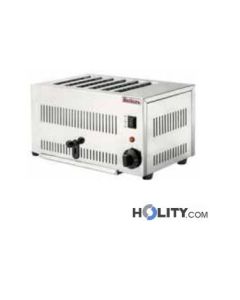
6-slice stainless steel toaster with crumb tray. Power: 2940 W.
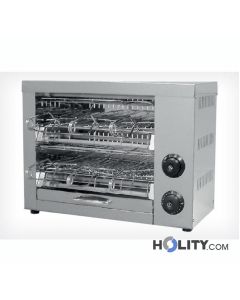
Professional stainless steel toaster. 6 quartz heating elements. Dimensions: 47.5 x 23 x 36.5 cm
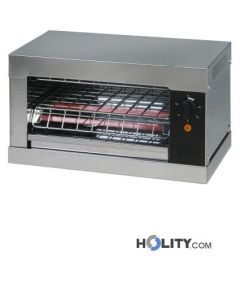
Stainless steel toaster. Equipped with a timer and crumb tray.
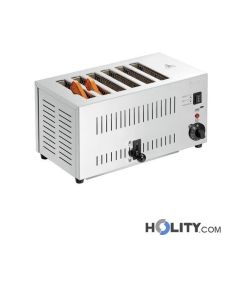
Toaster suitable for six slices to be inserted in slots measuring W 145 x D 20 x H 135 mm. Material: stainless steel. Time settable from 1 to 5 min.
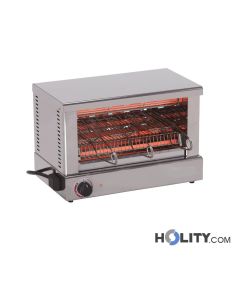
Professional toaster. Equipped with 3 chrome-plated steel tongs. Dimensions: W. 45 x D. 26.3 x H. 30.5 cm
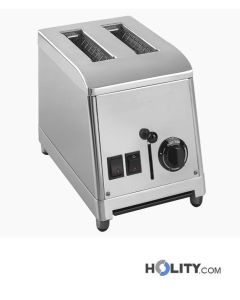
Classic toaster without tongs with crumb tray and automatic timer. Manual slice ejection via lever.
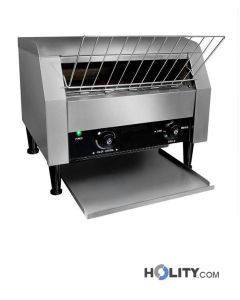
Professional conveyor toaster for buffets with steel structure. Production: approx. 300 slices/hour. Power: 2600 Watt. CE compliant.
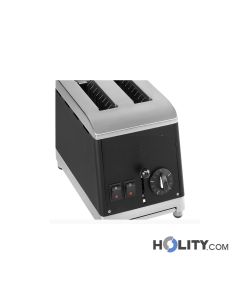
Holiday home buffet toaster with anodized aluminum body. Dimensions: 19 x 32 x 23 cm.
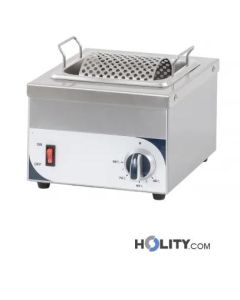
Butter spreader for breakfast buffets. Material: stainless steel. Dimensions: W.20.7 x D.23.7 x h.15.5 cm.
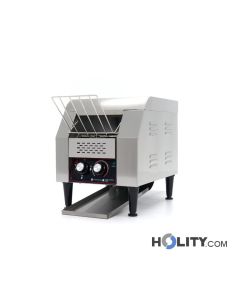
Conveyor toaster for 150 slices/hour, with adjustable speed and heat. Dimensions: W 32 x D 65 x H 42 cm.
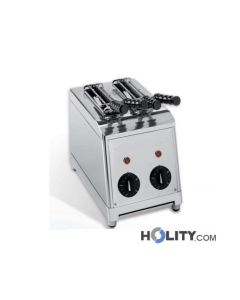
Professional toaster with 4-minute timer. Equipped with 2 tongs. Available in various colors. Made in Italy. Power: 1.37 kW.
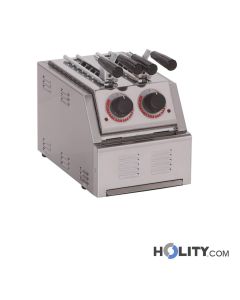
Toaster for professional use. Equipped with two tongs. Dimensions: W. 20.5 x D. 32 x h. 27.5 cm.
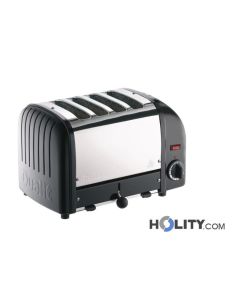
Design toaster for hotels. Dimensions: W360 x D210 x H220 mm. Hourly production: 120 slices.
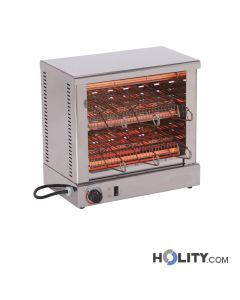
Horizontal toaster. Quartz lamps. Equipped with 6 tongs.
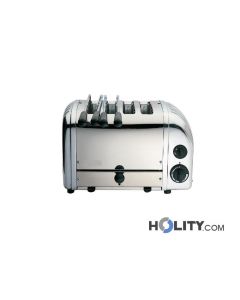
4-slot combined toaster in stainless steel. Dimensions: W.36xD.22xH.21 mm
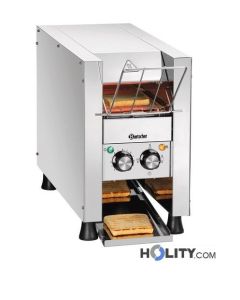
Breakfast room buffet toaster. Dimensions: W23.5 x D65.5 x H39.5 cm
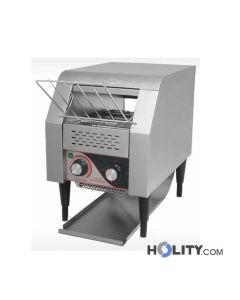
Conveyor toaster for breakfast buffets complete with crumb tray. Adjustable speed. Stainless steel frame.
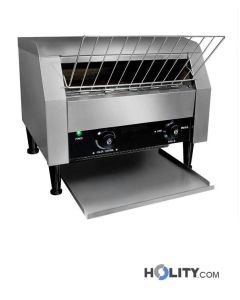
Conveyor toaster with steel structure. Adjustable belt speed. Power. 2.6 kW. Dimensions: W.360 x D.418 x H.77 mm.
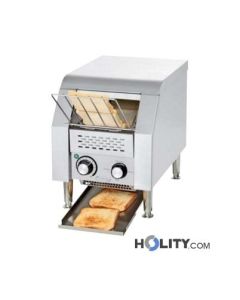
Steel toaster with crumb tray. Hourly production: 75 slices. Power: 1.34 kW. Dimensions: W.28.5 x D.42 x H.39 cm.
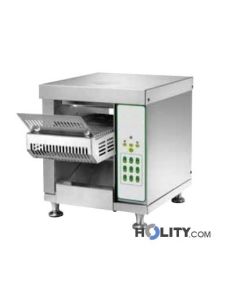
Continuous cycle toaster with stainless steel structure and rotating toasting conveyor belt. Cooking chamber with thermal insulation. Power: 1300 W.
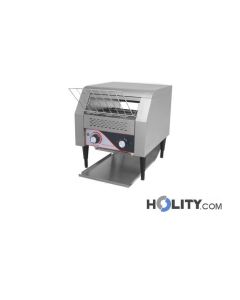
Hotel breakfast room toaster with an hourly production of 300 - 350 slices. Power: 1.9 kW. Dimensions: H.430 x D.430 x W.365 mm.
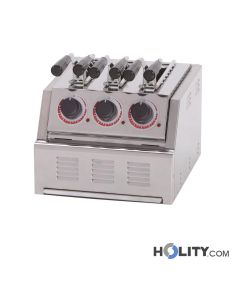
Toaster with 3 chrome-plated tongs. Dimensions: W. 27.5 x D. 32 x h. 37.5 cm
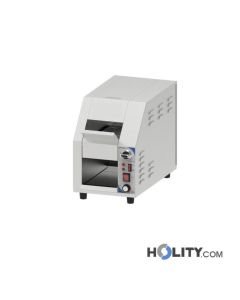
Conveyor toaster for breakfast room. Power: 1.8 kW. Dimensions: W 280 x D 608 x H 415 mm.
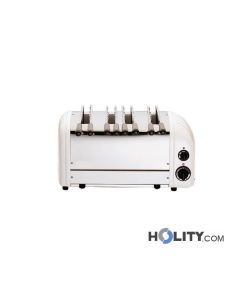
4-slot sandwich toaster with 2.8 cm slots, in stainless steel. Dimensions: W.46xD.21xH.22 cm
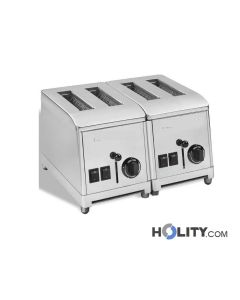
Classic slot toaster without tongs with 4 slots, equipped with crumb tray and automatic timer.
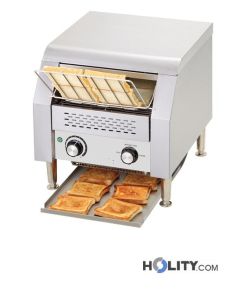
Professional two-slice conveyor toaster. Steel structure. Hourly production: 150 slices. Power: 2.24 kW. Dimensions: W.370 x D.420 x H.390 mm.
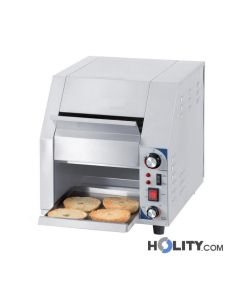
Stainless steel toaster with adjustable thermostat and conveyor belt speed. Opening dimensions: W 245 x H 60mm
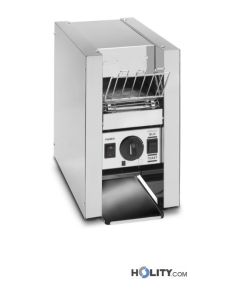
Energy-saving conveyor toaster, ideal for small hotels, delicatessens, pastry shops and venues. Hourly production 250 slices per hour.
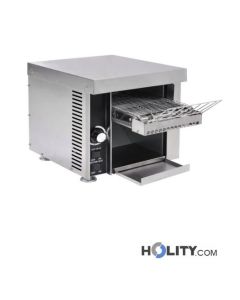
Single belt conveyor toaster equipped with crumb tray and adjustable feet. Power: 1340 W. Adjustable belt speed.
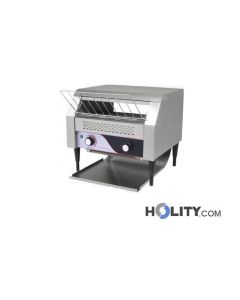
Stainless steel toaster with crumb tray. Hourly production: 450-500 slices. Dimensions: H.430 x D.430 x W.465 mm.
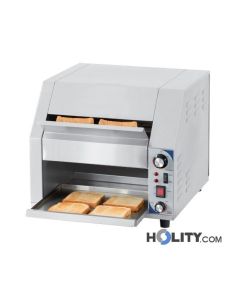
Conveyor toaster with adjustable thermostat and conveyor belt speed. Opening dimensions: W354 x H60mm
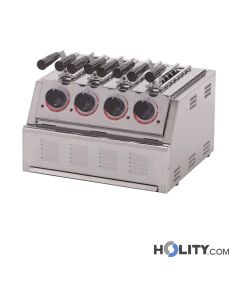
Professional toaster. Equipped with 4 chrome-plated tongs. Dimensions: W. 34.5 x D. 32 x h. 27.5 cm
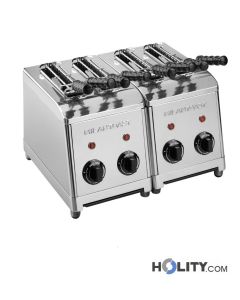
Toaster with clips for professional use. Solid and durable and built to last. Independent slots.
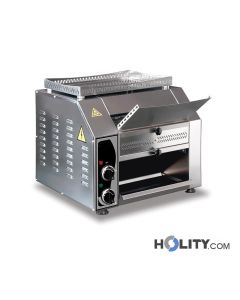
Toaster for hotel and restaurant breakfast rooms. Power: 2.5 kW. Hourly capacity: 400 slices.
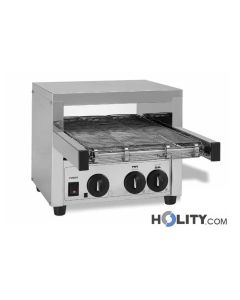
Professional conveyor toaster ideal for hotels. Rear bread slice exit. Hourly production: approximately 600 slices.
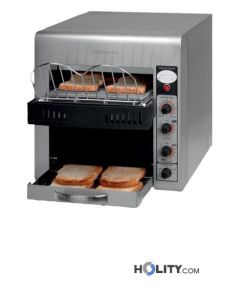
Professional toaster for breakfast rooms. Made of stainless steel. Hourly production: 360 toasts. Dimensions 370x580x400h mm
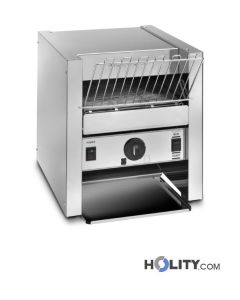
Professional toaster designed for the automatic toasting of bread slices. It is ideal for every type of hotel facility.
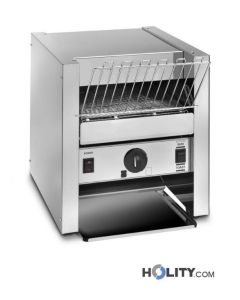
Conveyor toaster ideal for the automatic toasting of bread slices, brioches, buns. Hourly production: + 600 slices. Power consumption: 2.00 Kw.
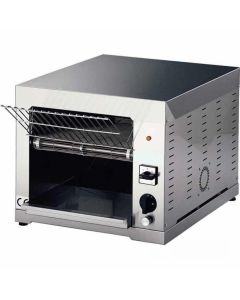
Professional machine for toasting bread slices in a continuous cycle, ideal for hotel facilities
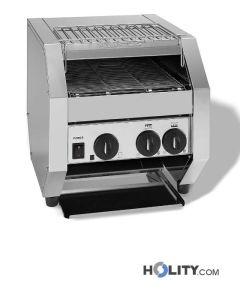
Professional conveyor belt toaster. Toasting chamber width: 25 cm. Ideal for every type of hotel facility
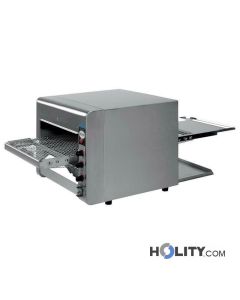
Conveyor toaster. Maximum temperature 260°C. Adjustable belt speed 2-12 minutes. Dimensions: 470x1050x400h mm
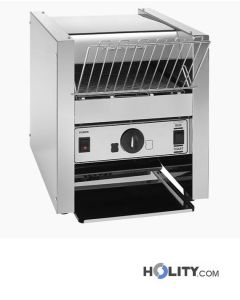
Professional continuous belt toaster, designed for the automatic toasting of up to three slices of bread.
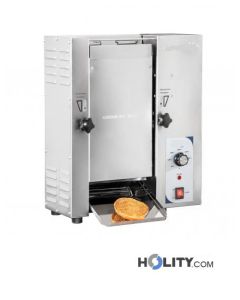
Vertical toaster for professional use. Production capacity: 600 toasts per hour. Dimensions: W46 x D32 x H57 cm.
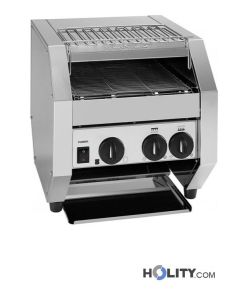
Professional conveyor toaster with 37 cm wide toasting chamber. Ideal for any type of hotel facility
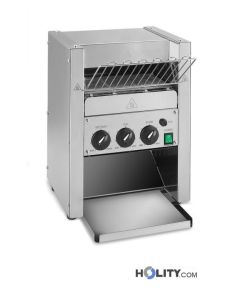
Professional ultra-fast conveyor toaster ideal for fast food outlets, burger shops, and restaurants. Hourly production: +600 slices. Weight: 31 kg.
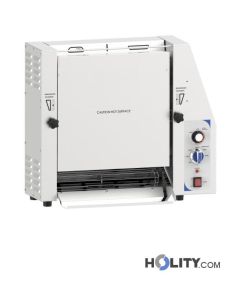
Vertical stainless steel toaster with temperature control via thermostat. Production capacity: 3,600 toasts per hour or 1,800 hamburgers.
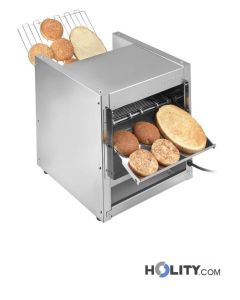
Stainless steel conveyor toaster. Dimensions: 47 x 50 x 50 cm. Hourly production: about 750 slices.
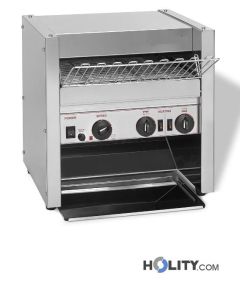
Professional three-slice toaster with front exit. Width belt: 37 cm. Hourly production: 950 slices. Dimensions: W.47 x D.41 x H.47 cm. Made in Italy.
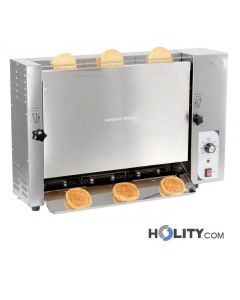
Professional toaster for hotel breakfast rooms. Conveyor belt operation. Production capacity: 1200 toasts per hour.
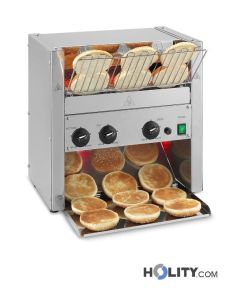
Professional ultra-fast conveyor toaster. External dimensions: W. 47 x D. 41 x h. 47 cm. Power supply voltage: 230 V 50-60 Hz.
Professional toasters represent a cornerstone in setting up any breakfast room that aspires to international standards of excellence. In the HoReCa sector, the ability to serve fragrant, golden, and crispy bread quickly and continuously is not just a service detail, but a determining factor for guest satisfaction. Unlike domestic devices, professional models are high-efficiency machines designed for intensive work cycles, capable of maintaining a constant temperature without overheating and managing production volumes ranging from a few dozen to hundreds of slices per hour.
The integration of a professional quality toaster within a hotel, restaurant, or bar guarantees not only uniform toasting, but also an optimization of operating times and a reduction in waste. The choice of tools made of stainless steel ensures unparalleled durability and ease of sanitization that meets the most rigorous hygiene and health standards. Holity proposes solutions where aesthetics and functionality merge, offering catering professionals reliable, safe equipment capable of enhancing every type of bread, from classic toast to artisan bread slices, transforming the buffet moment into a coordinated and flawless gourmet experience.
The purchase of a professional toaster responds to a specific need for reliability and performance that common household appliances cannot satisfy. The main technical advantage lies in thermal stability: armored heating elements and internal ventilation systems allow the machine to remain on for the entire duration of the buffet service without undergoing drops in performance or mechanical failures. This is essential to avoid unpleasant queues during peak breakfast times, ensuring that every guest receives their toasted bread with the same degree of browning, regardless of the machine’s workload.
Furthermore, the versatility of professional models allows for the management of different types of bread, regulating not only the heat exposure time but also the transit speed or the height of the toasting chambers. The use of a conveyor toaster or a professional toaster with tongs drastically reduces manual intervention by staff, allowing for a safe and intuitive self-service. The structural robustness provided by stainless steel protects the investment over time, resisting corrosion and daily wear. Choosing this equipment means aiming for superior execution quality, where the fragrance of the bread is enhanced without burning, ensuring constant positive feedback from the most demanding clientele.
Another strategic reason to prefer professional solutions concerns operational safety. Hotel toasters are equipped with enhanced thermal insulation to prevent external walls from reaching dangerous temperatures for the user, a fundamental requirement in environments frequented by children or distracted guests. Overheating protection systems and certified components ensure that the appliance operates within legal limits, minimizing the risk of short circuits or accidental fires. In summary, professional equipment is a guarantee of business continuity, hygiene, and safety, elements that define the authority of a modern accommodation facility.
The range of toasters available is divided into different technical configurations to adapt to every specific space and volume requirement. Conveyor toasters represent excellence for large hotels and high-traffic breakfast rooms. In these models, bread is loaded onto a rotating belt that transports it through the heat chamber, ejecting it perfectly toasted onto the front or rear tray. These devices can reach impressive productions of up to 1,200 slices per hour and offer separate controls for belt speed and the power of the upper and lower heating elements.
For more intimate contexts or assisted services behind the counter, vertical toasters with tongs or horizontal sandwich toasters are ideal. Tongs models allow for the insertion of already filled toast, holding the ingredients inside during the heating phase. There are also variants with extra-large toasting chambers to accommodate slices of homemade bread or bagels. Each model is designed to be functional: the presence of a practical removable crumb tray facilitates daily cleaning operations, while adjustable thermostats and knobs for thickness allow for total customization of the service, adapting to both thin slices of sandwich bread and thick slices of wholemeal bread.
Variants also differ in electrical power, which in top-of-the-range models can reach 2,800W to ensure instant heating. Materials are a constant in the category: brushed or polished stainless steel not only gives a professional and modern look to the buffet line but also guarantees sensory neutrality that does not alter the flavor of the bread. Many models also integrate energy-saving functions (“stand-by”) that reduce consumption during low-traffic moments, while still keeping the machine ready to return to full operation in seconds.
The selection of the ideal professional toaster must start from a rigorous analysis of the required hourly capacity. For a small Bed & Breakfast with fewer than 15 guests, a 2 or 4-slot toaster with tongs is sufficient. Conversely, for medium and large hotels, it is essential to focus on conveyor models with a minimum production of 150-300 slices per hour to avoid bottlenecks during the buffet. It is fundamental to evaluate the dimensions of the product: in compact buffets, vertically slender models allow for saving precious space, while models with rear discharge are preferable if the machine is positioned on a counter with access from both sides.
Another decisive technical criterion is the regulation of heat and speed. A good toaster must allow for modulating the toasting according to the type of bread (white, brown, frozen); the presence of a precision thermostat avoids service errors. One must also consider the total electrical absorption to ensure that the breakfast room system can handle the load, especially if coffee machines and kettles are present simultaneously. Common errors to avoid include purchasing machines with plastic components subject to deformation or choosing models without a crumb tray, which would unnecessarily complicate daily hygienic maintenance operations.
Finally, attention must be paid to the ease of use for the end customer in the case of self-service. Simple interfaces, with clear icons and robust knobs, reduce the need for assistance from staff. The stability of the machine is equally important: bases with non-slip feet ensure that the toaster does not move when inserting the bread. Choosing certified professional toasters on Holity.com guarantees access to original spare parts and structural robustness that amortizes the initial investment through years of smooth service, consolidating the image of efficiency of your catering business.
All professional toasters intended for the HoReCa sector must comply with rigorous European regulations on the safety of electrical equipment and the compliance of materials in contact with food (MOCA), according to EC Regulation No. 1935/2004. The use of certified stainless steel ensures that there are no migrations of toxic substances even at high temperatures. The CE marking is mandatory and certifies that the device has passed electromagnetic compatibility and low-voltage safety tests, minimizing the risk of electrocution or fire in professional environments.
In the context of HACCP, the toaster must be designed to facilitate deep sanitization. The presence of removable crumb trays is a functional requirement to prevent the accumulation of carbonized residues, which could generate smoke or open flames. Furthermore, surfaces must be free of dead corners or crevices where organic residues could hide. Compliance with these standards is not only a legal obligation for the facility manager, but a guarantee of protection for the guest and the staff, ensuring a healthy work environment and a food and beverage service that is safe and compliant with the highest European quality levels.
Explore all the products in the category and compare the available solutions to find the one best suited to your operational context.
The conveyor toaster guarantees continuous and automated production, ideal for self-service in hotels. The guest only needs to insert the slice, which will come out ready without having to monitor the time or manually extract tongs, drastically reducing wait times and the risk of burning the bread.
The most high-performing models designed for large buffets and canteens can reach an hourly production of up to 1,200 slices. For medium-sized facilities, models that guarantee between 150 and 600 slices per hour are common, ensuring a constant flow even during morning peak times.
Certainly. Professional toasters have knobs for adjusting the belt speed or the residence time in the heat chamber. Some advanced models also allow the power of the upper and lower heating elements to be regulated separately, perfectly adapting to white, wholemeal bread, or bagels.
Daily cleaning involves emptying and washing the crumb tray. For the external stainless steel body, it is necessary to use a soft cloth moistened with neutral, non-abrasive detergents. It is essential to perform these operations with the machine switched off and cold to ensure operator safety and preserve the metal’s brilliance.
Yes, they are designed with thermal insulation systems that keep external surfaces at temperatures safe to the touch. Furthermore, conveyor models avoid the user having to insert cutlery or hands inside the heat chambers, making the toasting process extremely safe even for less experienced users.
The power varies based on production capacity: starting from about 1,500W for small counter models up to 2,800W for faster conveyor toasters. It is important to check that the buffet’s electrical line is adequate for the required absorption, especially if multiple machines are used simultaneously.
High-quality professional models are equipped with safety systems and easy access to the toasting chamber. Many feature a ’reverse’ function or allow the guards to be partially opened to safely remove the obstruction. Correct adjustment of the entry thickness prevents most accidental jams.
 English
  Italian
 French
 German
 Spanish