
mon-fri 9-13 / 14.30-18.30
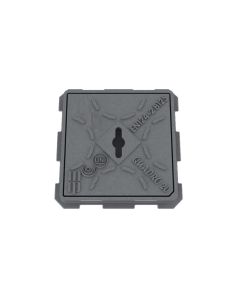
B125 road manhole cover in ductile iron, square frame with odor-proof sealing system. External dimensions: 200 x 200 mm.
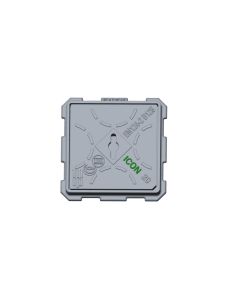
Ductile iron manhole cover 200 x 200 mm, class B125. External dimensions: 200 x 200 mm.
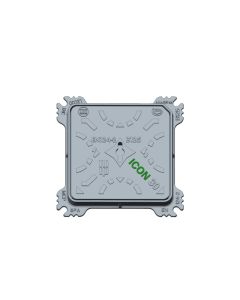
Ductile iron manhole cover. Clear opening: 200 x 200 mm. Height: 30 mm. External dimensions: 300 x 300 mm.
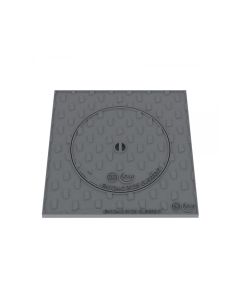
Ductile iron manhole cover. Class: B125. Height: 18 mm. Weight 9.7 kg. External dimensions: 400 x 400 mm.
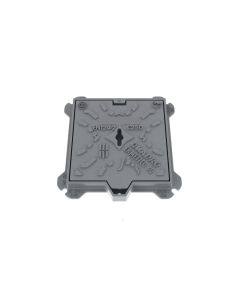
Ductile iron manhole cover GJS-500-7 C250 with square frame and lid. Class: C250. External dimensions: W 300 x D 300 x H 30 mm.
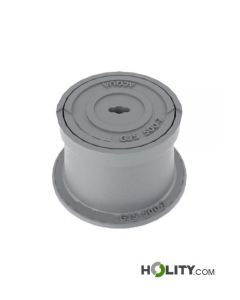
Ductile iron manhole cover, with interlocking lid and lifting slots. External dimensions: Ø 210 mm.

Manhole cover for public spaces, in ductile iron. Clear opening: 300 x 300 mm. Class: B125. External dimensions: 400 x 400 mm.
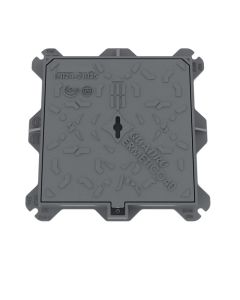
Ductile iron manhole cover. Dimensions: 40 x 40 cm. Loading class: B125.

Cast iron surface box, height 180 mm, with chain and lifting slots. External dimensions: Ø 214 mm.
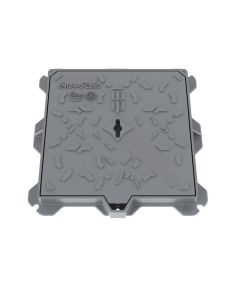
Ductile iron manhole cover. Dimensions: 40 x 40 cm. Square frame and cover. Loading class: C250.
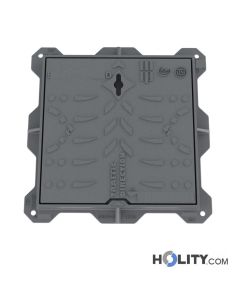
Cast iron manhole cover, C250 load class. Dimensions: 400x400 mm.

Spheroidal graphite cast iron manhole cover Ø 240 mm, clear opening Ø 100 mm, class D400. With chain.
Road manhole cover made of ductile iron. Class: B125. External dimensions: 380 x 380 mm.
Ductile iron manhole cover with square lid, load class B125. Ideal for road and urban applications. External dimensions: 500 x 500 mm. Clear opening: 400 x 400 mm. Height: 30 mm.
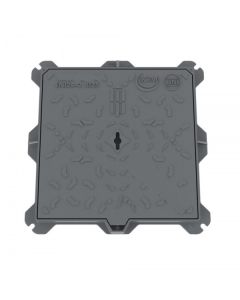
Road manhole cover with square shape and airtight seal. Dimensions: W.500xD.500.H.30mm
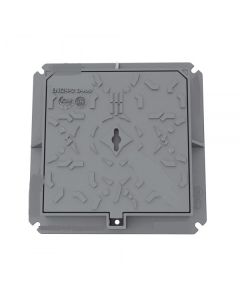
Square cast iron manhole cover. Dimensions: W.400x D.400.H.75mm
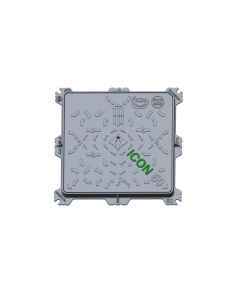
Square manhole cover in ductile iron C250, external 500x500 mm. Equipped with elastic snap closure system, odor-proof seat and non-slip surface.
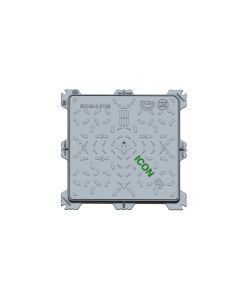
Ductile iron manhole cover. Clear opening: 450 x 450 mm. Height: 35 mm. External dimensions: 550 x 550 mm.
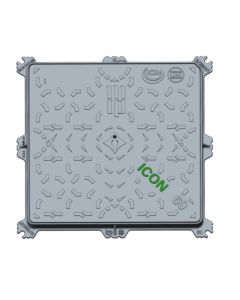
Square ductile iron manhole cover B125, external 600x600 mm. "U"-shaped frame for odor seal and non-slip surface for pedestrian and cycle paths.
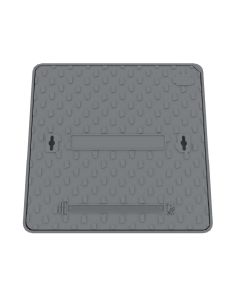
Spheroidal graphite cast iron manhole cover. External dimensions: 380x380 mm.
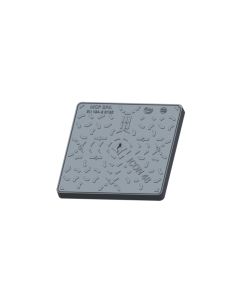
Ductile iron manhole cover, with square-shaped lid. Class: B125. External dimensions: 480 x 480 mm.
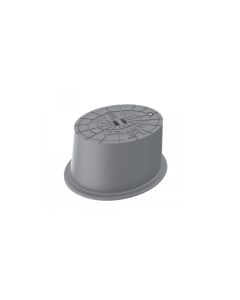
Hydrant cover with lateral locking screw. External dimensions: 310 x 400 mm.
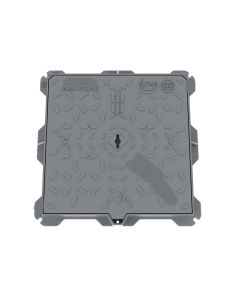
Spheroidal cast iron manhole cover class C250 with automatic locking. Dimensions: L.550xW.550x H45 mm

Ductile iron manhole cover with octagonal frame. Dimensions: Ø500xH.85mm.
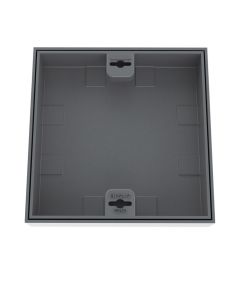
Spheroidal graphite cast iron recessed manhole cover. Dimensions: 40 x 40 cm. Internal depth: 75 mm.
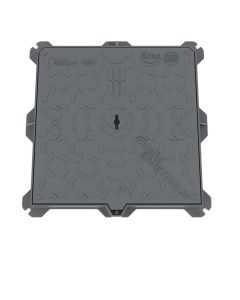
Road manhole cover in ductile iron. Dimensions: 60 x 60 cm. Loading class: B125.
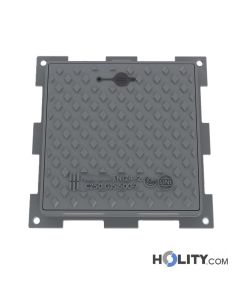
Ductile iron road manhole cover. Load class C250. Dimensions: 480x480 mm.
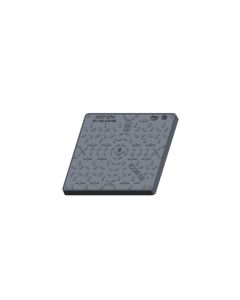
Ductile iron manhole cover with frame featuring a "U" internal rebate for odor tightness. Class: B125. Dimensions: 580 x 580 mm.
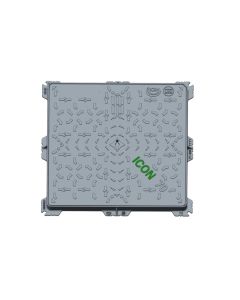
B125 ductile iron manhole cover, external 700x700 mm. Frame with anti-odor "U" seat, reinforced peripheral flange and anti-slip surface.
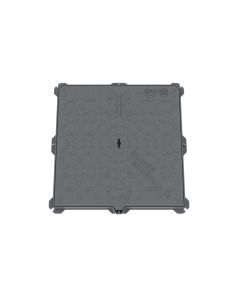
Ductile iron manhole cover. Clear opening: 600 x 600 mm. Loading class: B125. External dimensions: 700 x 700 mm.
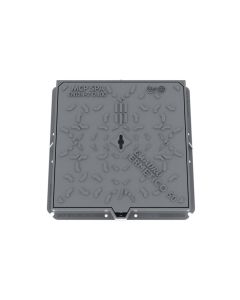
Ductile iron manhole cover with square frame and cover. Dimensions: 500 x 500 mm. Weight: 26.5 kg. Class: D400.
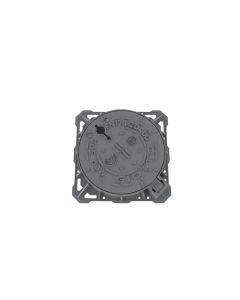
Ductile iron manhole cover. Dimensions: 500 x 500 x H.85 mm. Clear opening: Ø 400 mm.
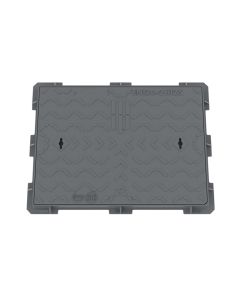
Ductile iron road manhole cover, rectangular. Class B125. Dimensions: 600x800 mm.
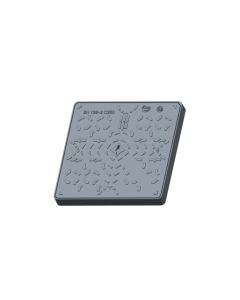
Ductile iron manhole cover with square lid and airtight seal, ISO 9001:2015 certified. Load class C250. External dimensions: 512 x 512 mm. Clear opening: 450 x 450 mm. Height: 50 mm.
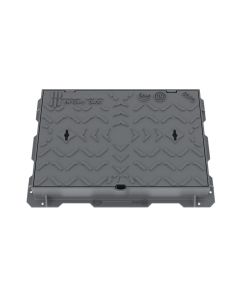
Ductile iron manhole cover. Class C250. Dimensions: 500x700 mm

Cast iron manhole cover with octagonal frame. Dimensions: Ø 600 x H.85 mm
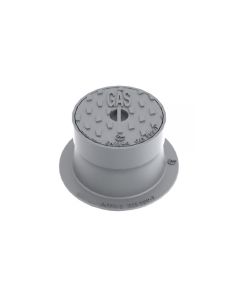
Driveway-accessible Ø 350 mm manhole cover in cast iron, with anti-slip lid. External dimensions: Ø 350 mm.
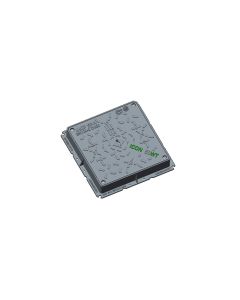
Spheroidal graphite cast iron road manhole cover with a square frame. Class D400. Dimensions: 490 x 490 mm.
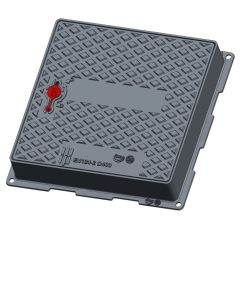
Square ductile iron manhole cover for street furniture. Load class: D400. External dimensions: 550 x 550 x h. 100 mm.
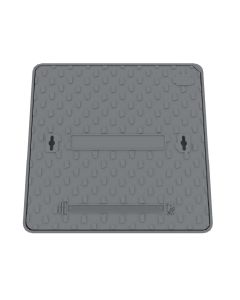
Ductile iron manhole cover 460x460 mm. Failure load > 250kN class C250.

Manhole cover for public spaces, in ductile iron. Clear opening: 700 x 700 mm. Class: B125. External dimensions: 800 x 800 mm.
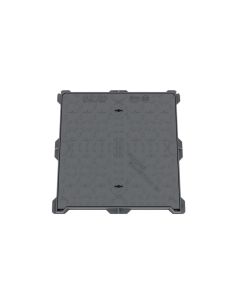
Ductile iron manhole cover with square lid and automatic closure, ISO 9001:2015 certified. Load class B125, ideal for sidewalks, parking lots and pedestrian areas. External dimensions: 800 x 800 mm. Clear opening: 700 x 700 mm. Height: 45 mm.
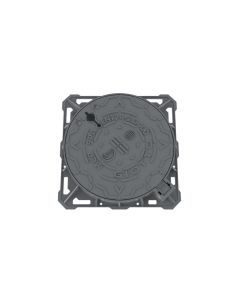
Spheroidal ductile iron manhole cover. Dimensions: 600 x 600 x H.85 mm. Clear opening: Ø 500 mm.
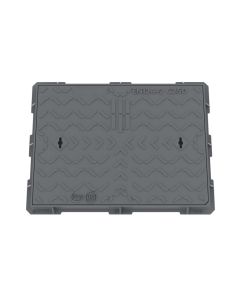
Rectangular ductile iron manhole cover Class C250. Dimensions: 600x800 mm
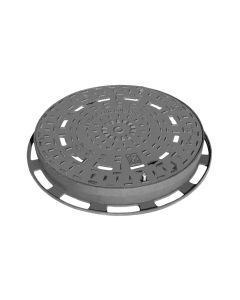
Road manhole cover with round frame, ventilated. Ø 785 mm. Class D400.

Cast iron manhole cover with round lid Ø 600 mm. Dimensions: Ø 700x H.85 mm
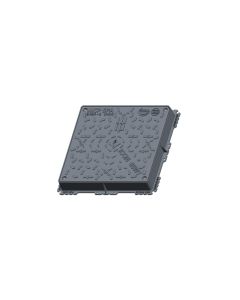
Road manhole cover with square-shaped lid. Class: D400. Dimensions: 590 x 590 mm.
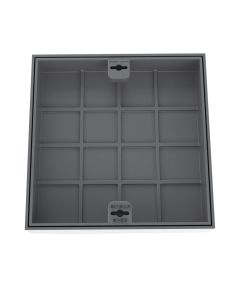
Recessed manhole cover for lids. Class D400. Dimensions 500x500 mm

Road manhole cover load class D400 with round cover. Dimensions: Ø800x H.85mm
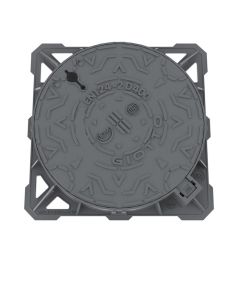
Cast iron manhole cover with square frame and round lid. Dimensions: 70 x 70 cm.
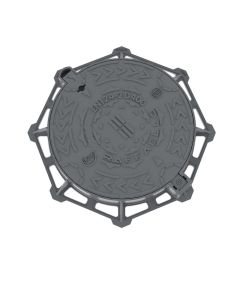
Manhole cover in cast iron. Octagonal frame. Dimensions: Ø85 cm.
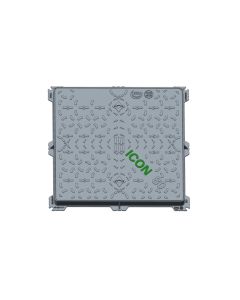
Square manhole cover in ductile iron C250, external 800x800 mm. Automatic snap closure, "U"-shaped odor-proof seat and non-slip surface. Weight: 46 kg.
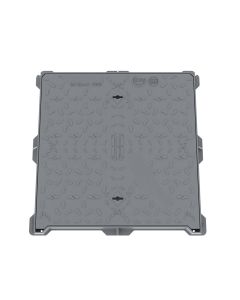
Square cast iron manhole cover with automatic closure. Dimensions: W.800xD.800x H.55mm
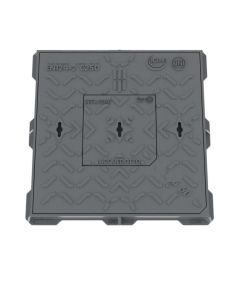
Road manhole cover with inspection hatch. Class C250. Dimensions: 600x600 mm.
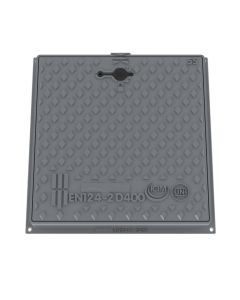
Ductile iron manhole cover. Load class D400. Dimensions: 550x550 mm.
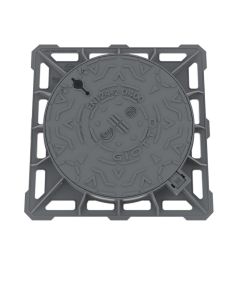
Cast iron road manhole cover. Dimensions: 80 x 80 cm. With square frame and round cover.
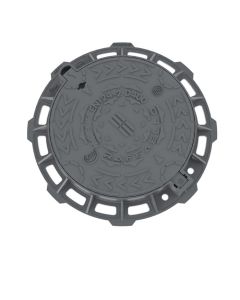
Road manhole cover with circular frame and cover. Material: ductile iron. Dimensions: Ø 85 cm.
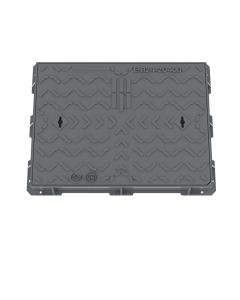
Airtight road manhole cover in GJS 500-7 ductile iron, load class D400, rectangular frame and cover. Dimensions: 600x800 mm. Clear opening: 500x700 mm.
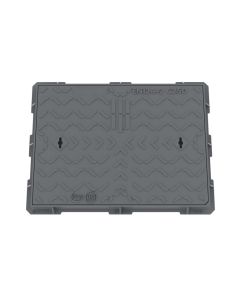
Rectangular cast iron road manhole cover. Loading class D400. Dimensions: 600x800 mm.
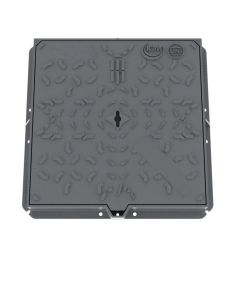
Ductile iron road manhole cover with airtight seal. Square shape. External dimensions: 550 x 550 mm. Height: 75 mm.
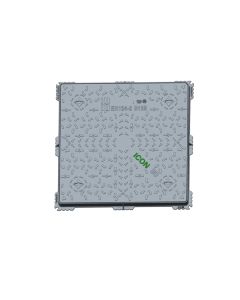
Square manhole cover in ductile iron B125, external 900x900 mm. Equipped with "U" anti-odor seat, reinforced perimeter flange and anti-slip surface.
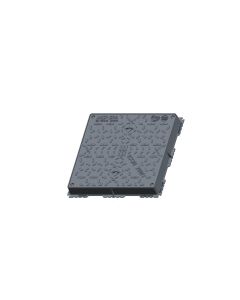
Ductile iron manhole cover with square lid and frame. Class: D400. Dimensions: 690 x 690 mm.
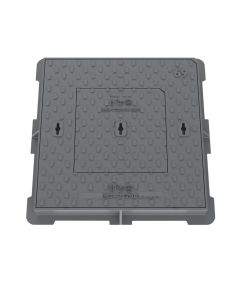
Cast iron manhole cover with inspection hatch. Class C250. Dimensions: 690x690 mm.
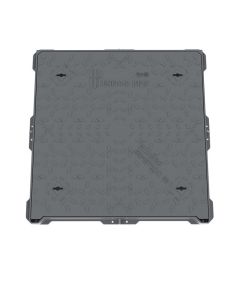
Ductile iron road manhole cover. Material: cast iron. Dimensions: 90 x 90 cm.
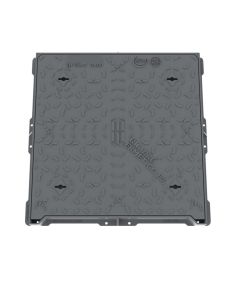
Hermetic road manhole cover. Dimensions: 80 x 80 x h.7.5 cm. Material: ductile iron. Square frame and cover.
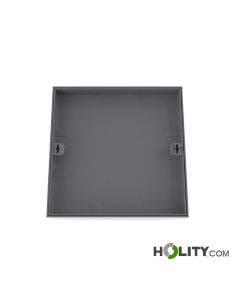
Recessed manhole cover H 90 mm in ductile iron GJS-500-7. Class: C250. External dimensions: 700 x 700 mm.
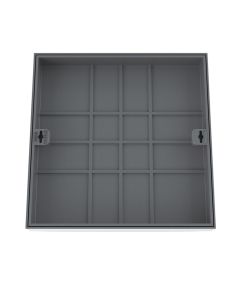
Recessed manhole cover in ductile iron. Class: D400. Dimensions: 600x600 mm.
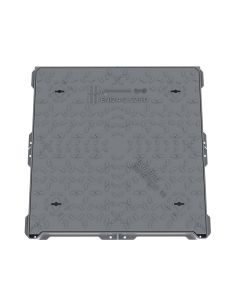
Square ductile iron manhole cover, airtight. External dimensions: 900x900 mm.
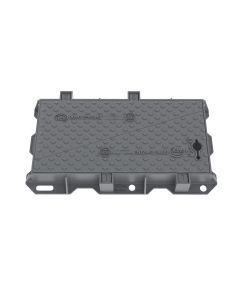
Rectangular manhole cover in ductile iron with 2 triangular lids. Load class D400. Dimensions: 530 x 900 mm
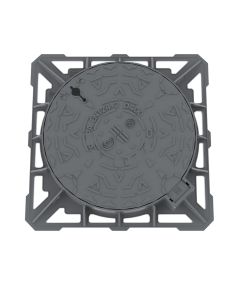
Ductile iron manhole cover 900x900 mm. Square frame.
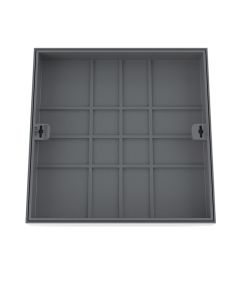
Road infill manhole cover. Dimensions: 70 x 70 cm. Internal depth: 75 mm.
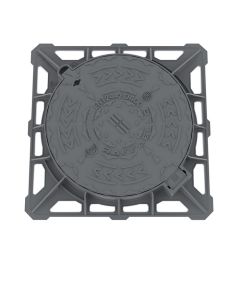
Road manhole cover with square frame and round lid. Dimensions: 95 x 95 cm.
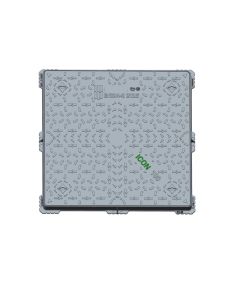
Square manhole cover in ductile iron B125, external 1000x1000 mm. Net opening 900x900 mm, anti-odor “U” seat and anti-slip surface. Weight: 81 kg.
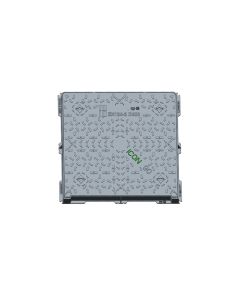
Square ductile iron manhole cover. Clear opening: 800 x 800 mm. Height: 75 mm. Weight: 80 kg. External dimensions: 900 x 900 mm.
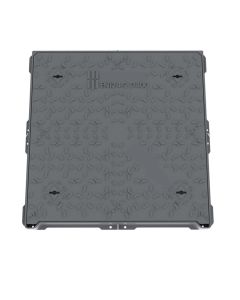
Square airtight road manhole cover. Dimensions: 90 x 90 cm. Class: D400. Material: ductile iron.
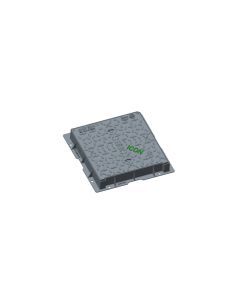
Ductile iron road manhole cover produced by an ISO 9001:2015 certified company. Class: F900. Dimensions: 735 x 735 mm.
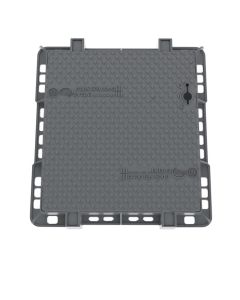
Ductile iron manhole cover with 2 triangular lids. Load class D400. Dimensions: 872 x 945 mm.
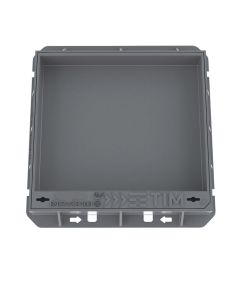
Recessed road manhole cover. Dimensions: 73 x 75 cm. Internal depth: 80 mm.
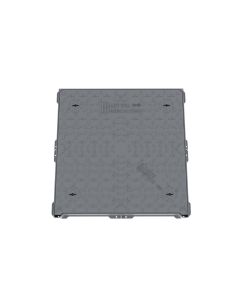
Ductile iron manhole cover with square lid and automatic locking, ISO 9001:2015 certified. Load class C250, ideal for urban roads, sidewalks, and parking lots. External dimensions: 1000 x 1000 mm. Clear opening: 900 x 900 mm.
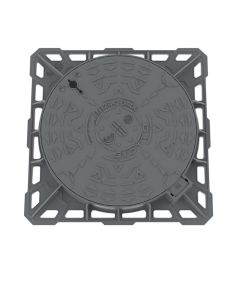
Ductile iron manhole cover. Square frame and round cover. Dimensions: 100 x 100 cm. Loading class: D400.
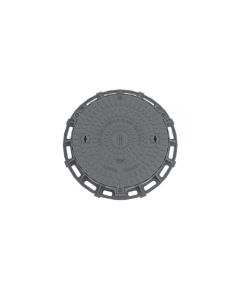
Circular D400 manhole cover in ductile iron Ø 850 mm. Watertight system with elastomer gasket and three-bolt fixing for public spaces.
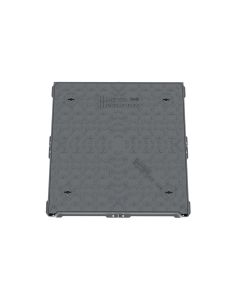
Ductile iron manhole cover with square lid and automatic locking, ISO 9001:2015 certified. Load class D400, ideal for high-traffic roads. External dimensions: 1000 x 1000 mm. Clear opening: 900 x 900 mm. Height: 80 mm.
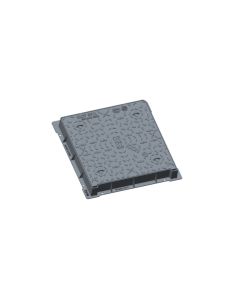
Road manhole cover in ductile iron produced by an ISO 9001:2015 certified company. Class: F900. Dimensions: 820 x 820 mm.
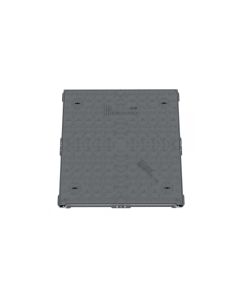
Watertight manhole cover h638_186 in GJS-500-7 ductile iron, class D400. Dimensions: 110 x 110 cm.
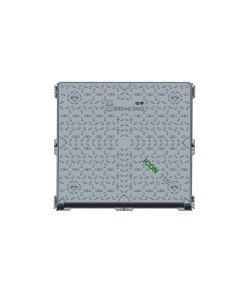
Odor-tight manhole cover in ductile iron h638_185, class D400 (load > 400kN). External dimensions: 110 x 110 cm.
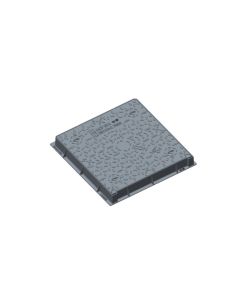
Ductile iron road manhole cover. Class: F900. Dimensions: 900 x 900 mm.
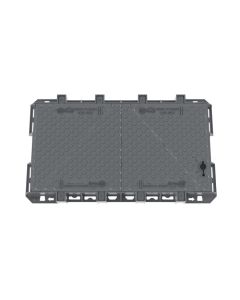
Spheroidal graphite cast iron manhole cover for telephony. Dimensions: 78 x 135 cm.
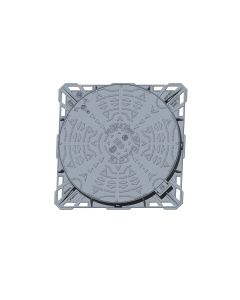
Circular spheroidal graphite cast iron manhole cover h638_187, class D400. Square/octagonal frame 1100 x 1100 mm.
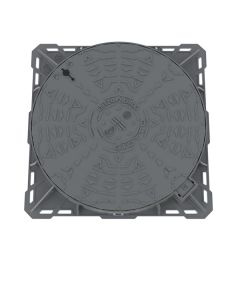
Road manhole cover with square frame and round lid. Material: ductile iron. Dimensions: 110 x 110 cm.
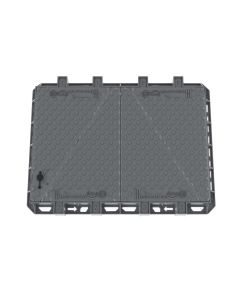
Ductile iron manhole cover with 4 triangular covers. Dimensions: 882 x 1164 mm. Loading class: D400.
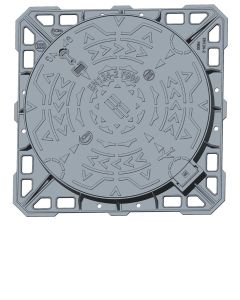
Ductile iron manhole cover GJS-500-7, class F900. External dimensions: 950 x 950 mm. Clear opening: Ø 800 mm. Square frame with circular cover.
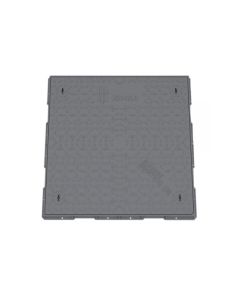
Watertight manhole cover h638_189 in ductile iron GJS-500-7, class D400. External dimensions 1200 x 1200 cm.
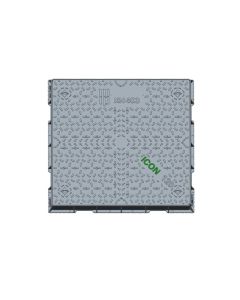
Watertight manhole cover h638_188 in GJS-500-7 spheroidal graphite cast iron, class D400. Impressive dimensions of 1200 x 1200 mm.
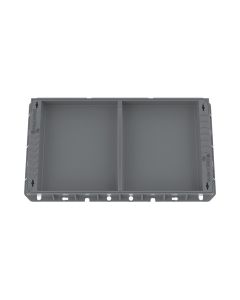
Recessed road manhole cover. Material: spheroidal graphite cast iron. Dimensions: 76 x 132 cm. Internal depth: 80 mm.
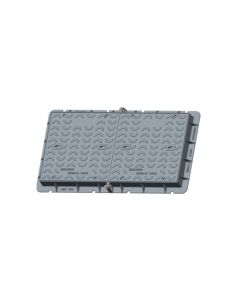
Ductile iron manhole cover with bolted rectangular lid, ISO 9001:2015 certified. D400 load class. External dimensions: 765 x 1400 mm. Clear opening: 600 x 1200 mm. Height: 100 mm.
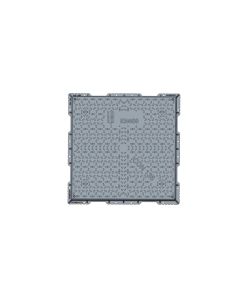
Ductile iron manhole cover. Class: KN400. Clear opening: 1200 x 1200 mm. Height: 100 mm. Weight: 207 kg. External dimensions: 1350 x 1350 mm.
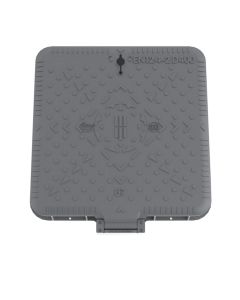
Cast iron manhole cover with assisted opening. Load class D400. Dimensions: 870x935 mm.
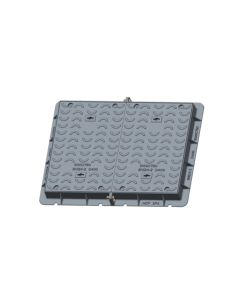
Ductile iron manhole cover with bolted rectangular lid, ISO 9001:2015 certified. Loading class D400. External dimensions: 920 x 1170 mm. Clear opening: 750 x 1000 mm. Height: 100 mm.
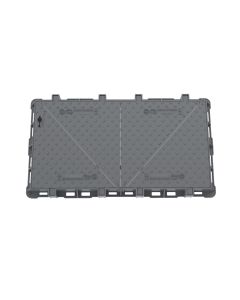
Ductile iron manhole cover, load class D400. 4 triangular covers.
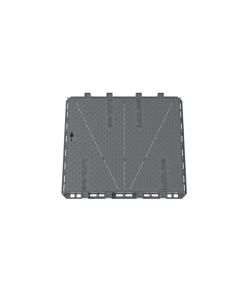
Rectangular D400 manhole cover in GJS-500-7 ductile iron, 1180x1350 mm. Tripod system, sequential triangular covers and bolt locking.
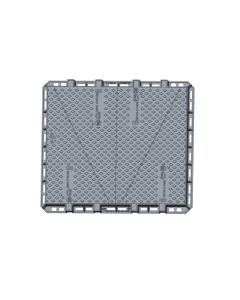
Rectangular D400 manhole cover in GJS-500-7 ductile iron, 1180x1350 mm. Anti-rattle tripod system and bolt locking for technological networks.
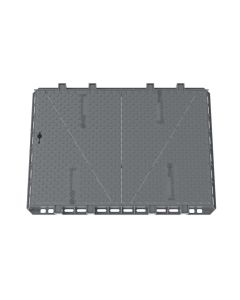
Rectangular ductile iron manhole cover. Load class: D400. Dimensions: 118 x 165 cm.
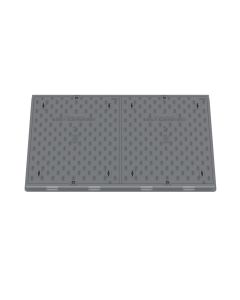
Rectangular manhole cover in ductile iron. Loading class D400. Dimensions: 870x1600 mm
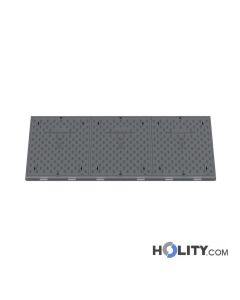
<p>Ductile iron manhole cover with 3 square covers. Load class D400. Dimensions: 870x2365 mm.</p>
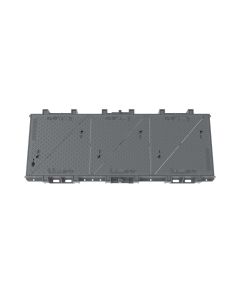
Rectangular ductile iron manhole cover, with 6 triangular covers. Class F900. Ideal for airport pavements.
Road manhole covers are essential components of modern urban infrastructure, serving as controlled access points to underground sewage systems, drinking water, gas, electricity, and telecommunications. Primarily made of ductile iron, reinforced concrete, and technical plastic, these elements ensure the hermetic sealing of underground networks while maintaining the safety of pedestrian and vehicular traffic. The choice of material and load class depends directly on the installation context, the type of underlying infrastructure, and the specific local and national regulations governing public spaces.
A functional road manhole cover is not just a covering solution but an element that contributes to urban landscape order and injury prevention. The variety of sizes, from square shapes to circular models, and the diversification of resistance classes (B125, C250, D400) allow the product to be adapted to any scenario: from pedestrian zones to avenues with a high concentration of heavy traffic. Periodic maintenance and the selection of components certified according to EN 124 standards significantly reduce the risks of failure and limit intervention costs over time.
Road manhole covers in ductile iron offer superior mechanical resistance compared to other solutions, with an average lifespan of 50-60 years under normal operating conditions. The GJS-500-7 cast iron structure ensures simultaneous elasticity and robustness, preventing the brittle fractures typical of traditional cast iron and reducing the risk of sudden failures under exceptional loads. The load capacity varies significantly based on the class: a class B125 manhole cover supports up to 125 kN of pressure, sufficient for pedestrian areas and residential zones, while class C250 and D400 models are suitable for provincial roads, highways, and areas with very high heavy traffic. The anti-odor hermetic seal, implemented through "U" sealing systems and elastic gaskets, contributes to urban comfort and the reduction of harmful emissions to the road surface.
Operational practicality represents another crucial advantage: the presence of lifting eyes facilitates access for maintenance operations, reducing intervention times and labor costs. Models with an automatic snap-lock system eliminate the risk of accidental drops during opening phases, protecting operators. The non-slip surface, a feature of modern products, improves safety in adverse weather conditions and in high pedestrian traffic areas. The wide range of available sizes, from small rectangular openings (310x400 mm) to large square formats (700x700 mm), allows for adaptation to any design requirement without construction compromises, maintaining uniform quality standards regardless of the chosen dimensions.
The range of road manhole covers differs primarily by construction material, geometry, and load capacity. Ductile iron models dominate the market for reliability and mechanical performance: they represent the ideal solution in contexts where durability and traffic resistance are priorities. Square manhole covers (in sizes 200x200, 300x300, 400x400, 500x500, 600x600, and 700x700 mm) perfectly adapt to square gully pots and facilitate installation in the orthogonal grids typical of urban centers. Circular models (frequently Ø210, Ø240, Ø500 mm) are preferred in areas where space is limited or where the plant configuration involves cylindrical shafts. Rectangular manhole covers (e.g., 600x800 mm) find specific application in access points to extended sewage systems or technological tunnels where a generous clear opening is required.
Functional variants further enrich the offering: specialized manhole covers for underground hydrants integrate lateral locking screws to prevent involuntary opening; recessed filling models with greater internal depth (approx. 75 mm) allow for the passage of small diameter pipes while maintaining the seal; gate valve covers include safety chains and reinforced eyes for frequent lifting. The classification by load class (B125, C250, D400) reflects specific uses: B125 for car parks, pedestrian areas, and low-traffic urban roads; C250 for provincial roads and mixed-use public areas; D400 for highways, industrial yards, and areas subject to concentrated heavy vehicle loads. Closing systems vary from simple rebate frames (more economical but less airtight) to "U" frames with elastomer gaskets, up to automatic snap systems that guarantee a perfect seal without manual intervention.
The correct selection of a road manhole cover begins with the evaluation of the underlying infrastructure and the context of use. First, it is necessary to identify the type of network served: access to sewage, water supply, gas, energy, or telecommunications involves slightly different needs. Sewage systems frequently require anti-odor systems ("U" frame with gaskets) to limit foul-smelling emissions; water and gas access points prefer absolute hermetic sealing for environmental safety reasons. The expected traffic represents the most critical parameter: in a pedestrian square (B125), the maximum load is limited, while on an urban road with mixed traffic (C250), greater robustness is required; on provincial road axes or near industrial areas (D400), mechanical resistance becomes decisive to avoid catastrophic failures. The most frequent error consists in undersizing the load class for economic reasons: an undersized manhole cover generates damage to the frame, cover, and underlying systems within 5-10 years, multiplying maintenance costs and creating public safety hazards.
Further decision factors include the dimensions of the opening, the depth of the shaft, and the available geometry. The clear opening must be proportionate to the need for access by operators and equipment: small formats (200x200 mm) adapt to drainage gullies and small access points, while wide openings (600x600 mm) facilitate extensive maintenance work. The effective height of the manhole cover must compensate for the depth of the shaft: models with a height of 18-30 mm adapt to shallow shafts; filling variants (75 mm internal depth) are indicated when the level difference between the road surface and the underground system is moderate. The shape must coincide with the geometry of the shaft: attempting to force a square manhole cover into a cylindrical shaft exposes it to the risk of movement and premature failure. Finally, evaluate the availability of lifting eyes (present in modern products), the possible need for a safety chain (for hydrants or frequent access), and the most suitable closing system for the context: high pedestrian traffic areas benefit from non-slip surfaces; shafts subject to water accumulation require frames with lateral drainage.
The design, production, and installation of road manhole covers in Europe are governed by the EN 124:1994 standard and subsequent updates, which defines load classifications, nominal dimensions, allowed materials, and resistance tests. The classification into load classes (A15, B125, C250, D400) corresponds to specific load capacities measured in kilonewtons and reflects well-defined usage scenarios: class B125 (125 kN) is intended for pedestrian areas and car parks; class C250 (250 kN) for urban and provincial roads; class D400 (400 kN) for highways and very high-traffic industrial zones. In addition to vertical static load, the standard prescribes impact tests, fire resistance (to prevent gasket liquefaction in case of underground fire), and odor impermeability measured through standardized methods. The ductile iron used must comply with the EN-GJS-500-7 standard, guaranteeing tensile strength greater than 500 N/mm² and percentage elongation greater than 7%, properties that confer resistance to shocks and vibrations resulting from vehicle traffic.
Specific requirements also emerge from national and local construction regulations: in Italy, DM 11.02.1992 (Sewerage Regulation) establishes positioning and protection standards for shafts in public areas, integrating EN 124 specifications. CE compliance is mandatory for all European manufacturers, implying periodic testing and technical documentation verified by certified third-party bodies. Recurring aspects in practice include the need for lateral drainage to prevent water accumulation in the shaft (which accelerates internal corrosion); the implementation of anti-odor systems for access to sewage networks (fundamental in densely populated urban centers); the use of anti-rust paints and epoxy resin coatings to increase durability in corrosive environments (coastal areas, industrial zones). The "U" anti-odor section represents a de facto standard for modern sewage systems, reducing the release of hazardous gases and bad smells to the road surface, significantly improving urban livability and compliance with increasingly stringent environmental standards on air quality in densely inhabited areas.
Explore all products in the category and compare the available solutions to find the one best suited to your operational context. Our range covers every dimensional, load, and functional specialization need, ensuring reliable performance over time and full regulatory compliance.
The load class indicates the maximum supportable load capacity. A B125 manhole cover supports loads up to 125 kN and is suitable for pedestrian areas and car parks. A D400 withstands up to 400 kN and is intended for highways and areas with concentrated heavy traffic. The choice depends on the intended use and the actual traffic on the road.
The manhole cover must perfectly align with the geometry of the underlying shaft: square on square, circular on circular. The effective height compensates for the difference in level between the road and infrastructure. The frame must rest on flat, stable surfaces; sealing is achieved via an elastic gasket or special mortar depending on the type of seal required. Post-installation inspection verifies the absence of movement.
It is a "U" shaped frame with an elastic gasket that creates an airtight seal, preventing the release of foul-smelling gases to the road surface. Essential for access to sewage networks in densely populated urban areas, it improves environmental comfort and regulatory compliance regarding air quality.
Ductile iron offers the best durability (50-60 years) and mechanical strength, with moderate initial costs. Reinforced concrete is economical for large volumes but less durable. Technical plastic is lightweight and corrosion-resistant, ideal for saline areas, but less used for high load classes. The choice depends on budget, environmental context, and expected traffic.
Inspect periodically (at least annually) to check for absence of movement, cracking, or water accumulation. Clean the perimeter of debris and sediment. In case of noise during vehicle passage, check the integrity of the elastic gasket. For severe maintenance cycles (frequent access), choose models with reinforced eyes and a safety chain.
 English
  Italian
 French
 German
 Spanish