
mon-fri 9-13 / 14.30-18.30
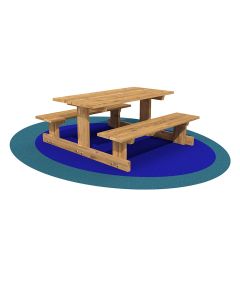
Picnic table with benches for playground. Dimensions: W120 x D126 x H56 cm. Seats: 4.
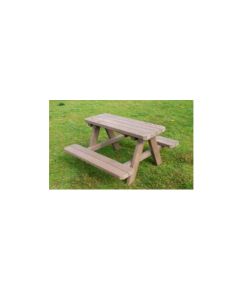
Children’s picnic table and bench set made of 100% recycled plastic. Dimensions: L.900 x D.970 x H.540 mm.
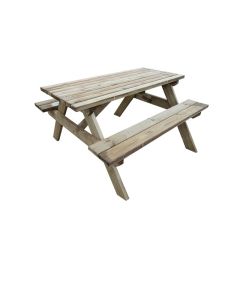
Picnic table in very robust and resistant pine wood. Dimensions: W180 x D165 x H76.5 cm
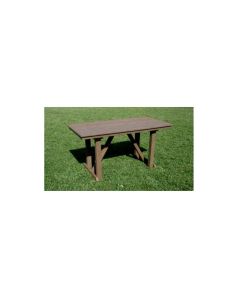
Recycled plastic table, robust and durable. Dimensions: 1400 x 700 x 750 mm. Weight: 50 kg.
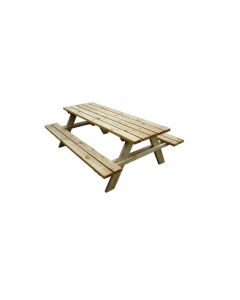
Wooden picnic table and benches for public spaces. Dimensions: L. 180 x D. 150 x H. 80 cm.
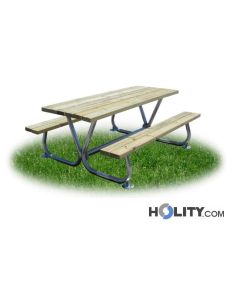
Picnic table with integrated benches ideal for public parks, made of wood and steel. Length 190 cm. Ground level anchoring.
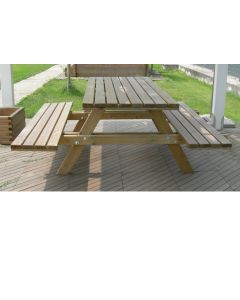
Picnic table with benches for parks. Material: certified pine wood PEFC and FSC. Dimensions: L.195 x D.200 x h.80 cm.
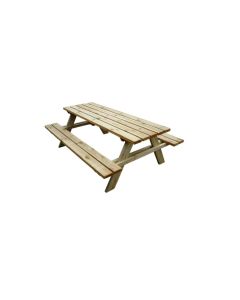
Wooden park picnic table and benches. Dimensions: L. 200 x D. 150 x H. 80 cm.
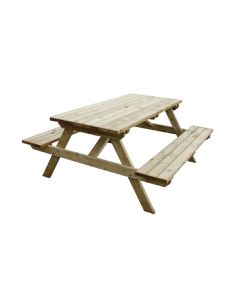
Wooden picnic table with benches for picnic areas. Dimensions: 150 x 150 x 70h cm
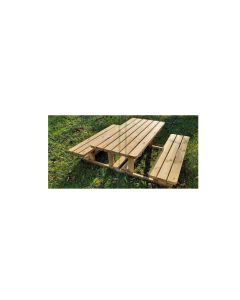
Picnic table for children in pressure-treated pine with integrated benches without backrest. Dimensions: L 145 x D 120 x H 50 cm.
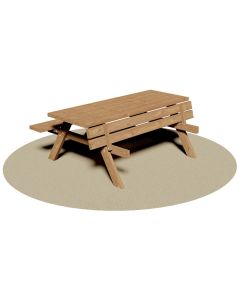
Table with folding benches in Nordic pine wood ideal for furnishing picnic areas. Supplied in assembly kit
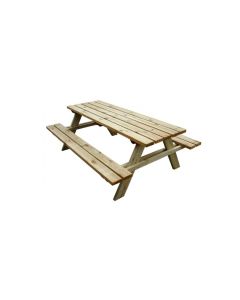
Picnic table and benches for public spaces without backrests. Dimensions: W. 200 x D. 165 x H. 80 cm.
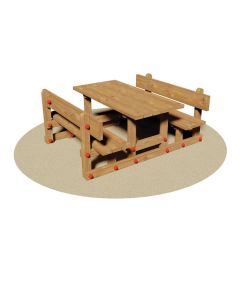
Mini wooden picnic table with 2 benches ideal for playgrounds.
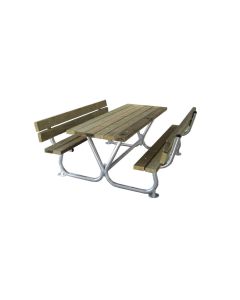
Picnic area table in wood and steel with backrest. Dimensions: max 190 x 183 x 78 h.
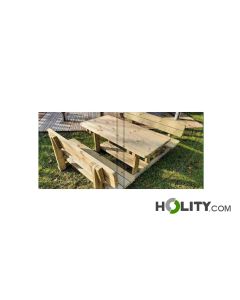
Picnic table for children in pressure-treated pine and benches with backrest. Dimensions: W 163 x D 120 x H 55 cm.
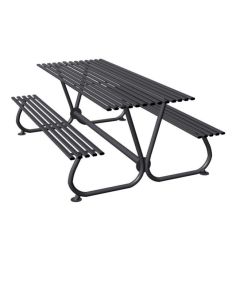
Picnic table complete with benches. Material: steel. Dimensions: L150 x D180 x H77 cm.
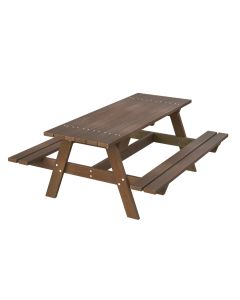
Eco-friendly picnic table in WPC (100% recycled) with integrated benches. Weather-resistant, no painting required. Dimensions: L 180 x D 158 x H 75 cm.
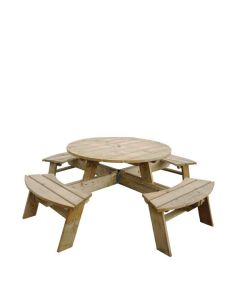
Round picnic table with benches. Dimensions: Ø200 x 72h cm
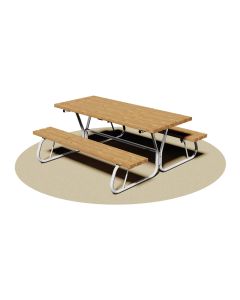
One-piece picnic table with benches for picnic areas. Top and table in Nordic pine wood and steel structure.
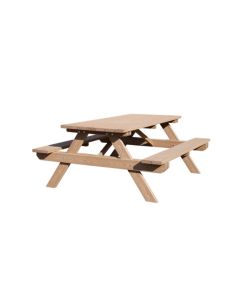
Table with integrated benches, in recycled material, ideal for picnic areas and rest zones. Dimensions: W 180 x D 165 x h 76.5 cm.
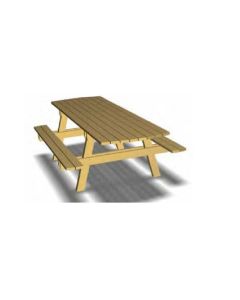
Picnic set consisting of a table and two flat benches in pressure-treated Nordic coniferous wood. Dimensions: W.195 x D.146.2 cm. 100% Made in Italy.
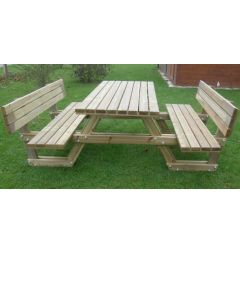
Picnic table with benches equipped with backrest. Dimensions: W.195 x D.251 x h.80 cm. Material: solid pine wood certified PEFC and FSC.
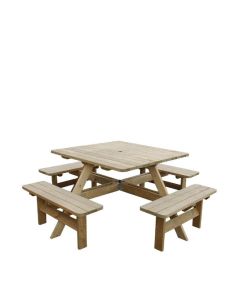
Wooden picnic table with benches for picnic areas. Dimensions: 198 x 198 x 75h cm.
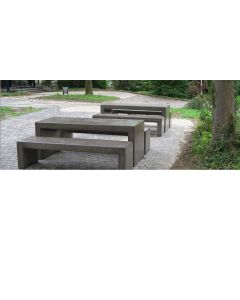
Concrete table for park furniture and outdoor spaces. Available in different finishes. Dimensions: W200 x D80 x H75 cm
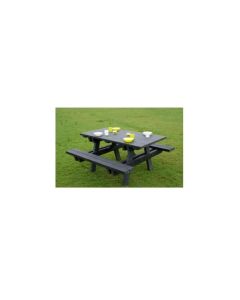
Recycled plastic table and benches set for public spaces. Dimensions: 1450 x 1560 x 790 mm.
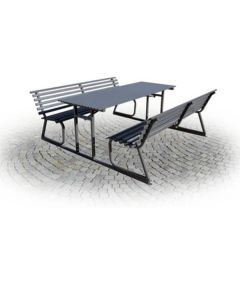
Picnic table with steel benches. Dimensions: W. 150 x D. 190 x h. 82 cm
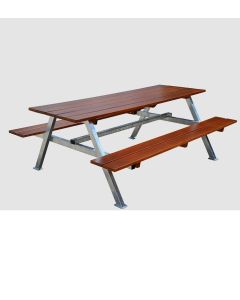
Table with integrated benches ideal for picnics. Length 175 cm
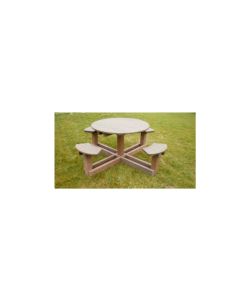
Round table with integrated benches in recycled plastic. Dimensions: Ø 1800 x h 755 mm. Weight: 93 kg.
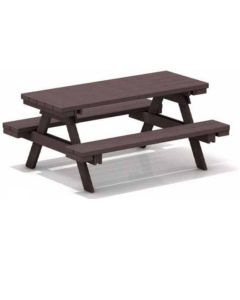
Picnic table set with benches. Material: recycled plastic. Dimensions: L170 x D170 x H72 cm.
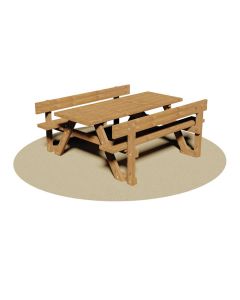
Wooden Picnic Table for public spaces. Dimensions: 190x180x h.80 cm.
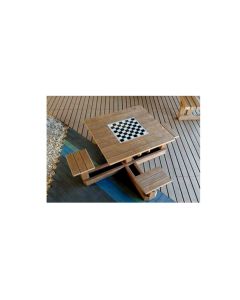
Picnic table with seats in recycled plastic and chess game. Dimensions: 1600 x 1600 x H775 mm.
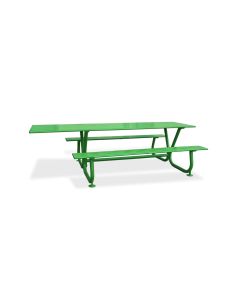
Inclusive picnic table in powder-coated galvanized steel. Seat height: 45 cm. Dimensions: L 150 x D 180 x H 77 cm.
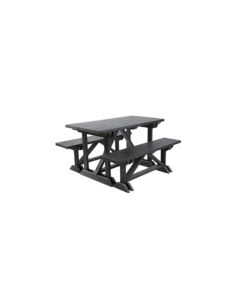
Recycled plastic table and bench set for urban furniture. Dimensions: 1450 x 790 x 790 mm.
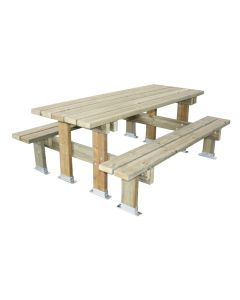
Wooden picnic table and benches without backrest. Dimensions: W. 190 x D. 210 x h. 82 cm.
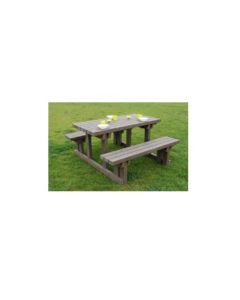
100% recycled plastic table and bench set, resistant and durable. Dimensions: 1500 x 1670 x 800 mm.
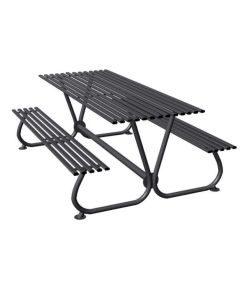
Picnic table for public parks, dimensions 200 x 180 x H 77 cm. Available in various colors.
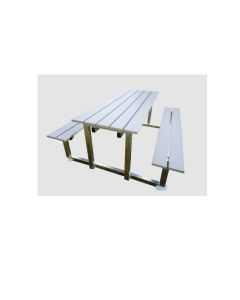
Benches and table for picnic. Without footrest.
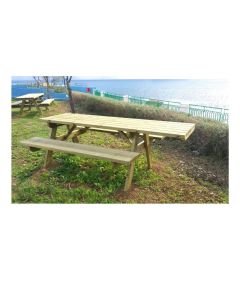
Pine wood picnic table and benches. Product suitable for people with disabilities.
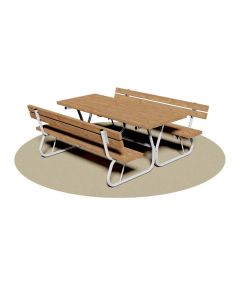
Picnic table with benches. Material: wood. Dimensions: L190 x D195 x H77 cm.
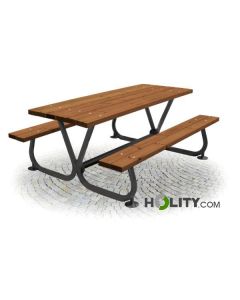
Picnic table for public park. Anchoring: ground level.
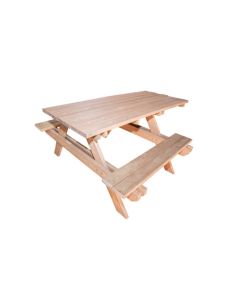
Table with integrated benches in recycled material, ideal for picnic and rest areas. Dimensions: W 180 x D 165 x H 79 cm.
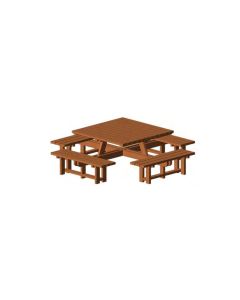
Square picnic table with 4 benches in class III pressure-treated solid pine wood. Dimensions: W 254 x D 254 x H 45 - 80 cm.
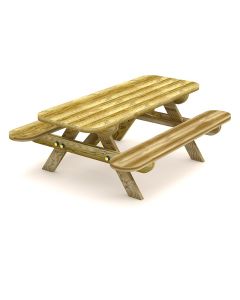
Picnic table with benches for playgrounds. Material: wood. Dimensions: W150 x D120 x H55 cm.
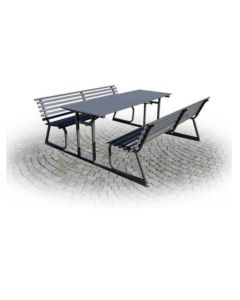
Picnic table for public parks and gardens. Anchoring: flush to the ground. Finish: galvanized steel.
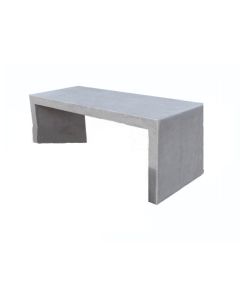
Concrete outdoor table. Dimensions: L. 200 x D. 80 x h. 80 cm. Available in different finishes.
Octagonal table with integrated benches in recycled plastic. Dimensions: 2060 x H.770 mm.
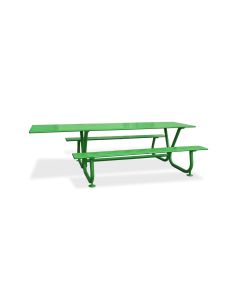
Inclusive picnic table in powder-coated galvanized steel. Seat height: 45 cm. Dimensions: W 200 x D 180 x H 77 cm.
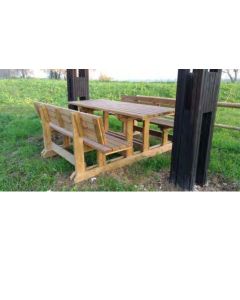
Picnic table with benches with backrest. Material: autoclave-impregnated pine wood, certified PEFC and FSC. Dimensions: L.200 x D.220 x h.80 cm.
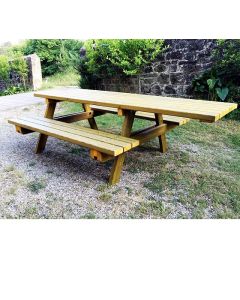
Picnic table in treated and colored Nordic pine wood. Dimensions: L. 237 x D. 160 x h. 78 cm.
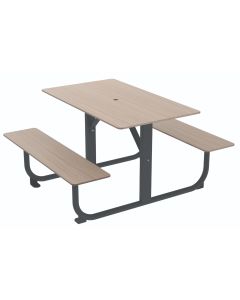
Picnic table with HPL benches. Dimensions L 1390 x D 1180 x H 725 mm.
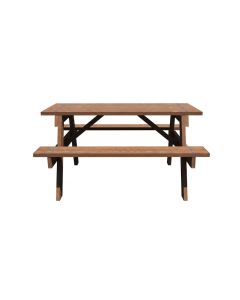
Outdoor picnic table h763_69 in technological wood. Maintenance-free, eco-friendly configuration with dimensions 1.8x1.4x0.79 m.
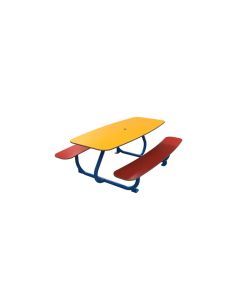
Oval children’s picnic table in metal and colored HPL. Dimensions 150x119x56 cm, 6 integrated seats and ground fixing for play areas and schools.
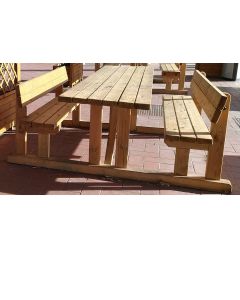
Picnic table with benches and extension for the disabled. Made of PEFC and FSC certified wood. Dimensions: L.235 x D.220 x h.80 cm.
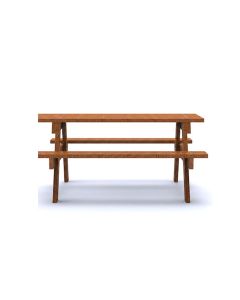
Inclusive picnic table and bench h763_70 in technological wood. Wheelchair-accessible model, maintenance-free. Dimensions 1.8x1.4x0.79 m.
Children’s picnic table in eco-friendly WPC, weather-resistant, with rounded corners for safety. Dimensions: W 140 x D 150 x H 55 cm.
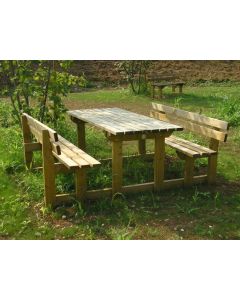
Table and benches with backrest in Finnish pine wood. Dimensions: W.1900 x D.2100 mm. Table height: 820 mm. Made in Italy.
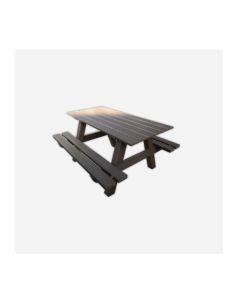
Recycled plastic picnic table and benches. Dimensions: H.750 x D.1600 x L.1800 mm.
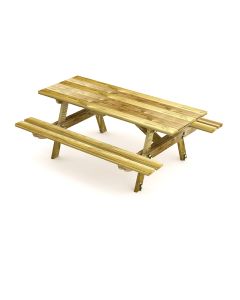
Picnic table with benches without backrests. Material: Nordic pine wood. Dimensions: W190 x D150 x H74 cm.
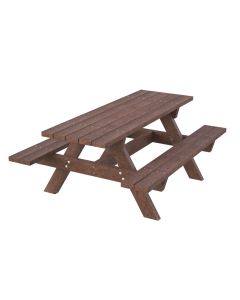
Eco-friendly picnic table with integrated benches, brown recycled polymer slats and stainless steel hardware. Dimensions: L 180 x W 140 x H 75.5 cm.
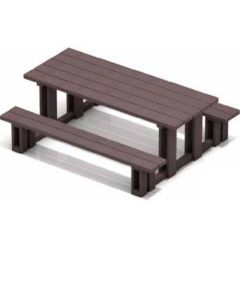
Picnic table with benches. Material: recycled plastic. Dimensions: W200 x D170 x H81 cm.
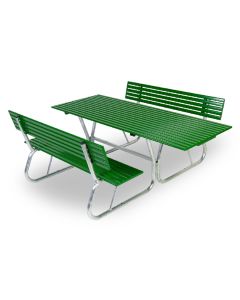
Picnic table with benches. Dimensions: 190x180xh.81 mm.
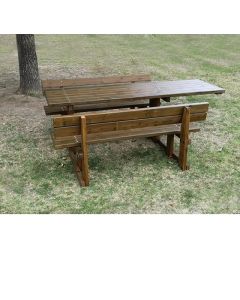
Picnic table accessible for the disabled with 2 benches with backrest. Length 239 cm.
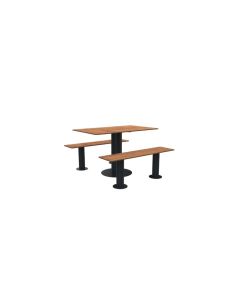
4-seater rectangular table for urban furniture in steel and HPL. Dimensions 137x118 cm, inclusive design with separate benches and pine effect finish.
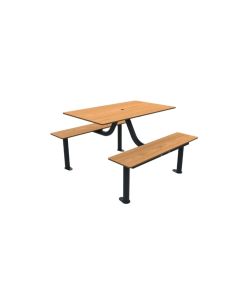
4-seater monoblock table with integrated benches, RAL 7016 metal structure and teak-effect HPL tops, complete with parasol hole.
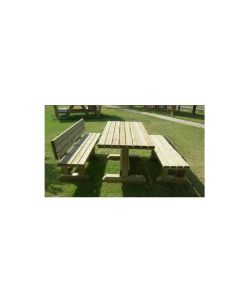
Picnic table set in pressure-treated pine, with 2 independent benches, one with backrest and one without. Table dimensions: W 200 x D 79 x H 80 cm.
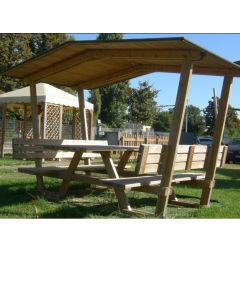
Picnic table with benches and roof. Dimensions: W.200 x D.314 x h.214 cm. Material: PEFC and FSC certified pine wood.
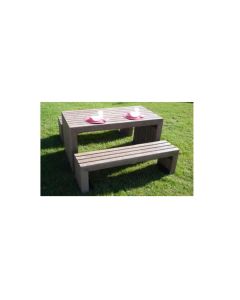
Robust picnic table and benches set in recycled plastic. Dimensions: 1500 x 780 x 800 mm.
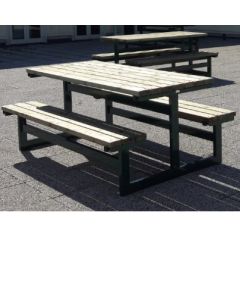
Picnic table and benches in galvanized steel and wooden slats. Made in Italy.
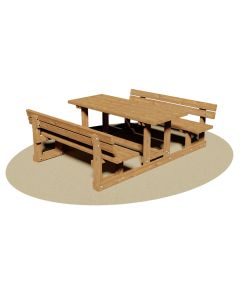
Picnic table and two benches set in Nordic pine wood with backrest. Dimensions: L. 190 x D. 213 x h. 80 cm.
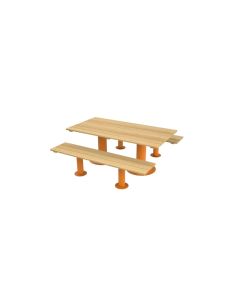
Children’s table and bench set in wood/metal. Color: yellow/wood. Dimensions: W 148.8 x D 147.5 x H 56.8 cm.
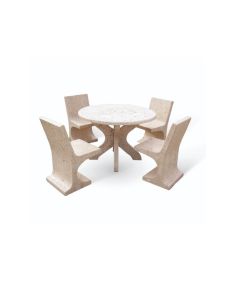
Round picnic table with 4 seats. Diameter 1100 mm, Height: 750 mm
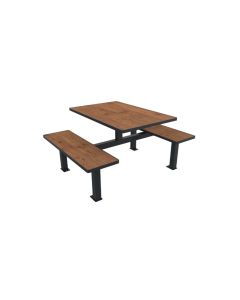
H463_21 inclusive picnic table in steel and pine-effect HPL, 156x119 cm. 4-seater monobloc structure with easy wheelchair access.
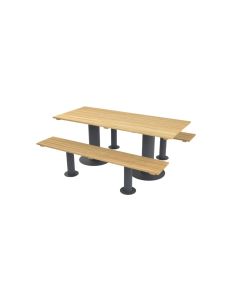
8-seater picnic table in steel and PEFC robinia wood (180 cm). Inclusive design with separate benches for maximum accessibility and resistance.
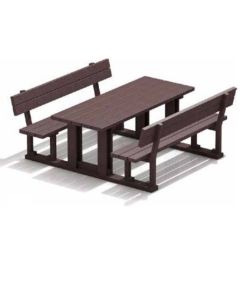
Picnic table with built-in benches. Material: recycled plastic. Dimensions: 180 x 210 x 77 cm
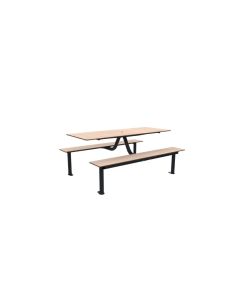
Monobloc table with integrated benches for 6 people in steel and oak-effect HPL, W 180 cm, designed for inclusivity and urban furniture.
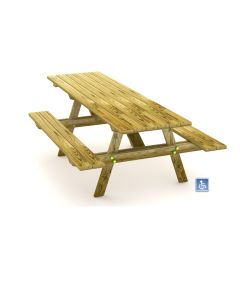
Table with benches for picnic areas. With wheelchair space. Dimensions: L250 x W150 x H74 cm.
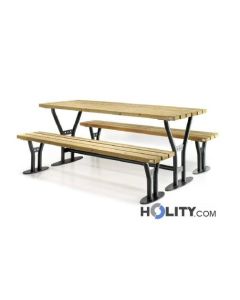
Picnic set consisting of a table and two benches in hot-dip galvanized steel and wooden slats. Structure available in various colors. 100% Italian product.
Concrete picnic table with benches. Available in various finishes. Table dimensions: L.180xW.80xH.70 cm.
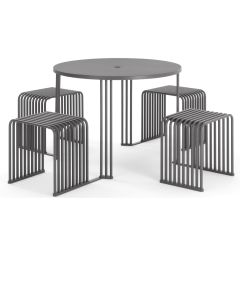
Picnic table with seating available in various colors. Hot-dip galvanized steel structure. Dimensions: W.182.5 x D.182.5 x H.73.6 cm.
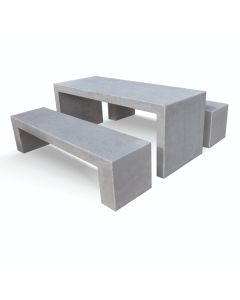
Picnic table complete with benches without backrests. Material: concrete. Dimensions: L.200 x D.80 x h.80 cm.
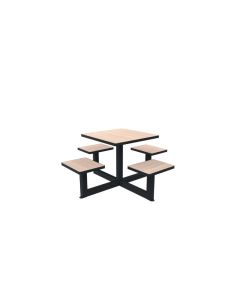
Square 4-seater outdoor table in steel and HPL (154.5x154.5 cm), inclusive for PRM users, ideal for parks and urban common areas.
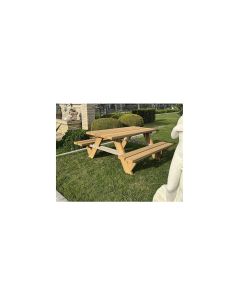
Eco-friendly WPC picnic table Made in Italy, weather-resistant and maintenance-free. Dimensions: L 180 x W 175 x H 75 cm.
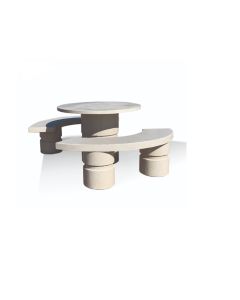
Concrete picnic table, with curved benches. Available in various finishes
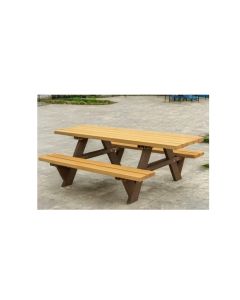
Eco-friendly WPC picnic table Made in Italy, weather-resistant and with an inclusive design for wheelchairs. Dimensions: L 200 x D 175 x H 75 cm.
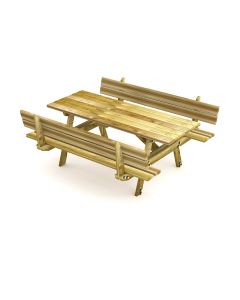
Picnic table with benches. Material: Nordic pine wood. Dimensions: W190 x D178 x H87 cm.
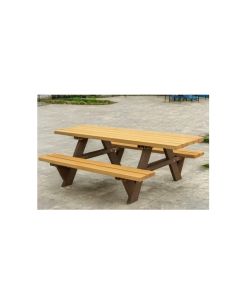
Picnic table in CAM and FSC certified WPC, eco-friendly and resistant, with space on two sides for wheelchairs. Dimensions: L 220 x D 175 x H 75 cm.
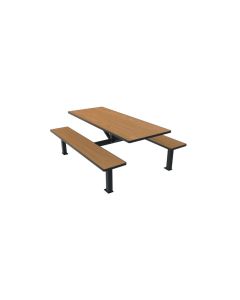
Monobloc picnic table in steel and teak-effect HPL, 200x156 cm. Accommodates 8 people with an inclusive design for wheelchair accessibility.
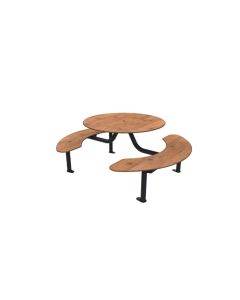
Round table in steel and HPL with Tyrol pine effect, 187x161 cm, 6 seats with inclusive access and umbrella hole. Robust solution for urban furniture.
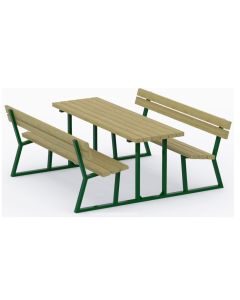
Picnic set for parks and trails consisting of a table and two seats with backrests. Dimensions: L.190 x D.185 x h. 80 cm.
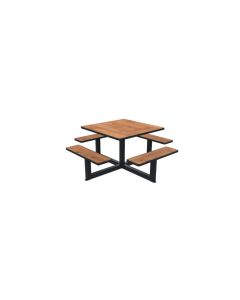
Square picnic table H463_24 in steel and Tyrol pine effect HPL (167x167 cm). Inclusive design for 4 people, wheelchair accessible.
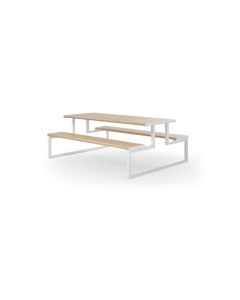
Picnic table with integrated benches and hot-dip galvanized structure. Dimensions: L.200 x D.154.5 x H.75 cm.
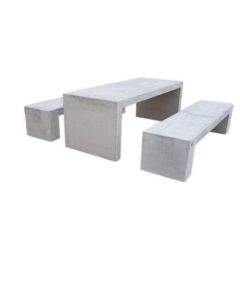
Concrete picnic table for parks. Complete with benches without backrest. Available in various finishes. Dimensions: L200 x D80 x H80 cm
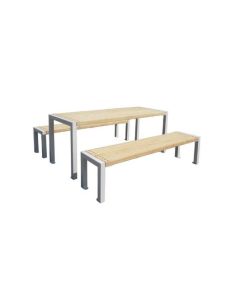
Picnic set consisting of table and benches with galvanized and painted steel structure. Seats and top in treated pine wood. 100% Italian Product.
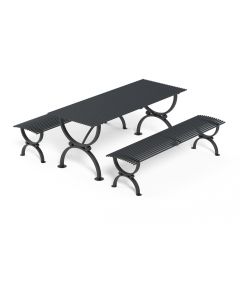
Picnic table complete with benches. Material: galvanized steel. Dimensions: L180 x D. 80 x H80 cm.
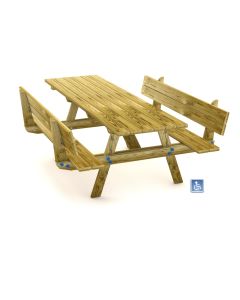
Picnic table set with benches, for disabled people. Material: Nordic pine wood. Dimensions: L250 x W178 x H87 cm.
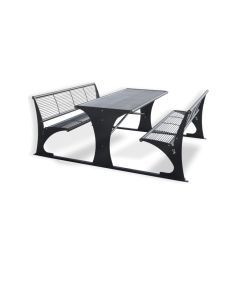
Picnic table for public park. Material: painted steel. Anchoring: flush to the ground.
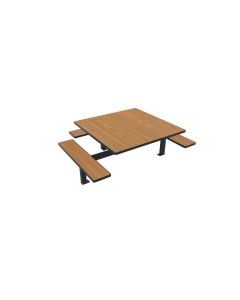
Square outdoor table in steel and HPL, 7 seats with integrated PRM access. Resistant monoblock structure for urban furniture, parks, and schools.
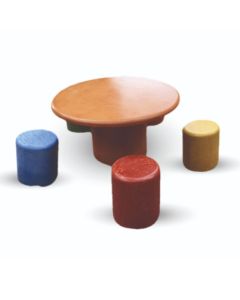
Picnic table with five stools, ideal for children. Table dimensions: Ø110 x h. 65 cm.
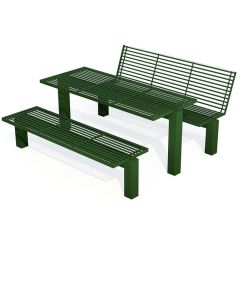
Inclusive picnic set consisting of a bench with backrest, a bench without backrest and a 180 cm table, made of galvanized and painted steel.
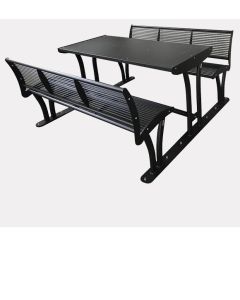
Picnic set with table and 2 benches with backrest. In galvanized steel. To be bolted down.
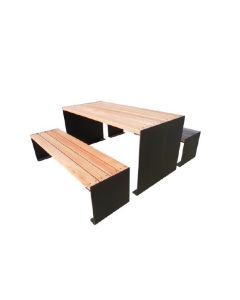
Pine wood picnic table with galvanized and painted steel structure. 100% Made in Italy. Fixing: to be bolted down.
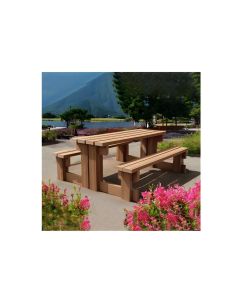
CAM and FSC certified WPC picnic table, eco-friendly, weather-resistant and maintenance-free. Dimensions: W 180 x D 180 x H 80 cm.
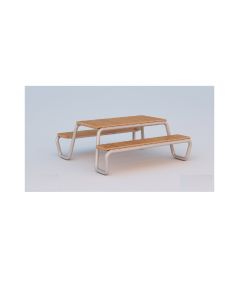
Picnic table with benches in galvanized steel and Okoume wood.
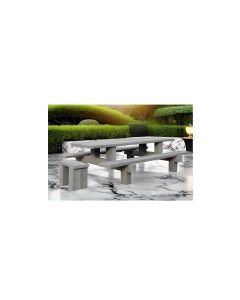
Picnic table in CAM and FSC certified WPC, with 3D wood effect, resistant and refined, ideal for public and private spaces. Dimensions: W 200 x D 170 x H 80 cm.
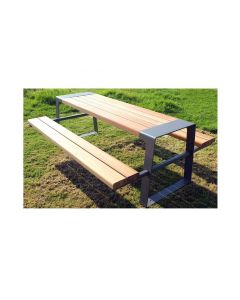
Picnic table with benches with a light, clean and contemporary design. Wood and steel structure. Dimensions: H.720 x D. 1650 x L.2020 mm
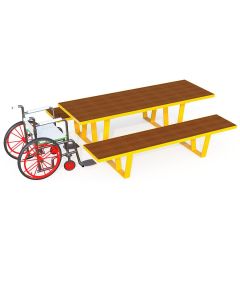
Inclusive picnic set for public, school, and recreational spaces. Galvanized steel structure and WPC slats. It can accommodate up to ten people. Total dimensions: W. 2200 x D. 1850 x h. 740 mm.
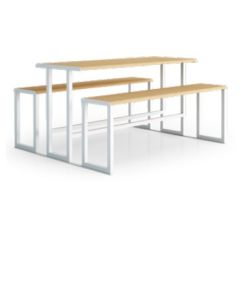
High table with high flat benches in galvanized metal with aluminum slats. Slat color: ash wood effect.
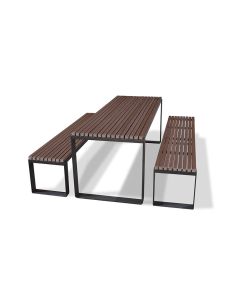
Table with benches for urban furniture in recycled plastic and steel structure. Dimensions: W.2000 x D.1750 x H.750 mm.
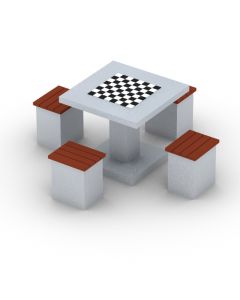
Picnic table with seating and chess table on the top. Dimensions: W.180 x D.180 x h.76 cm. Material: concrete and wood.
Picnic table in CAM and FSC certified WPC, 3D wood effect, with reinforced galvanized sheet metal structure. Weather-resistant and maintenance-free. Dimensions: L 300 x W 170 x H 80 cm.
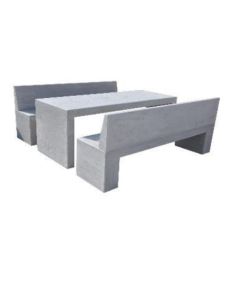
Table with picnic benches made of water-repellent concrete. Italian product - Dimensions: W220 x D80 x H80 cm
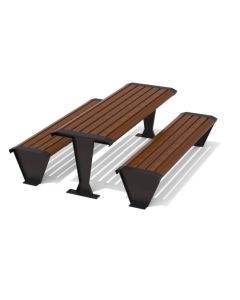
Modern design picnic set consisting of table and backless benches. Material: wooden planks and galvanized sheet metal.
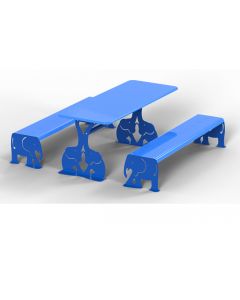
Picnic table with benches also for use by people with disabilities. Material: galvanized steel sheet. Dimensions: W218 x D212 x H78 cm.
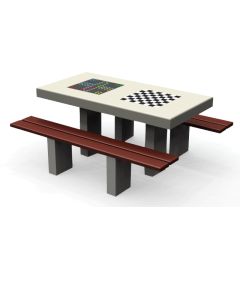
Picnic or game table with chess and Chinese board. Material: concrete and wood. Dimensions: L.180 x W.170 x H.76 cm.
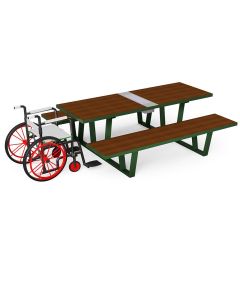
Picnic set with galvanized and painted steel structure, top and seats made of WPC slats. 2 wireless charging points, 2 USB ports and 2 Schuko sockets.
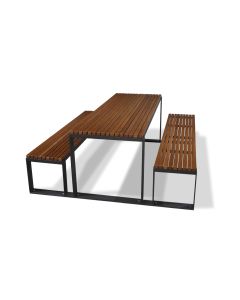
Wooden picnic table and benches ideal for gardens and public parks. Dimensions: L.2000 x D.1750 x H.750 mm. Suitable for wheelchair users.
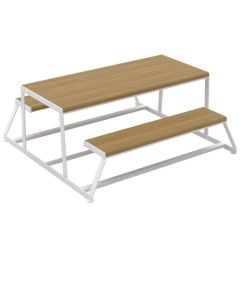
Picnic table with seats without backrest. Materials: galvanized steel and Okumè wood planks. Dimensions: L. 180 x D. 180 x H. 80 cm.
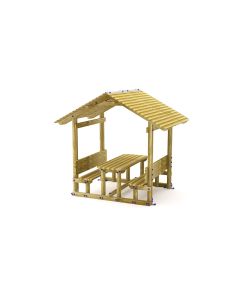
Picnic table with seats and roof. Built entirely with Nordic pine wood posts and boards. Dimensions: W.2758 x D.2000 x H.2512 mm.
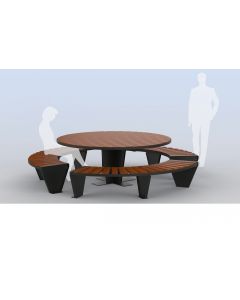
Circular picnic table complete with 3 benches. Material: wood and galvanized sheet metal. Dimensions: L290 x W290 x H75 cm.
Picnic tables and benches represent a complete and versatile solution for furnishing public spaces, recreational areas, and common zones dedicated to outdoor dining. Made from robust materials such as certified wood, recycled plastic, and steel, these complements combine structural strength, long-term durability, and ease of maintenance. They find natural application in urban parks, pine forests, public gardens, campsites, school areas, and recreational facilities, where they serve to create convivial and accessible environments for picnics, outdoor meetings, and socialization.
Choosing the right table and bench depends on factors such as available space, the number of people to accommodate, local climatic conditions, and the aesthetic preferences of the project. Holity offers a complete catalog of over 100 models, differentiated by material, size, seating configuration, and finish level, allowing for a precise selection based on specific needs.
Picnic tables and benches meet a structural need in public spaces and recreational areas: providing rest points where the community can consume meals, socialize, and rest in a comfortable and safe way. Correct installation of these furnishings significantly increases the use of outdoor space, encourages recreational activity, and improves the quality of urban life. Functionally, a complete table-bench set eliminates the need to purchase separate elements, ensuring design consistency and long-term stability. Modern models integrate ergonomic features such as backrests for back support, optimized dimensions for seating height, and dedicated spaces for people with motor disabilities, thus complying with the principles of universal accessibility.
From an operational standpoint, management costs are low thanks to the minimal maintenance required. Pressure-treated and PEFC-FSC certified wood naturally resists atmospheric agents without the need for frequent painting; recycled plastic (WPC and HDPE) does not rot, does not absorb moisture, and does not attract insects; galvanized steel offers prolonged protection against corrosion. Furthermore, these furnishings promote social inclusion: a well-structured picnic area becomes a reference point for various population groups, from families with children to the elderly, from tourists to workers on break.
The category of picnic tables and benches is primarily divided into three material families, each with distinct construction and performance characteristics. Solid wood, preferably PEFC-FSC certified Nordic pine or pressure-treated conifer, represents the most traditional and aesthetic choice, guaranteeing a natural and warm appearance that integrates harmoniously with the environment. This material offers good durability when treated correctly, typically lasting 10-15 years under moderate exposure conditions. Wooden tables are particularly appreciated in landscape contexts, botanical gardens, and protected areas where environmental sensitivity prevails.
Recycled plastic, available in compact forms (HDPE) or composites (WPC - Wood Plastic Composite), represents a modern solution oriented towards sustainability. These materials do not require painting, do not rot, resist UV rays and extreme humidity, and facilitate cleaning even with high-pressure water jets. Durability frequently exceeds 20 years. Hot-dip galvanized steel, often paired with wood or laminate tops, provides exceptional structural strength and potentially unlimited longevity if maintained. Hybrid wood-steel models combine the aesthetics of the former with the durability of the latter, making them ideal for high-traffic contexts. Finally, reinforced concrete represents a solution for public environments with very high intensity of use, with minimal maintenance but less aesthetic adaptability.
Selecting a picnic table and its relative benches requires a preliminary assessment of specific project constraints. The first decision criterion is the available physical space: measure the useful width, depth, and height of the intended area, also considering the maneuvering spaces around it. Standard models vary considerably: from mini tables 120 cm long for small areas and playgrounds, to extended tables of 250 cm for dedicated picnic areas with high attendance. Seat height is a second critical parameter, especially if use by children or the elderly is expected; specific models for play areas maintain reduced heights (45-55 cm), while standards for adults are positioned at 70-80 cm. The number of diners supported is an often underestimated variable: do not confuse overall size with real capacity; a 150x150 cm table typically accommodates 4-6 people sitting comfortably.
Environmental evaluation represents a third decisive axis. If the installation is in a coastal area or with high humidity, recycled plastic or galvanized steel outperform wood in long-term reliability. Conversely, in mountain contexts or low humidity, certified wood maintains aesthetic and economic advantages. The expected frequency of use influences the choice of configuration: very high-traffic areas (shopping centers, stations, urban parks) benefit from monobloc steel-wood models, while areas with moderate traffic tolerate traditional wood sets. Common mistakes include underestimating the need for ground anchoring (essential for safety reasons in public areas), ignoring accessibility requirements for the disabled in spaces subject to inclusion regulations, and not considering packaging dimensions and ease of assembly during delivery. Finally, evaluate whether the benches have backrests: models without backrests take up less space but reduce comfort during prolonged breaks.
Furnishings for public spaces, including picnic tables and benches, must comply with specific regulations that vary depending on the context of use. In Europe, the EN 1176 standard regulates the safety of playground equipment for children, prescribing minimum distances, rounded corners, safe fall heights, and non-toxic materials. If the picnic table is located in a playground, it must respect these parameters. For installations in open public spaces (municipal parks, gardens), structural safety and stability regulations apply: tables must be anchored to the ground to prevent accidental tipping, especially if frequented by children. The EN 581 standard specifies construction requirements for seats and backrests, including resistance to concentrated loads and joint durability.
Recurring aspects emerging from design and management practice include the need for scheduled maintenance: PEFC-FSC certified wood does not require initial painting but can benefit from protective treatments every 2-3 years in humid climates. Anchoring must be professionally performed, typically with floor bolts, chemical anchors, or dedicated fastening systems that guarantee resistance to horizontal loads. For installations in environmentally sensitive areas, verify the certified origin of the wood and prefer suppliers with sustainability declarations. The durability declared by manufacturers varies: pressure-treated wood typically guarantees 10-15 years, recycled plastic 20+ years, and galvanized steel 25+ years. Finally, consider public hygiene protocols, particularly relevant in post-pandemic times: easily cleanable and disinfectable surfaces are preferable in very high-traffic areas.
Explore all products in the category and compare the available solutions to find the one best suited to your operational context. Our catalog includes over 100 models differentiated by material, size, and configuration, allowing you to identify the optimal combination of aesthetics, durability, and sustainability in relation to your project specifications.
An integral picnic table is a monobloc set where the tabletop, benches, and support structure form a single welded or bolted unit. It differs from a separate configuration because it offers greater stability, does not allow involuntary movement of components, and occupies less overall space. Ideal for very high-traffic public areas.
Recycled plastic (WPC or HDPE) outperforms wood and untreated steel. It does not absorb water, does not rot, resists sea salts, and maintains structural integrity for 20-30 years. Hot-dip galvanized steel is the second choice if the galvanization is applied correctly and checked periodically. Avoid unprotected wood in these conditions.
Anchoring must be performed with specific fixing bolts (typically M10-M12), chemical anchors, or anchoring plates embedded in the foundation concrete. Space the fixing points according to the manufacturer's instructions (generally 60-80 cm). Ensure the ground is level and well-compacted before the intervention. Consult the supplier's technical manual for precise specifications.
Playground tables have a reduced seat height (45-55 cm vs. 70-80 cm), rounded edges, non-toxic certified materials, and comply with the EN 1176 standard. They are dimensionally more compact. Standard adult models prioritize prolonged comfort and capacity. Do not mix categories: a playground table is unsafe for adults, a standard one is uncomfortable for small children.
No, pressure-treated wood does not require initial painting. However, in very humid climates or coastal areas, applying a transparent protective treatment every 2-3 years extends durability beyond the standard 15 years. In temperate and dry climates, wood maintains satisfactory performance without additional intervention for at least 10 years.
Models with backrests guarantee greater comfort during prolonged stays and support for the elderly but take up more space. Without backrests, they reduce bulk and facilitate cleaning. If the area is mainly frequented by users sitting for long periods (residential parks), choose with backrests. For high-rotation areas (parking lots, stations), the model without backrests is more efficient.
Yes. Specific models for the disabled provide an open side space (typically 80-100 cm) to accommodate a wheelchair, with an adapted tabletop height (80-85 cm). Verify that the chosen model respects accessibility requirements such as ADA standards or international equivalents. The Holity catalog includes several dedicated options for this segment.
 English
  Italian
 French
 German
 Spanish