
mon-fri 9-13 / 14.30-18.30
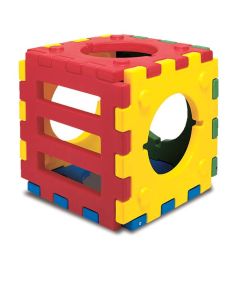
Cube with ladder panel for outdoor play areas. Dimensions: W. 75 x D. 75 x h. 75 cm.
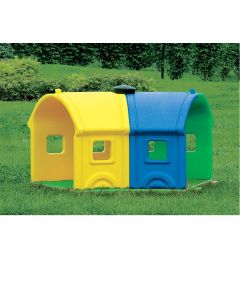
Train-shaped tunnel complete with 2 carriages with windows and 2 bases. UNI EN 71-1/2/3/8 certified.
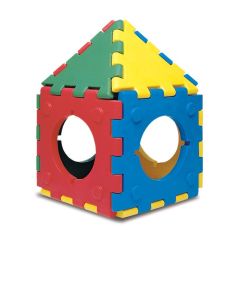
Cubic outdoor playhouse made of high-resistance plastic material. Overall dimensions: W. 75 x D. 75 x h. 125 cm.
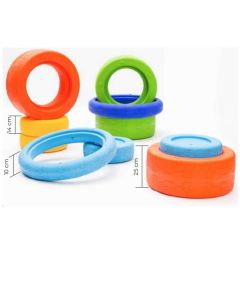
Kit of 10 play wheels in semi-rigid plastic of various diameters and heights, Made in Italy, ideal for play courses and constructions in outdoor areas.
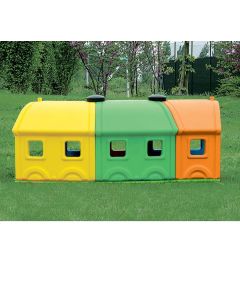
3-wagon colored train-tunnel with windows. Construction material: high-resistance plastic.
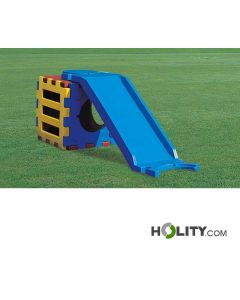
Slide with colored cube for outdoor play areas. Overall dimensions: W. 180 x D. 75 x H. 85 cm.
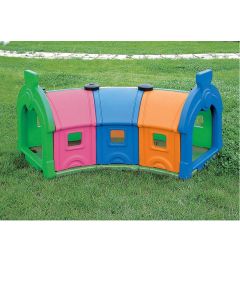
Colorful tunnel for children. Ideal for outdoor areas. Dimensions: W. 200 x D. 70 x H. 84 cm.
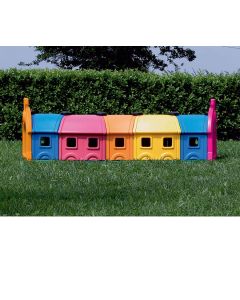
Colorful toy train-shaped tunnel for children. Made of high-resistance plastic material.
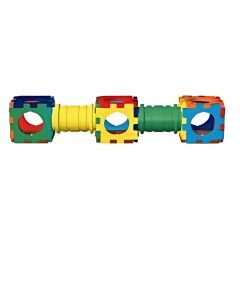
Modular plastic play structure (335x67 cm) with 18 perforated panels and 2 tunnels. Ideal for the motor activity of children aged 3 and up.
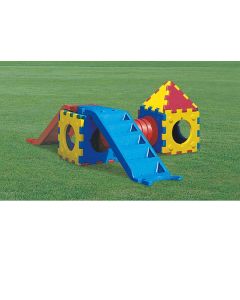
Colorful and fun playground station for outdoor areas of schools and playrooms. 2 slide-ladders, 1 playhouse, 1 tunnel and 1 cube.
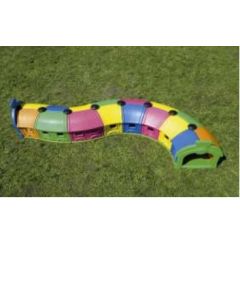
Modular structure composed of cute colorful wagons. Product certified UNI EN 71/1-2-3-8.
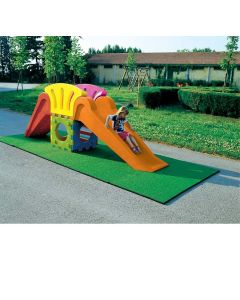
Modular game consisting of colored modular elements. Equipped with a slide. Dimensions: W. 400 x D. 75 x h. 140 cm.
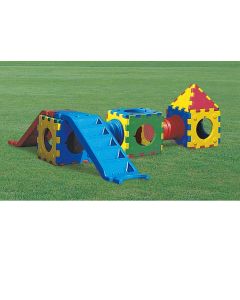
Modular play station for children in high-resistance plastic material. UNI EN 1176-1/3 certification.
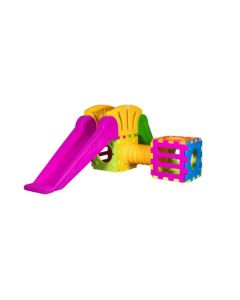
Modular play system with large slide, ladder, cubes and tunnel. Dimensions: W 250 x D 400 x H 140 cm.
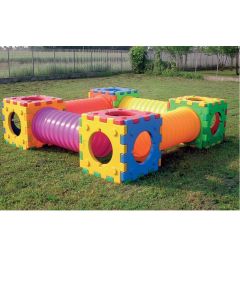
Modular square play structure in bright colors. Material: high-resistance plastic.
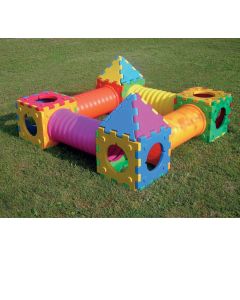
Castle made with a modular system and square cubes. Overall dimensions: 280 x 280 x 125 cm.
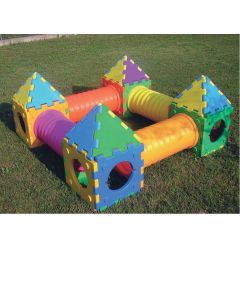
Modular castle play system. Made of high-resistance plastic material.
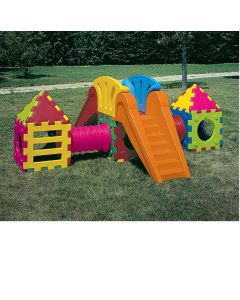
Modular playground station equipped with a slide. UNI EN 1176-1/3 certified product.
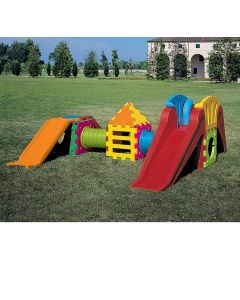
Colorful modular play station including slides, ladders and high-resistance plastic panels.
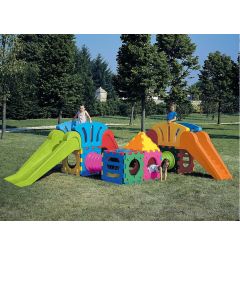
Play station including slides, tunnels, stairs and cubic elements. Overall dimensions: 500 x 400 x h.140 cm.
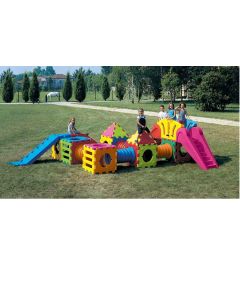
Modular playground station for the fun of the little ones. Ideal for gardens, courtyards, outdoor areas.
The setting up of play areas in the school environment represents a strategic investment that goes far beyond simple entertainment for children. Choosing the correct outdoor play equipment for schools means designing educational spaces where physical movement merges with cognitive and social development. In contexts such as nurseries, kindergartens, and primary schools, the equipment must meet rigorous safety standards, while ensuring exceptional durability under the action of atmospheric agents and intensive daily use. A well-conceived play area promotes inclusion and allows young users to experience their physical limits in a controlled and stimulating environment.
Our catalog focuses on solutions that integrate ergonomic design and certified materials, offering a wide range of structures ranging from classic slides to more complex multi-function towers. Each element is designed to fit harmoniously into the school garden, transforming it into an extension of the teaching classroom. The selection of materials, such as pressure-treated wood or high-density polyethylene, ensures that each installation maintains its structural and chromatic characteristics over time, minimizing extraordinary maintenance interventions and ensuring maximum hygiene for school staff and families involved in educational processes.
The integration of professional play equipment within school complexes responds to a fundamental pedagogical need: the promotion of free play as a learning tool. Outdoor play equipment for schools are not just tools for recreation, but true facilitators of complex motor skills such as balance, coordination, and muscular strength. Through the use of climbing structures or balance paths, children learn to manage space and develop proprioception intuitively. These moments in the open air contribute significantly to reducing stress and improving concentration during classroom lessons, creating a psychophysical balance necessary for growth.
Beyond the physical aspect, these pieces of equipment play a crucial role in socialization. In schools, the courtyard is the place where the first group dynamics are formed and where respect for rules and taking turns is learned. Choosing high-quality structures means providing children with safe platforms where interaction is encouraged by the design of the game itself. Investing in certified products also guarantees school management and municipal administrations long-term management peace of mind, as professional solutions are designed to withstand much higher workloads than domestic products, avoiding sudden breakages that could compromise the safety of users.
The varieties of play equipment for school environments are extremely diversified to respond to different age groups and the dimensions of the available spaces. One of the most requested categories concerns multi-function tower structures, which combine climbing ramps, Tibetan bridges, and slides in a single compact block. These systems allow multiple children to play simultaneously, optimizing space in the school garden. Alongside these, we find timeless classics such as swings, available both with flat seats and cradle seats for the youngest, and spring rockers, fundamental for stimulating the sense of balance and perception of rhythm in the early years of kindergarten.
Another fundamental type is represented by themed games and playhouses, which stimulate symbolic play and imagination. Many schools also opt for the installation of simplified fitness or adventure paths, consisting of oscillating logs, low climbing walls, and reinforced rope nets. Regarding materials, the choice often falls on galvanized and powder-coated metal for extreme impact resistance, or on glulam pine or larch wood, appreciated for its natural aesthetic impact and its low thermal conductivity, which prevents surfaces from overheating excessively during the summer months, ensuring comfortable use in every season.
Selecting the ideal equipment requires careful analysis of several technical and logistical factors that go beyond aesthetic appearance. The first fundamental criterion is identifying the age group of the users: a game designed for a nursery will not be stimulating for a primary school child, while a structure that is too complex could be dangerous for the little ones. It is essential to verify the free fall height of each piece of equipment, as this data determines the thickness and type of safety surfacing needed to be installed at the base. Many buyers make the mistake of underestimating the safety zone, which is the area free from obstacles that must surround every game according to current regulations, fundamental for preventing accidental collisions during the most active play phases.
Another critical aspect concerns resistance to vandalism and ease of maintenance. In school contexts not monitored 24/7, it is preferable to opt for vandal-resistant bolts and materials that do not allow easy carving or removal of parts. Attention must be paid to the quality of the plastics, verifying that they are UV-stabilized to prevent them from becoming brittle and sharp after a few seasons of sun exposure. Consulting the technical data sheets to ensure the presence of certifications issued by third-party bodies is the safest way to avoid non-compliant purchases that could lead to the closure of the play area during mandatory periodic inspections. Finally, considering inclusivity has become an ethical and often regulatory requirement: providing at least one element accessible even to children with motor disabilities is a sign of civility and pedagogical progress.
The safety of outdoor play equipment for schools is regulated at European level by the UNI EN 1176 standards, which define the general and specific requirements for each type of equipment installed in public spaces. This regulation covers every construction detail, from protection against head, finger, and clothing entrapment, to the structural resistance of loads. It is mandatory that every supply is accompanied by a declaration of conformity and a detailed use and maintenance manual. Correct installation must be performed by qualified personnel, strictly following the manufacturer’s instructions, to ensure that joints and ground fixings are perfectly stable and durable over time.
In parallel with the EN 1176 standard, it is necessary to comply with the UNI EN 1177 standard relating to impact-attenuating surfacing. The latter establishes the criteria for safety surfacing, which must be able to cushion the impact energy in the event of a fall. Depending on the height of the game, you can opt for wet-pour rubber, SBR rubber tiles, or natural materials such as sand, round gravel, or bark, provided they are maintained at the correct thickness. The regulation also provides for the obligation of periodic visual and operational inspections, as well as a main annual inspection conducted by a qualified technician. Maintaining a register of checks is not only a bureaucratic obligation, but fundamental documentary evidence to demonstrate the school’s diligence in managing the safety of its students.
Explore all the products in the category and compare the available solutions to find the one best suited to your operational context.
Play equipment intended for school use must mandatorily comply with the European standard UNI EN 1176. This certification guarantees that the product has been designed and tested for intensive public use, differing from games for private use which follow less rigorous standards and are not permitted in school gardens.
The safety zone is the area free from obstacles surrounding each game, necessary to ensure the child’s safety when moving or in case of a fall. This area is calculated based on the height and type of the game according to the parameters of the EN 1176 standard and must be covered by suitable safety surfacing.
The choice of surfacing depends on the free fall height of the equipment. If the height exceeds 60 centimeters, it is mandatory to install a safety surface certified according to the UNI EN 1177 standard. The most common options include rubber tiles, wet-pour rubber, or loose materials such as sand and bark in appropriate thicknesses.
Yes, maintenance is a regulatory requirement to ensure the constant safety of students. Periodic visual inspections must be provided to check integrity and cleanliness, quarterly operational checks to test stability and wear, and a main annual inspection performed by a specialized technician who verifies the overall structural compliance of each installed element.
The best performing materials are pressure-treated wood, appreciated for its naturalness and low heat transmission, and galvanized steel or aluminum for their extreme robustness. High-density polyethylene is also very common for paneling, as it resists impacts and does not fade under the action of ultraviolet rays.
An inclusive game is designed to be used by children with different motor and sensory abilities. To choose it correctly, you must check for the presence of access ramps, tactile panels at a reduced height, or special swing seats that offer adequate postural support, allowing all students to participate in play activities together.
Professional wooden games for schools are made with sanded glulam pine or larch specifically treated for outdoor use. Modern processing methods and the application of non-toxic protective coatings drastically reduce the risk of cracks and splinters, provided that the ordinary maintenance prescribed by the manufacturer is performed to nourish the wood fibers.
 English
  Italian
 French
 German
 Spanish