
mon-fri 9-13 / 14.30-18.30
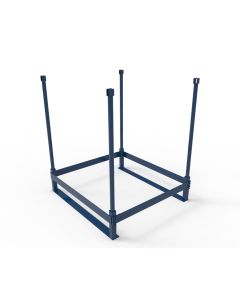
Big Bag support frame h332_16 in painted steel. 1000 kg capacity with pallet, ideal for static filling of 1 m³ bags.
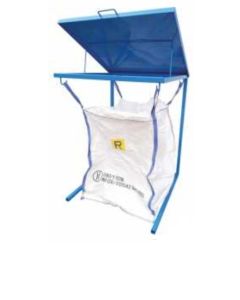
Painted carbon steel big bag holder structure, equipped with a lid. W. 110 x D. 110 x h. 140 cm.
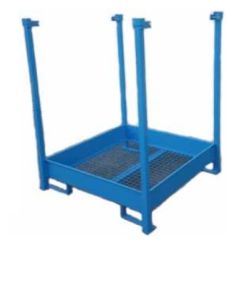
Painted big bag holder frame. Demountable model. Dimensions: W. 107 x D. 107 x h. 137 cm.
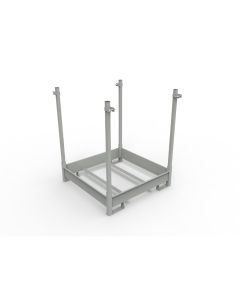
Painted steel Big Bag holder for 1 m³ bags, capacity 1000 kg. Self-supporting dismantlable and movable structure, 100% Made in Italy.
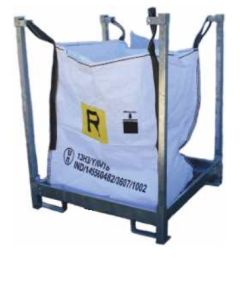
Demountable big bag holder frame for industry. Dimensions: W. 107 x D. 107 x h. 137 cm. In galvanized carbon steel.
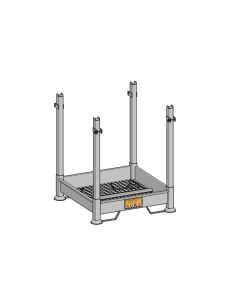
1000 kg big bag container in galvanized steel, dimensions 1070x1070 mm with containment sump and electro-welded mesh bottom.
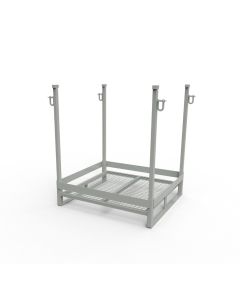
Electrowelded steel Big Bag holder container (1310x1080 mm). Dismountable structure with 1000 kg capacity, mesh bottom, and anchoring hooks.
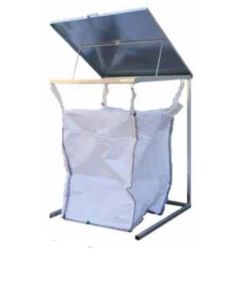
Galvanized carbon steel big bag holder frame, with lid. Dimensions: W. 110 x D. 110 x h. 140 cm.
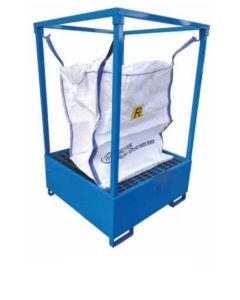
Big bag support structure with watertight containment bund. W. 100 x D. 100 x h. 170 cm. Made of painted carbon steel.
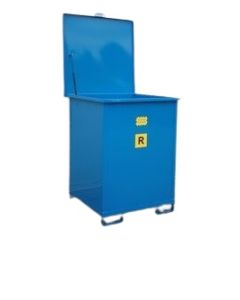
Painted steel big bag holder. External dim.: W. 95 x D. 95 x h. 105 cm. With servo-assisted hinged door.
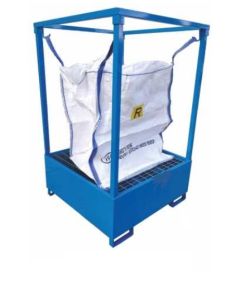
Mobile big bag support structure. Watertight collection tank. W. 100 x D. 100 x H. 185 cm. Made of painted carbon steel.
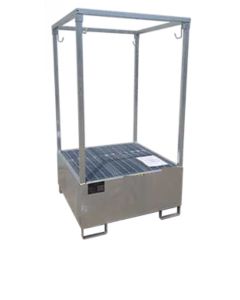
Galvanized big bag holder structure, complete with containment tray. W. 100 x D. 100 x h. 170 cm.
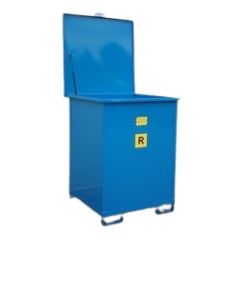
Painted steel big bag holder container. External dimensions: W. 105 x D. 105 x h. 135 cm.
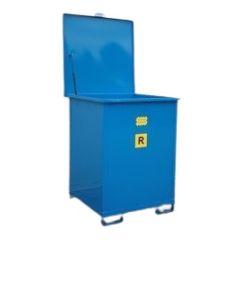
Big bag holder structure with servo-assisted hinged door. W. 105 x D. 105 x h. 135 cm. In painted steel.
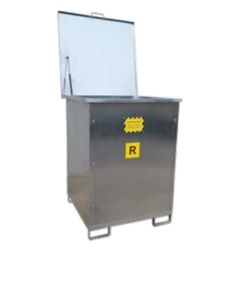
Big bag holder for industrial sector, in galvanized steel. External dimensions: W. 95 x D. 95 x h. 105 cm. Assisted hinged door.
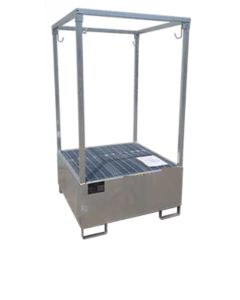
Galvanized steel big bag holder with wheeled collection tray. Dimensions: W. 100 x D. 100 x h. 185 cm. Industrial use.
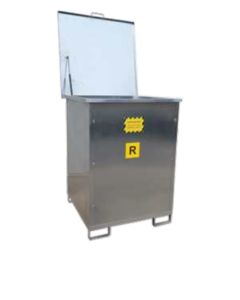
Galvanized steel big bag holder container. External dimensions: W. 105 x D. 105 x h. 135 mm. With removable door.
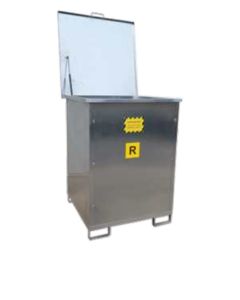
Big bag holder with servo-assisted hinged gate, in galvanized steel. W. 105 x D. 105 x h. 135 cm.
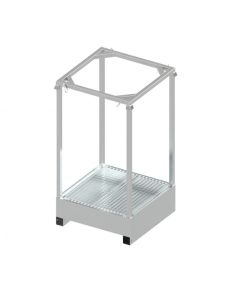
Hot-dip galvanized big bag container with watertight collection sump and upper mobile frame. Base dimensions: 1000x1000 mm.
Big bag holder containers represent structural solutions dedicated to the handling, storage, and containment of large bags used in industrial, chemical, agricultural, and food sectors. These systems are designed to ensure stability during loading and unloading, protect the stored material from external contamination and, when necessary, contain any leaks of hazardous substances or waste. The choice of the correct structure depends on the type of material, the specific weight of the contents, the operational context, and the regulatory requirements that characterize the sector of use.
The use of structured big bag holder containers offers multiple operational advantages that go beyond simple material containment. First and foremost, they ensure safe handling of loads, reducing risks related to tipping or accidental leaks during handling phases. These systems are fundamental in environments where the stored material presents critical characteristics: high specific weight, potential toxicity, chemical reactivity, or simply a considerable volume that requires space organization. The metal structure, available in painted or galvanized steel, allows for even load distribution and maintains stability even on irregular ground or during mechanical handling operations with forklifts.
Practical benefits extend to internal logistics: a dedicated structure for big bags optimizes space utilization, facilitates visual identification of the material, and accelerates loading and unloading times. In sensitive sectors such as chemical or pharmaceutical, the use of standardized containers contributes to traceability control and reduces risk variables in flow management. Furthermore, models equipped with a spill tray are indispensable when the material could release fine powders, liquids, or fragments, protecting both the floor and the surrounding environment from contamination.
The range of big bag holder containers is divided into various construction configurations, each suitable for specific operational contexts and environmental constraints. The main variants concern the opening system, the structure material, the presence of additional accessories, and mobility. Basic models with a removable frame represent the most economical and versatile solution: they are assembled on-site, occupy minimal warehouse space, and are ideal for temporary applications or for companies with flexible space needs. Painted carbon steel structures guarantee protection from corrosion in dry environments, while hot-dip galvanizing becomes necessary where high humidity, corrosive agents are present, or when the big bags contain substances that could cause coating deterioration.
Models with a hinged or removable lid limit the material’s exposure to air and significantly reduce the dispersion of dust and particulates during handling operations. Containers equipped with a watertight spill tray are mandatory by law in many contexts when material could accidentally leak: the tray collects the contents and prevents infiltration into the ground, a critical element for environmental issues and regulatory compliance. Some models include a movable upper frame, which allows the empty big bag to be lifted after unloading, accelerating operational cycles. Finally, wheeled structures allow the entire system to be moved without the need for mechanical handling equipment, a practical solution for businesses with logistical flexibility needs.
The selection of a big bag holder container must start from the analysis of three determining factors: the maximum load capacity required, the dimensions of the standard big bag used in the company, and the physical and chemical characteristics of the material. The load capacity, expressed in kilograms, must significantly exceed the weight of the full big bag: this safety margin allows for variability in filling and load dynamics during handling. A common error is undersizing the capacity to limit initial costs; on the contrary, choosing a structure with a safety margin exceeding 20-30% compared to the maximum expected load extends durability and reduces operational risks. The internal dimensions must be compatible with the big bags used: a space that is too wide causes instability and difficulty in positioning, while an undersized container prevents correct bag insertion.
The material of the structure represents a critical aspect when the operational environment exposes the container to degrading factors: outdoor environments, constant humidity, contact with acids or salts necessarily require hot-dip galvanizing, with additional costs but superior guarantees of longevity. If the stored material is powdery or toxic, the presence of a lid becomes fundamental, even if it involves an increase in initial expenditure; the benefit in terms of occupational health and regulatory compliance quickly offsets the extra cost. Evaluate the need for mobility: static containers require a permanent dedicated space, while wheeled structures offer flexibility but occupy larger useful surfaces when in transit. For companies with significant managed volumes or seasonal variability of material, the availability of removable models represents a strategic advantage, reducing handling times from one production line to another.
Big bag management is governed by technical and safety regulations that vary depending on the sector and the type of material contained. The ISO 21898 standard defines the construction criteria for large flexible containers, including resistance, stability, and marking requirements. When the big bag contains hazardous substances, classified according to the CLP (Classification, Labelling and Packaging) Regulation, supplementary provisions come into force regarding accidental spill containment and chemical-physical compatibility between the material and the support structure. In a chemical context, the reference standard is ISO 1346, which specifies the properties of big bags for the transport of dangerous goods by land; the big bag holder container must ensure that the bag remains intact even in the event of accidental falls or impacts during loading operations.
In the food sector, HACCP regulations and European regulations on food hygiene and safety require that containers be made of materials that do not release contaminating substances and that handling traceability is guaranteed. For toxic or carcinogenic materials, provisions such as those from INAIL (National Institute for Insurance against Workplace Accidents) establish the obligation to use containers with a watertight spill tray to prevent dispersion into the soil. When the big bag contains hazardous waste, Legislative Decree 152/2006 (Italian Environmental Code) integrates further constraints on management: the support structure must be an integral part of the containment system traced and cataloged according to waste regulations. Companies operating within the European Union must verify compliance with the RoHS (Restriction of Hazardous Substances) regulation if the metal structure contains regulated coatings or substances. The CE marking of the structure, when applicable, represents the essential compliance document certifying the product’s alignment with current safety directives.
Explore all products in the category and compare the available solutions to find the one best suited to your operational context. Carefully evaluate load capacity, internal dimensions, structure material, and accessories based on your specific storage and handling needs.
A big bag holder container is a self-supporting metal structure designed to hold, stabilize, and move large flexible bags (big bags) used in multiple sectors. The primary function is to ensure stability during loading and unloading, protect the stored material, and, if equipped with a tray, contain any accidental leaks of hazardous substances or waste.
The structures are primarily made of painted carbon steel or hot-dip galvanized steel. Painted steel is suitable for dry indoor environments and offers a lower cost. Hot-dip galvanizing is necessary in humid, outdoor contexts or where corrosive substances are present; it increases the cost but guarantees superior durability and long-term resistance against oxidation.
The container’s load capacity must exceed the maximum weight of the full big bag by at least 20-30%. If your material weighs 900 kg, choose a structure with a minimum capacity of 1100-1200 kg. This safety margin absorbs filling variability and dynamic stresses during mechanical handling operations, reducing the risk of structural failure.
A spill tray is mandatory by law when the big bag contains hazardous substances classified according to the CLP Regulation, toxic or carcinogenic materials, or hazardous waste regulated by Legislative Decree 152/2006. The Decree establishes that watertight containment prevents soil infiltration and protects the environment from accidental pollution. Consult the material label and Safety Data Sheets (SDS) to confirm this requirement.
Removable frames are assembled on-site, occupy less space in the warehouse, and are ideal for temporary needs or environments with logistical constraints. Fixed structures are pre-assembled, ready for immediate use, and more structurally rigid. The choice depends on your storage methods, available space, and the frequency of movement between different production areas.
The lid is optional for non-powdery inert materials, but becomes essential when the big bag contains fine powders, inhalable toxic substances, or moisture-sensitive materials. In addition to significantly reducing particulate dispersion during operations, the lid lowers environmental contamination risks and improves regulatory compliance in sensitive environments such as chemical or pharmaceutical ones.
Yes, standard containers are equipped with side or bottom openings compatible with forklift forks. Some models include top hooks for lifting with cranes or hitching systems. Always check the product’s technical specifications and ensure the ground is suitable; non-wheeled structures require a flat and stable surface to avoid tipping during transport.
Regulations vary by sector: ISO 21898 for general flexible containers, ISO 1346 for big bags with hazardous substances, HACCP for food, and Legislative Decree 152/2006 for waste. If you operate in Europe, check the CE marking of the product and compliance with the RoHS Regulation. Consult the Safety Data Sheet of the stored material to identify specific containment and handling constraints.
 English
  Italian
 French
 German
 Spanish