
mon-fri 9-13 / 14.30-18.30
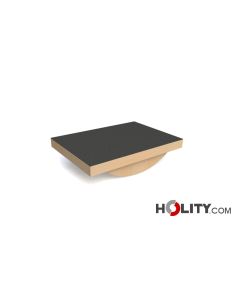
Proprioceptive platform with structure made of non-slip wood. Dimensions: W. 40 x D. 29 x H. 9 cm.
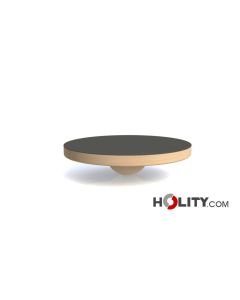
Proprioceptive physiotherapy board with non-slip wooden structure. Dimensions: Ø 40 x H. 11 cm.
Proprioceptive boards represent one of the pillars of modern rehabilitation and functional training, offering an effective tool for developing balance, joint stability, and body awareness. These devices utilize controlled instability to stimulate proprioceptive systems—the complex network of nerve receptors that allow the body to perceive its position in space. Used in physiotherapy clinics, gyms, sports centers, and home environments, proprioceptive boards adapt to various rehabilitation protocols, from post-injury recovery to preventive strengthening for professional athletes. Their effectiveness is supported by numerous scientific studies demonstrating that proprioceptive training significantly reduces the risk of recurrence and improves overall motor performance.
Proprioceptive boards offer concrete and measurable benefits in the context of musculoskeletal rehabilitation and functional recovery. Surface instability continuously stimulates deep stabilizer muscles, those that often remain inactive during daily movements, promoting more complete and functional muscle strengthening compared to traditional exercises. During post-traumatic rehabilitation, regular use of these devices accelerates the recovery of proprioception, the fundamental ability that prevents new injuries. The effects also extend to prevention: athletes who regularly integrate the proprioceptive board into their training program significantly reduce the incidence of joint sprains, dislocations, and other instability-related injuries.
Beyond therapeutic settings, proprioceptive boards find application in fall prevention programs for elderly patients, helping to maintain balance and confidence in movement, crucial elements for functional independence and quality of life. In neurological rehabilitation, these tools support the recovery of motor coordination and static and dynamic balance in patients with stroke, brain injuries, or neurodegenerative diseases. Versatility allows physiotherapists to modulate exercise difficulty based on the patient's functional level, ensuring a gradual and safe progression toward recovery.
From a practical standpoint, investing in a well-chosen proprioceptive board represents a lasting and cost-effective solution compared to pharmacological treatments or more invasive interventions. Ease of use and the ability to customize exercises based on specific needs make these boards suitable for both professional and home contexts. Many patients experience tangible improvements in balance and stability after just two to three weeks of regular use, which increases therapeutic compliance and motivation for recovery. Furthermore, using proprioceptive boards in the maintenance phase after completing rehabilitation helps consolidate results and prevent disease progression in chronic balance disorders.
In the physiotherapy market, there are several types of proprioceptive boards, each designed for specific rehabilitation goals and difficulty levels. Rectangular non-slip wooden boards are the most common and versatile model: characterized by a flat, stable base with a central fulcrum that creates controlled instability, they allow tilting movements on the anterior-posterior and lateral planes. These models are ideal for beginners and early stages of rehabilitation, offering a manageable motor challenge without requiring great initial body awareness. Standard dimensions, such as 40x29 cm with a height of 9 cm, ensure a sufficient support surface even for patients with reduced mobility.
Circular boards, available in various configurations, offer more complete three-dimensional instability compared to rectangular boards. Rotating disc models, typically 40 cm in diameter, add a rotational element that significantly increases the difficulty and proprioceptive stimulus. These devices are more suitable for patients in advanced stages of rehabilitation or athletes seeking intense proprioceptive training. Inflatable boards, made of reinforced PVC, create dynamic instability that varies based on air pressure, allowing difficulty modulation without changing equipment. They represent an excellent choice for rehabilitation programs requiring gradual progression, as pressure can be increased as the patient's stability improves. Models with lateral supports or handles add a safety element, particularly useful for elderly patients or those with significant balance impairment, allowing them to maintain a point of support during exercise.
Choosing the appropriate proprioceptive board depends on multiple factors that must be carefully evaluated before purchase. The first element to consider is the patient's initial functional level: a patient starting rehabilitation after an ankle sprain will have very different needs than an athlete wanting to refine their balance. For beginners or patients with significant balance impairment, rectangular wooden boards with a central fulcrum are the most appropriate choice, offering controlled and predictable instability. Intermediate-phase patients can benefit from circular boards or inflatable models, which offer a greater proprioceptive challenge while maintaining a good level of controllability. Athletes or advanced patients can fully utilize rotating or multi-directional models, which stimulate proprioception in a complete and realistic way relative to functional movements.
A second decision criterion concerns the available space and context of use. Standard rectangular boards take up little space and are easy to store, making them ideal for home environments or clinics with limited space. Circular models require more surrounding space to allow safe lateral movements. Inflatable boards, while taking up little space when deflated, require pumps and accessories that increase overall bulk. A common mistake is underestimating the importance of base stability: boards with an insufficiently wide or heavy base can slip during use, increasing the risk of falls. It is essential to verify that the chosen product has a robust structure, a non-slip surface, and an adequate weight for the context of use. For professional environments where the board will be used by multiple patients, robust wood or reinforced plastic materials guarantee greater longevity compared to inflatable models, which are more subject to wear and failure.
Proprioceptive boards used in health and physiotherapy sectors are subject to various regulations ensuring safety, efficacy, and quality. In Europe, medical devices classified as rehabilitation boards must comply with Directive 93/42/EEC and subsequent amendments, which establishes essential safety and performance requirements. The UNI EN ISO 13732-1 standard provides guidance on evaluating the thermal safety of materials in contact with skin, an aspect particularly relevant for inflatable or coated models. Proprioceptive boards must ensure adequate mechanical resistance to the user's maximum weight, generally tested according to ISO 7837 standards for wood products, and must feature non-toxic, aging-resistant materials.
At the Italian national level, the use of proprioceptive boards in clinical contexts requires the product to have CE marking and technical documentation certifying compliance with safety standards. Materials must be certified as suitable for skin contact, without sharp edges or dangerous parts that could cause injury, and non-slip surfaces must ensure adequate friction coefficients even in wet conditions. Regarding ergonomic aspects, boards must allow easy access and a stable posture during exercise, with dimensions proportional to different population segments (pediatric, adult, elderly). Specific models for elderly or disabled patients must also comply with accessibility standards, such as the presence of handles sized according to UNI EN ISO 4414. From a hygiene perspective, materials must be easy to clean and sanitize, a critical aspect in contexts where the device is shared among multiple patients.
Explore all products in the category and compare available solutions to find the one best suited to your operational context, carefully evaluating the difficulty level, construction materials, safety, and compatibility with your rehabilitation or proprioceptive training needs.
Proprioceptive boards stimulate deep stabilizer muscles and significantly improve balance and motor coordination. This type of training accelerates post-injury recovery, reduces the risk of recurrence, and increases body awareness, essential elements in the rehabilitation of joint sprains and fall prevention.
Beginners should start with rectangular wooden boards with a stable central fulcrum, which offer controlled instability. As rehabilitation progresses, you can move to circular, inflatable, or rotating models that provide a greater proprioceptive challenge. A physiotherapist can guide you in your choice based on your specific functional state.
Generally, sessions of 15-20 minutes three to five times a week offer noticeable results within two to three weeks of regular use. Frequency and duration may vary depending on the personalized therapeutic program and the type of injury you are recovering from.
Yes, provided you choose models with lateral supports or handles and follow the physiotherapist's instructions. Proprioceptive exercises are particularly beneficial for the elderly as they improve balance and confidence in movement, significantly reducing the risk of accidental falls, which are a frequent cause of injury in this population.
After learning the correct exercises with a physiotherapist, many patients can use the board at home safely. However, it is always advisable to start under professional supervision to ensure correct execution of movements and prevent fall risks resulting from incorrectly performed techniques.
Solid wood boards and those made of reinforced plastic (polypropylene) are generally more resistant to intensive and frequent use. Non-slip wood guarantees excellent durability over time, while inflatable models, although more versatile, require more frequent maintenance and may be subject to wear with continued use.
Regularly clean the surface with a damp cloth and neutral detergent, check for sharp edges or cracks in the wood, and ensure the base remains stable. For inflatable models, periodically check the air pressure and inspect for micro-lesions that could compromise the seal.
 English
  Italian
 French
 German
 Spanish