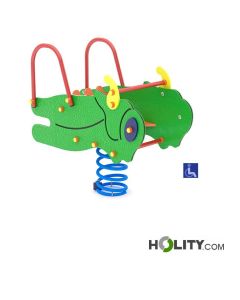
mon-fri 9-13 / 14.30-18.30
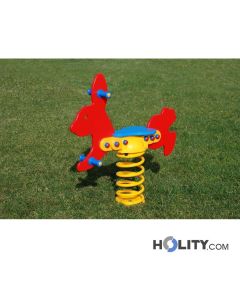
Rabbit-shaped spring rider for children made of plastic material. Dimensions: W27.3 x D93.9 x H92.1 cm
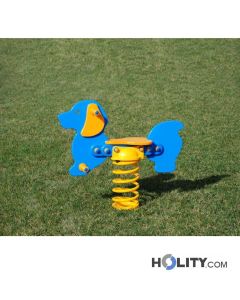
Polyethylene playground spring rider in the shape of a dachshund. Dimensions: W27.3 x D93.1 x H80.55 cm
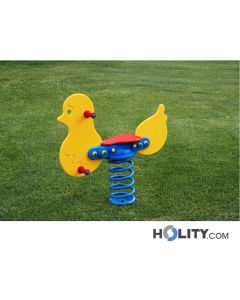
Chick-shaped spring rider for playgrounds: Dimensions: W24 x D97 x H92 cm
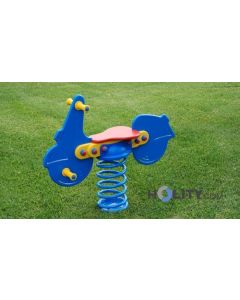
Playground spring rider with polyethylene silhouette in the shape of a motorcycle. Age of use: 0-12 years. Spring assembly with 20 mm wire. Dimensions: L. 99 x W. 24 x h.82 cm.
Spring rider for playgrounds with inground bracket. Dimensions: 48.8 x 31 x 87.2 cm. Age of use: 0-12 years.
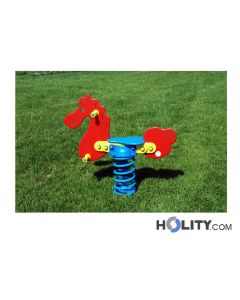
Plastic spring rocker in the shape of a horse. Dimensions: W24 x D99 x H92 cm
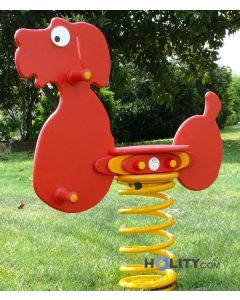
Dog-shaped outdoor spring rider h27106 made of HDPE polyethylene and galvanized steel. Ideal for public parks and schools, 100% Made in Italy.
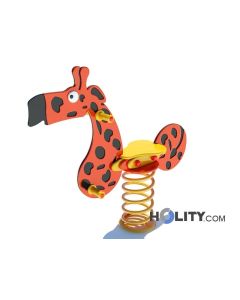
Giraffe-shaped spring rider made of HDPE and galvanized steel, 25x86x80 cm. High UV resistance, ideal for public parks and school areas.
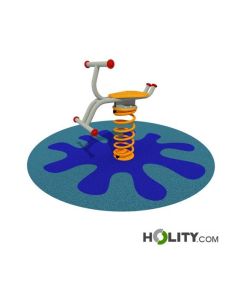
Spring rider for playgrounds in electro-galvanized steel and PEHD, 63x34x75 cm. EN 1176 certified with anti-finger trapping safety device.
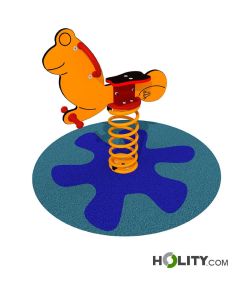
Frog-shaped spring rider for playground. Age of use: 2-8 years. Maximum dimensions: 23 x 83 x 82 cm
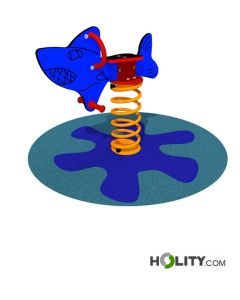
Shark-shaped spring rider in 15 mm HPL bilaminate, 23x79x67h cm. EN 1176 certified with anti-finger-trap system and steel spring.
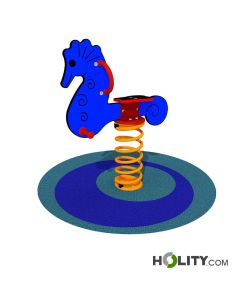
Seahorse-shaped spring rider for playgrounds. Age of use: 2-8 years. Maximum dimensions: 23 x 70 x 82 cm.
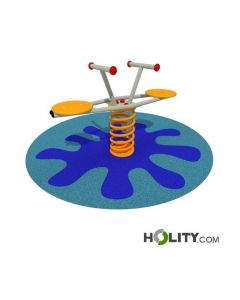
Professional two-seater spring rider in steel and PEHD, 101x34x67 cm. EN 1176 certified with anti-crush system for public parks.
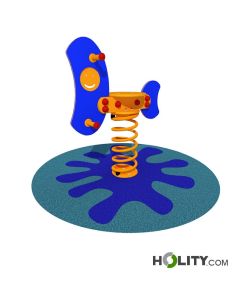
Spring rider for playground. Age of use: 2-8 years. Maximum dimensions: L. 67 x D. 25 x h. 81 cm.
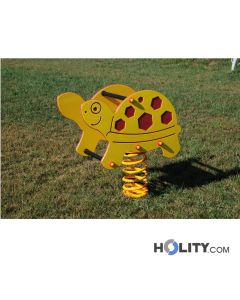
Spring rider for children’s parks made of plastic in the shape of a turtle. Dimensions: W49 x D77.5 x H85.4 cm
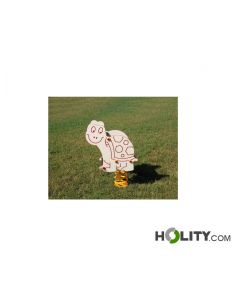
Spring rider for playgrounds, turtle model. Dimensions: W.69 x D.49 x H.98 cm.
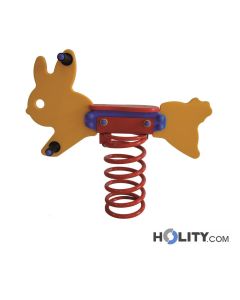
Spring rider for playgrounds in the shape of a hare. Polyethylene structure.
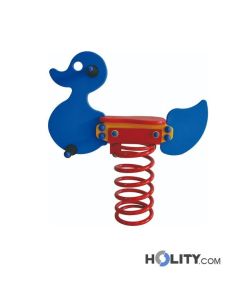
Duck-shaped spring rider, for outdoor spaces of schools, playrooms, public gardens, parks.
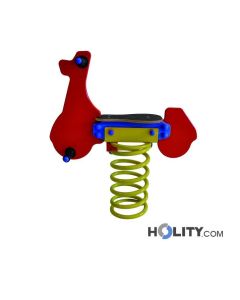
Spring rider for outdoor spaces of playrooms and parks in the shape of a scooter.
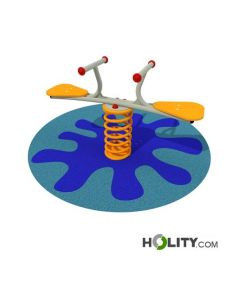
Two-seater spring rider in steel and HDPE, 104x33 cm. EN 1176 certified structure with anti-pinch system for public parks and play areas.
Spring rider with a cute camel shape. Number of seats: 2. Dimensions: L.120 x D.24 x H.100 cm.
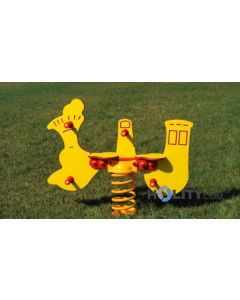
Playground equipment ideal for creating a children’s play area. Age range: 0-12 years. Dimensions: L 111.8 x W 24 x H 96 cm.
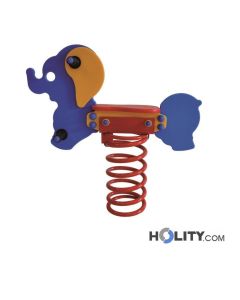
Spring rider for playground wooden structure elephant-shaped
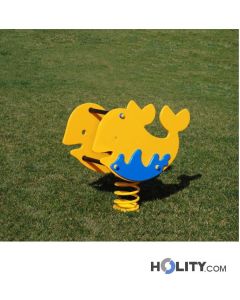
Whale-shaped plastic spring rider for playgrounds. Dimensions: W42.6 x D85.4 x H82.8 cm
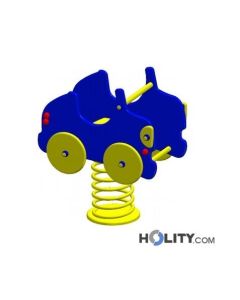
Spring rider for parks, gardens and courtyards with car-shaped polyethylene silhouette. Age of use: 0-12 years. Dimensions: L 74.3 x W 42.6 x h 85.6 cm.
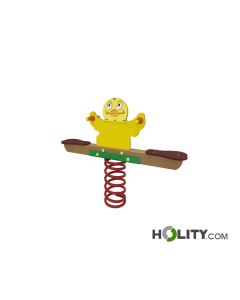
Duck-shaped playground spring rider with two seats. Dimensions: L. 121 x D. 21 x H. 96 cm.
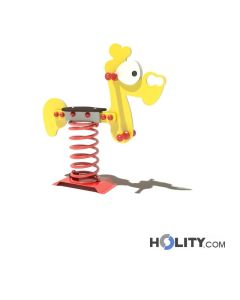
Spring rider for playgrounds, with HDPE polyethylene silhouette in the shape of a giraffe. Dimensions: L92 x D25 x H95 cm
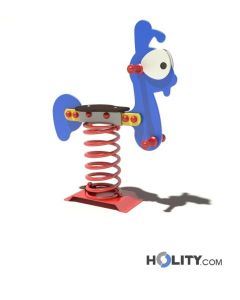
Rabbit-shaped spring rider made of PEHD polyethylene and steel, 83x25x99 cm. Certified structure for public parks and professional play areas.
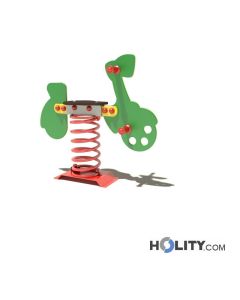
Motorcycle-shaped spring rider in HDPE and steel, 91x25x85 cm. Anti-trauma structure certified UNI EN1176 for public and school play areas.
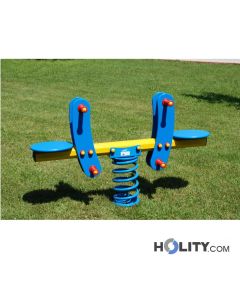
Spring rider with double plastic seat for playground. Dimensions: W31 x D138 x H87.2 cm
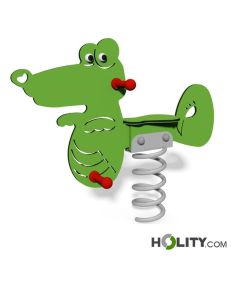
Crocodile-shaped spring rider for playgrounds. Dimensions: W.109 x D.30 x H.82 cm. Material: HDPE and steel.
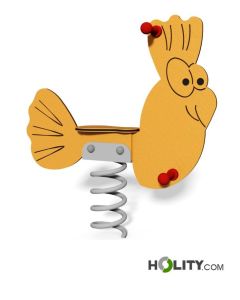
Rooster-shaped spring rider for children. Dimensions: L.96 x D.29 x h.80 cm. Fixing: to be buried.
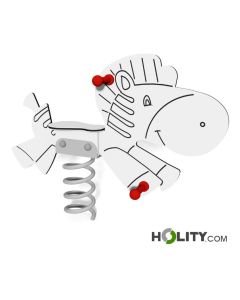
Zebra-shaped spring rider for children. Dimensions: W.118 x D.29 x H.80 cm. Material: HDPE and steel.
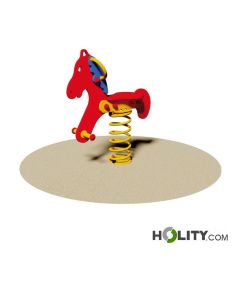
Professional HDPE polyethylene spring rider h350_287, EN 1176 certified with anti-pinch device and anchoring for public use.
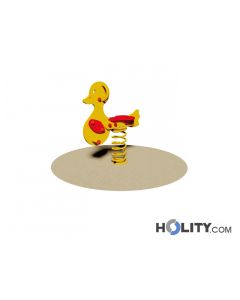
Single spring rider for playground in the shape of a duck. Age of use: 3-8 years. Length: 65 cm.
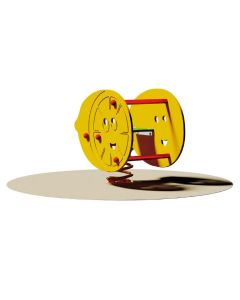
Inclusive lemon-shaped spring rider for public spaces. Overall dimensions: W. 64 x D. 44 x h. 69 cm.
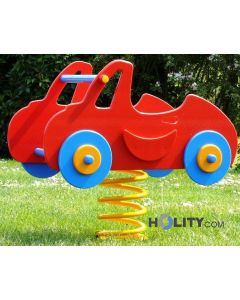
Professional car-shaped spring rider in polyethylene and galvanized steel, 45x80x80 cm. Ideal for outdoor playgrounds and collective recreational areas.

Whale-shaped outdoor spring rider made of HDPE polyethylene and galvanized steel, 45x80x80 cm. Italian product certified for collective use.
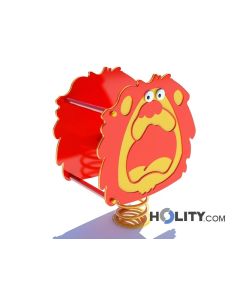
Lion-shaped spring rider made of HDPE polyethylene and steel for play areas. Dimensions 45x80x80 cm, high-resistance Made in Italy design.

Spring rider with wooden Dog shape silhouette. Age of use: 3 - 8 years. Fall height: 55 cm.
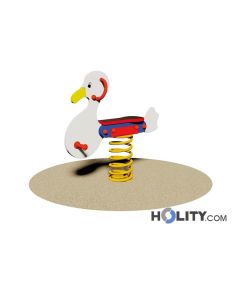
Wooden spring rider for children. Dimensions: L.95xW.25xH.95 cm
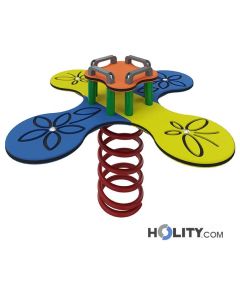
Four-leaf clover shaped spring rider for outdoor areas of playrooms and parks.
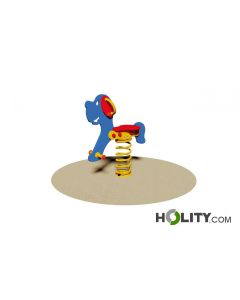
Polyethylene spring rider for kindergarten outdoor spaces. Dimensions: W.73 x D.28 x H.85 cm.
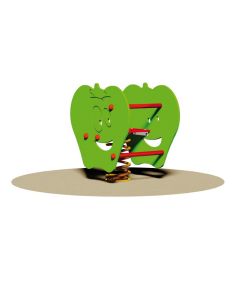
Inclusive spring rider for playground in the shape of an apple. Age of use: 3-8 years. Overall dimensions: L. 70 x D. 44 x h. 75 cm.
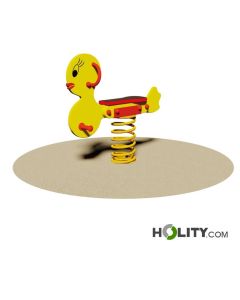
Chick-shaped spring rider made of okoumé mahogany plywood (95x25x90 cm), EN 1176 certified with finger anti-pinch device.
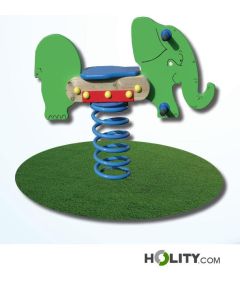
Elephant-shaped spring rocker made of resistant outdoor material, 80x20x80 cm, equipped with handles and non-slip footrests for private areas.

Butterfly-shaped playground spring rider, fixed on a galvanized and painted spring. Dimensions: L. 65 x D. 53 x H. 79 cm.
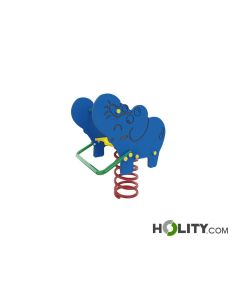
Elephant-shaped playground spring rider with HDPE panels. Dimensions: 60 x 53 x h. 79 cm.

Spring rider for outdoor spaces of playrooms, public gardens. material: HDPE.
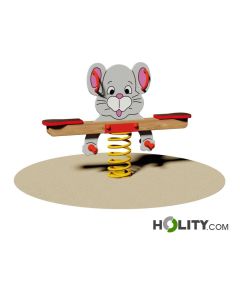
Spring rider for outdoor school spaces. Dimensions: W. 125 x D. 25 x h. 97 cm.

Ladybug-shaped spring rider for children. Dimensions: W.60 x D.48 x h.80 cm. Fixing: to be buried.
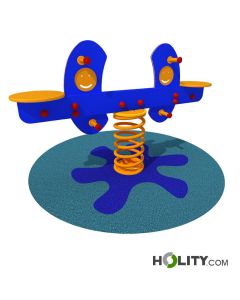
Two-seater spring rider for public spaces. Maximum dimensions: L. 127 x D. 25 x h. 80 cm.

Children’s spring rider, horse-shaped. Impact area: 11.26 m2. Dimensions: L.101 x D.29 x h.76 cm.
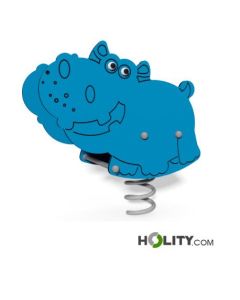
Children’s spring rider in the shape of a hippopotamus. Material: HDPE and steel. Fixing: to be buried. Dimensions: W.68 x D.48 x h.86 cm.
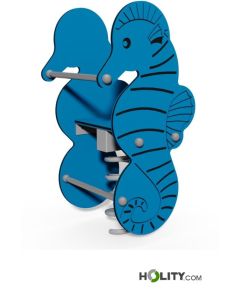
Spring rider for outdoor playgrounds. Dimensions: W.49 x D.48 x h.90 cm. Material: HDPE plastic and steel.

Shark-shaped spring rider for playgrounds. Dimensions: L.87 x W.48 x h.86 cm. Impact area: 11.37 m2.
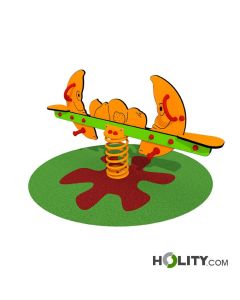
Spring rider ideal for playgrounds. Age of use: 2-8 years. Overall dimensions: L. 163 x D. 25 x h. 85 cm.

Spring rider for outdoor spaces of playrooms, schools, public gardens shaped like a bee. Dimensions: 77.5x53xh77 cm

Sheep-shaped spring rider. Dimensions: W.78 x D.43 x h.81 cm. Fixing: to be buried. Material: HDPE and steel.
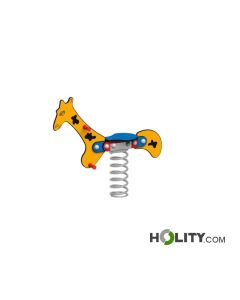
Spring rider for outdoor spaces with polyethylene panels. Dimensions: L. 113 x D. 28 x H. 9 cm.

Pig-shaped spring rider for playground. Dimensions: W.70 x D.48 x h.80 cm. Material: HDPE and steel.
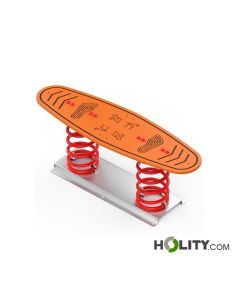
Spring rider in the shape of a surfboard, ideal for children aged 3 and up, with a robust and safe structure. Dimensions: L 120 × W 37 × H 45 cm.
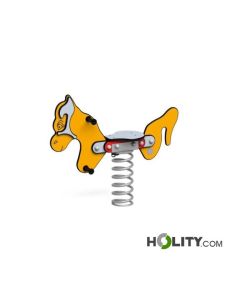
Spring rider for public park with metal base. Dimensions: W. 28 x D. 115 x H. 86 cm.
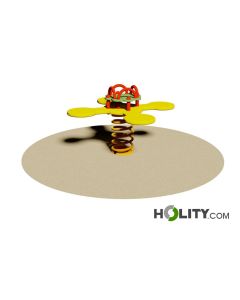
Spring rider for public park. Age of use: 3-8 years.
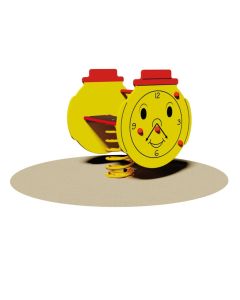
Inclusive spring rider for public park. Dimensions: W. 65 x D. 60 x h. 80 cm.
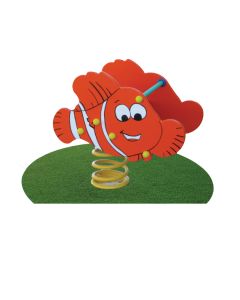
Little fish shaped spring rider for private use, made with rounded edges and double seat. Dimensions 80x40x80 cm, safe and colorful.
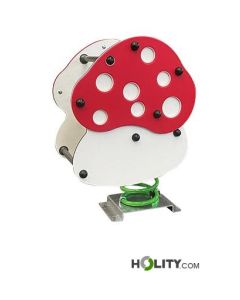
Mushroom-shaped spring rider for children. Age of use: 1-12 years. Dimensions: L. 0.58 x D. 0.42 x h. 0.83 m.
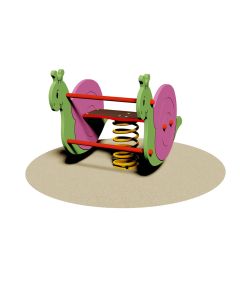
Inclusive spring rider for public parks. Age of use: 2-8 years.
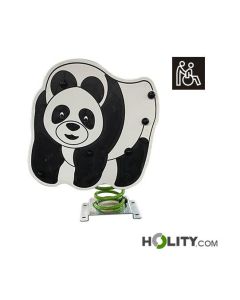
Inclusive panda-shaped spring rider. Dimensions: W. 0.68 x D. 0.39 x h. 0.84 m.
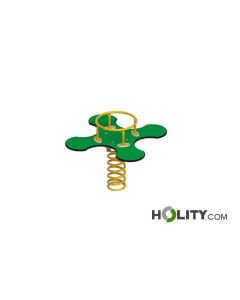
Clover-shaped playground spring rider with polyethylene panels. Dimensions: L. 100 x D. 100 x H. 59 cm.
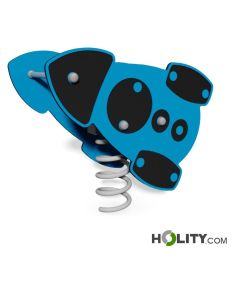
Spring rider for playground equipment. Dimensions: W.80 x D.45 x H.74 cm. Fixing: for underground installation.

Bear-shaped spring rocker with backrest, suitable for children from 2 to 8 years, designed for playgrounds and play areas. Dimensions: L 61 x W 43 x H 84 cm.
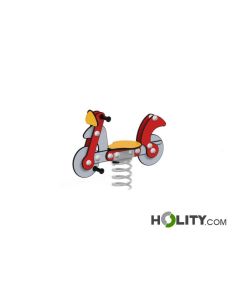
Scooter-shaped playground spring rider with metal base. Dimensions: L. 30 x W. 97 x h. 81 cm.

Horse-shaped spring rider in tri-laminate HDPE for playgrounds. Dimensions 37x26x92 cm, ideal for children aged 2 to 6.
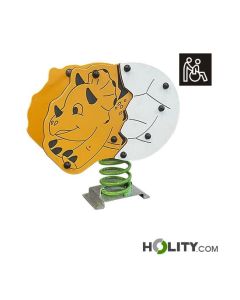
Inclusive spring rider for kindergarten gardens and playgrounds. Materials: polyethylene and powder-coated steel.
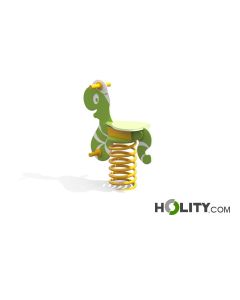
Worm-shaped spring rider in high-resistance HDPE, dimensions 37x26x92 cm, ideal for inclusive play areas and certified playgrounds.

Crab-shaped spring rider made of HDPE polyethylene and steel, UNI EN1176 certified, ideal for playgrounds and beach resorts.
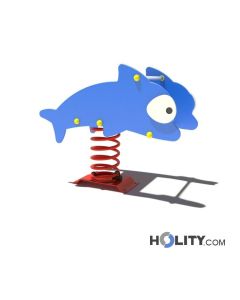
Dolphin-shaped spring rider in HDPE polyethylene and steel. Dimensions 95x47x80 cm, UNI EN1176 certified for public parks and playrooms.
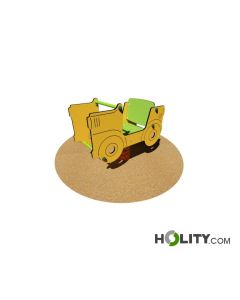
Spring rider for playground with seat made of HPL solid laminate. Dimensions: W. 101 x D. 48 x H. 78 cm.
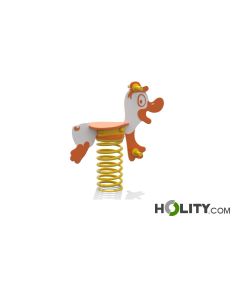
Duck-shaped spring rider in three-layer HDPE (15 mm), dimensions 37x26x92 cm. Ideal for outdoor play areas and children from 2 to 6 years old.
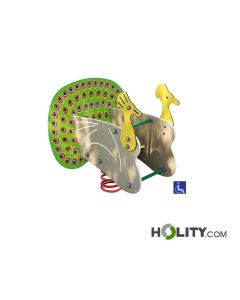
Inclusive peacock-shaped spring rider made of HDPE and galvanized steel. Dimensions 99x99x99 cm. Equipped with a backrest for optimal postural support.

Whale-shaped spring rider, ideal for children aged 2-8 years, stimulates balance and coordination. Dimensions: W 85 x D 74 x H 73 cm.
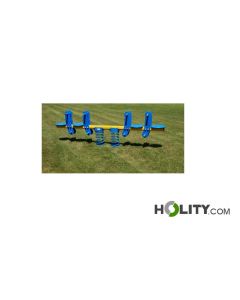
Spring rider designed for children’s fun. Number of seats: 4. Dimensions: L. 268 x W. 31 x h. 87.20 cm.
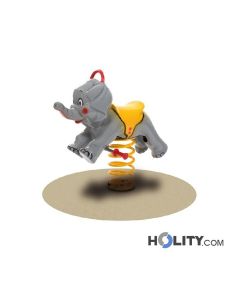
Spring rider for playground in the shape of a fiberglass elephant.
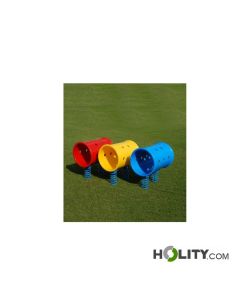
Spring rider for playgrounds made of polyethylene. Dimensions: L.111.50 x D.80 Ø x H.121 cm. Weight: 67.80 kg.
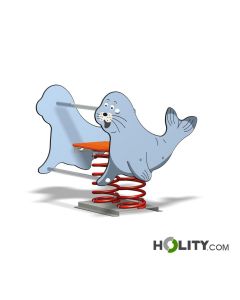
Seal-shaped two-seater spring rider, ideal for children from 2 to 8 years old, with a robust and safe structure. Dimensions: W 88 × D 73 × H 86 cm.

Frog-shaped HDPE spring rider for outdoor play areas. Dimensions 58x42x80 cm, ideal for schools and parks thanks to its rounded edges.
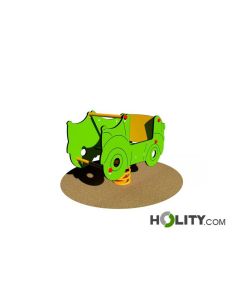
Car-shaped spring rider for nursery school outdoor spaces. Dimensions: L.101 x W.48 x H.78 cm.

Multi-user octopus-shaped spring rider in two-tone HDPE for 4 children. Dimensions 100x100 cm, ideal for socialization in public playgrounds.
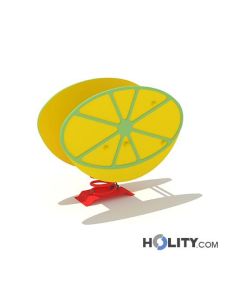
Lemon-shaped spring rider in PEHD polyethylene and phenolic wood, 100x47x87 cm. Ergonomic and safe design certified for public play areas.
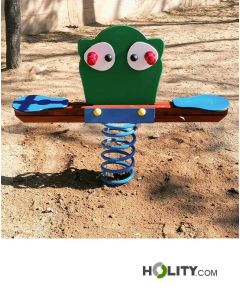
Two-seater spring rider for children aged 3 to 12. Dimensions: L. 114 x D. 30 x h. 94 cm. Seat height: 56 cm. Safety area: 3.19 x 2.30 m.
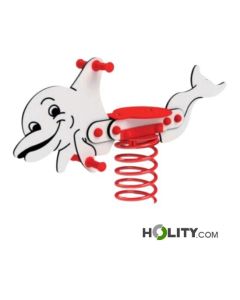
Individual dolphin-shaped spring rider for children. Dimensions: L. 125 x D. 30 cm. Safety area: 3250 x 3300 mm.
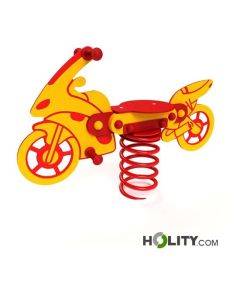
Individual motorcycle-shaped spring rider for public parks, with weather-resistant HDPE silhouette. Dimensions: L. 1100 x D. 300 mm. Recommended age: from 3 years.
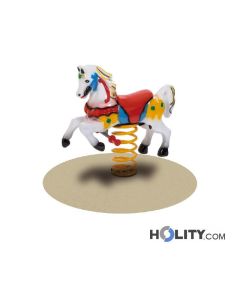
Spring rider in fiberglass depicting a pony. Dimensions: 82x50xh.80 cm.
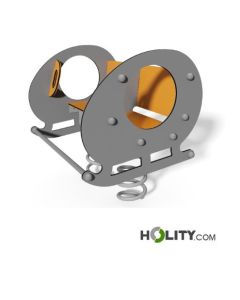
Spring rider for playground in the shape of a snowmobile. Material: HDPE. Dimensions: L.90 x W.67 x H.87 cm.
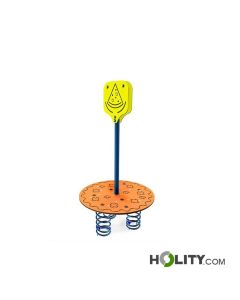
Pizza-shaped spring rider for outdoor spaces made with an HDPE panel. Dimensions: Ø 99 x h. 187 cm.
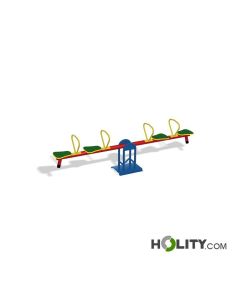
Spring rocker for playground with 4 seats, ideal for children aged 3 to 14, with a stable and safe structure. Dimensions: L 300 x W 40 x H 93 cm.
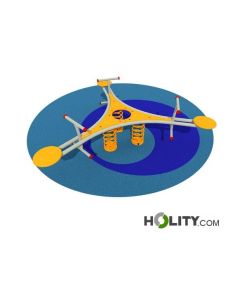
Three-seater spring rocker for playgrounds in electro-galvanized steel and HDPE. Triangular design with three anti-pinch springs, EN 1176 certified.

Two-seater crab-shaped spring rider made of 15mm two-tone HDPE. Dimensions 137x26.5x92 cm, ideal for recreational development in public parks.

Individual spring rider in the shape of a frog, designed to stimulate movement and imagination in young children in total safety. Dimensions: L. 750 x D. 450 mm.
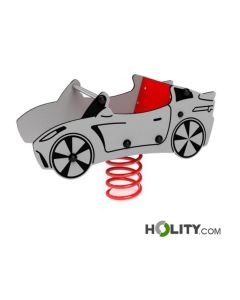
Individual car-shaped spring rocker, designed for the fun of little ones in public parks and play areas. Dimensions: L. 1000 x D. 450 mm.
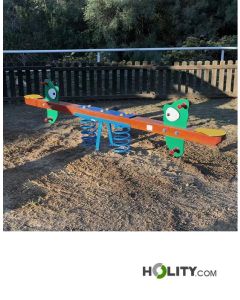
Double spring rider for parks, designed for the fun of 2 children at the same time. Dimensions: L. 309 x D. 51 x h. 94 cm. Seat height: 57 cm.
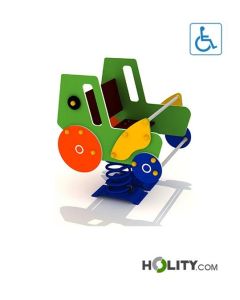
Individual spring rider with a tractor-shaped structure. Dimensions: W. 84 x D. 76 x H. 102 cm. Safety area: 2.71 x 2.84 m.
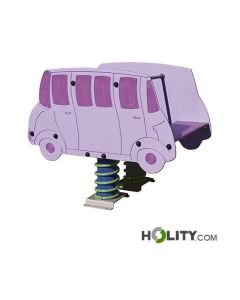
Multi-user bus-shaped spring rider in polyethylene and steel, dimensions 126x87x103 cm, EN 1176 certified to accommodate up to 4 children.
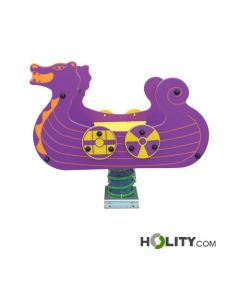
Multi-user Viking ship-shaped spring rider in polyethylene and steel, 4 seats, EN 1176 certified for public parks and school areas.
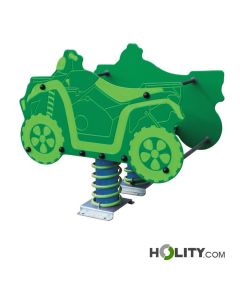
Quad-shaped spring rider h763_03 in polyethylene and steel, 4-seater, EN 1176 certified. Ideal for playgrounds and play areas for children aged 1 to 12 years.
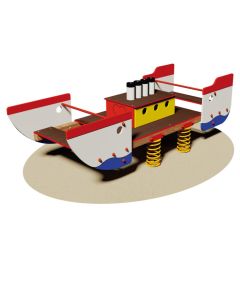
Inclusive ship-shaped spring rider in Nordic pine and steel, 125x350 cm. EN 1176 certified, accommodates up to 10 children for parks and schools.
Spring riders represent an essential structural element in public and private play areas, combining motor functionality with visual appeal for children of various age groups. These devices utilize the elastic principle of the spring to generate controlled oscillating movements, promoting the development of balance, coordination, and spatial perception. Available in multiple zoomorphic shapes and vehicles, spring riders are suitable for public parks, school courtyards, playrooms, and private gardens. Their presence increases the overall play value of an area and meets the needs for unstructured motor activity that children require during their growth.
Spring riders offer immediate and measurable motor benefits during use. The oscillating movement stimulates the core stabilizer muscles, improves proprioceptive ability, and allows children to experience variations in acceleration and deceleration under relatively safe conditions. Unlike static equipment, springs guarantee constant sensory feedback that favors neuromuscular development in age groups between 0 and 12 years. Attractive shapes—from horses to sharks, from giraffes to scooters—create immediate visual engagement, encouraging spontaneous use of the play area without the need for direct supervision.
From a management perspective, spring riders require moderate routine maintenance compared to other equipment and have a small footprint, making them ideal for public spaces with limited square footage. Their weather resistance, when made of appropriate materials, allows for continuous use throughout the year. In recent years, the EN 1176 certification has standardized safety requirements, ensuring that products on the market respect controlled fall distances and certified anti-crush systems. This regulatory approach has significantly raised the overall quality of the offering, reducing the risk of accidents and facilitating the planning of public spaces.
The offering of spring riders differs primarily by materials, structural configuration, and load capacity. Models in polyethylene (HDPE) and steel represent the most widespread solution for public environments, combining aesthetic lightness with structural resistance and ease of cleaning. Wood structures offer a natural aesthetic particularly appreciated in established landscape contexts, although they require protective treatments and more frequent periodic maintenance. HPL laminate variants guarantee high weather resistance and prolonged durability with less need for maintenance. Many models feature single shapes with a single seating point, while two-seater spring riders offer the possibility of simultaneous use for two children, increasing the overall play capacity of the area.
Significant differences also emerge in the anchoring system: some riders use an underground bracket for permanent fixing, while others rely on modular foundation plates for temporary installations. Dimensions vary considerably, from compact units approximately 65 cm in length to extended models over 120 cm, allowing for a selection calibrated based on space availability and the expected number of simultaneous children. Some manufacturers offer variants with additional devices such as extra handles, reinforced footrests, or easily inspectable anti-crush protections.
The initial choice must consider the prevailing age group that will use the play space, as spring riders vary in useful height and spring “stiffness”. Models intended for children between 0 and 3 years old have limited heights (around 60-75 cm) and springs with a low elastic constant, reducing perceived acceleration and oscillation times. For the 3-8 age group, most of the standard catalog offers sizes around 80-95 cm with intermediate springs, while models for users up to 12 years old reach heights of 100+ cm with more responsive elastic systems. A common error consists in underestimating spatial constraints: verifying plan dimensions is fundamental to avoid overlaps with other equipment. Equally critical is the assessment of the final intended use—a public space with a high flow of children requires more resistant materials and certified anti-crush systems, while a protected school area can tolerate slightly lower-end variants.
The comparative analysis between models must include verification of EN 1176 certification and compliance with local installation regulations. Particular attention should be paid to the characterization of the spring itself: a 20 mm wire offers better wear resistance compared to smaller sections, significantly extending the product’s useful life beyond 10 years under regular use conditions. Consulting technical data sheets for details on UV resistance, maximum load capacity, and routine maintenance intervals allows for a realistic estimate of the total cost of ownership. For public installations, it is advisable to favor suppliers who offer detailed anchoring documentation, as a correct foundation directly impacts safety and durability in the medium term.
In Italy and European countries, the installation of spring riders in public spaces is governed by the UNI EN 1176 standard, which specifies safety requirements, resistance tests, and controlled fall distances. This standard establishes that each spring rider must have a minimum free fall area, calculated based on the height and configuration of the device. EN 1176 certified devices include compliant anti-crush systems, protected by visually inspectable guards, and require periodic structural integrity checks at least once a year. In addition to the EN 1176 standard, Italian legislation requires the compilation of the Risk Assessment Document (DVR) by the structure responsible for the play area, indicating appropriate control and maintenance procedures. For private spaces such as school courtyards, responsibility falls on the managing institution, which must have a routine and extraordinary maintenance plan.
Regulatory aspects also include the certification of contact materials for small removable components, verified according to toy safety directives (EN 71 and subsequent). Many certified suppliers have CE declarations of conformity and certificates of compliance with international regulations, documents that must be explicitly requested during the acquisition phase. For installations in public contexts, it is advisable to involve a safety officer during the selection and positioning phase, verifying compatibility with the underlying impact-absorbing surfaces (generally certified sand, synthetic rubber, or engineered wood fiber) and ensuring minimum distances from surrounding fixed obstacles.
Explore all products in the category and compare the available solutions to find the one best suited to your operational context, taking into account the age group, space dimensions, preferred materials, and specific regulatory requirements of your installation.
The age range varies based on the specific model. Most riders support children from 0 to 12 years old, with some products intended for more specific ranges (2-8 years). Reduced heights and softer springs characterize models for the youngest children, while more robust versions accommodate users up to 12 years old.
Galvanized steel combined with HDPE polyethylene or HPL laminate represents the most durable choice for outdoor environments. These materials resist weather agents, UV rays, and require minimal maintenance. Wood structures, while aesthetically pleasing, need periodic protective treatments.
EN 1176 certification must be declared in the technical documentation provided by the manufacturer and accompanied by a CE certificate of conformity. You can request a copy of the complete technical sheet, which clearly indicates the reference standard, the tests performed, and the guaranteed controlled fall distances.
Single models allow for individual use and take up less space, while two-seater versions allow two children to use them simultaneously, increasing the play capacity of the area. The dimensions and structure of the spring vary accordingly to distribute the load equally.
The EN 1176 standard specifies a minimum free fall zone calculated based on the height of the device, generally between 1.5 and 2.5 meters on all sides. The technical sheets indicate the maximum footprint and recommended safety distances to avoid interference with other equipment.
Routine maintenance includes weekly visual inspection of the spring and fastener integrity, surface cleaning, and checking of anti-crush systems. A thorough technical check must be performed annually by competent personnel, with recorded documentation for regulatory compliance.
Preferably not. Certified impact-absorbing surfaces (sand, synthetic rubber, engineered wood fiber) are mandatory to guarantee fall energy absorption and user protection. Installation on asphalt or concrete nullifies safety benefits and violates regulatory requirements.
Yes, HDPE/galvanized steel structures represent the intermediate economic range with an excellent cost-benefit ratio, treated wood is positioned in the middle, while HPL laminate is generally more expensive but offers prolonged durability and very low maintenance in the long run.
 English
  Italian
 French
 German
 Spanish