
mon-fri 9-13 / 14.30-18.30
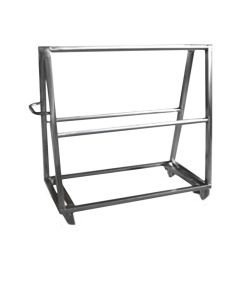
AISI 304 stainless steel cured meat curing trolley. Dim. 1200x600x1400 mm. Hygienic and antibacterial for butcher shops and delicatessens.
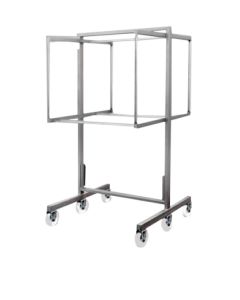
Cured meat seasoning trolley in AISI 304 stainless steel, 2 levels, 4 wheels, dimensions 1000x1000x2000 mm, corrosion resistant and suitable for food contact.
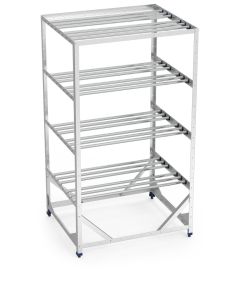
Removable galvanized steel rack for curing cured meats and cheeses. 4 adjustable levels, 24 positionable tubes, 300 kg capacity. Ideal for butcher shops and cured meat plants.
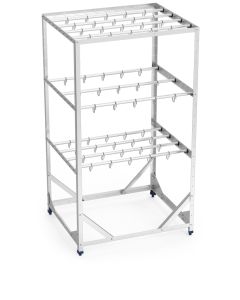
3-level ham curing pallet, galvanized steel, h.203 cm, adjustable and demountable, load capacity 300 kg.
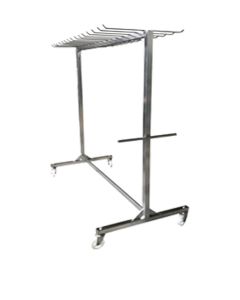
Stainless steel trolley for seasoning and drying cured meats. Robust structure 1500x750x1680 mm, food contact compliant. For butcher shops and deli meat factories.
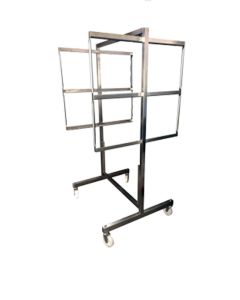
AISI 304 stainless steel trolley for curing cured meats, 3 removable shelves, 4 swivel wheels, 880x1000x2000 mm.
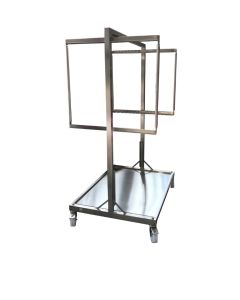
AISI 304 stainless steel trolley with 2 shelves and collection basin for curing and handling cured meats. Dimensions: 1000×700×1820 mm. Wheels with brake.
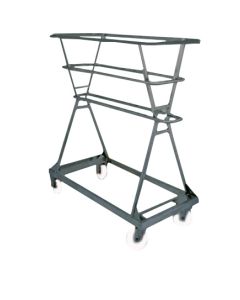
AISI 304 stainless steel trolley for cured meats, 1900×800×1770 mm, designed for transporting loins and hams with optimal sanitization.
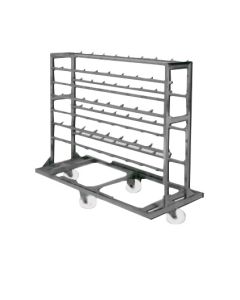
AISI 304 stainless steel trolley for handling cured meats and cheeses. Dimensions 1400×750×1800 mm. Antibacterial and easy to sanitize.
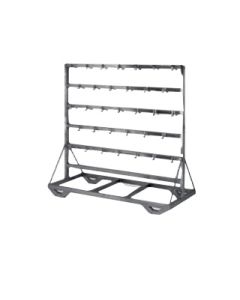
AISI 304 stainless steel cured meat display rack with hooks, 1480x680x2000 mm. Hygienic and organized solution for product display.
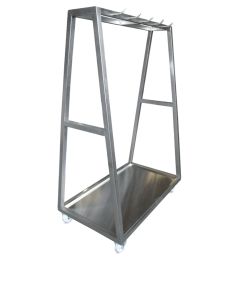
Stainless steel trolley for curing cured meats, compact dimensions (120x70x180 cm), capacity 500 kg, removable bottom shelf for easy cleaning.
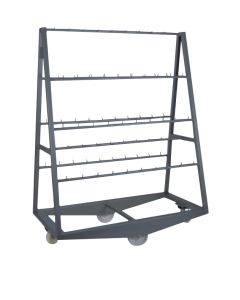
AISI 304 stainless steel trolley for seasoning cured meats and cheeses. 5-level pyramidal structure, 7 rods with 100 hooks, 4 wheels. Dimensions: 1700x750x1760 mm.
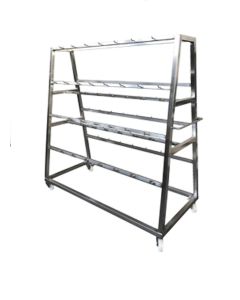
AISI 304 stainless steel trolley for cured meats, pyramidal shape, 1700x750x1760 mm, with hooks for salami, suitable for butcher shops and warehouses.
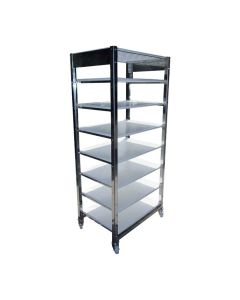
Dismountable STAINLESS steel cheese trolley h1051_01 (60x80x180h cm). Includes 8 perforated food-grade polyethylene shelves for optimal seasoning.
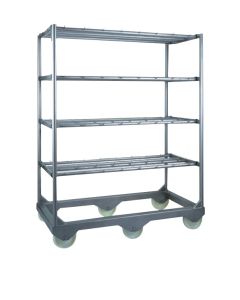
AISI 304 stainless steel trolley for storage and transport of cured meats and cheeses. Dimensions 1450×650×1900 mm. Non-magnetic and antibacterial.
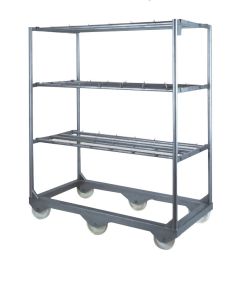
AISI 304 stainless steel pallet with 3 levels, featuring 12 folding rods and 96 hooks for seasoning and handling cured meats. Dimensions: W 1450 x D 650 x H 1900 mm.
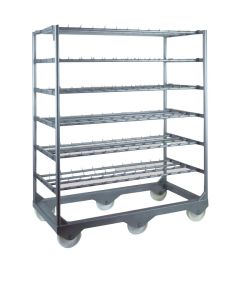
AISI 304 stainless steel pallet with 6 levels, 300 hooks and 6 wheels, ideal for storing meat and cured meats in butcher shops and meat processing industries.
Curing trolleys for cured meats and cheeses represent an essential solution for butchers, cured meat factories, dairies, and agri-food companies operating in the processing and preservation of meat and dairy products. Curing is a complex biological process that requires controlled environments and dedicated equipment capable of guaranteeing correct air circulation, maintenance of specific temperatures, and optimal organization of available space. A professional curing trolley is not simply a storage unit, but a technical tool that directly influences the final quality of the product, its organoleptic properties, and its ability to develop characteristic aromas and flavors during rest in the cellar or cold room.
Choosing the right equipment requires understanding specific production needs: the type of product to be cured, the duration of the process, available space, and the frequency of movement are variables that affect the final decision. Modern trolleys combine technical functionality, ease of cleaning, corrosion resistance, and load capacity, representing an investment that impacts the profitability of the entire operation.
The use of professional trolleys dedicated to curing offers significant advantages from a technical and organizational point of view. Firstly, these tools guarantee a uniform distribution of the load over several levels, avoiding crushing or damaging the products during the resting period. The stainless steel structure, particularly in the AISI 304 version, ensures resistance to corrosion even in environments with high relative humidity, a typical condition of curing rooms. Facilitated movement via swivel wheels allows trolleys to be moved quickly from one area of the facility to another, useful during cell cleaning phases or to optimize air circulation between different products.
From a hygienic-sanitary point of view, professional trolleys allow quick and complete cleaning thanks to smooth surfaces and rounded corners that do not favor the accumulation of residues. The modularity of the shelves, often adjustable in height, allows the available space to be adapted to different types of products: whole cured meats have different needs than sliced meats, just as aged cheeses require different configurations than fresh cheeses. Furthermore, the possibility of equipping the trolleys with specific accessories such as hooks, triangular bars, collection trays, or rod guides transforms a single trolley into a versatile tool capable of adapting to multiple production situations.
The market offers various trolley configurations, each designed to meet specific curing and handling needs. Shelved trolleys with adjustable guides represent the most common solution, thanks to their versatility: they allow the height of individual shelves to be varied based on the size of the meats or cheeses to be cured. These models are available with a variable number of levels, usually from 2 to 6, and in different sizes, from compact configurations for limited spaces to large models for industrial dairies and meat processing plants. Trolleys with a bottom collection tray are particularly useful for curing products that lose liquids, such as fresh hams or soft cheeses, capturing drips and facilitating general hygiene.
Trolleys with meat hanging hook systems are specifically designed for whole products: they allow hams, shoulders, or other meats to be hung using a removable triangular bar, maximizing vertical space and air circulation around the product. Pyramidal models, on the other hand, offer an innovative configuration that widens progressively downwards, reducing the footprint on the ground while maintaining high storage capacity. For dairies, there are specific trolleys for hanging scamorza and cheeses, equipped with tubular structures with round holes for semi-hard and soft cheeses, or boards with rectangular holes for hard cheeses. Some models include grids with anti-tip systems, which significantly simplify product movement during curing, reducing the risk of breakage or deformation.
Selecting the appropriate trolley requires a preliminary assessment of several critical factors. The first element to consider is the type of product intended for curing: whole cured meats have different needs than sliced or stuffed meats, while hard, semi-hard, and soft cheeses require different structural configurations. A frequent mistake is underestimating the importance of air circulation: trolleys with shelves that are too dense or with insufficient space between levels compromise curing, creating areas of excessive humidity and favoring the development of unwanted molds. Dimensions are also critical: carefully measuring the available space in the curing room or cold storage room is fundamental to avoid purchasing trolleys that do not fit correctly, compromising air circulation and the energy efficiency of the structure.
A second important aspect concerns the load capacity and the number of levels required. Trolleys with 2-3 levels are suitable for small production realities or for smaller rooms, while structures with 4-6 levels maximize verticality in larger environments. The declared maximum capacity must always consider not only the weight of the individual level but also the total weight when the trolley is fully loaded, ensuring that the wheels and the structure can support the load without failure. A common mistake is ignoring the quality of the material: not all stainless steels are the same. AISI 304 stainless steel is the industrial standard for humid environments, offering superior resistance compared to less noble steels that may develop surface corrosion over time. Evaluating also the ease of cleaning, the possibility of dismantling components, and the availability of spare parts ensures that the investment maintains value in the long term.
Curing trolleys for cured meats and cheeses must comply with several specific regulations for food safety and labor. At the European level, Regulation (EC) 852/2004 establishes the general hygiene requirements applicable to all food businesses, including specifications for equipment: these must be constructed of non-toxic materials, easy to clean and disinfect, without sharp corners that favor the accumulation of bacteria. The EN 16001 standard concerns safety requirements for equipment used in the food industry and provides for checks on structural strength, stability, and correct configuration. Regarding materials in contact with food, AISI 304 stainless steel must comply with the EN 10088-1 standard, which certifies its chemical composition and corrosion resistance properties.
In terms of occupational safety, trolleys equipped with wheels must have adequate locking systems to prevent accidental movement during loading and unloading of products. Recommended working heights follow the indications of UNI EN 527 for ergonomic work surfaces, in order to reduce operator fatigue. The declared maximum capacity must be visible and strictly respected: exceeding it not only compromises the trolley but also constitutes a safety risk. Furthermore, in the case of installation in environments with controlled curing cells, the trolleys must not obstruct ventilation outlets or temperature probes, to ensure the effectiveness of the air conditioning system. Many companies require additional certifications of origin and traceability of materials, especially if they operate in the organic sector or with protected denomination regulations, making it important to check with suppliers for the availability of specific certifications.
Explore all the products in the category and compare the available solutions to find the one best suited to your operational context. The choice of a quality trolley represents an investment in the stability of your production process and the consistency of your final product.
Cured meat trolleys prioritize vertical hanging via hooks and triangular bars, favoring air circulation around the product during curing. Cheese trolleys have shelves with holes (round for semi-hard and soft, rectangular for hard) and anti-tip systems, allowing horizontal positioning of the product. Some modern models are designed to be versatile and usable for both.
AISI 304 stainless steel is the industrial standard for humid environments, thanks to its composition which includes molybdenum and chromium, making it resistant to corrosion from humidity and salts. Avoid common steels that develop surface oxidation over time, compromising both the aesthetics and the hygiene of the surface.
For a small butcher shop with limited space, 2-3 levels are generally sufficient. If the cell allows heights of 2 meters or more and production is consistent, evaluating 4-5 levels maximizes vertical space. The choice also depends on the type of product: whole cured meats require wider spaces between levels than stuffed meats.
Use hot water and food-specific detergent for stainless steel surfaces, avoiding abrasive products that create micro-scratches. Rinse thoroughly with potable water and dry with microfiber cloths. For disinfection, follow company protocols with products authorized by Regulation (EC) 852/2004. Check that no liquid remains trapped in corners.
Yes, the lower tray captures runoff liquids (whey from cheeses, juices from fresh hams), preventing them from dripping onto lower levels and contaminating the products below. However, the tray must be emptied and cleaned regularly to avoid accumulation of liquids that favor bacterial proliferation.
Professional rubber or nylon wheels are designed to minimize damage to ceramic, resin, or steel floors. However, on very delicate floors or in environments with wooden floors, consider low-set trolleys with low-impact rubber wheels, or use protectors under the wheels.
It depends on the model, but generally ranges from 300 to 600 kg total. Always consult the product’s technical specifications: a declared capacity of 300 kg means that the total weight of the products on all levels must not exceed this limit. Distribute the load evenly on the shelves to avoid imbalances.
Yes, the pyramidal shape reduces the footprint on the ground while maintaining high storage capacity thanks to the upward widening. However, it is mainly suitable for stuffed meats and products that do not require extreme stability. For delicate cheeses or in cells with vibrations, prefer rectangular trolleys with stable shelves.
 English
  Italian
 French
 German
 Spanish