
mon-fri 9-13 / 14.30-18.30

Pack of 4 pieces
€74.59 VAT incl.PVC corpse transport bag. Load capacity approx. 113 kg.
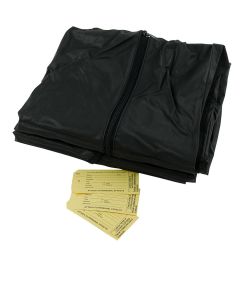
Pack of 3 pieces
€79.56 VAT incl.PVC body bag with transport straps. Capacity approx. 136 kg

Biodegradable and tear-resistant body bag. Dimensions: L.240 x D.90 cm. Color: white.

Pack of 7 pieces
€225.04 VAT incl.Vinyl body bag. Capacity: 150 kg. Dimensions: 210 x 90 cm.

Pack of 3 pieces
€96.88 VAT incl.Body bag with 120 kg capacity, equipped with no. 6 handles and full zipper opening.

Pack of 7 pieces
€247.38 VAT incl.Vinyl body bag. Color: white. Load capacity: 150 kg.

Body bag with double closure. 4 handles. Load capacity: 180 kg. Dimensions: L.2340 x W.900 mm.

Vinyl body bag for transport with double zipper on three sides and 6 handles. Dimensions: L. 215 x D. 90 cm.
Pack of 3 pieces
€232.67 VAT incl.PVC body bag, black color. Capacity: 150 kg

Pack of 2 pieces
€212.76 VAT incl.Vinyl-nylon body bag. Load capacity 150 kg
Body bags represent specialized equipment for the safe transport and handling of the deceased within hospital facilities, morgues, funeral services, and medical transport systems. These devices are designed to ensure dignity, hygiene, and operational safety during the transfer and management phases of the remains. The choice of an appropriate cadaver pouch depends on multiple technical factors, including construction materials, load capacity, closure system, and the provision of handling accessories. Each product must comply with rigorous regulatory standards and specific hygienic-sanitary requirements of the medical sector.
The use of professional body bags represents a fundamental operational necessity in the healthcare and funeral sectors. These devices solve significant criticalities in transport operations, providing waterproof and ergonomic structures that protect both the body and the surrounding environment from biological contamination. Modern pouches include total closure systems via zippers or double seals, minimizing hygienic-sanitary risks during handling. The provision of robust handles, transport straps, and side rings allows operators to lift loads safely, respecting the principles of biomechanics and the prevention of workplace injuries. Furthermore, these products facilitate standardized procedures in regulated environments such as hospitals, forensic medicine centers, and authorized funeral services.
Practical advantages of body bags include simplified hospital logistics management, lower environmental impact thanks to biodegradable options, and greater operational efficiency for medical and auxiliary personnel. The choice of durable materials such as PVC, vinyl, and synthetic fibers ensures resistance to wear during frequent operations and repeated disinfection cycles. Well-designed structures allow for the maintenance of the anatomical integrity of the body, a critical aspect for forensic consultations and subsequent dressing operations. Variable load capacities, from 113 to 180 kilograms, allow for the selection of solutions proportioned to specific needs, avoiding oversizing that would lead to unnecessary operational costs.
In the body bags catalog, there are several construction variants, each optimized for different operational contexts. PVC models represent the most economical and versatile solution, ideal for hospital facilities requiring periodic bulk purchases and frequent replacement cycles. These pouches typically feature a load capacity between 113 and 136 kilograms, standard dimensions around 240 x 90 centimeters, and simplified closure systems with side handles. PVC bags packaged in bundles of three or four pieces offer significant logistical advantages for storage centers. Vinyl-nylon models, on the other hand, represent a superior production range, characterized by greater mechanical resistance, load capacities up to 150-180 kilograms, and closure systems with double zippers on three sides. These devices maintain superior structural integrity through repeated cleaning and chemical-thermal disinfection cycles.
An emerging category is represented by biodegradable and tear-resistant pouches, formulated for contexts where environmental sustainability represents a regulatory constraint or a conscious corporate choice. These products, generally made of welded polyester or compostable materials, allow for ecological end-of-life management without significant compromises on hygienic-sanitary performance. Models with full zipper opening guarantee total access for preliminary dressing operations, while those with additional handles, up to ten grip points, facilitate complex operations with critical loads or in tight spaces. Construction differences also reflect the contexts of use: hospitals require high replacement frequency and resistance to aggressive detergents, while funeral services prefer aesthetic elegance and easy-access features.
The selection of an appropriate body bag requires a systematic evaluation of technical parameters related to the specific operational context. The first decision criterion concerns the maximum supported load capacity, which must exceed the average weight of the patients managed by the facility, considering a safety margin of 15-20% compared to the maximum expected weight. A hospital facility with geriatric cases will have different needs than a forensic medicine service dealing with wide demographic variability. The closure system represents the second critical element: pouches with zippers on three sides allow rapid access for preliminary dressing, while those with partial closure require less operational time but limit procedural versatility. The configuration of the grip points, such as handles, side rings, and straps, must correspond to the number of operators typically employed and the ergonomic characteristics of the facility (corridor width, standard lifting heights).
Common errors in selection include undersizing the load capacity, which generates risks of tears and environmental contamination, and overestimating functional needs that find no practical application. High-turnover facilities should prioritize materials resistant to repeated disinfection cycles rather than economical disposable solutions. The dimensions of the pouch deserve specific attention: lengths of less than 210 centimeters may be inadequate for tall individuals, compromising the dignity and integrity of the procedure. Color, although an apparently secondary aspect, influences perceived visual hygiene and visual differentiation within complex workflows. Critical factors also include compatibility with existing equipment (stretchers, elevators, mortuary carts), hygienic-sanitary certifications, and logistical availability of spare parts from the main supplier.
Body bags operating in medical contexts must comply with national and international regulations governing medical devices and healthcare equipment. In Italy, the main provisions derive from the guidelines of the Istituto Superiore di Sanità (ISS), UNI-EN standards relating to non-sterile medical devices, and ministerial directives on the management of the deceased in hospital settings. Impermeability to biological fluids is a basic requirement, certified through penetration tests carried out according to standardized ISO 14644 and similar methodologies. Materials must be non-toxic, hypoallergenic, and compatible with common disinfecting agents used in healthcare facilities, including chlorine derivatives, alcohols, and phenolics. Mechanical resistance must be verified through tear, traction, and accelerated wear tests, ensuring integrity even after multiple wash cycles at controlled temperatures, typically up to 65-75°C.
Recurring aspects among regulatory requirements include material traceability, CE declarations of conformity where applicable, and technical documentation available for inspections by competent health authorities. Some local entities require additional certifications related to the management of special waste, especially when the pouch contains substances contaminated by airborne pathogens (tuberculosis, COVID-19). Operators handling bodies must receive specific training on correct handling and associated biological risks, with particular attention to skin protection and hand hygiene. Preventive maintenance and periodic replacement documentation must be maintained by the user entity, as structural wear compromises the effectiveness of protective barriers. Periodic organoleptic checks, including visual inspections for tears, swelling, or abnormal bulges, represent consolidated practices in best-practice facilities.
Explore all products in the category and compare the available solutions to find the one best suited to your operational context, considering load capacity, materials, closure systems, and ergonomic accessory equipment.
A body bag is a specialized medical device designed for the safe and hygienic transport of the deceased within hospital facilities, morgues, and funeral services. It serves to protect the surrounding environment from biological contamination, ensures the dignity of the body, and facilitates ergonomic handling by healthcare personnel through dedicated handles and straps.
PVC pouches are economical, suitable for frequent replacement cycles, and withstand medium load capacities (113-136 kg). Vinyl-nylon pouches offer superior mechanical resistance, increased durability through multiple disinfection cycles, and higher load capacities (150-180 kg), making them ideal for high-frequency operational facilities requiring long-term investments.
Examine the average and maximum weight of the patients managed by your facility, then select a pouch with a load capacity 15-20% higher. A geriatric facility with an average case of 70 kg should opt for capacities of at least 85-90 kg. Consult your supplier for case-specific evaluations on exceptional needs or complex demographic variability.
A three-sided zipper allows total access for preliminary dressing and in-depth forensic procedures but increases costs and potential points of failure. Pouches without zippers, with only handles, reduce rapid handling times and are more resistant. The choice depends on the workflow: hospitals with preliminary dressing prefer zippers; facilities with direct transfer opt for simple handles.
Yes, biodegradable pouches made of welded polyester or certified compostable materials guarantee impermeability and resistance equivalent to traditional products. They represent a conscious choice for entities that subscribe to environmental sustainability policies without compromising on biological protection or structural integrity during transport operations.
Frequency depends on intensity of use, quality of the pouch, and the effectiveness of disinfection protocols. PVC pouches require replacement every 12-18 months in high-turnover facilities; vinyl ones support 24-36 months. Periodic visual inspections for tears, permanent stains, or structural degradation should guide early replacement decisions, regardless of standard timelines.
Prices range from 15-20 euros for basic PVC pouches to 60-90 euros for vinyl models with premium finishes. Bulk packs of 3-4 pieces offer savings of 5-10%. Medium-to-large hospital facilities should negotiate special prices with authorized suppliers based on predictable annual volumes and multi-year commercial continuity commitments.
Most pouches support washing at temperatures of 65-75°C with hospital-grade detergents containing chlorine, alcohols, or phenolic compounds. Air drying in a ventilated environment is preferable to preserve structural integrity. Always consult the manufacturer’s instructions, as some specialty materials require specific protocols to avoid chemical or physical degradation of the material.
 English
  Italian
 French
 German
 Spanish