
mon-fri 9-13 / 14.30-18.30
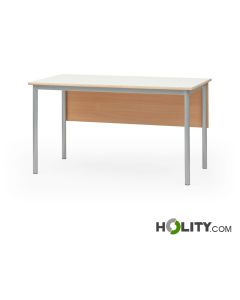
School desk without drawers. Dimensions: W. 140 x D. 70 x h. 76 cm
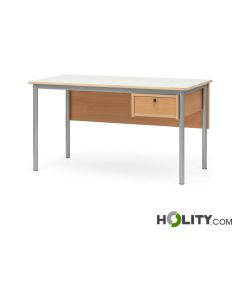
Teacher’s desk for schools. Equipped with 1 drawer. Dimensions: W. 140 x D. 70 x h. 76 cm.
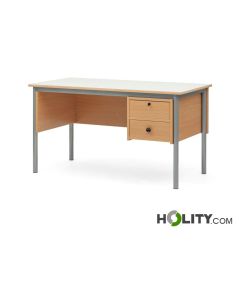
School teacher’s desk. Equipped with 2 drawers. Dimensions: W. 140 x D. 70 x h. 76 cm.
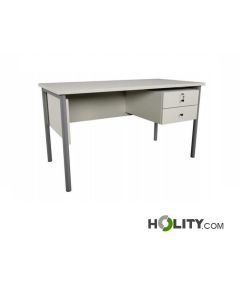
Pack of 2 pieces
€558.00 VAT excl.School teacher’s desk with 2 drawers. Milk-colored melamine.
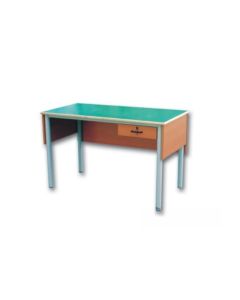
School desk with wooden conglomerate top. School furniture equipped with a lockable drawer. Dimensions: 130x70xh.76 cm. 100% Made in Italy.
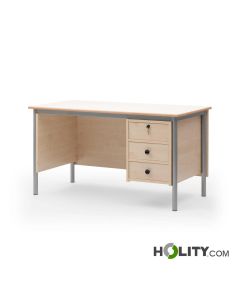
Teacher’s desk with 3 drawers. Dimensions: W. 140 x D. 70 x h. 76 cm
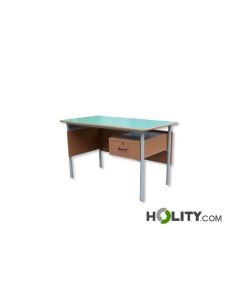
Teacher’s desk with 1-drawer unit and rounded beech edge. Dimensions: 130 x 70 x H 76 cm.
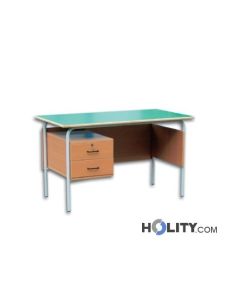
School furniture with tubular structure and wooden conglomerate top. Teacher’s desk with chest of 2 drawers. Dimensions: W.130xD.70xH.76 cm. Made in Italy.
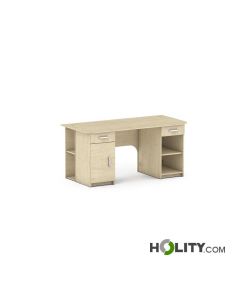
Wooden teacher’s desk. 2 drawers, shelves. dimensions: W.160xD.75xH.75 cm.
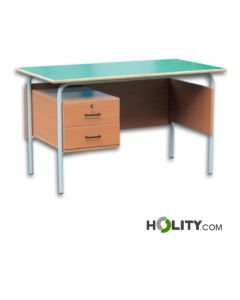
Teacher’s desk for school classrooms with 2 drawers. Dimensions: L.140 x D.70 x h.76 cm. Wooden top and tubular legs Ø 28.
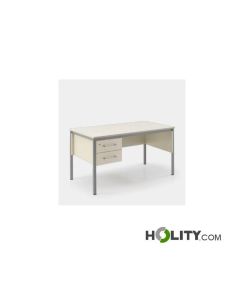
Pack of 5 pieces
€1,598.65 VAT excl.Melamine teacher’s desk for schools and 2 drawers. Dimensions: 140 x 70 x H.76 cm.
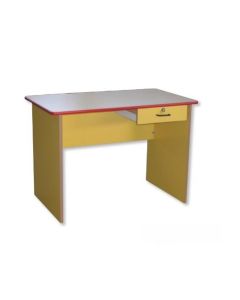
School teacher’s desk equipped with a drawer with lock. Top in wood conglomerate with rounded edges. Dimensions: L.130 x W.70 x h.76 cm.
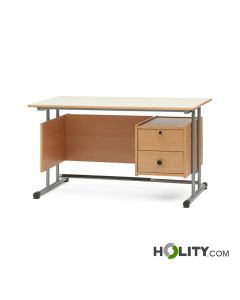
Teacher’s desk with two drawers. Dimensions: W. 140 x D. 70 x H. 76 cm.
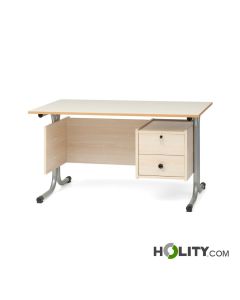
Teacher’s desk with front panel. Dimensions: W. 140 x D. 70 x h. 76 cm
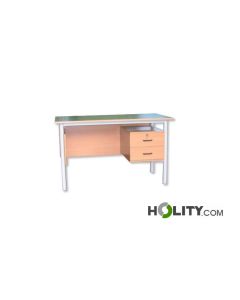
School teacher’s desk with Ø 40 tubular structure and side 2-drawer unit. Dimensions: 130 x 70 x H 76 cm.
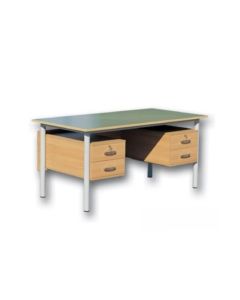
School furniture with wooden conglomerate top and beech front panel. Teacher’s desk with double drawer unit. Dimensions: 170x70xh.76 cm. Italian product.
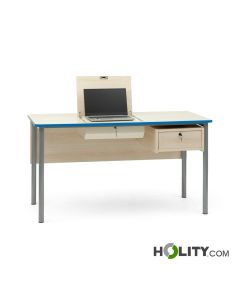
Teacher’s desk with notebook compartment. Dimensions: W. 140 x D. 70 x h. 76 cm
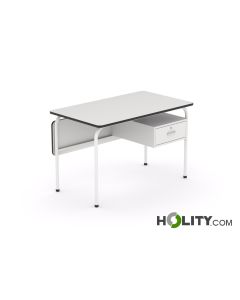
White melamine school teacher’s desk with lockable drawer. Painted steel structure with adjustable feet. Dimensions: W 120 x D 70 x h 76 cm.
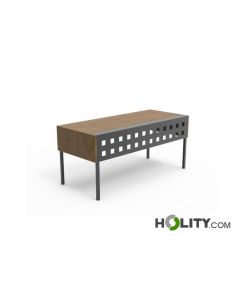
Telematic desk with metal structure and anti-scratch melamine top, integrated cable management. Dimensions: L 160 × D 70 x H 70 - 74 cm.
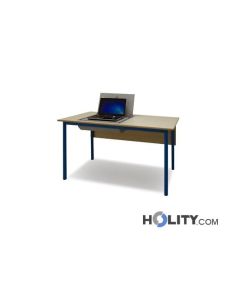
Pack of 3 pieces
€1,776.60 VAT excl.Teacher’s notebook desk with panel. Conglomerate top coated in plastic laminate. Dimensions: W.140 x D.70 x h.76 cm. Italian product.
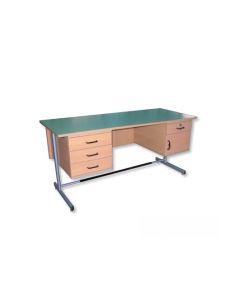
School teacher’s desk with oval steel structure and footrest with PVC profile. Dimensions: L.170 x D.70 x h.76 cm. 100% Made in Italy.
The teacher's desk represents the central element of didactic organization in the classroom, serving as the operational hub for the teaching staff and a visual reference point for the entire class. Modern school teacher desks must meet requirements that blend the ergonomics necessary for long working hours with structural robustness capable of withstanding the intense rhythms of educational institutions. These are not simple desks, but workstations specifically designed to accommodate registers, technological devices, and teaching materials, maintaining a functional order essential for lesson management. The choice of the correct desk directly influences the teacher's posture and the perception of professionalism within the training environment.
Our catalog offers a curated selection of solutions ranging from classic wooden models to more contemporary designs with reinforced metal structures. Each product is selected to guarantee a large, scratch-resistant work surface, treated with non-toxic materials and compliant with current regulations regarding safety in public environments. Whether for a primary school or a high school, the versatility of the available configurations allows every workstation to be perfectly integrated with the rest of the school furniture, ensuring aesthetic and functional coherence that fosters a serene and organized learning climate for teachers and students.
Investing in a professional teacher's desk means prioritizing the health and efficiency of teaching staff within school buildings. Unlike common office desks, school desks are dimensioned and built to handle the specific workload of a classroom, where mobility is frequent and space must be maximized. A solid structure prevents annoying wobbling during writing or computer use, providing stable support that lasts over the years despite the frequent movements necessary for room cleaning or reconfiguration of teaching spaces. The robustness of edges and worktops is designed to prevent dangerous chipping, ensuring a workspace that is always decent and safe.
Furthermore, this equipment facilitates the logistical organization of daily teaching. The possibility of having dedicated compartments or large surfaces allows the teacher to always have everything they need at hand, reducing distractions and downtime. In an era where digitalization is massively entering schools, modern desks often offer provisions for cable management, making the use of laptops, tablets, and interactive whiteboards much more orderly and safe, eliminating tangles of wires that could represent a tripping hazard for pupils and teachers. Choosing products specific to the HoReCa and school sectors also ensures that the materials used are easily sanitizable, a feature that is now essential for managing school cleaning protocols.
The range of available desks is mainly divided based on the configuration of storage units and the construction materials used. Desks with fixed drawer units represent the most complete traditional solution, offering drawers equipped with locks for the secure storage of sensitive documents, personal items, and stationery. These models can feature a single or double drawer unit, depending on the width of the top. For environments that require greater flexibility or where the space under the top must remain free for greater leg movement, there are versions without drawers, often preferred in laboratories or classrooms where teachers rotate frequently and do not need a permanent personal archive.
From a structural point of view, we find desks with metal frames made of tubular steel, which offer unparalleled resistance to impact and mechanical stress, usually powder-coated with epoxy to prevent corrosion. The worktops are generally made of melamine-faced chipboard with ABS edges or plastic laminate, materials chosen for their high resistance to abrasion and sunlight. Some variants also include a front panel (modesty panel), which in addition to giving greater stability to the structure, guarantees the necessary privacy to the seated teacher, a technical detail often required in public supplies to ensure an impeccable formal aesthetic within the classroom.
The choice of the ideal desk must start from a meticulous evaluation of the available space in the classroom and the usage habits of the teaching staff. It is essential to consider the dimensions of the top: a standard surface of about 120x70 cm is usually sufficient to accommodate a register and a computer, but for special classrooms or professors who use many volumes, it might be appropriate to opt for larger models. A common mistake is neglecting the height of the desk, which must be perfectly coordinated with the teacher's seating to avoid musculoskeletal disorders. The presence of adjustable feet is a critical factor, as it allows the workstation to be leveled even on old school floors that are not perfectly flat, avoiding annoying wobbling.
Another decision criterion concerns security and document management. If the classroom is used by multiple classes or different teachers, the presence of keyed drawers becomes indispensable to protect the privacy of sensitive data contained in paper registers or mobile devices. Attention should also be paid to the shape of the edges: rounded ABS profiles are not only more durable than cold-glued edges, but drastically reduce the risk of accidental injury in case of impact. Finally, it is advisable to evaluate the maintainability of the material: excessively porous surfaces could hold ink stains or glue residues that are difficult to remove, while high-quality laminates can be cleaned with a simple damp cloth, maintaining a new appearance throughout the product's life cycle.
School furniture is subject to specific technical regulations, most notably the UNI EN 1729 standard, which defines functional dimensions, safety requirements, and test methods for chairs and tables intended for educational institutions. This standard ensures that the furniture promotes correct posture and is proportional to the user's height. Every desk must be designed to eliminate crushing or cutting points, with well-finished joints and no sharp edges. Structural stability is rigorously tested to prevent accidental tipping, even when the drawers are fully loaded and extended, a fundamental passive safety requirement in environments frequented by minors.
In addition to mechanical aspects, it is essential that desks comply with parameters relating to reaction to fire and the emission of volatile substances. Wood panels or derivatives must be in class E1 regarding formaldehyde emission, guaranteeing air quality within closed classrooms. Compliance with Minimum Environmental Criteria (CAM) is another factor increasingly requested in public tenders, ensuring that the entire life cycle of the product, from production to disposal, is oriented toward environmental sustainability. Verifying the presence of such certifications is not just an act of legal compliance, but a guarantee of superior quality that protects the school's investment against premature wear and health risks.
Explore all products in the category and compare the available solutions to find the one best suited to your operational context.
The most common dimensions for a school desk are approximately 120 cm or 130 cm in width and 70 cm in depth. These measurements guarantee sufficient workspace to comfortably accommodate a computer, registers, and teaching materials, while ensuring a compact footprint that does not obstruct movement in the classroom.
The choice depends on the use of the classroom. A desk with drawers is preferable if the teacher needs a secure space to store personal documents and stationery. If, on the other hand, the classroom is multi-purpose or subject to frequent teacher changes, a model without drawers offers greater visual lightness and ease of cleaning, as well as total freedom of movement for the legs.
Professional desks use painted tubular steel frames for maximum stability and tops made of melamine-faced chipboard or laminate. These materials are chosen for their high resistance to wear, scratches, and detergents, ensuring a hygienic and durable surface even with intensive daily use.
Yes, desks must comply with the European standard UNI EN 1729, which regulates functional dimensions and safety requirements for school furniture. Furthermore, wood-based materials must comply with formaldehyde emission limits (class E1) to guarantee the healthiness of the school environment and the safety of teachers and students.
Most desks equipped with a drawer unit include a lock, usually on the first drawer or with a central locking system. This element is fundamental for compliance with privacy regulations, allowing the teacher to securely store registers and sensitive data during breaks or at the end of lessons.
To keep the worktop in perfect condition, it is sufficient to use a soft cloth moistened with water and a neutral, non-abrasive detergent. It is important to avoid using metal sponges or aggressive solvents that could scratch or dull the surface. Always dry well after cleaning to avoid infiltration into the edges.
The front panel is a vertical element placed under the worktop that covers the front of the desk. It has a dual function: structural, as it increases the stability of the desk, and decorative, as it guarantees the privacy of the seated teacher, hiding legs and equipment cables from the class's view.
 English
  Italian
 French
 German
 Spanish