
mon-fri 9-13 / 14.30-18.30
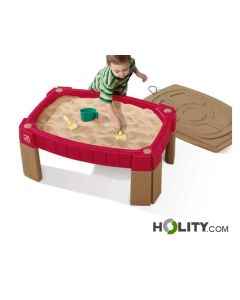
Plastic sandbox for parks and kindergartens with a lid convertible into a toy car track. Dim. 91x66x42 cm. Includes play accessories.
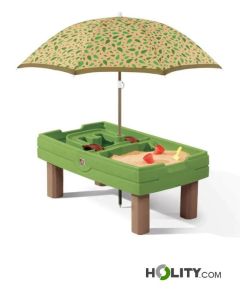
Plastic sandbox with umbrella and track-lid for children. Dimensions 118x66x53 cm, complete with educational accessories and drain plug.
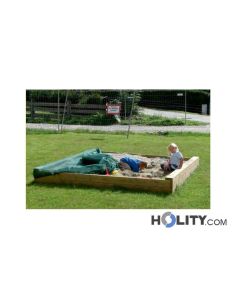
Sandbox for children in pine wood, 150x150x33 cm, class 4 pressure impregnation, with hot-dip galvanized screws.
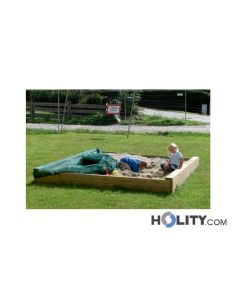
Square sandbox in impregnated pine wood, class 4, 200x200x33 cm, for public parks and gardens.
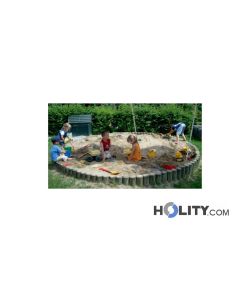
Round pine wood sandbox, Ø 3.00 m, Ø 12 cm palisades, pressure impregnation, beveled edge.
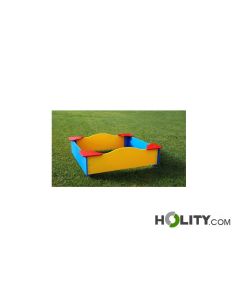
PE-HD polyethylene sandbox for playgrounds, 161x157x53 cm, children 0-12 years, compliant with EN1176-1-2017.
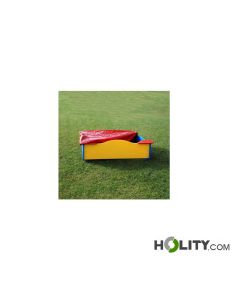
Sandbox for playgrounds in PE-HD polyethylene with PVC protective cover. Age 0-12 years, 161×157×53 cm, EN1176 compliant.
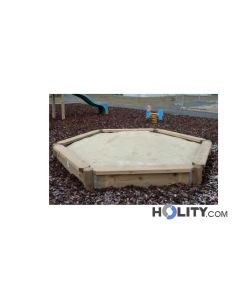
Hexagonal pressure-treated pine wood sandbox, 3 m diameter, with integral seat and corner protection for playgrounds and play centers.
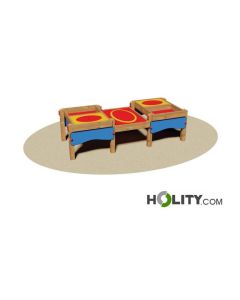
Inclusive sand table h350_315 in pressure-treated Nordic pine (210x90x60 cm), EN 1176 certified with basins and sand compartments for playgrounds.
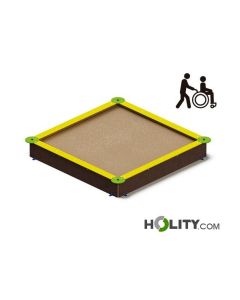
Inclusive wooden sandbox for children aged 1-12, structure 2.71x2.71x0.87 m, pressure-treated wood and plywood, TÜV SUD EN 1176 certified.
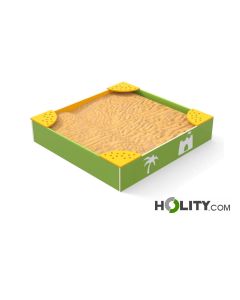
Sandbox module for playgrounds, polyethylene and aluminum, 150×150×30 cm, 8 children, with cover sheet.
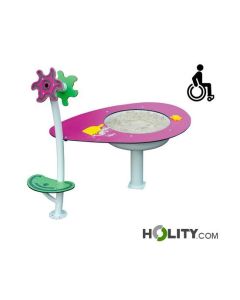
Inclusive sandbox made of polyethylene and powder-coated steel with kaleidoscope. Suitable for children with disabilities. Dimensions: 1.36 x 1.19 x 1.21 m. TÜV SUD EN 1176 certification.
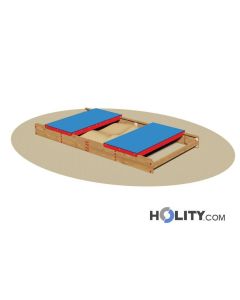
Nordic pine wood playground sandbox, pressure-treated, EN 1176 certified, with 2 sliding panels in galvanized steel and HPL laminate. Playing space 200x200 cm, dimensions 400x200x40 cm.
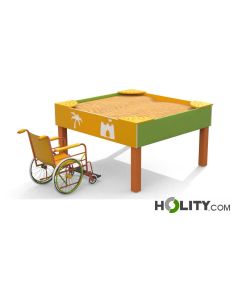
Raised sandbox in aluminum and recycled polyethylene, 150x150x90 cm, accessible to children in wheelchairs, with cover sheet included.
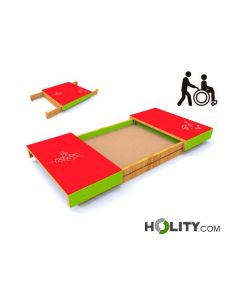
Inclusive sandbox in wood and polyethylene for playgrounds, ages 1-12. Central basin with sliding closable tops, impact surface 33.87 m2. EN 1176 certified.
Playground sandboxes represent one of the most important play elements in spaces dedicated to childhood, both in public and private facilities. These tools combine educational and recreational functionality, allowing children to explore the properties of sand through manipulation and constructive play. A well-designed sandbox facilitates motor, sensory, and cognitive development, while promoting hand-eye coordination and the strengthening of fine motor skills. Sand pits find application in nurseries, preschools, public parks, holiday resorts, and recreational areas, becoming a privileged space where children discover shapes, textures, and dynamics of free and creative play.
Playground sandboxes offer concrete benefits in the psychomotor development of children. The manipulation of sand stimulates tactile perception and proprioception, strengthening the muscles of the hands and forearms through activities such as pouring, digging, modeling, and compressing. Playing with sand also promotes limitless creativity, as children can build castles, tunnels, abstract shapes, and imaginary scenarios using simply shovels, buckets, and various types of molds. This type of free activity represents a valuable opportunity for the development of autonomy and self-esteem, allowing little ones to experience success through the achievement of self-set goals. In school and recreational environments, the sandbox also serves as a natural place for socialization, where several children interact, negotiate spaces, and share materials, thus acquiring fundamental relational skills.
In addition to developmental aspects, playground sandboxes present significant operational advantages for facility managers. They require limited maintenance, as sand is a natural material that quickly drains rainwater. Modern pits are built with materials resistant to weather and UV rays, guaranteeing durability over time. A well-sized sandbox occupies a limited space compared to other play equipment, making it ideal even for medium or small parks. Furthermore, the management cost remains competitive, especially when compared to more complex structures such as carousels or multi-play compositions. Versatility allows the sandbox to be adapted to different age groups: lower and smaller models for toddlers (1-3 years) and larger pits for preschool and school-age users.
In the playground sandbox market, it is possible to distinguish solutions mainly by construction material and structural configuration. Plastic (polyethylene) sandboxes represent the most popular choice for small-to-medium-sized facilities, characterized by lightness, ease of transport, low cost, and excellent resistance to UV rays. These pits are ideal for nurseries and indoor/semi-covered spaces, available in rectangular or square shapes with dimensions ranging from 90x60 cm up to 160x160 cm. Pressure-treated wood sandboxes, typically made of Nordic pine, offer a more natural and warm aesthetic, favoring better visual integration in landscape contexts and outdoor schools. These pits stand out for structural solidity, availability of varied shapes (rectangular, square, circular, hexagonal), and dimensions exceeding 150x150 cm, making them particularly suitable for public parks and play areas intended for large groups of children.
A growing category is represented by inclusive sandboxes, specifically designed to ensure accessibility for children with motor or sensory disabilities. These models feature raised heights (80-90 cm) to allow access even for wheelchair users, closable sliding tops that facilitate seated play, and, in some cases, additional sensory elements such as tactile kaleidoscopes. Sandboxes with PVC covers offer protection from rain and debris, keeping the sand clean longer and allowing use even during brief showers. Finally, sandbox tables combine the functionality of a traditional pit with a table height (about 60 cm), reducing the need to bend down and making them particularly appreciated in school contexts where they also serve educational purposes. The choice of type depends on the context of use, the age of the users, the available space, and the investment budget.
Selecting the most appropriate sandbox requires a careful evaluation of several decision criteria. First of all, the age of the children who will use the facility represents the primary parameter: for very small users (0-2 years), low plastic pits (30-40 cm in height) with slightly inclined walls to facilitate independent access are preferable. Preschool children (3-5 years) benefit from standard medium-sized rectangular pits (about 120x120 cm), while mixed groups or primary schools require larger solutions and potentially including accessory elements such as integrated benches or dedicated zones. Space availability constitutes a second decisive constraint: a 2x2 meter square space allows for the installation of a 150x150 cm sandbox with lateral movement zones, while smaller areas limit the choice to compact plastic models (90x90 cm).
A frequently overlooked but critical aspect concerns the climatic conditions and the geographical context of the installation. In areas with high rainfall, it is advisable to opt for pits with effective drainage or even with a removable cover; in very sunny areas, the selection of materials with UV protection guarantees the durability of color and structure over time. The balance between robustness and maintenance is essential: wooden sandboxes offer elegance but require periodic pressure-treatment (every 2-3 years), while plastic solutions involve minimal maintenance interventions. Common errors include purchasing pits that are undersized for the actual number of simultaneous users, causing congestion and conflict during play, or choosing materials not suitable for the local climate, which leads to premature aging and unexpected replacement costs. Finally, always check for the presence of safety certifications (EN 1176 for playground equipment in public parks) and the availability of protection elements such as anti-trauma impact surfaces in the immediate vicinity of the pit.
Playground sandboxes intended for public facilities or frequented by children must comply with specific safety regulations. The European standard EN 1176 (Playground equipment and surfacing) represents the main reference, establishing requirements for structural strength, stability, prevention of entrapment and crushing hazards, as well as the design of impact zones. This standard also prescribes minimum and maximum dimensions of various structural elements and specifies the materials allowed in direct contact with children. Regarding the sand itself, materials free from biological or chemical contaminants must be used, characterized by suitable grain size (generally fine sea or river sand). EN 1176-1 addresses general hazards and structural safety, EN 1176-2 deals with specific requirements for fixed equipment, while EN 1177 concerns impact attenuating surfacing, often installed around pits to cushion any accidental falls.
Recurring aspects of compliance concern the free space around the sandbox (generally 1.5-2 meters on all sides), the maximum depth of the pit (usually not exceeding 50 cm to avoid risks of sinking), and the resistance of the walls to lateral pressure. Inclusive sandboxes must further comply with accessibility regulations (e.g., UNI 9042, adaptations for people with reduced mobility) and may be subject to specific certifications for medical products if integrated into healthcare facilities. Regular maintenance is mandatory: the sand must be periodically inspected for contamination (foreign bodies, animal waste) and completely replaced at least once a year in high-traffic contexts. Each facility must have a documented maintenance log and perform formal weekly inspections. Legal responsibilities fall on the facility manager, who must ensure compliance with the regulations, safe usability, and continuous monitoring of conditions of use.
Explore all products in the category and compare available solutions to find the one best suited to your operational context. From compact plastic pits for nurseries to inclusive wooden models for public parks, the range offers options for every need of space, budget, and age group.
A sandbox is a pit containing fine sand intended for children’s free play. It promotes motor, sensory, and cognitive development through the manipulation of sand, strengthens hand muscles, stimulates creativity and socialization. It represents a natural educational tool for age groups from 1 to 12 years, depending on the type and height of the pit.
Sandboxes are mainly made of plastic (polyethylene), pressure-treated wood, or wood-polyethylene combinations. Plastic offers lightness, low cost, and easy maintenance; wood guarantees natural aesthetics and structural solidity. Wood requires periodic pressure-treatment, while plastic is practically maintenance-free besides sand cleaning.
For small groups (up to 6 children), 100x100 cm pits are suitable; for groups of 8-12 children, 150x150 cm or larger pits are needed. Facilities with high traffic require 200x200 cm models or circular ones with a 3-meter diameter. Also consider the lateral movement space (at least 1.5-2 meters free around the pit) to ensure safe circulation.
Yes, inclusive sandboxes are designed with raised heights (80-90 cm), facilitated lateral access and, often, sliding tops. They allow children in wheelchairs or with reduced mobility to participate in play. They must still comply with the EN 1176 standard and specific accessibility standards to be compliant.
Maintenance costs vary from 200-500 euros per year for plastic sandboxes (sand change, cleaning) to 400-800 euros for wooden pits (sand change, pressure-treatment, structural checks). Weekly inspections, documentation, and any repairs should be considered in the annual operating budget.
The primary certification is EN 1176, which attests to structural compliance, resistance, absence of entrapment hazards, and safe sizing. Check that the product bears the CE mark and is accompanied by complete technical documentation, including a maintenance manual and a periodic inspection plan.
The sand must be fine, free of chemical or biological contaminants, preferably sea or river sand certified for play use. It must be inspected weekly for foreign bodies (plastic, glass, animal waste) and completely replaced at least once a year in public facilities. Install anti-intrusion barriers (nets or fences) to prevent contamination by pets.
 English
  Italian
 French
 German
 Spanish