
mon-fri 9-13 / 14.30-18.30

Professional stainless steel clog shelf, 8-pair capacity, vertical space-saving design for operating rooms and sterile environments.
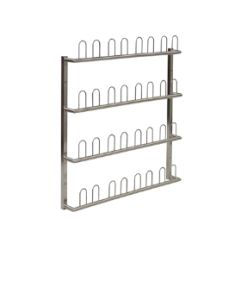
16-slot stainless steel wall-mounted clog rack, dimensions 99.5x13x96.5 cm, ideal for hygienic and space-saving organization in operating rooms.
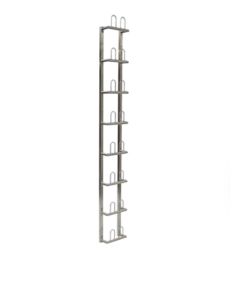
Wall-mounted stainless steel clog holder for 16 pairs, 51.5x13x218 cm. Hygienic and space-saving solution for organizing footwear in operating theaters.
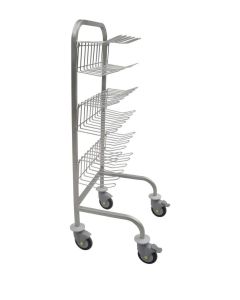
Single-sided AISI 304 stainless steel rack for storing 18 pairs of clogs, equipped with removable supports and rubberized wheels with brakes.

AISI 304 stainless steel clog trolley for operating rooms. Capacity 18 pairs, antistatic wheels, removable supports, 620x515x1396 mm.

Wall-mounted stainless steel clog rack for 24 pairs. Vertical space-saving solution for operating rooms and high-hygiene environments.

Wall-mounted stainless steel clog rack shelf, 99.5x218 cm. Capacity 32 pairs, specific for filter zones and entrances to operating rooms and sterile areas.
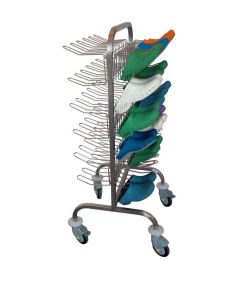
Hospital clog trolley in AISI 304 stainless steel, capacity 36 pairs, double-sided on wheels. Aseptic structure for operating blocks.
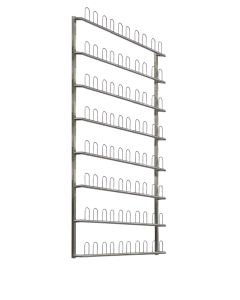
Wall-mounted stainless steel clog rack for operating rooms, capacity 40 pairs. Space-saving vertical structure for maximum hospital hygiene.

Double-sided clog trolley in AISI 304 stainless steel, 36-pair capacity, with antistatic wheels and removable supports for operating rooms.

Professional stainless steel clog trolley for operating rooms, 40-pair capacity, dimensions 110x50x165 cm, equipped with 4 wheels for mobility.

Professional tubular clog trolley for operating rooms, 600x980x1600 mm, with antistatic wheels for maximum sanitary hygiene.

Clog rack in 18/10 AISI 304 stainless steel. Capacity: 28 pairs of clogs.

AISI 304 stainless steel clog trolley for operating rooms, 7 shelves with capacity for 28 pairs, antistatic wheels and perimeter bumpers.
Clog trolleys represent an essential solution for the logistical organization of operating rooms and surgical blocks. These storage systems, made of AISI 304 stainless steel, allow for the orderly transport and storage of the medical staff’s sterile footwear, maintaining high hygiene standards and facilitating sanitization operations. A functional operating room depends on the ability to maintain a sterile and well-organized environment: clog trolleys respond to this critical need, preventing contamination, reducing search times for devices, and ensuring immediate accessibility of footwear during shift changes. The choice of the appropriate model directly affects the fluidity of operational flows and compliance with biosafety protocols.
The use of dedicated trolleys for transporting surgical clogs entails significant operational and hygienic advantages. Firstly, it maintains separation between contaminated zones and sterile areas, a fundamental practice in hospital sterilization protocols. Orderly transport prevents footwear from coming into contact with uncontrolled surfaces, reducing the risk of cross-contamination. Furthermore, centralized storage facilitates the implementation of standardized disinfection cycles: healthcare workers can subject the entire trolley to chemical nebulization or saturated steam treatments without having to disassemble components. From an ergonomic point of view, wheeled models with removable supports reduce the physical stress on staff during loading and unloading operations, while wall-mounted solutions optimize space in surgical blocks with limited square footage.
In terms of daily practicality, trolleys with well-sized hooks and shelves reduce footwear search times and minimize the risk of damage, as each pair has a dedicated space. Immediate visibility of availability allows staff to quickly identify the necessary sizes without multiple contacts with the structure. Double-sided models double the storage capacity without increasing the footprint, an aspect particularly relevant in hospital environments where available space is often limited. In addition, the certification of stainless steel materials guarantees prolonged durability and lower maintenance costs compared to solutions built with alternative materials that are less resilient to aggressive sanitization procedures.
The range of clog trolleys includes several configurations designed to adapt to specific organizational contexts. Fixed wall shelves represent the most compact solution, ideal for filter zones, preparation rooms, or small surgical blocks. These models, available in capacities from 8 to 40 pairs, exploit the vertical height of the wall while minimizing horizontal bulk. Wall-mounted systems are characterized by fixing with steel brackets and an open structure that allows for easy cleaning of every single hook. Single-sided wheeled trolleys offer mobility and intermediate storage, suitable for transit between operating zones or for temporary placement in changing rooms. These models include rubber wheels with mechanical brakes, preventing unwanted movement during footwear changes. Double-sided trolleys, equipped with a double series of shelves and hooks, double the capacity (usually 36 pairs) while maintaining a contained footprint, making them particularly efficient in large surgical blocks with high staff turnover.
Further differentiations concern construction materials and accessories. Some models integrate peripheral shock-proof rubber bumpers, which protect both the structure and adjacent furniture during movement. Removable supports facilitate maintenance operations and allow for a flexible configuration of the internal space according to contingent needs. Racks with a completely open frame favor air circulation and rapid visual inspection, while models with partially closed doors guarantee aesthetic protection while maintaining accessibility. Tubular variants instead of solid steel reduce the overall weight without compromising strength, proving advantageous in environments where frequent trolley movements are inevitable. The choice between these configurations depends on the available surface area, the frequency of staff rotation, and the specific protocols of each hospital facility.
The selection of a clog trolley requires the preliminary analysis of some critical parameters. The first aspect concerns the estimation of the necessary capacity: it is necessary to count the maximum number of operators using the changing room simultaneously, added to the reserve volumes maintained to ensure operational continuity in case of failures or extraordinary needs. A surgical block with three operating rooms and 8-hour shifts might require a total capacity of 40-50 pairs, while smaller facilities can be served by modular systems with 8-16 places. The second criterion concerns the available space: environments with limited square footage benefit from vertical wall shelves, while larger spaces allow for the use of double-sided trolleys on wheels, which also facilitate periodic sanitization operations by moving the structure from the storage area. The third factor concerns the frequency of movement: if the trolley remains fixed in a single location, wall-mounted models are sufficient; if it needs to be moved between different zones, antistatic wheels and mechanical brakes become essential features.
A common mistake consists in underestimating the importance of the ergonomic configuration of the hook. Supports that are too close together lead to difficulties in the rapid retrieval of clogs, while insufficient spacing causes cross-contamination between adjacent pairs. The size of the hook must be proportionate to the volume of the standard surgical footwear used in the facility. Equally critical is verifying that the construction material is actually AISI 304 stainless steel: this standard guarantees minimum resistance to corrosion and a durability of at least 10-15 years in environments with a high frequency of sanitization. The absence of sharp edges, the ease of disassembly of individual shelves, and the absence of inaccessible cavities are parameters that affect the practicality of cleaning operations. Finally, verify that the structure is certified for hospital use and that it possesses appropriate technical documentation regarding compatible sterilization cycles: some materials could deteriorate with autoclave treatments or with specific chemical disinfectants.
Clog trolleys intended for use in operating rooms must comply with specific regulations governing safety, hygiene, and compatibility with medical environments. The EN 61010-1 standard defines the general safety requirements for equipment used in hospital environments, while the ISO 14644 standard establishes the cleanliness conditions in operating rooms, indirectly influencing the construction characteristics of storage structures. AISI 304 stainless steel represents the minimum standard required in Italy and Europe for contact with sterile zones, guaranteeing proven resistance to chemical and thermal disinfection procedures. Structures must be designed without internal cavities where dirt or moisture can accumulate, in compliance with the guidelines of the Higher Institute of Health regarding the prevention of healthcare-associated infections. Compatibility with autoclave sterilization cycles at 121°C represents a widespread requirement, although not always mandatory: check the technical documentation for the protocol recommended by the manufacturer.
Specific aspects also concern the antistatic criteria in wheeled models, especially in surgical blocks where explosive anesthetics or machinery sensitive to electrostatic discharges are used: the wheels must possess an electrical resistance between 10^6 and 10^9 Ohms, certified according to the relevant standards. The load capacity per shelf must be clearly indicated and higher than the total expected weight (a pair of surgical clogs weighs on average 1-1.5 kg, so a capacity of 36 pairs requires at least 54-60 kg per shelf). Structural stability, verifiable through tilt tests according to EN standards, assumes critical importance to prevent tipping during use or transport. Finally, the product must be accompanied by a certificate of origin, material traceability documents and, preferably, validation certificates issued by ACCREDIA accredited laboratories, as a guarantee of compliance with Italian and European standards.
Explore all the products in the category and compare the available solutions to find the one best suited to your operational context.
A double-sided trolley has shelves and hooks on both sides, doubling the storage capacity (generally 36 pairs) without increasing the footprint. The single-sided model occupies less vertical and horizontal space, with a capacity of approximately 18 pairs, and is more suitable for confined environments or for frequent transport between different areas of the surgical block.
It depends on the construction material and the technical specifications of the model. AISI 304 stainless steel trolleys without plastic or rubber components are generally compatible with autoclaves at 121°C. Always check the manufacturer’s technical documentation and contact the supplier to confirm resistance to the sterilization cycles planned for your hospital facility.
Wall-mounted shelves vary in depth from 13 to 20 cm and in height from 65 to 220 cm depending on capacity. A vertical space of at least 200 cm and a free wall surface of approximately 100×65 cm are generally sufficient for standard models with a capacity of 16-24 pairs. Consult the specific dimensions of the selected product before purchasing.
Removable supports allow each individual hook to be subjected to thorough manual cleaning and chemical or thermal disinfection treatments without compromise. They also facilitate the rapid replacement of damaged components and reduce inaccessible areas where bacteria or dirt could accumulate, significantly increasing the overall hygiene level of the system.
Count the maximum number of simultaneous operators in your surgical rooms, add a safety reserve of 30-40% to cover extraordinary needs or temporary failures, and multiply by the number of pairs of clogs per person. A room with 12 simultaneous operators would require a total capacity of at least 18-20 pairs, while larger blocks require modular systems with 40-50 pairs.
AISI 304 stainless steel is the recognized standard in hospital environments for its proven resistance to aggressive sanitization procedures, corrosion from constant humidity, and repeated disinfection cycles. Alternative materials could deteriorate prematurely, increasing maintenance costs and compromising hygiene. It is strongly recommended to ensure durability and regulatory compliance.
 English
  Italian
 French
 German
 Spanish