
mon-fri 9-13 / 14.30-18.30
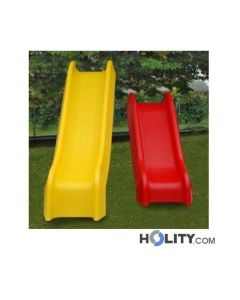
Rotational polyethylene playground slide. Height: 100 cm
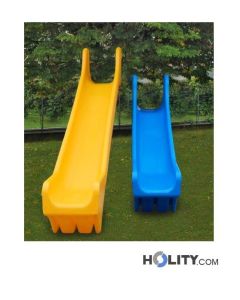
Polyethylene children’s slide available in various colours. Height: 100 cm
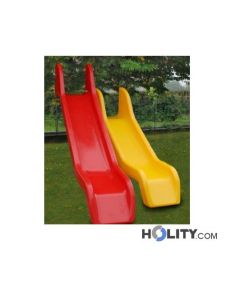
Children’s slide available in various colors. Height 150 cm.
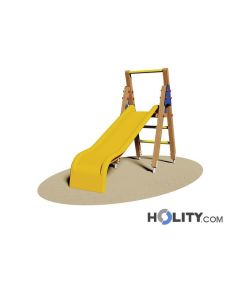
Slide for outdoor spaces of schools, playrooms, for municipal gardens, with wooden climbing ladder.
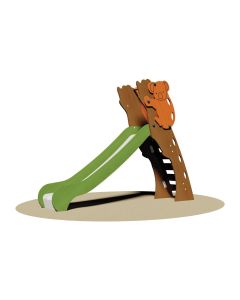
Playground slide for children from 3 to 8 years complete with climbing ladder. Max dimensions: 228x47x172h cm
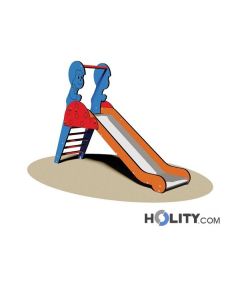
Outdoor slide, for municipal gardens, for playrooms. Height: 80 cm
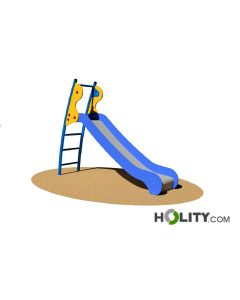
EN 1176 certified slide in electro-galvanized steel and aluminum. Height 98 cm, press-bent track and HDPE side panels for public play areas.
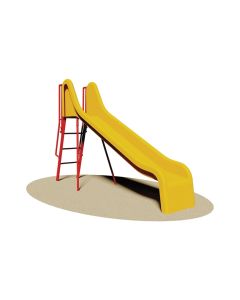
Resin slide ideal for playgrounds or private gardens to ensure children’s fun.
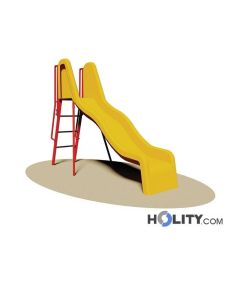
Fiberglass children’s slide, with metal climbing ladder. Fall height: 134 cm.
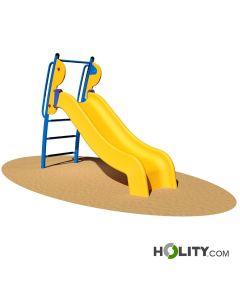
Outdoor slide in electro-galvanized steel and polyethylene, h 98 cm, EN 1176 certified for schools and public parks.
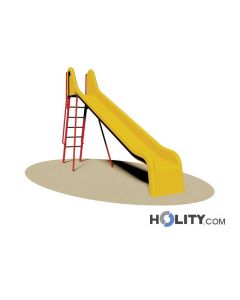
Playground slide in fiberglass with metal climbing ladder. Weight 19 Kg.
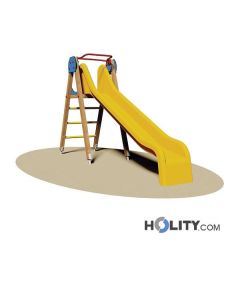
Playground slide with wooden climbing ladder. Height: 125 cm
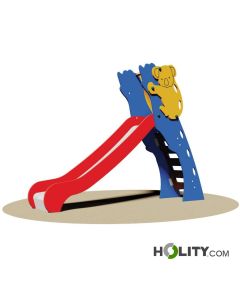
Professional EN 1176 certified slide in HDPE and aluminum, dimensions 228x47x172 cm. Ideal for public parks and outdoor play areas.
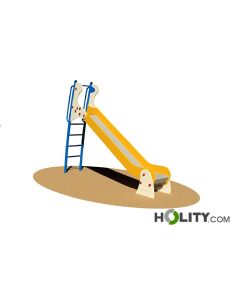
Professional slide compliant with EN 1176 standard, electro-galvanized steel structure and aluminum track h 150 cm. High resistance to atmospheric agents.
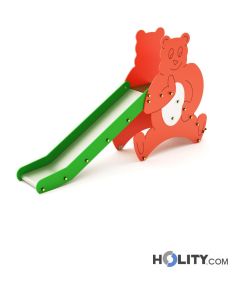
Playground and playroom slide for children from 2 to 8 years old. Overall dimensions: L260 x D46 x H150 cm
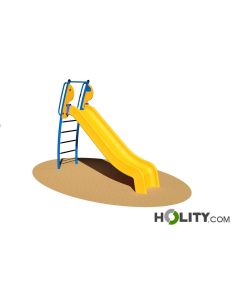
Professional electro-galvanized steel slide compliant with EN 1176 standards. Height 150 cm, track 275 cm. UV and weather resistant.
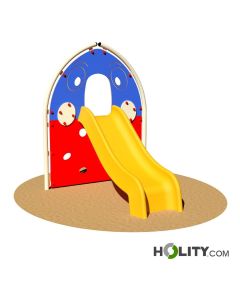
Professional galvanized steel and HDPE slide for public parks. EN 1176 certified, UV resistant, ideal for children aged 2 to 8.
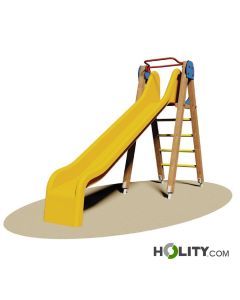
Slide for public parks in pressure-treated Nordic pine and fiberglass, h 150 cm. EN 1176 certified for intensive collective and school use.
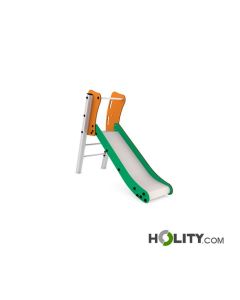
Steel and HPL playground slide, dimensions 236x76x168 cm. Durable structure for soft ground and anti-corrosion components.
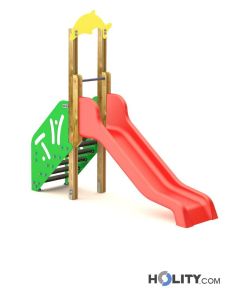
Slide for playgrounds or gardens of schools and playrooms. Number of users: 2. Overall dimensions: L314 x W74 x H265 cm
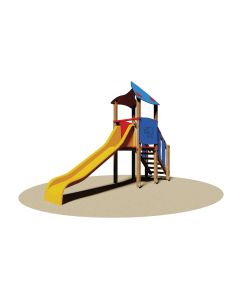
Tower with climbing ladder and slide ideal for playgrounds. Structure made of Nordic pine wood
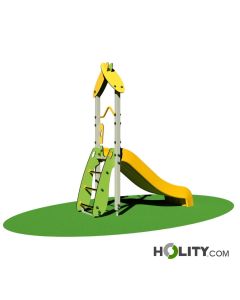
Professional outdoor slide in aluminum and HPL, height 100 cm, EN 1176 certified. Non-slip structure with anchoring for in-ground installation.
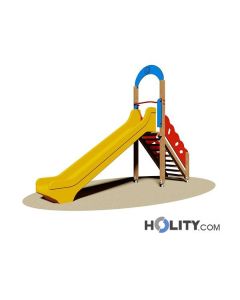
Outdoor slide for schools, playrooms, public gardens. With wooden ladder.
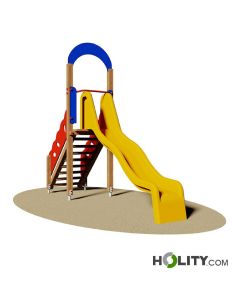
Professional playground slide in Nordic pine and fiberglass, 365x100x307 cm. EN 1176 certified for public and collective use.
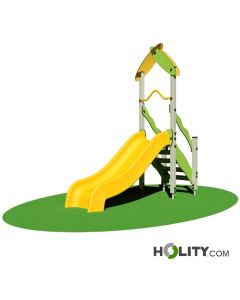
Playground slide in aluminum and HPL, dimensions 240x90x252 cm. UV-resistant structure with EN 1176 certification for public use.
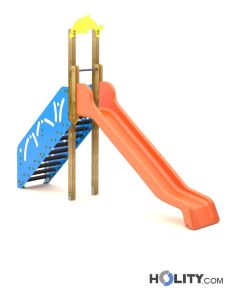
Children’s slide complete with structure and climbing ladder. Overall dimensions: W425 x D74 x H325 cm
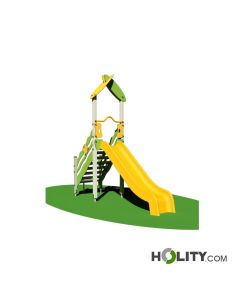
Professional slide h350_416 in aluminum and HPL. EN 1176 certified, 150 cm fall height, ideal for public playgrounds and recreational areas.
Playground slides represent fundamental elements of urban furniture intended for public, school, and recreational spaces. These devices, designed according to international safety standards, combine play functionality with structural durability, offering children stimulating play experiences in controlled environments. The choice of the appropriate model depends on factors such as available space, the age group of the users, local climatic conditions, and the level of routine maintenance. Available in various material configurations—from rotational polyethylene to fiberglass, wood, stainless steel, and aluminum—modern slides integrate aesthetics, ergonomics, and regulatory compliance to ensure safe and long-lasting play experiences over time.
Installing a slide in a public or school space generates tangible benefits for children’s motor and psychosocial development. The activity of sliding stimulates coordination, balance, and body awareness, while providing an experience of immediate fun that encourages the daily use of green areas and outdoor play. From a management perspective, modern slides require minimal maintenance compared to traditional games, thanks to materials resistant to atmospheric agents and mechanical wear. Contemporary solutions include progressive access ramps, anti-slip surfaces designed to ensure optimal sliding in various weather conditions, and ergonomic profiles that reduce joint stress during use. Furthermore, the availability of models in various heights (from 80 cm to over 300 cm) allows for serving different age groups within the same play area, maximizing the utility of the invested space.
Choosing a slide certified according to European standards (EN 1176) represents a strategic investment for public administrations, schools, and managers of recreational facilities, as it significantly reduces the risk of litigation related to injuries and regulatory sanctions. The materials used—polyethylene, fiberglass, galvanized steel—maintain safety and usability characteristics for 10-15 years with scheduled routine maintenance cycles, resulting in a favorable cost-benefit ratio over the medium to long term. Public spaces equipped with well-maintained slides also generate a positive perception of urban quality and institutional dedication to the community’s well-being, increasing the spontaneous use of parks and green areas.
The contemporary catalogue of playground slides is divided into main categories determined by construction materials and structural configurations. Rotational polyethylene slides represent the most economical and versatile solution: made using the rotomolding process, they guarantee structural monolithicity, the absence of critical joints, and ease of installation. Models of this type start from heights of 100 cm and are suitable for children aged 2 to 5, offering gentle curves and soft surfaces. Fiberglass slides, on the other hand, provide a superior sliding surface, greater resistance to intense sun, and the possibility of more elaborate colors; they are particularly suitable for southern climates with prolonged solar radiation. Metal slides (stainless steel, galvanized steel, aluminum) handle greater heights (150-350 cm) and support higher distributed loads, making them ideal for high-density public parks. Nordic pine wood configurations integrate a natural appearance and environmental sustainability, with solid wood climbing ladders or wood-metal combinations.
Other structural variants include slides with themed shapes (airplane, animals, fruit) made of colored polyethylene, particularly effective for playrooms and themed play areas where the aesthetic element amplifies the play appeal. Combined towers—integrated structures that combine stairs, transition platform, and slide—maximize space utilization, allowing for continuous play flows. Modular models allow for configurations adaptable to the dimensions of the available space: some manufacturers offer curved, straight, or spiral ramps, single or multiple, adjustable in inclination. The choice between types reflects a balance between budget, the demographic profile of users (toddlers vs. pre-adolescents), climatic exposure of the site, and the overall design of the play area. Complementary elements—impact surfaces in synthetic rubber or natural mulch, anti-fall side barriers, transition seats—expand the customization portfolio.
Selecting an appropriate slide requires a systematic evaluation of multiple technical and contextual parameters. The fall height represents the first critical decision criterion: defined as the vertical distance from the exit point of the slide to the underlying impact surface, it simultaneously determines the size of the required safety area (often 15-25 square meters for standard models) and the age group served. Children aged 2-4 require maximum heights of 100-150 cm, while pre-adolescents (8-12 years) use structures up to 250-350 cm. The inclination of the ramp affects the sliding speed: angles between 25° and 35° guarantee controlled speed with less risk of stopping, while angles greater than 40° increase adrenaline but require certified anti-slip surfaces and greater stopping space.
The geographical and climatic environment conditions the choice of material: areas with intense UV and extreme temperatures suggest fiberglass or stainless steel over polyethylene, which can soften or discolor. Humid or coastal areas require stainless steel par excellence due to its resistance to salt corrosion. The intended intensity of use points towards robust solutions (metal, fiberglass) for high-traffic public sites, while polyethylene is sufficient for moderately used school areas. Common mistakes include: underestimating the necessary impact space, choosing an excessive height compared to the average motor maturity of users, installation without certified absorption surfaces, and failure to consider inclusive access for children with reduced mobility. Preliminary assessment of regulatory compliance (EN 1176, UNI EN 1177) ensures legal protection and compatibility with local authorization standards.
Playground slides marketed in Europe and Italy must comply with the EN 1176 standard (Playground equipment and surfacing) and the related UNI EN 1177 concerning the technical specifications of impact surfaces. The EN 1176-1 standard establishes general safety requirements and test methods, including structural strength tests, analysis of space margins around the device, and evaluation of entrapment hazards. Every commercial slide must bear CE conformity labeling, a manufacturer’s declaration, and technical documentation certifying the critical fall height, recommended age group (typically 2-12 years with subdivisions), and necessary safety areas. Voluntary quality marks (TÜV, Intertek) provide an additional level of assurance.
From an installation point of view, regulatory requirements prescribe: certified structural fixing to the ground using anchors certified in load capacity, impact surface compliant with UNI EN 1177 with a minimum thickness determined by the specific fall height of the model (generally 200-400 mm for synthetic rubber), perimeter demarcation cord, clear warning signage in the local language, and installation documentation signed by a qualified technician. Annual routine maintenance includes visual inspection for cracks, corrosion, structural movements, checking impact surfaces for sagging or compaction, and formal recording of results. Managing bodies must also draw up a periodic control protocol (generally quarterly-semiannual depending on use) and record any accident or damage, constituting a legal trace of administrative diligence. Italian national regulations (Legislative Decree 81/2008 for prevention aspects) integrate further organizational safety obligations.
Explore all the products in the category and compare the available solutions to find the one best suited to your operational context. Consult the complete technical specifications, certifications, and dimensions to ensure regulatory compliance and maximize the usability of your play area.
For this age group, slides with a fall height between 80 and 120 cm are optimal. These models guarantee controlled sliding speed and offer fall margins that can be reduced to 6-8 square meters with standard impact surfaces. Always verify that the structure is EN 1176 certified and installed on a UNI EN 1177 compliant absorption surface.
Yes, in areas with intense solar radiation, fiberglass maintains superior sliding properties and resists UV degradation better than polyethylene, which can soften or develop sticky surfaces. Polyethylene remains valid in temperate environments with medium use. Stainless steel offers maximum durability but at a higher price point.
The total safety space depends on the critical fall height, generally determined by the manufacturer’s technical verification. For standard models of 100-150 cm, the safety area varies from 12 to 20 square meters, including side, access, and stopping zones. The EN 1176 standard specifies the exact margins based on the model.
Slides with progressive access ramps, transition seating, and side barriers facilitate inclusive use. Low-height models (80-100 cm) with a gentle inclination are more accessible. Check the availability of dedicated lifts or ramps to reach the upper platform, as required by UNI accessibility regulations.
Quarterly visual inspection includes checking for cracks, corrosion, structural stability, and the integrity of the sliding surface. Certified annual maintenance must verify ground anchors, impact surfaces, and signage. Document recording guarantees legal traceability and compliance with diligence obligations.
Stainless steel (duplex or super duplex) is preferable in saline environments as it resists the intrinsic corrosion of salt exposure. Galvanized steel, which is less expensive, requires more frequent annual checks to detect any corrosion points. A specific technical quote from the supplier will dictate the optimal choice for your context.
Treated Nordic pine wood retains good structural properties for 10-12 years, but requires annual checking of fixings, verification of swelling or cracking, and occasional protective treatments. It is more labor-intensive than polyethylene but less critical than galvanized steel in humid environments. Cost and aesthetic appearance compensate for the moderate maintenance.
 English
  Italian
 French
 German
 Spanish