
mon-fri 9-13 / 14.30-18.30

Open wardrobe with clothes rail, upper and lower compartment. Dimensions: W 48.8 x D 60 x H 239.4 cm.

Single wardrobe with door, clothes rail and upper compartment. Dimensions: W 48.8 x D 60 x H 199.4 cm.

Open ward wardrobe with hanging rails and upper compartments. Dimensions: W 93.8 x D 60 x H 199.4 cm.

Wardrobe with door, clothes rail, upper and lower compartment. Dimensions: W 48.8 x D 60 x H 239.4 cm.
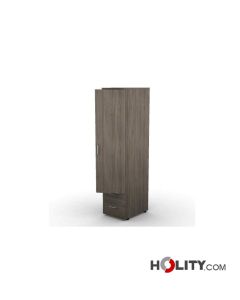
Patient room wardrobe with door, top compartment and 2 drawers. Dimensions: W 45.2 x D 60 x H 199.4 cm.

Open wardrobe with clothes rail, upper compartment and lower compartment. Dimensions: W 93.8 x D 60 x H 239.4 cm
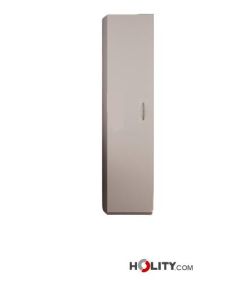
Wardrobe for nursing homes with a single door on the left side. Dimensions: W.50 x D.60 x h.220 cm. Material: melamine.

Patient room wardrobe with 1 right-hand door. Dimensions: W.50 x D.60 x h.220 cm. Material: melamine.

Wardrobe for patient room with hinged doors, 2 hanging rails and upper compartments. Dimensions: W 93.8 x D 60 x H 199.4 cm.
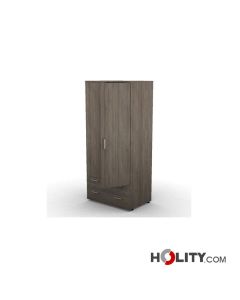
Hospital ward wardrobe with 2 doors, upper compartment and 2 lower drawers. Dimensions: W 90.2 x D 60 x H 199.4 cm.
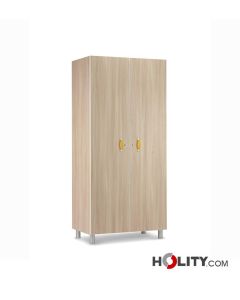
Hospital wardrobe for clinics and hospitals. Material: beech melamine. Dimensions: W.90 x D.56 x h.198 cm.
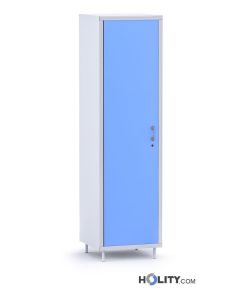
Single-patient ward wardrobe. Dimensions: W.50xD.50xH.190 cm.
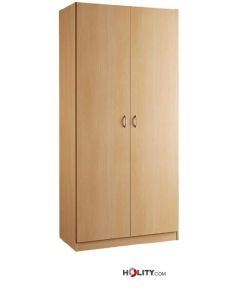
2-door hospital ward wardrobe. Dimensions: W.100 x D.60 x H.220 cm. Material: melamine.

Wardrobe for furnishing patient rooms. Dimensions: W.50 x D.60 x h.220 cm. With 1 left-side door.
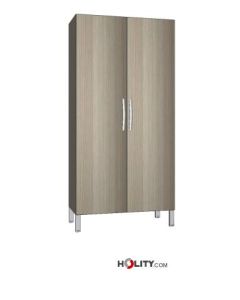
2-compartment wardrobe for hospital and clinic rooms. Dimensions: W.90 x D.55 x h.175 cm. Doors with locks.

Hospital ward wardrobe for clinics with 2 hinged doors. Dimensions: W.100 x D.55 x H.200 cm. Material: PVC melamine.

Hospital ward wardrobe with 2 sliding doors. Dimensions: W.100 x D.60 x h.220 cm. Material: melamine.

Hospital wardrobe for nursing homes. Dimensions: W.100 x D.55 x h.200 cm. With 2 sliding doors.
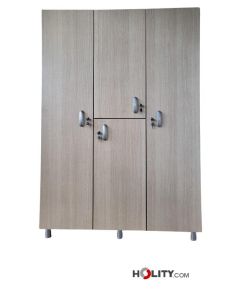
2-person ward wardrobe. Dimensions: W. 135 x D. 56 x h. 200 cm. Material: melamine.
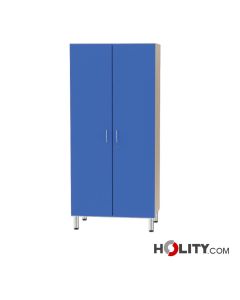
Melamine ward wardrobe with two compartments. Dimensions: W. 90 x D. 54 x h. 185 cm.
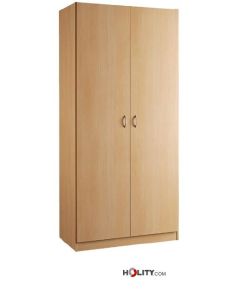
Wardroom wardrobe with 2 hinged doors. Interior divided into 2 compartments. Dimensions: W.100 x D.60 x h.220 cm.
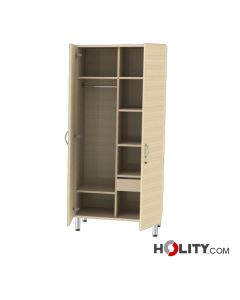
Hospital ward wardrobe with melamine structure and two compartments. Dimensions: W. 90 x D. 54 x h. 185 cm.
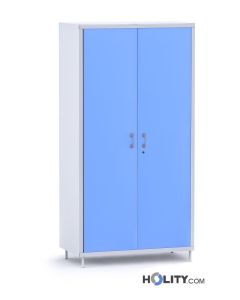
Hospital ward wardrobe for two people. Dimensions: W.100xD.50xh.190 cm.
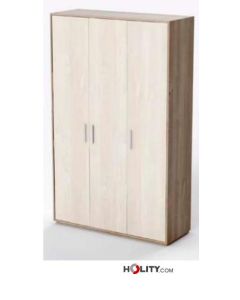
Wardrobe for hospital patient rooms. Dimensions: W.150 x D.55 x h.200 cm. With 3 hinged doors.
Patient wardrobes represent an essential component of hospital and healthcare facility furniture, specifically designed to meet the needs of confined and functionally complex spaces such as patient rooms, internal medicine wards, intensive care units, and nursing homes. These pieces of furniture combine organizational practicality with professional aesthetics, offering storage solutions dedicated to the preservation of patients’ personal clothing, belongings, and medical supplies. Their design takes into account critical aspects such as hygiene, ease of cleaning, durability under intensive loads, and compliance with the structural regulations of healthcare environments.
The inclusion of functional patient wardrobes within hospital rooms directly affects the quality of the stay and the patient’s perception of the healthcare service received. An adequately sized and organized wardrobe reduces the management load on nursing staff, freeing up valuable time to dedicate to direct care. These furniture units facilitate the segregation between clean and dirty personal effects, support infection control protocols, and allow the patient to maintain a degree of autonomy in managing their own spaces. Modern solutions include secure locking systems, adjustable hanging rails, separate compartments for different types of objects, and antibacterial finishes, all elements that contribute to overall well-being and safety in a healthcare environment.
From an operational standpoint, a well-designed wardrobe allows for rapid access to clinical documents and personal effects during shift handovers, reducing search times and improving management efficiency. The available dimensional versatility allows them to adapt to rooms of various sizes, from single rooms to wards with shared beds, ensuring an appropriate solution for every context. Furthermore, many patient wardrobes are made with low-maintenance materials—such as treated melamine or PVC—that withstand frequent sanitization procedures without aesthetic deterioration or structural compromise.
The patient wardrobe market is divided into various configurations to meet the specific needs of different healthcare contexts. There are completely open-front models, without doors, ideal for quick visual monitoring and maximum accessibility during emergencies, usually equipped with hanging rails and upper compartments for functional subdivision. Models with single or double hinged doors offer greater patient privacy and protection of personal belongings, with key lock options for security reasons. Particularly common in hospital environments are wardrobes with sliding doors, which take up less maneuvering space when open and are practical in rooms with limited square footage. Some products include lower drawers, ideal for personal linens or medical supplies, while others feature compartments divided into separate sections to facilitate organization.
From a dimensional perspective, the range spans from single-user models (approximately 50 cm wide) for individual rooms, to double or triple-user solutions (widths 90-150 cm) intended for multi-bed wards. Height typically varies between 175 and 240 cm, affecting overall storage capacity and aesthetic proportion relative to the room height. Predominant materials are beech or birch effect melamine, appreciated for its resistance and ease of cleaning, and pressed PVC, particularly suitable for high-humidity environments such as hospitals and spa facilities. Some manufacturers also offer versions in painted steel or solid wood for contexts where refined aesthetics have equal priority to functionality.
The selection of a patient wardrobe first requires an analysis of the spatial constraints of the room: room depth, door positioning, usable room height, and proximity to other furniture elements (beds, bedside tables, medical equipment). A frequent error is underestimating the depth of the unit compared to the need for door opening: a wardrobe with a depth of 60 cm requires an equivalent amount of free space to fully open the doors without obstructing circulation. Subsequently, the required storage volume must be evaluated in relation to the average length of stay in the facility: short stays (2-5 days) require compact solutions, while medium to long-stay wards (15-30 days) benefit from more spacious wardrobes. The choice between open and closed models depends on the criticality of privacy: psychiatric or geriatric wards generally prefer doors, while intensive care often prefers visible configurations.
A decisive technical aspect concerns the construction material in relation to the intended frequency of sanitization: standard melamine withstands daily cleaning with neutral pH disinfectants, while wards with very high infection risk may require specific finishes resistant to alcohol and hypochlorite. The locking system also deserves attention: handle locks are practical but require regular maintenance, while push-to-open systems reduce contact contamination. The dimensions of the drawers, if present, must be functional for the intended load—personal linens and medical supplies weigh significantly. Finally, customization options should be evaluated, such as the left or right-hand door in single wardrobes, which affect the flow of the staff’s workflow and patient comfort.
Hospital furniture, including patient wardrobes, is subject to a complex regulatory framework that integrates international standards, national directives, and industry guidelines. The Medical Device Directive 93/42/EEC (and the subsequent EU Regulation 2017/745) defines criteria for safety, biocompatibility, and traceability for elements in contact with patients. Although wardrobes constitute furniture rather than a medical device per se, their storage function in a healthcare setting subjects the materials to requirements of non-toxicity, absence of harmful volatile substances, and resistance to aggressive sanitizers. The EN 581 standard (furniture for public use) establishes criteria for mechanical resistance, stability, and structural safety, with specific tests on load capacity, rounded corners, and the absence of dangerous edges.
At a national level, hospital facilities must comply with hygiene standards regulated by the Ministry of Health and regulations regarding the prevention of hospital-acquired infection control, which require easily sanitizable surfaces and the absence of crevices where pathogens can hide. Floors and furniture in isolation rooms or intensive care must pass compatibility tests with broad-spectrum disinfectants—hypochlorite, aldehydes, quaternary ammonium compounds—without undergoing aesthetic deterioration or structural compromise. Many hospitals also adhere to international guidelines such as the AIA (American Institute of Architects) Guidelines for Design and Construction of Hospital and Health Care Facilities, which provide specific recommendations on square footage, access, opening systems, and materials. Critical aspects frequently emerging in operational practice concern certification on fire resistance (class B-s2, d0 according to EN 13823-1), mandatory in some states for furniture in common areas, and the EU Declaration of Conformity (DoC) by the manufacturer.
Explore all the products in the category and compare the available solutions to find the one most suitable for your hospital or care operational context.
A patient wardrobe is a furniture unit intended for hospital and care rooms, designed for the storage of personal clothing and patient belongings. It allows for an orderly segregation between clean and dirty laundry, facilitates the work of nursing staff, and contributes to the hygienic control of the healthcare environment. Typical dimensions vary from 45 cm in width (single-user) to over 150 cm (multi-user).
Open-front wardrobes are completely open, allowing for quick visual inspection and are ideal in intensive care where monitoring is critical. Wardrobes with hinged or sliding doors offer greater patient privacy and protection of personal belongings, taking up less maneuvering space if they are sliding. The choice depends on the type of ward and management priorities.
Beech or birch effect melamine offers good resistance to daily cleaning with neutral pH disinfectants. Pressed PVC is particularly suitable for intensive care units because it withstands alcohol, hypochlorite, and quaternary ammonium compounds without deteriorating. Painted steel is practical for environments where maximum durability and hygiene are required.
Measure the available depth: wardrobes 56-60 cm deep require at least 60 cm of free space to open the doors. Evaluate the usable height of the room and the door position. For narrow or single rooms, prefer single-user models (about 50 cm wide). For wards with multiple beds, choose double-user (90 cm) or triple-user (150 cm) solutions.
Yes. EU Regulation 2017/745 and the EN 581 standard establish criteria for structural safety, biocompatibility, and mechanical resistance. At a national level, hospital facilities must comply with Ministry of Health guidelines on infection prevention, which require easily sanitizable surfaces. Always check the manufacturer’s EU declaration of conformity.
In isolation rooms, prioritize models with PVC or certified melamine finishes for resistance to aggressive disinfecting agents. Prefer sliding doors to reduce frequent contact areas. Ensure there are no crevices or sharp edges where pathogens can hide. Ask the supplier for certification on compatibility with your ward’s specific sanitization protocols.
A single-user wardrobe (50x60x190 cm) offers an average of 0.6-0.8 m³ of useful volume. Models with lower drawers reduce the space available for hanging clothes but facilitate the organization of flat linens and supplies. Double-user wardrobes (90x60x190 cm) double the capacity. The real square footage depends on the internal configuration (rails, dividers, drawers).
Most patient wardrobes are freestanding solutions that are stable thanks to their structural base. However, intensive care units or areas with high seismicity often require wall anchoring for safety reasons. Check the manufacturer’s instructions and local seismic regulations before installation, especially if the furniture houses medical equipment.
 English
  Italian
 French
 German
 Spanish