
mon-fri 9-13 / 14.30-18.30
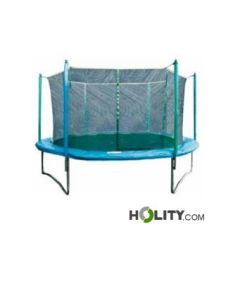
Trampoline with perimetric safety net. Diameter: Ø305 cm.
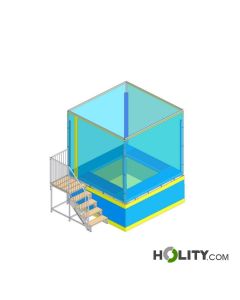
Single outdoor trampoline with galvanized frame, 180 x 180 cm jumping mat and access ladder. Dimensions: W 266 x D 266 x H 352 cm.
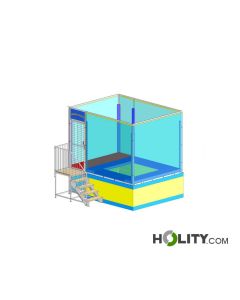
Single trampoline with side corridor, safety net and galvanized structure. Dimensions: 346 x 266 x H 352 cm.
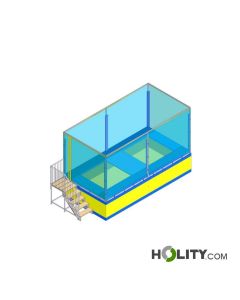
2-station inline trampoline without corridor, galvanized structure and safety netting. Dimensions: 266 x 604 x H 352 cm.
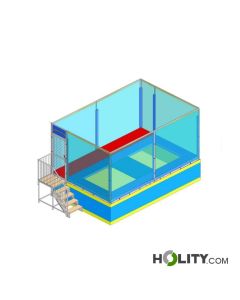
Double trampoline with side corridor and galvanized structure for professional use. Dimensions: 346 x 604 x H 352 cm.
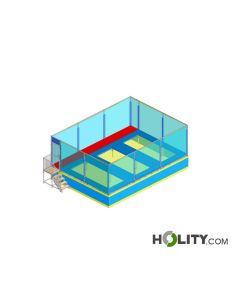
Professional 3-station trampoline in line, with access corridor. Dimensions: 568 x 862 x H 352 cm.
Trampolines for playgrounds represent a consolidated solution in the professional recreational equipment landscape, combining recreational functionality and psychomotor benefits. These tools allow children and young people to develop coordination, balance, and body awareness skills through controlled jumping, while adults find a pleasant and stimulating physical activity. The construction quality, resistance to atmospheric factors, and compliance with international safety regulations are distinctive elements of professional models intended for playrooms, public parks, shopping centers, and private spaces.
The available range spans from compact solutions for home gardens to multi-station modular configurations for commercial and community environments, each designed to handle specific loads and ensure user safety even under intensive use conditions.
The introduction of trampolines in play spaces brings tangible benefits from both a recreational and educational perspective. Children naturally engage in cardiovascular activity, strengthen leg and core stabilizer muscles, while improving spatial perception and sense of balance. Professional equipment reduces the risk of trauma thanks to perimeter protection systems, containment nets, and low-rigidity surfaces, a critical element for playroom operators and managers of public parks subject to civil liability. From a management perspective, an industrial-quality trampoline maintains constant performance over time, minimizing maintenance and replacement costs, a decisive factor for those operating in high-traffic contexts.
Versatility is an often-underestimated aspect: the available models adapt to different geometries, from medium-sized private gardens to linear 2-3 station configurations for shopping centers. This means that choosing a professional trampoline represents a lasting investment, capable of generating constant satisfaction for users and maintaining value over time through resistance to UV rays, freeze-thaw cycles, and corrosion.
The categorization of trampolines is based on three main axes: geometry, capacity, and context of use. Circular models, typically 305 to 427 centimeters in diameter, represent the classic solution for home gardens and playrooms with limited space, with load capacities generally between 100 and 150 kg per single user. Rectangular models, which are larger (460x305 cm, 520x427 cm), guarantee wider jumping surfaces and are ideal for schools, public parks, and recreational centers where high alternating attendance is expected. Professional multi-station configurations (1, 2, or 3 stations with a side access corridor) are intended for commercial operators: single trampolines with 180x180 cm nets, double linear trampolines up to triple configurations 568x862 centimeters long, with galvanized structures and dedicated access ladders.
The construction quality differs significantly: entry-level models use PVC materials with coil springs, suitable for moderate and seasonal use; professional trampolines employ hot-dip galvanized frames, pre-compressed springs, dense-weave technical fabric mats, and net containment systems with a maximum mesh size of 10 mm. The overall height also varies significantly, from 266 cm for standard models up to 352 cm for versions with corridors, determining access comfort and visibility for supervisors in public environments.
Selecting an appropriate trampoline involves a preliminary definition of the intended use, frequency of use, and available space. If the buyer is a manager of a shopping center or playroom, it is essential to evaluate the simultaneous number of users and their age group: single trampolines with a side corridor are suitable for environments where rotation is managed (swimming pools, fitness centers), while double or triple configurations ensure load capacity and jumping surfaces suitable for open public parks. A recurring error is undersizing the structure relative to actual loads or user concentration during peak periods: assuming you are managing a fenced area in a park, a 305 cm diameter model might be insufficient if the available space allows for the installation of a 365 or 427 cm model for the same investment.
Resistance to environmental factors is decisive: if the trampoline remains exposed to rain, direct sun, and freeze cycles, anti-corrosion treatments on the metal frame, UV-resistant mats, and springs protected by PVC or rubber covers are essential. For indoor environments (internal playrooms, shopping centers), this priority decreases. Finally, the perimeter protection system represents a non-negotiable element in public contexts: nets at least 180 cm high, small mesh (max 10 mm), absence of sharp edges, and widespread support handles are requirements that not only guarantee compliance with EN 71-14 standards but also reduce the manager’s legal liabilities.
The European market for trampolines is regulated by the EN 71-14 standard, which specifies requirements for mechanical, dynamic safety, and protection against entrapment hazards. This regulation establishes maximum net mesh sizes (10 mm), minimum distances between metal components, resistance of the jumping mat to cyclic stress, and behavior in the event of spring or structural element failure. Every trampoline intended for the European Union market must be accompanied by a declaration of conformity, CE marking, and an installation and maintenance manual in the local language. Regarding additional certifications, many manufacturers seek TÜV certificates or notified bodies for privileged access to public tenders or sensitive insurance contexts.
From a management perspective, those responsible for playgrounds and playrooms must guarantee periodic visual inspections (monthly for high-traffic environments), check the integrity of the safety net, verify the wear of the jumping mat, and lubricate the springs according to the provided manuals. Photographic documentation of inspections represents a relevant legal defense in case of accidents. Furthermore, many insurance companies require maintenance certifications by qualified technicians at least every 12 months, especially for multi-station configurations where the dynamic load is higher and civil liability is more amplified.
Explore all products in the category and compare the available solutions to find the one best suited to your operational context. From the most compact configuration for home gardens to professional structures for shopping centers, discover models built according to European standards, with certified safety nets and materials resistant to environmental cycles.
Professional trampolines for shopping centers feature hot-dip galvanized frames, pre-compressed springs, and synthetic mesh safety nets with max 10 mm mesh, ensuring durability under intensive use conditions. Domestic models use base materials and are intended for 2-3 occasional users. Professional configurations offer side corridors, access ladders, and a load capacity of 120 kg per person, mandatory for public environments with civil liability.
Professional trampolines already have anti-corrosion treatments on the frame and UV-resistance on the mat. However, during prolonged periods of inactivity (e.g., Northern winter), it is advisable to cover the trampoline with a transparent waterproof cover, check monthly for water accumulation in the safety net, and lubricate the springs according to the manual provided to prevent oxidation.
For playrooms with rotated use (maximum 2-3 children at a time), a 305 cm diameter trampoline is sufficient with a load capacity of 100-120 kg per user. If the playroom involves free access (groups of 5+ children), it is preferable to opt for 460x305 cm rectangular models or 2-station linear configurations, distributing the dynamic load over larger surfaces.
Verify the CE marking and request a copy of the EN 71-14 declaration of conformity. If possible, choose models certified by TÜV or recognized notified bodies in the EU. Ensure that the installation, maintenance, and periodic check manual is available in English and that the manufacturer offers after-sales support for annual inspections.
The minimum space recommended by the EN 71-14 standard is at least 1 meter of free space beyond the perimeter safety net on all sides. For configurations with a side corridor, verify that the access ladder and corridors do not create tripping or entrapment areas. In public environments, also calculate space for the passage of supervisors and emergency responders.
A professional trampoline features: a hot-dip galvanized steel frame (not painted), springs with PVC or rubber protection, a jumping mat with a dense weave (min. 18 threads/cm), a safety net in braided polyester with uniform mesh max 10 mm, no sharp edges, and rubber handles. Check the declared load capacity per single user and the number of jump cycles guaranteed by the manufacturer.
Multi-station trampolines (2-3 stations with corridor) require stable foundations, precise leveling, and assembly of the galvanized frame. It is advisable to entrust the installation to the supplier’s qualified technicians or certified specialized maintenance workers, especially in public environments where civil liability is high and required inspections are more rigorous.
Perform a monthly visual inspection (net, springs, mat), clean the jumping surface, lubricate the springs with specific products every 6 months, and check for water accumulation in covered areas. For high-traffic environments, request a certified annual technical check. Document all inspections for legal protection.
 English
  Italian
 French
 German
 Spanish