mon-fri 9-13 / 14.30-18.30
Industrial furniture constitutes the set of structural and functional solutions designed to organize operational spaces in production environments, workshops, warehouses, and manufacturing plants. These systems are conceived to face conditions of intense and prolonged use, ensuring mechanical resistance, ease of logistics management, and compliance with workplace safety regulations. The conscious choice of appropriate furniture directly affects operational productivity, accident prevention, and the efficiency of material handling within the work environment.
From basic solutions—robust workbenches, specialized trolleys, metal containers—to more complex systems such as containment basins, storage for dangerous substances, and climate control equipment, the offer covers the entire spectrum of operational needs. The size of the investment in industrial furniture reflects not only logistical aspects but represents a comprehensive business risk management strategy and optimization of workflows.
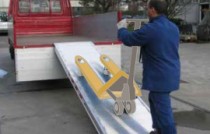
The adoption of appropriate industrial furniture solutions generates measurable and tangible operational benefits. Spaces organized through dedicated systems significantly reduce the time spent handling and finding materials, minimize picking and storage errors, and allow for more effective visual supervision of available resources. In contexts where frequent manipulation of components, drums, or bulk materials is recurrent, the use of professional trolleys, specialized pallets, and allocation systems represents a concrete response to the needs for logistical fluidity and accident prevention.
Properly structured industrial environments see a decrease in hidden costs resulting from damage to goods, losses, inventory errors, and accidents generated by disorder, poor lighting, or a confused layout. In addition to the direct economic aspect, modern industrial furniture adapts to heterogeneous sectors: from mechanical workshops to the chemical industry, from the storage of dangerous fluids to the management of delicate components requiring controlled environments. The choice of solutions compliant with current regulations ensures proactive and transparent risk management, protecting the company from legal liabilities and creating a context where operators develop awareness of their personal safety.
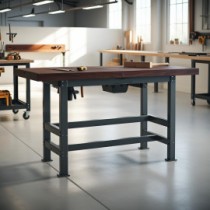
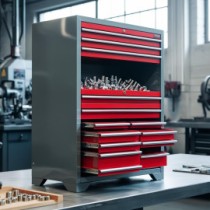
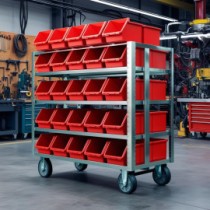
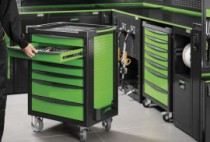
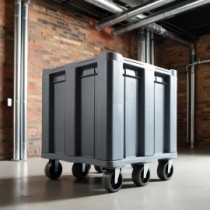
The industrial furniture catalog covers very different categories, each oriented towards solving specific operational needs. Workbenches and workshop trolleys represent the fundamental solutions for the assembly, repair, and preparation of components and machinery. Made of solid steel, painted, or equipped with solid wood worktops, these furnishings guarantee structural stability even under significant loads and intense cycles of use. Modular cabinets for small parts allow for the vertical organization of screws, bolts, small components, and spare parts in cataloged drawers, optimizing vertical space and accelerating the location of materials. Small parts trolleys, on the other hand, combine mobility with storage capacity, solving the problem of distributing small materials between different workstations without operational interruptions.
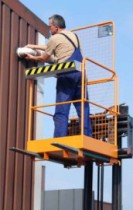
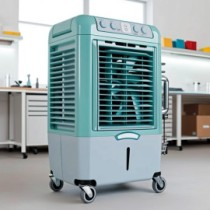
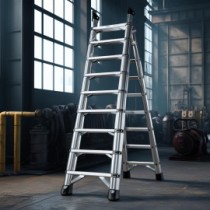
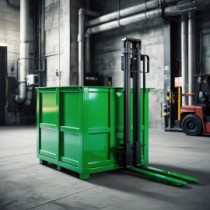
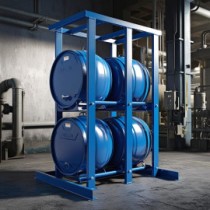
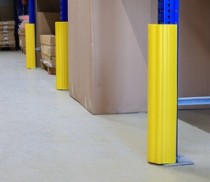
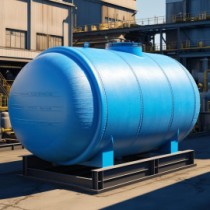
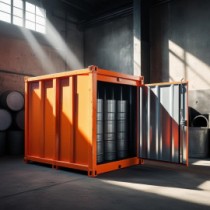
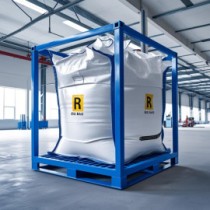
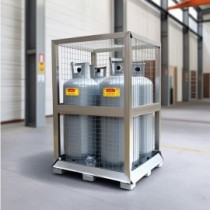
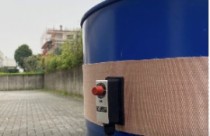
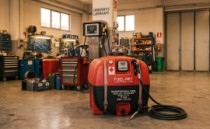
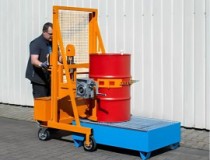
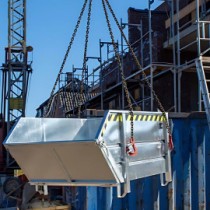
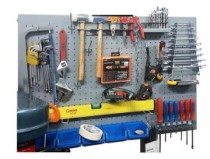
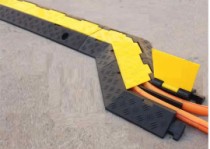
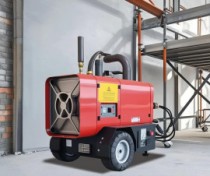
For specialized handling and containment, industrial cargo pallets, containment basins for hazardous liquids, and metal containers respond to the needs for safe transport and compliance with environmental and safety regulations. Caged ladders, telescopic ladders, and ladders dedicated to agriculture satisfy vertical access needs while ensuring stability and fall protection. Systems such as drum boxes, drum supports, and specialized storage for gas cylinders are designed for the containment of hazardous materials according to current regulatory provisions. Complementary equipment such as industrial scales, coolers, hot air generators, tool holder panels, cable ducts, and corner guards complete the spectrum of organizational solutions available for complex production environments.
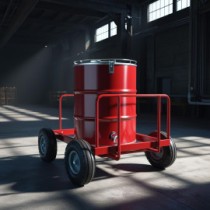
Selecting the correct industrial furniture requires a preliminary assessment of the available space and the characteristic operational dynamics of the specific environment. The first decision criterion concerns the type of activity: a mechanical workshop has structurally different needs from a chemical warehouse, an assembly laboratory, or a bulk material storage. Concrete and precise questions must be formulated: which materials and components will be moved regularly? What is the average weight of individual units? What frequency of access is foreseeable? The answer to these questions leads towards specific and dimensioned solutions. If handling drums is frequent, specialized trolleys and containment basins become indispensable; if the workflow requires frequent searching for small parts, cabinets with cataloged drawers represent a rational and measurable investment.
A recurring error is underestimating the aspect of operational scalability: since workspace and production evolve over time, the chosen furniture must possess a certain modularity and expansion capacity. Workbenches with adjustable supports, expandable drawers, and modular containment systems offer flexibility in the medium and long term. Another critical factor concerns regulatory compliance: not all industrial furnishings possess the same safety and certification characteristics. Caged ladders, containment basins, and storage for dangerous substances must comply with precise and verifiable standards. Before purchasing, it is prudent to check the product certification, permissible load specifications, actual dimensions, and compatibility with the space layout. Furthermore, consider long-term maintenance costs: materials such as stainless steel or anti-corrosion treatments require higher initial investments but guarantee longevity in hostile or humid environments.
Industrial furniture is subject to a complex regulatory framework that varies according to the type of equipment and the specific sector of use. The main reference is Legislative Decree 81/2008 (Consolidated Law on Occupational Health and Safety), which defines the minimum requirements for safety in work environments, including the correct organization of space and the suitability of the equipment used. Portable and caged ladders must comply with the UNI EN 131 standard, which specifies static and dynamic load tests and stability criteria. Containment basins for hazardous liquids must comply with the environmental and safety provisions provided by the ATEX directive in contexts with a potential risk of explosion.
Specialized containers and storage for pressurized gases must comply with the regulations on the storage and safety of hazardous substances. Further requirements emerge from the specific sector of application: in the pharmaceutical or food sector, the furnishings must guarantee certified hygiene and ease of sanitization; in chemical contexts, resistance to corrosives is a fundamental and verifiable parameter; in port or outdoor environments, resistance to atmospheric agents and marine corrosion is a priority. Most specialized suppliers of professional industrial furniture provide complete technical documentation with CE declarations of conformity and guaranteed load specifications. Before acquisition, it is advisable to verify that the product has the CE marking where required by law, and that the accompanying documentation clearly indicates operational use limits, detailed assembly and maintenance instructions, as well as relevant safety data for the specific operational context.
Explore all products in the category and compare available solutions to find the one best suited to your operational context.
Industrial furniture includes workbenches, trolleys, containers and storage systems designed for production environments and warehouses. It serves to organize the workspace, facilitate the safe movement of materials, keep components in catalog order and ensure the operational safety of workers, reducing search times and the risk of injury.
An industrial workbench is built of solid steel or solid wood to withstand heavy loads and intense daily use, with reinforced tops and certified structures. General workbenches are lightweight and suitable for occasional use, not certified for high-intensity operational environments and do not guarantee stability under prolonged stress.
Containers must comply with ATEX regulations if the environment has an explosion risk, show chemical resistance to the stored liquid, and have underlying containment basins. Always check the CE certification, material compatibility specifications, and maximum allowed load capacities according to the technical documentation.
Portable and caged ladders must comply with the UNI EN 131 standard, which certifies resistance to static and dynamic loads. In environments with specific risks, ladders for agriculture or heavy industry follow further technical standards relating to structural stability and fall protection during use.
Yes, because it allows for adaptation to production changes without a total replacement of the system. Adjustable benches, modular trolleys, and expandable drawer systems reduce future reorganization costs, ensuring operational flexibility and superior economic return in the medium-to-long term.
Choose CE-certified products, check maximum load specifications, install caged ladders for high access, use containment basins for hazardous liquids, and keep evacuation routes free of obstacles. The supplier’s technical documentation must clearly indicate limits of use and preventive maintenance procedures.
Many solutions are modular and configurables: benches with adjustable drawers, modular tool panels, and specialized trolleys adapt to specific layouts. Contact the supplier with precise data on the available space and operational dynamics to receive proposals tailored to your context.
Stainless steel, anodized aluminum, and treated solid wood resist atmospheric agents and chemical corrosives. Avoid raw steel without protection in humid contexts. Always check the specific compatibility of the material with the substances present in the work environment before purchasing.
 English
  Italian
 French
 German
 Spanish