
mon-fri 9-13 / 14.30-18.30

Oxygen cylinder trolley with adjustable handle, 2 wheels Ø60mm, cylinder capacity Ø150mm, acrylic powder coated, 4 kg, 5-year warranty.
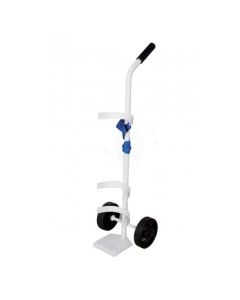
10/14L oxygen cylinder trolley for healthcare facilities. Painted steel, 2 rubber wheels, securing strap, 60kg capacity, Made in Italy.

Hospital gas cylinder transport trolley Ø180 from 10-14 L, 2 non-marking 150 mm wheels, restraint strap, ergonomic non-toxic gray rubber handle.

Trolley for hospital cylinders Ø180 (5-7L), epoxy powder coating, 2 non-marking wheels Ø150mm, containment strap, 60kg capacity.

Oxygen cylinder trolley for hospital facilities, painted metal structure, 2 non-marking wheels, locking strap, load capacity 60 kg.

Hospital cylinder transport trolley Ø210 for 15/20L, 2 non-marking 150mm wheels, containment strap, rubber grips, 60kg capacity.
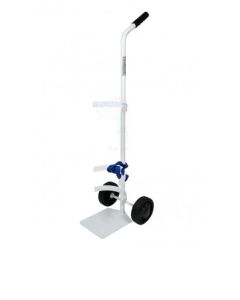
Oxygen cylinder trolley in painted steel with 3 containment rings, 2 rubber wheels, fastening straps. For 5/7/14 lt cylinders, capacity 60 kg.
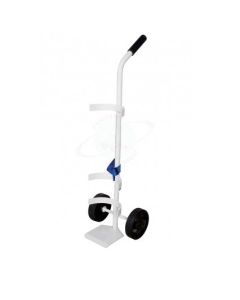
Portable oxygen cylinder trolley with Ø150 mm rubber wheels, acrylic paint, 40 kg capacity, CE compliant.
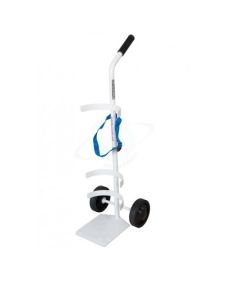
Single-cylinder holder in painted steel for healthcare facilities and home care. Ø150 wheels, CE compliant, Italian production.
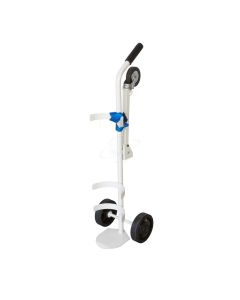
Trolley for 150 mm cylinders with three wheels, tightening straps and stable structure for healthcare environments. Weight 4 kg, acrylic coating, CE compliant.

Hospital trolley for 40/50 l oxygen cylinders, steel structure, solid rubber wheels Ø200mm, ergonomic handle, safety chain, load capacity 100kg.
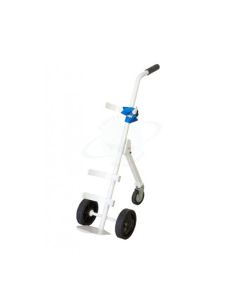
Oxygen cylinder trolley with 3 convertible wheels, ergonomic handle and tightening strap. For Ø 160 mm cylinders, weight 4 kg, RAL 9010 white coating.

Oxygen cylinder trolley with painted steel structure, 5 wheels Ø50 mm, safety belt, for 10/11 liter cylinder, capacity 25 kg.
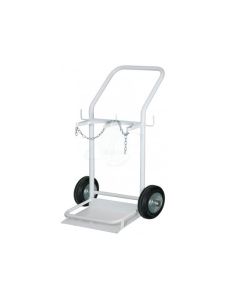
Painted steel hospital trolley for transporting two Ø160 oxygen cylinders, solid rubber wheels, Italian production, CE compliant.
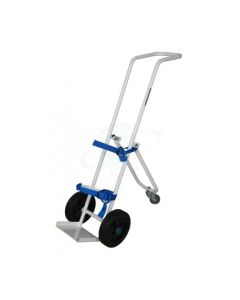
Sanitary oxygen cylinder holder 10/14 lt, 3 convertible wheels, capacity 100 kg, for Ø160 cylinders.
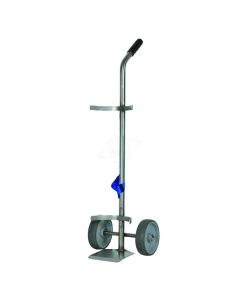
AISI 304 stainless steel trolley for hospital oxygen cylinder transport, 2 rubber wheels, capacity 3 cylinders, dimensions 290x960h mm.
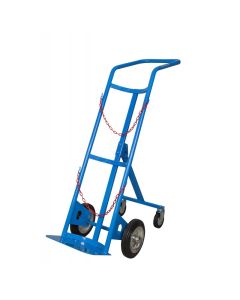
Single-cylinder 40/50 liter convertible gas bottle trolley, 4 wheels (2 solid rubber Ø200mm, 2 swivel Ø100mm), loading plate 320×220mm, weight 14kg, acrylic painting, CE compliant.
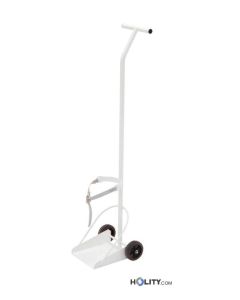
Epoxy steel oxygen trolley for cylinders up to Ø110 mm. Stable structure with strap and Ø100 mm wheels. Ideal for hospitals and clinics.
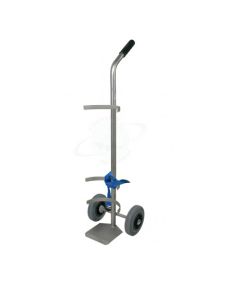
AISI 304 stainless steel oxygen cylinder holder for Ø160 cylinders, with 2 Ø150 non-marking wheels and securing strap. Ideal for healthcare facilities.
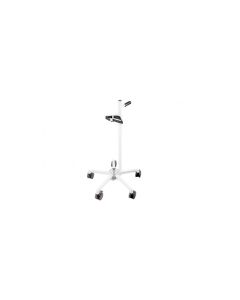
Oxygen cylinder transport trolley in steel and aluminum, 5 wheels Ø50mm, max load 25kg, safety belt.
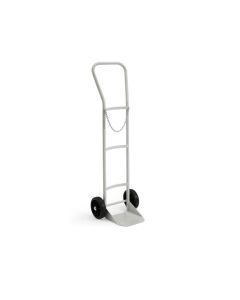
Epoxy-painted steel cylinder trolley, capacity 80 kg for cylinders up to Ø 250 mm. Ø 200 mm wheels for hospital handling.
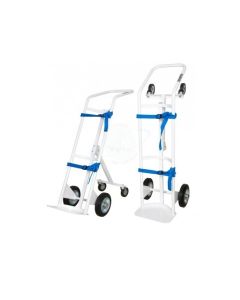
Single-seater oxygen cylinder trolley for healthcare environments, Made in Italy steel structure, 4 wheels, suitable for Ø250 cylinders, weight 14 kg.
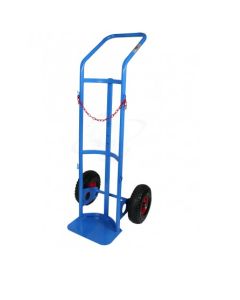
Single-cylinder oxygen trolley with 2 pneumatic wheels Ø260, containment chain, central bar, capacity 40/50 lt. For healthcare environments.
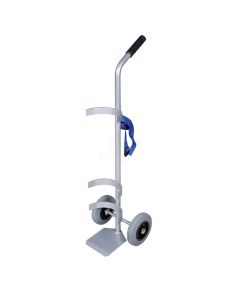
Anodized aluminum trolley for transporting hospital oxygen cylinders. 2 wheels 150mm, plate 150x150mm, 290x960h mm, 3kg.
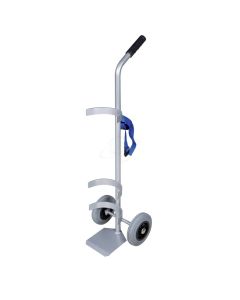
Transport trolley for 5/7 l oxygen cylinders in anodized aluminum, 2 rubber wheels, CE compliant, for healthcare facilities and home care.

AISI 304 stainless steel hospital trolley for Ø160 (5/7 L) oxygen cylinders, with 2 Ø150 mm non-marking wheels, containment strap and ergonomic handle.
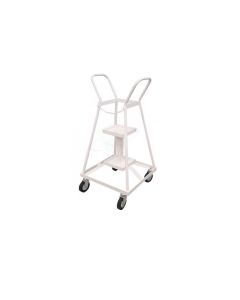
4-wheel gas cylinder trolley, raised plate with containment edge, ergonomic push handles, 60 kg capacity, Made in Italy.

4-wheel transformable oxygen cylinder trolley, with parking brake, acrylic coating, and double strap. Suitable for Ø250mm cylinders, 100kg capacity. CE compliant.
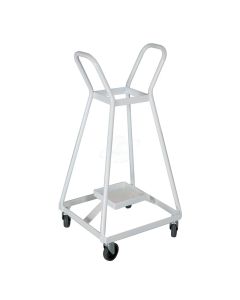
Transport trolley for 10/14 lt oxygen cylinders, painted structure, 4 rubber wheels, for hospitals and home care.

Convertible painted steel cylinder trolley for Ø 250 mm cylinders. 4-wheel system with 100 kg capacity and double safety strap.
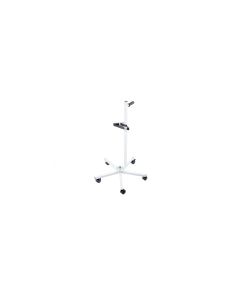
Steel oxygen cylinder handling trolley, 25 kg capacity, Ø75 mm wheels, for hospitals and home use.
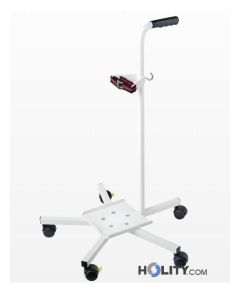
Stainless steel cylinder trolley for 10-liter O² cylinders. Twin wheels Ø50 mm, anchoring strap, EN 60601 compliant.

Medical trolley for 5/10 L oxygen cylinders, powder-coated steel, 5 lockable double wheels, ergonomic handle, CE certified.
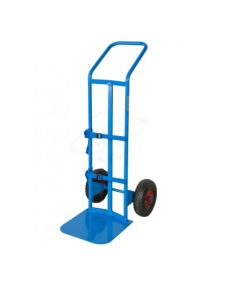
Oxygen cylinder trolley with double strap, central bar, 2 pneumatic wheels Ø260, acrylic coating, load capacity 100 kg.
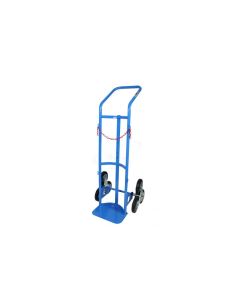
Single gas cylinder holder Ø250 for 40/50 lt capacity with 6 industrial rubber wheels on a rotating star, curved back and red chain. Load capacity 100 kg, CE compliant.
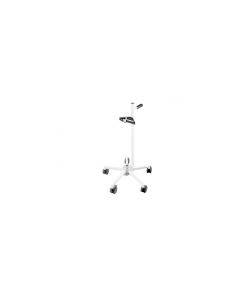
Medical trolley for oxygen cylinders, steel-aluminum structure with safety belt, 5 conductive wheels (2 lockable), capacity 25 kg, height 930 mm.
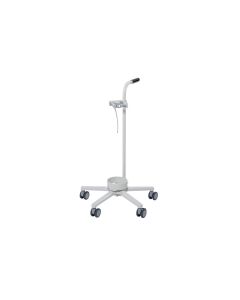
10L oxygen cylinder trolley with painted steel structure, Ø150mm ring, ergonomic handle, 5 double wheels Ø65mm (2 lockable). CE certified.
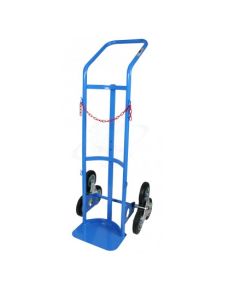
Oxygen cylinder trolley for hospitals and clinics, Ø250 capacity, 6 smooth-running wheels for stair transport, 40/50 lt capacity.

Professional steel cylinder trolley, convertible to 4 wheels for Ø 250 mm cylinders. 100 kg capacity, non-marking wheels and double safety.

Double steel gas cylinder carrier with 2 solid rubber wheels Ø200mm, safety chain and tool box. Capacity 40/50 lt, load capacity 200 kg. CE compliant.

Epoxy steel trolley for oxygen cylinders, mixed wheels, support belt, dim. 43×70×95 mm. For medical environments.

Two-seater gas cylinder holder for 40/50 liter gas cylinders. Painted steel, 2 fixed wheels Ø200 mm + 2 swivel wheels Ø125 mm, load capacity 200 kg, chain containment system, integrated toolbox.
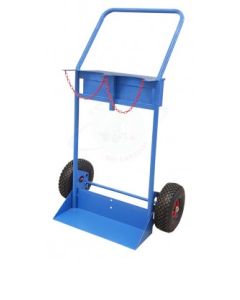
Steel double cylinder trolley for 40/50 lt compressed gases. Ø300 mm pneumatic wheels, toolbox, safety chain, CE compliant.

Two-seater steel cylinder holder for the safe transport of 40/50 liter gas cylinders. Solid wheels, safety chain, integrated toolbox, 200 kg load capacity.

Double-cylinder steel trolley for transporting 40/50 lt cylinders, Ø 300 mm pneumatic and swivel wheels, ergonomic handle, CE compliant.
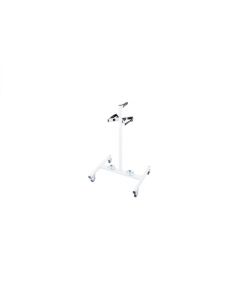
Painted steel hospital trolley for 2 oxygen cylinders 10/11L, with safety belts and 4 lockable galvanized wheels, suitable for transport in clinics and nursing homes.

Double steel trolley for 40/50 l cylinders. Puncture-proof wheels, electro-welded structure and safety chains for industrial and medical use.

Steel cylinder trolley for oxygen and propane, with tool box, 2 wheels Ø300mm, safety hitch with red chain, CE compliant.
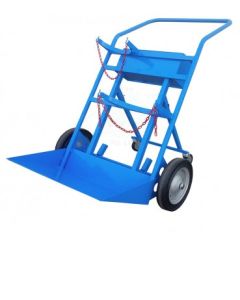
Professional electro-welded steel cylinder trolley, 820x1250 mm. 4-wheel convertible system for safe transport of oxygen and LPG.

Hospital oxygen cylinder trolley in painted steel, for 10 L cylinders, with safety strap and conductive wheels Ø 150 mm.

LPG and oxygen cylinder transport trolley, epoxy painted steel, 400 mm wheels, 150 kg capacity, CE compliant.
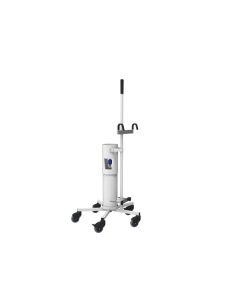
Oxygen cylinder transport trolley, suitable for 5-10L, adjustable height, wheels, 11kg capacity.

Medical steel trolley for safe transport of 2 oxygen cylinders (10/11 liters), with safety belts, 4 conductive wheels and compact structure for narrow hospital spaces.
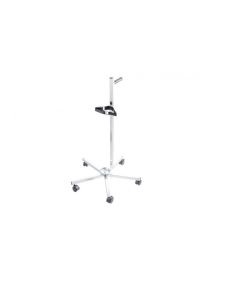
Stainless steel oxygen cylinder trolley, 5 conductive wheels, compatible with 10-11L cylinders, max load 25kg, safety belt fastening.
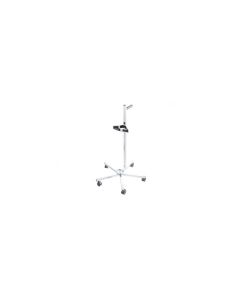
Trolley for 10-11L oxygen cylinders in brushed stainless steel, 5 wheels, safety belt, max load 25kg, hospital and private use.

Hospital trolley for 15 oxygen cylinders (9 small + 6 medium), 200 kg capacity, non-marking rubber bumpers, braking wheels, CE compliant.
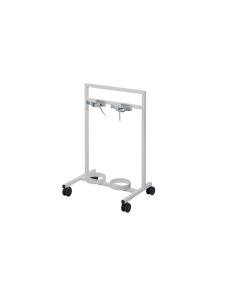
Steel trolley for transporting 2 oxygen cylinders 10L, with safety straps, cylinder holder rings and 4 lockable double wheels.
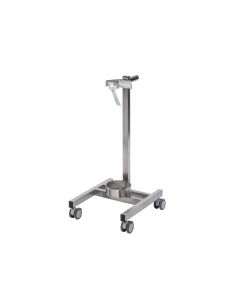
Stainless steel hospital trolley for safe transport of 10L oxygen cylinders, with strap and lockable wheels.
Oxygen cylinder trolleys represent an essential solution in healthcare, hospital, and home care environments. These devices facilitate the safe and easy transport of cylinders, ensuring stability during movements and protection of the cylinder from accidental impacts. The choice of an appropriate trolley depends on multiple factors: the volume of the cylinder, the frequency of use, the available circulation spaces, and the regulatory compliance requirements of the destination environment. An appropriate trolley reduces operational risks for healthcare personnel and extends the useful life of the cylinders themselves.
The offering includes versatile models, from single-unit trolleys for standard cylinders to convertible and dual-position solutions for specific needs. All products maintain high quality standards, with corrosion-resistant materials and certified finishes for healthcare environments.
Oxygen cylinder trolleys offer significant operational advantages in medical environments. The mobility guaranteed by robust wheels and ergonomic structures allows personnel to transport cylinders without excessive fatigue, reducing the risk of accidents and improving department logistics management. Furthermore, these devices keep cylinders in an upright position or at the correct angles, preventing instability situations that could compromise the integrity of the valve or encourage gas leaks. Structural stability is essential to ensure the patient’s therapeutic continuity and personnel safety.
From a practical standpoint, a well-designed trolley also facilitates access to the cylinder’s adjustment controls, allowing nursing staff to monitor and regulate the oxygen flow rate without difficulty. Models with tightening straps or integrated fastening systems prevent unwanted movements during transport, especially when moving on irregular ground or through hospital corridors. Investing in an appropriate trolley translates into a reduction in handling times, better organization of space, and more conscious compliance with hospital safety standards.
The catalog includes several categories of trolleys, each designed for specific cylinder capacities and contexts of use. Standard single-unit models for 5/7 liter cylinders represent the most common solution in clinics and small-to-medium-sized facilities. These trolleys maintain compact dimensions (generally around 300x250 mm at the base) and variable heights between 600 and 1100 mm, ensuring agility when moving in narrow corridors and restricted rooms. Anodized aluminum and stainless steel trolleys offer corrosion resistance, a fundamental characteristic in high-humidity environments. Alongside these, there are models for larger volume cylinders (10/14 liters and 40/50 liters), equipped with more robust structures and higher capacities, up to 100 kg, suitable for high-intensity use departments.
A particular category is represented by convertible trolleys, which transition from a single-unit to a 4-wheel configuration, expanding the support base and improving stability on irregular ground or during prolonged movements. Dual-position models, instead, allow for the simultaneous transport of two cylinders, a solution appreciated in combined therapy contexts or in anesthesia departments. Some trolleys include integrated straps, sized load plates, and patented fastening systems; others feature wide-based stands for even more marked passive stability. The choice of configuration depends both on the number of cylinders needed simultaneously and on the architectural characteristics of the facility.
The selection of a cylinder trolley requires a preliminary analysis of critical parameters. Firstly, it is necessary to identify the diameter of the cylinder: models are generally calibrated for cylinders of Ø 110 mm, Ø 150-160 mm, Ø 180-200 mm, and Ø 210 mm. An incorrect measurement involves the risk of instability or impossibility of fastening. Secondly, the volumetric capacity of the cylinder (5, 7, 10, 14, 20, 40, 50 liters) influences the choice of structure: larger volume cylinders require trolleys with a wider base and higher capacity to guarantee balance. A frequent mistake is underestimating the need for safety margins on the declared capacity: it is advisable to choose trolleys with a capacity 20-30% higher than the actual load.
The third fundamental aspect is the environment of use: environments with high humidity or exposure to acid vapors require corrosion-resistant materials, such as AISI 304 stainless steel or anodized aluminum, rather than simple epoxy paint. The frequency of use influences the choice between models with solid rubber wheels (for high durability) or pneumatic wheels (for better vibration absorption). In restricted spaces, such as patient rooms or small clinics, single-unit trolleys with a square base (approx. 300x300 mm) prove to be more manageable. For departments with high movement and wide corridors, 4-wheel convertible trolleys guarantee superior versatility, reducing staff fatigue during long transports.
Oxygen cylinder trolleys intended for healthcare facilities must comply with recognized technical standards at the European level. Directive CE 93/42/EEC, applicable to medical devices, establishes minimum safety and performance requirements. In particular, trolleys must be constructed with biocompatible materials or those certified for use in medical environments, free of toxic paints and easily sanitized. The ISO 14855 standard and specific protocols for hospital devices include stability, mechanical resistance, and compatibility tests with standard fastening systems. Many Italian manufacturers operating in the medical-healthcare sector declare compliance with the EN ISO 1811 standard (trolleys for hospital use) and undergo periodic audits by independent certification bodies.
Critical aspects of compliance include the breaking load of the tightening straps (generally not less than 500 kg), the minimum diameter of the wheels (at least 150-200 mm to ensure the overcoming of obstacles), and static stability, tested according to protocols that involve tilting the base up to 15 degrees without tipping. Public and private hospital structures, during the purchasing phase, frequently request test certificates and declarations of conformity signed by the manufacturer. Routine maintenance includes periodic checks of the fasteners, lubrication of the wheel pins, and verification of strap integrity, aspects that must be documented to maintain the product warranty validity.
Explore all products in the category and compare the available solutions to find the one most suitable for your operational context. Carefully consider the cylinder diameter, volumetric capacity, construction materials, and destination environment for a conscious and long-lasting choice.
A single-unit trolley has a fixed structure, ideal for transport over short distances and in restricted spaces. A convertible trolley transitions from an initial configuration (generally 2 wheels) to one with 4 wheels, increasing stability and the support base for longer movements. The choice depends on the frequency of use and the distances to be covered.
The diameter of the cylinder is measured at the widest part of the cylinder, using a caliper or a flexible tape measure. Standard models on the market cover diameters from 110 mm up to 250 mm. Always verify this dimension before purchasing: an error leads to instability and impossibility of fastening.
AISI 304 stainless steel is the best choice for environments characterized by high humidity, acid vapors, or exposure to corrosive substances. Anodized aluminum represents a lighter alternative. Epoxy-painted steel is suitable for standard medical environments but requires more frequent maintenance.
For a 40-50 liter cylinder (weight between 60-80 kg), a trolley with a declared capacity of at least 100 kg is recommended, including a 20-30% safety margin. This prevents assessment errors and ensures stability even with prolonged use or accidental impacts.
Yes, routine maintenance includes monthly checks of straps, wheel pins, and fixing screws, as well as bearing lubrication. A well-maintained trolley has a lifespan of 5-8 years. Hospital facilities must document maintenance interventions to ensure regulatory compliance.
No, quality anodized aluminum (such as 6061-T6 aircraft-grade aluminum) offers stability equivalent to steel, with the advantage of being lighter, facilitating manual transport. Stability depends on the base geometry and the position of the center of gravity, not the material.
It depends on the diameter: if the cylinder fits into the fastening compartment without sliding, the trolley can also accommodate cylinders of different gases (nitrogen, nitrous oxide). However, it is advisable to check with the manufacturer and always comply with the specific safety regulations for each medical gas.
 English
  Italian
 French
 German
 Spanish