
mon-fri 9-13 / 14.30-18.30
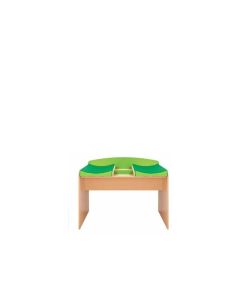
Double changing table in melamine-faced wood conglomerate (E1), birch, for nurseries. Two changing stations, 138.5×70 cm, top height 92 cm, total height 110 cm. Designed for mats.
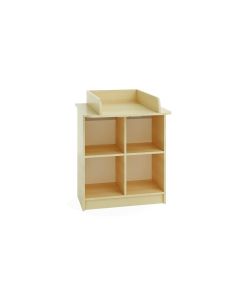
Open wooden changing table in birch melamine wood, 77x70x100h cm, with open shelves for accessories. Can be equipped with optional mattress and ladder.
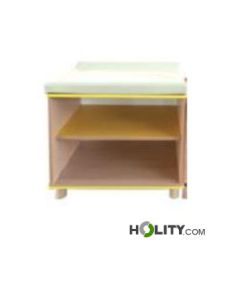
Changing table for nursery school in beech melamine. Dimensions 80x50x80 cm, 2 shelves, foam mattress, ABS and rubber edges for safety.
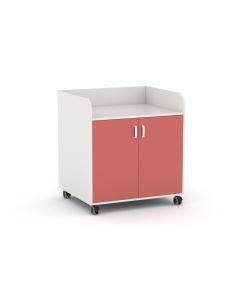
Professional changing table h979_03 in 19mm melamine, 90x75x98 cm. Structure on wheels with anti-trapping safety hinges for nurseries.
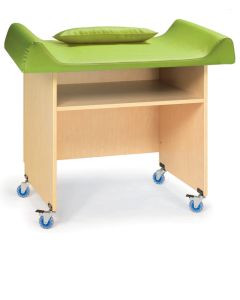
Two-seater wooden changing table with lower shelf and 4 swivel wheels. Dimensions W140 x D74 x H86 cm. Ideal for nurseries and playrooms.
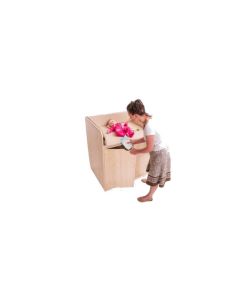
Changing table cabinet with padded top and safety rails. Maple melamine wood structure, 6 adjustable shelves, dimensions 76x100x108 cm.
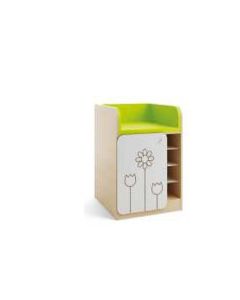
Mobile changing table for nursery schools in melamine-faced chipboard, polyurethane padding, waterproof faux leather, open compartments and 2 MDF doors. 67x75x100h cm.
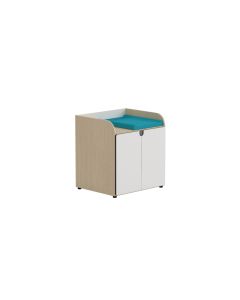
Professional changing table for nurseries and playrooms, Nordic finish, 90x75x95 cm. Sturdy structure delivered already assembled for intensive use.
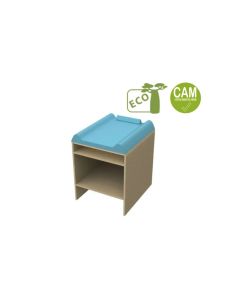
Compact changing table h364_73 in FSC chipboard, 65x75x85 cm. Fire-retardant structure with 2 open shelves for nurseries, kindergartens, and pediatric clinics.
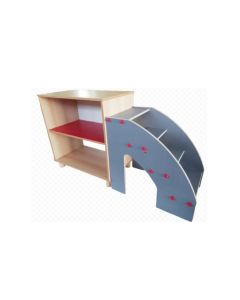
Changing table cabinet in beech melamine for nurseries and preschools. Dimensions 80x50xh85 cm, gray side ladder, ABS rounded edges, sponge changing mat.
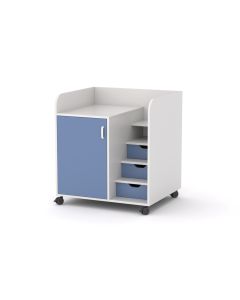
Professional changing table with integrated stairs, white and talc blue structure, dim. 90x75x98 cm. Ideal ergonomics for nurseries and preschools.
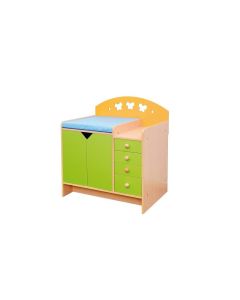
Wooden changing table for nurseries with 4 drawers, compartment with shelf and washable PVC mat. Butterfly decoration, H 84 cm.
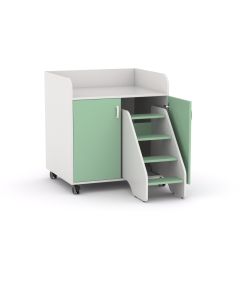
Professional changing unit h979_02 in melamine with integrated pull-down stairs, braking wheels and large storage compartments for nurseries and schools.
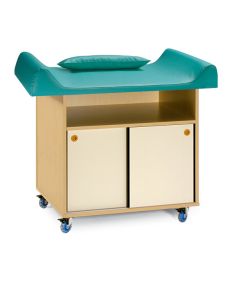
Wooden changing table with ABS edges, lower cabinet and 4 swivel wheels. Dimensions W100 x D74 x H86 cm. Ideal for nursery schools and playrooms.
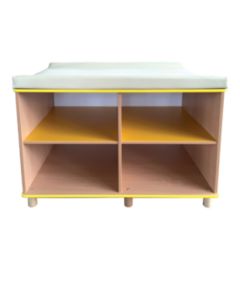
Mobile changing table for nurseries and preschools in melamine wood with safe edges, 4 storage compartments and padded changing mat. 125x75x85 cm.

Single-seater changing table in beech melamine wood with 90x75x15 cm padded top. Waterproof structure with rounded ABS edges, safety system shelves with spring pins, adjustable feet. Made in Italy.
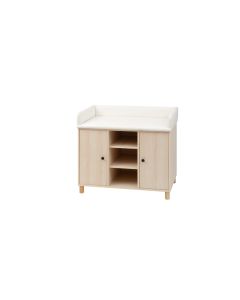
Professional changing table for nurseries h908_42 in wood and faux leather. Dimensions W120xD80 cm, equipped with doors and open compartments for hygienic storage.
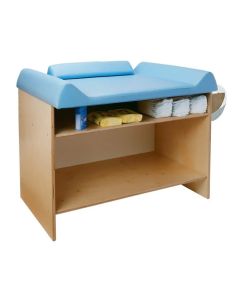
Professional nursery changing table in CAM melamine chipboard, 100x75x85 cm, with washable mat and Class 1 certified fire-retardant structure.
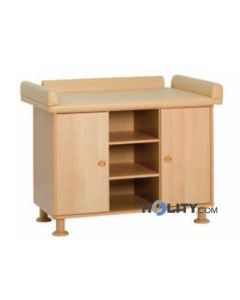
Two-seater changing table unit in melamine-faced beech wood with 120x75 cm padded top. Structure in 18 mm panels, laminate doors, ABS adjustable feet, Made in Italy.
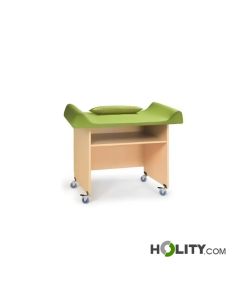
Wooden single-seater changing table for nurseries, 100x74x86 cm. Open structure with shelves and antibacterial fireproof cushion for maximum hygiene and practicality.
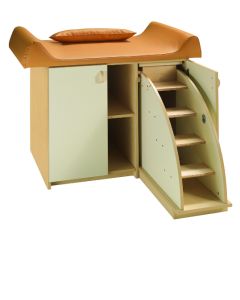
Wooden changing table unit for nurseries, with cabinet, 2 compartments and pull-out stairs. Dimensions W100 x D74 x H86 cm.
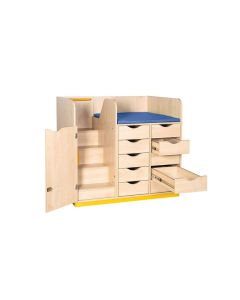
Nursery school changing unit with 10 pull-out drawers, safety ladder with padlock and waterproof HDPE base. Includes Oeko-Tex certified mattress.
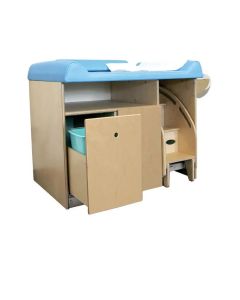
Space-saving changing table in birch plywood with pull-out ladder. Dimensions 115x75 cm, ideal for autonomy in nurseries.
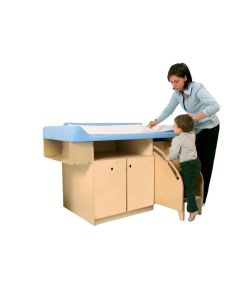
Changing table unit in birch plywood with double changing surface, sliding ladder and storage compartments. Complies with UNI EN 14749:2005.
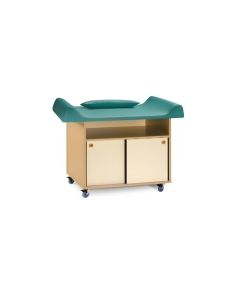
Professional double-seater changing table in E1 wood 140x74cm, with sliding doors, braking wheels and 1IM fireproof antibacterial cushions for healthcare use.
The area dedicated to changing and personal hygiene represents one of the most sensitive operational cores within a nursery school or professional daycare. The nursery school changing unit is not just a simple piece of furniture, but a technical station that must guarantee very high standards of safety for the infant and ergonomics for the operator. In a context where changes occur with high frequency, the structure must allow every operation to be carried out smoothly, keeping all hygiene supplies within reach and minimizing the risks of falls or injury. Choosing a professional unit ensures that every component, from the storage compartments to the support surfaces, is optimized for intensive use and complies with current health regulations.
The design of these furnishings takes into account the long-term health of the educational staff, offering working heights that prevent spinal pathologies resulting from incorrect and repetitive postures. The use of certified materials and antibacterial surfaces is fundamental to prevent cross-contamination between users of the facility, facilitating deep and rapid cleaning cycles between changes. A high-quality changing unit is distinguished by the robustness of its joints and the care of its construction details, such as the presence of raised edges and facilitated access systems for older children, positioning itself as an indispensable element for the efficiency and safety of every early childhood service.
The integration of a professional changing unit within an educational facility offers guarantees that domestic products cannot sustain, especially regarding structural stability and chemical resistance. These units are designed to withstand constant dynamic weights and to resist the aggressive action of hospital-grade disinfectant detergents, which are mandatory in school hygiene protocols. The solid structure, often made of plywood or high-density melamine, prevents dangerous oscillations during changing, ensuring that the child remains in a stable and safe position at every moment of handling.
In addition to the safety of the minor, these furnishings significantly improve work organization. The presence of open compartments, integrated drawers, or modules with removable trays allows diapers, creams, and wipes to be always organized and ready for use, preventing the educator from having to move away or be distracted from direct supervision of the child. Many professional models integrate ingenious solutions such as pull-out stairs, which allow children already able to walk to independently climb onto the changing surface under the adult’s guidance, reducing the lifting efforts of the staff and promoting the child’s autonomy at the same time, in line with the most modern pedagogical orientations.
The range of changing tables for nursery schools is divided into different functional variants to respond to the specific layouts of the changing and nursery areas. Wooden changing tables with storage units represent the most complete solution: they integrate a large upper work surface with side safety edges and a lower area dedicated to the storage of individual or common hygiene material. These structures can be configured with doors for greater visual cleanliness or with open compartments for superior speed of use during peak school activity times.
Another highly appreciated type is the changing unit with integrated stairs, a solution that combines changing with educational and motor aspects, facilitating access to the surface for older children without straining the educators’ backs. There are also versions with an integrated sink, which allow for complete hygiene management without moving from the station, optimizing time and maintaining constant control over the child. For facilities with limited space, compact or corner models are available that make use of every available centimeter, while always maintaining compliance with standard safety measures. Materials vary from the warmth of birch plywood to the practicality of laminated panels in pastel colors, all finished with non-toxic paints and anti-shock edging.
The selection of the ideal changing table must start from a careful analysis of the volume of users and the space available in the bathroom or nursery area. It is essential to check the height of the work surface, which should be between 85 and 95 cm to allow operators of different heights to work in ergonomic comfort. A discriminating technical criterion is the presence of side protection barriers: these must be sufficiently high (at least 15-20 cm) and free of gaps where the child could insert their fingers. It is also necessary to evaluate the required storage capacity: in a nursery school, being able to assign each child a tray or a personal compartment within the unit itself is a logistical advantage that drastically reduces changing management times.
Another critical factor is the quality of the coordinated mattress, which must be made of high-density foam with a PVC or eco-leather coating, totally waterproof and free of exposed seams that could accumulate dirt. Considering the maintainability of surfaces is essential: rounded internal corners and smooth surfaces facilitate the removal of organic residues and bacteria. Finally, it is advisable to check the type of feet or plinths: high feet facilitate cleaning the floor underneath, while closed plinths prevent dust accumulation under the furniture, contributing to maintaining a healthier environment for infants and reducing the workload of the cleaning staff.
Changing tables for professional use must meet rigorous safety standards defined at the European level, in particular the UNI EN 12221 standard, which specifies the safety requirements and test methods for changing tables for public and domestic use. This regulation imposes strict tests on stability, the mechanical strength of the shelves, and the prevention of crushing or entrapment. In the school environment, it is fundamental that the wooden materials used belong to Class E1 for low formaldehyde emissions and that all paints and plastic materials are non-toxic and comply with the EN 71-3 standard for the safety of toys and children’s furniture.
In addition to the structural requirements, it is necessary for the unit to comply with local health regulations regarding infection prevention, prioritizing non-porous and water-repellent materials. Compliance with fire safety regulations is equally important, especially for the textile or foam components of the mattresses, which must be certified as fire-retardant. Facility managers must always ensure that the product is accompanied by a detailed technical sheet and instructions for correct assembly and wall mounting, where required, to ensure maximum stability. Compliance with these standards is not only a regulatory obligation but a guarantee of quality that protects the health of the little guests and the professionalism of the educational institution.
Explore all the products in the category and compare the available solutions to find the one best suited to your operational context.
The ideal height of the work surface for a professional changing unit ranges between 85 and 95 centimeters. This measurement is ergonomically designed to allow educators to perform diaper changes while maintaining correct back posture, reducing muscle fatigue during the numerous daily interventions expected in a nursery.
The pull-out ladder allows children who have already acquired a certain motor stability to independently climb onto the changing surface. This solution reduces the physical effort of the staff, who no longer have to lift weights repeatedly, and promotes the child’s autonomy according to the pedagogical principles of self-determination in the school space.
The best materials are high-pressure melamine-faced board and birch plywood treated with water-based polyurethane paints. These surfaces are waterproof and resistant to aggressive disinfectants, allowing for deep sanitization after each use to eliminate bacteria and prevent contagions within the infant community.
Yes, mattresses intended for use in nursery schools and public facilities must be made with foams and coatings certified as fire-retardant, usually in Class 1 IM. This requirement is fundamental to comply with fire prevention regulations for school buildings, ensuring the safety of environments intended for infants.
Safety is guaranteed by the presence of side rails at least 15 centimeters high that prevent accidental rolling. Furthermore, professional changing units are designed to be extremely stable and fixed to the wall, eliminating any risk of tipping even if the child makes sudden or abrupt movements during the change.
The choice depends on the facility’s priorities. Open compartments offer immediate access to diapers and wipes, optimizing changing times. Units with doors, on the other hand, protect the material from dust and offer a more tidy aesthetic appearance to the room, hiding stored objects from view when not in use.
 English
  Italian
 French
 German
 Spanish