
mon-fri 9-13 / 14.30-18.30
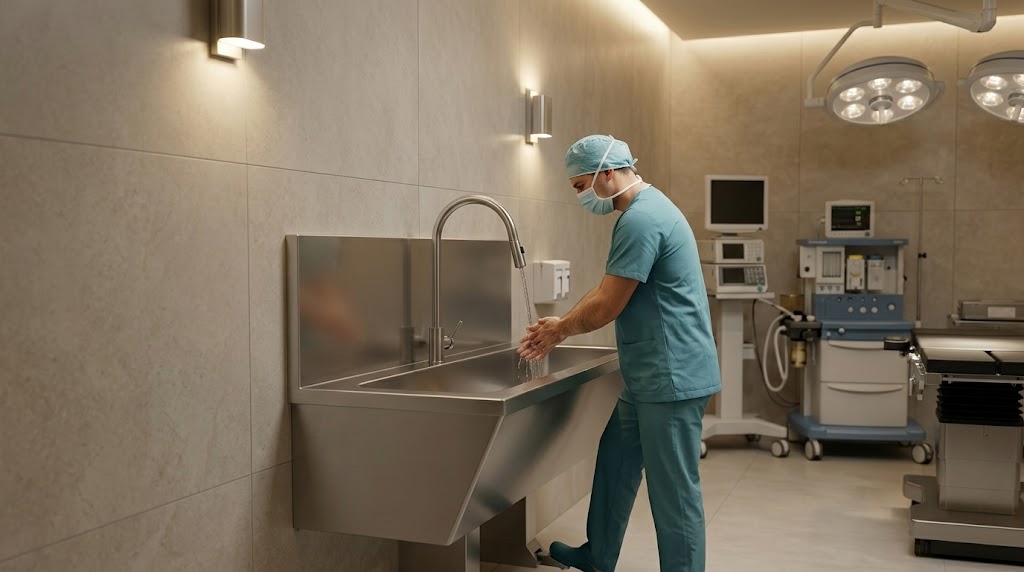
Proper hygiene flow management within preoperative areas is the cornerstone of microbial load reduction strategies prior to any invasive procedure. Choosing surgical sinks (also known as scrub sinks) isn't simply a matter of plumbing, but rather a structural intervention aimed at maintaining asepsis for healthcare personnel and ensuring maximum ergonomic comfort when washing hands and forearms. In the clean-out rooms preceding the operating room entrance, every detail of the sink must accommodate the movements of surgeons and scrub nurses, minimizing unnecessary movements and eliminating manual contact points. This buying guide will help you evaluate the best construction, geometric, and functional options available in the Holity.co.uk online catalog, with the goal of optimizing your investment and increasing the biological safety of your clinical facility.
The architecture of modern surgical departments requires flexible solutions that can combine construction site constraints with maximum operational accessibility for staff. Instrument and jacket sinks are mainly structured on two macro-positioning architectures.
They represent the configuration of choice for new-generation operating blocks, where the management of air spaces and deep cleaning of horizontal surfaces are priorities.
Advantages: The absence of supports or legs on the floor completely frees the flooring underneath the bowl. This geometric suspension simplifies the daily washing routines of the room, allowing waste disposal operators to intervene quickly with industrial machinery and liquid sanitizers without encountering barriers or physical obstacles on the floor.
Disadvantages: They require highly structurally resistant rear walls or the integration of reinforced counterframes inserted inside the plasterboard frames to stably support the specific weight of the steel block when fully loaded with water.
Ideal for: High-turnover operating rooms, intensive care units and hospital facilities where floor cleaning protocols are frequent and stringent.
Structured systems equipped with perimeter legs or a monoblock body extended to the floor, designed to discharge the weight force directly onto the flooring.
Advantages: They offer absolute mechanical stability independent of the state of the vertical walls. Installation is extremely quick, immediate and cost-effective, not requiring any particular consolidation work on the room's dividing walls.
Disadvantages: The presence of vertical uprights on the floor creates micro-gaps and corners that require greater manual accuracy during the room brushing and disinfection cycles.
Ideal for: Renovations of old departments, private clinics with light walls and installations in which immediate mechanical solidity prevails over logistical washing considerations.
The water flow tapping method is the element that determines the level of no-touch protection of the medical station:
To integrate an efficient personnel wash module and avoid hydraulic sizing errors, it is essential to carefully analyse the geometry of the product.
The sink configuration must be proportionate to the volume of operations performed simultaneously in adjacent surgical blocks. Our online catalogue offers flexible solutions structured across multiple service slots:
A professional surgical sink is distinguished from common civilian sanitary ware by the hydrodynamic shape of the basin. The usable depth of the basin must be generous (no less than 20 centimetres) to allow the operator to bend and rub their limbs up to the elbow without the risk of accidentally hitting the bottom or metal walls, compromising decontamination. Furthermore, the rear backrest must be developed in height (integrated splashback) and combined with internal walls inclined with a continuous radius, free of sharp corners or rough welds. This shaped geometry is calculated to guide the flow of water tangentially towards the drain, eliminating the formation of splashes (anti-splash technology) that would wet the operator's uniform or sterile drapes, and preventing the biological stagnation of limescale and detergents.
Since these are devices that are constantly in contact with drinking water and subjected to severe chemical attacks, the choice of metal is non-negotiable. The best tubs are made entirely of high-gauge medical-grade stainless steel. This alloy boasts natural aseptic properties, is non-porous, resists chemical corrosion triggered by iodine- or chlorhexidine-based antiseptic surgical soaps, and tolerates deep thermal cleaning cycles with high-temperature saturated steam without deformation. A satin or Scotch-Brite surface finish is preferable to a polished one, as it effectively masks scratches from mechanical wear and reduces glare from operating room lights.
Large Public Hospitals, Polyclinics and Emergency Rooms: In these large centers characterized by simultaneous emergencies and continuous flows, the adoption of wall-mounted sinks with 3 or 4 continuous stations, equipped with electronic taps with no-touch infrared sensors and inspectable drain systems, is recommended. They maximize the autonomy of the block and speed up the pre-operative dressing of the teams.
Private Clinics, Day Surgery and Aesthetic Surgery Centers: The ideal choice is 2-station surgical sinks (length approximately 1200 mm), both in the wall-hung and free-standing versions on legs, equipped with clinical lever taps or IR sensors. They combine excellent operational performance with clean and professional aesthetic lines that reflect the quality of the layout of the healthcare facility.
Dental Practices, Specialist Clinics and Protected Laboratories: In rooms with limited floor space, the winning solution involves installing a 600-700 mm wall-mounted single-station module. It offers the necessary bowl depth (20 cm) for antiseptic protocols while taking up minimal horizontal space, guaranteeing the full hygienic traceability required by health audits.
Guarantee maximum biological safety for your medical team, combat the onset of infectious complications in your surgical block and renew your filter rooms with the high-end products available on Holity.co.uk. In our online catalog you will find a specialized and select assortment of operating room sinks in medical-grade stainless steel, designed by the best manufacturers in the industry to ensure smooth movements, easy sanitization and many years of durability.
Use our lateral search tools to configure the number of spaces needed (from 1 to 4 inlets), set the structural installation mode and identify the most suitable faucet and flow control systems for your water systems. Do you manage supplies for a public hospital, for an accredited clinic or do you need technical support for large supplies or tender specifications? Contact our customer service team today to receive complete technical data sheets and a personalized quote tailored to your project.
How does the continuous radius geometric design inside the basin combat the formation of bacterial biofilm?
Professional surgical basins exclude folds, interlocking joints or sharp 90° edges between the walls and the bottom of the basin, adopting widely rounded continuous radius mouldings. From a microbiological point of view, the absence of sharp corners eliminates hydrodynamic blind spots where the rinse water could slow down, preventing the capillary deposition of limescale, organic detergents, and skin particles. Deprived of these protected niches, microorganisms are unable to synthesize the polymeric matrix necessary to structure the bacterial biofilm, being washed away by normal surface cleaning cycles.
What rear channeling measures prevent biological stagnation of water on the backsplash of the surgical sink?
The rear backsplash is not a simple vertical sheet, but is molded in structural continuity with the body of the tub and is designed with a calibrated frontal inclination of a few degrees. This geometric slope causes the water drops projected towards the backrest during scrubbing to slide by gravity towards the bottom of the bowl, eliminating any linear water stagnation on the top of the cabinet, an essential protective factor for preventing fungal proliferation close to the wall.
How is the recommended horizontal clearance between two adjacent stations in a multi-station sink calculated to ensure the dynamic safety of the team?
In 2-, 3-, or 4-station stations, the dispensing points and tap axes must maintain a clear interaxial distance generally between 60 and 70 centimeters. This millimetric spacing is calculated to allow two or more surgeons to simultaneously complete the forearm scrubbing without their elbows or limbs accidentally hitting each other during the oscillations of the movement, avoiding involuntary breaches of the preoperative asepsis protocol.
What are the hygienic advantages of continuous free-flow drains compared to traditional hydraulic closure systems in surgical filter rooms?
Operating room sinks must have free-flow drains without protruding grates, mechanical plugs, chains, or locking devices. Any moving component or cavity within the drain hole would be a receptacle for soapy sludge and skin residue. Continuous and direct drainage ensures that the evacuated contaminated liquid flows instantly into the siphon without the possibility of backflow into the basin, facilitating deep sanitization of the duct using enzymatic fluids.
How do no-touch water supply systems with integrated safety solenoid valves protect circuits from thermal shocks or power blackouts?
The electronic control units that govern the infrared (IR) sensor taps operate at very low safety voltage and incorporate "fail-safe" passive safety devices. In the event of a sudden power failure in the facility, the solenoid valves instantly seal by magnetic back pressure, blocking the flow to prevent accidental flooding in the corridors. Furthermore, the interposition of thermostatic mixers upstream of the circuit keeps the selected water temperature constant, protecting the doctor's skin from sudden thermal shocks or burns during washing.
Why is a satin or Scotch-Brite type metallic surface finish considered a preferable standard to mirror polishing in the operating block?
Inside the pre-operative rooms and surgical blocks there is a high concentration of high-intensity lighting fixtures and surgical lamps. A mirror-polished stainless steel surface would reflect light beams in a refractive manner, causing visual glare and eye strain for surgeons engaged in the dressing. The Scotch-Brite satin finish diffuses light evenly and opaquely; furthermore, its surface micro-texture perfectly masks micro-scratches caused by mechanical wear and the rubbing of brushes or bottles, preserving the fixture's aesthetic appearance over time.
 English
  Italian
 French
 German
 Spanish