
mon-fri 9-13 / 14.30-18.30
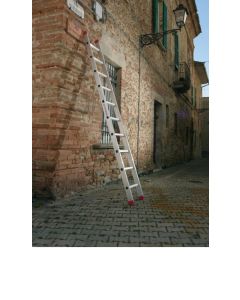
Professional 7-step aluminum ladder, height 200 cm and ultra-light weight of 4 kg. Reinforced structure for intensive use up to 4 meters.
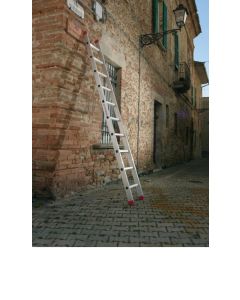
Professional 10-step aluminum ladder, 4m working height and 6.5kg weight. EN 131 reinforced structure for intensive use and maximum maneuverability.
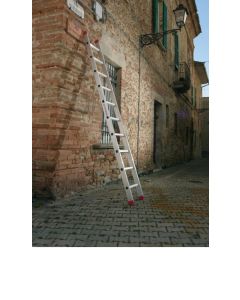
Professional 14-step aluminum ladder, lightweight (9.50 kg) and sturdy. 150 kg capacity, 4m working height, EN 131.1 certified for intensive use.
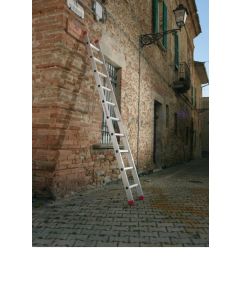
Professional aluminum agricultural ladder with 17 steps. Working height 4m, weight 12kg. Reinforced structure certified EN 131 for intensive use.
Agricultural ladders represent a fundamental element in the operational equipment of any farm, orchard, or fruit-growing enterprise. These specialized tools allow safe access to elevated areas during pruning, harvesting, vegetation maintenance, and phytosanitary control operations. The specific structure of agricultural ladders, often made with a conical or tripod profile, allows for optimal weight distribution and superior stability even on irregular terrain or among thick vegetation. Choosing the correct agricultural ladder directly affects productivity and work safety, reducing operation times and minimizing risks related to working at height.
In the professional market, agricultural ladders are available in numerous configurations: from models with 8 steps for light operations, up to variants with 14-17 steps to reach significant working heights. Construction materials vary between aluminum, steel, and treated wood, each with specific advantages in terms of lightness, corrosion resistance, and durability over time. Models certified according to the EN 131 standard guarantee standardized load capacities, usually between 100 and 150 kg, and compliance with European safety requirements. Maximum load capacity, the number of steps, and the reachable working height are critical parameters that must be evaluated in relation to the specific operational needs of the farm.
Agricultural ladders offer significant operational advantages compared to traditional construction ladders. The conical or tripod structure, typical of agricultural models, distributes the load more evenly when the operator works among branches and vegetation, allowing lateral movements without compromising stability. This aspect is crucial in agriculture, where workspaces are often limited by the presence of fruit trees, pergolas, or trellis systems. The steps are generally sized with a wide, non-slip surface, essential when wearing boots soiled with mud or wet from morning dew. Operational safety increases thanks to non-slip feet that guarantee grip on soft, stony, or sloping ground, situations frequent in agricultural environments. Furthermore, professional agricultural ladders significantly reduce operator fatigue, allowing them to focus on the quality of the harvesting or pruning work rather than on maintaining balance.
From a practical point of view, agricultural ladders have been specifically designed for sectors such as fruit growing, viticulture, and horticulture. Their configuration allows working at different heights without the need for frequent movements, increasing hourly productivity. A model with 10-12 steps, for example, reaches working heights around 3-4 meters, sufficient for most operations on naturally developing fruit trees. Investing in a certified agricultural ladder represents a choice of accident prevention, as work at height is one of the main causes of serious accidents in the agricultural sector. The durability of the materials, in particular corrosion-resistant aluminum, ensures that the product maintains optimal performance over time, even in humid environments or those subject to significant climatic variations.
Agricultural ladders are mainly divided into three construction categories: conical ladders, tripod ladders, and straight ladders. Conical ladders have a tapered structure, where the base is wider than the top, guaranteeing exceptional stability on irregular terrain. This model is extremely common in agriculture because it moves easily through vegetation without getting caught in branches. Tripod ladders, an alternative to the quadrangular base, offer additional positioning flexibility on slopes and uneven ground, distributing the weight over three stable contact points. Steps vary from 8 to 17 per model, with uniform spacing and non-slip material. The main construction materials are aluminum (lightweight, corrosion-resistant, ideal for intensive use) and treated wood (economical, suitable for less frequent use). Aluminum represents over 70% of the professional market due to better durability over time and ease of sanitization in environments where corrosion can be accelerated by humidity and phytosanitary treatments.
Each type has specific operational limits that must be considered. A ladder with 8 steps reaches approximately 2.3-2.5 meters in working height and is ideal for light pruning, but insufficient for harvesting fruit located at medium height on developed trees. Models with 12-14 steps allow reaching 3.5-4.2 meters and are more versatile, although they are heavier and require more space for transport. The 17-step ladders, the tallest in the category, exceed 5 meters but are rarely necessary in traditional fruit growing and require experienced operators. The choice between conical and tripod depends on the morphology of the terrain: steep slopes require three feet, while regular surfaces adapt well to the conical shape. The maximum load capacity, almost always 150 kg for professional models, remains constant regardless of the number of steps, but must be checked in relation to the weight of the operator plus any tools and harvest.
Selecting the correct agricultural ladder requires an initial assessment of the typical working heights of the farm. If the farm mainly grows naturally developing apple, pear, or cherry trees, a maximum working height of 4 meters is generally sufficient, suggesting ladders with 10-12 steps. For vineyards with higher pergolas or orchards with vigorous rootstocks, 14-step models should be considered. A common mistake is underestimating the importance of the number of steps by thinking that a smaller ladder is easier to transport: the economy of the choice is negated by the need for more movements and longer operational times. The morphology of the farm’s terrain is a second determining criterion: flat and regular surfaces allow the use of standard conical ladders, while slopes or stony ground require tripod models to guarantee stability. The annual frequency of use affects the choice of material: businesses with harvests concentrated in 2-3 months may opt for treated wood, while operations with continuous activities throughout the year benefit from aluminum for strength and longevity.
An often overlooked aspect is the compatibility between the weight of the operator, the tools used (shears, scissors, harvesting baskets), and the declared load capacity. A load capacity of 150 kg does not mean that an 85 kg operator with 20 kg of tools can work safely: the EN 131 standard provides for internal safety margins, so it is advisable to remain below 75% of the maximum load capacity during continuous use. Always check the certification and the CE compliance number on the ladder, mandatory information that certifies compliance with European safety standards. The ease of cleaning and maintenance, often underestimated, becomes relevant in agricultural environments where vegetable residues, soil, and humidity compromise durability: anodized aluminum ladders allow rapid sanitization without corrosion. Finally, the availability of options such as articulated or anti-corrosion feet must be evaluated based on the climatic conditions of the farm and the need for special adaptations.
Agricultural ladders marketed in the European market must comply with the EN 131-1 standard, which establishes minimum construction requirements for portable wood, aluminum, and steel ladders. This regulation defines static and dynamic resistance criteria, specifying that a ladder must support a minimum load capacity of 100 kg under load conditions distributed over two steps simultaneously. EN 131 compliance involves laboratory tests that certify stability, impact resistance, and behavior in the event of eccentric loading, common situations when the operator harvests fruit by moving laterally on the steps. The Italian Legislative Decree 81/08 (Consolidated Law on Health and Safety in the Workplace) integrates these requirements with specific obligations for the agricultural company: the ladder must be subjected to periodic maintenance, visually inspected before each use, and repaired or replaced if it has visible structural damage. The CE marking on the ladder is mandatory and must include the manufacturer’s name, the batch number, the maximum load capacity, and the compliance number with the applied regulation.
Recurring safety aspects emerging from field checks concern the wear of the steps and the corrosion of the support feet. Regulations do not establish a precise useful life for ladders, but recommend five-year inspections for aluminum models and annual ones for treated wood in humid environments. The non-slip feet must be checked regularly because their deterioration represents the primary factor in slipping: if the rubber or plastic coating is smooth and visibly worn, the ladder must be maintained or withdrawn from service. The distance between the wall or vertical support and the base of the ladder must respect the 1:4 ratio (for every 4 units of height, 1 unit of distance from the wall), a criterion often not followed in agricultural environments where improvisation prevails over safety. The civil and criminal liability of the agricultural employer falls on the failure to provide certified safe tools, which is why investing in EN 131 professional ladders represents legal as well as operational protection.
Explore all products in the category and compare the available solutions to find the one best suited to your operational context. Carefully evaluate the number of steps, construction material, load capacity, and certifications to ensure maximum safety and efficiency during agricultural operations.
For naturally developing fruit trees (apple, pear, cherry trees), a ladder with 10-12 steps reaches working heights of 3-3.5 meters, sufficient for most operations. Models with 14 steps are necessary for more vigorous plants or pergolas. The standard load capacity of 150 kg is adequate for operators up to 100 kg plus tools and harvest.
The conical ladder has a quadrangular base tapering upwards, ideal for flat and regular terrain. The tripod ladder distributes the load over three points, suitable for slopes and uneven ground. Both are EN 131 certified; the choice depends on the morphology of the farm terrain and the ease of positioning among vegetation.
Yes, aluminum is naturally resistant to corrosion due to the formation of a protective film. Anodized aluminum agricultural ladders resist humidity, dew, and phytosanitary treatments for 10-15 years if subjected to regular maintenance and periodic sanitization. Treated wood requires annual checks in humid environments.
Check the CE marking on the ladder, which must indicate the manufacturer’s name, the batch number, and compliance with the EN 131-1 standard. Documentation should be available from the retailer. Also verify that the maximum load capacity is clearly printed and that the steps have a full non-slip surface and certificate.
The ladder must be positioned with a distance from the wall equal to 1/4 of the total height (1:4 ratio). If the ladder reaches 4 meters, the base must be 1 meter from the wall. Stability is crucial: the feet must be in full contact with the ground and the ground must be as level as possible; on irregular surfaces, use tripod models with articulated feet.
 English
 Italian
 French
 German
 Spanish