mon-fri 9-13 / 14.30-18.30
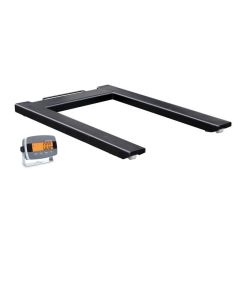
Industrial pallet scale. Maximum capacity: 1500 kg. Dimensions: 126 x 84 x h. 9 cm
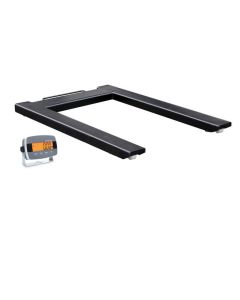
Industrial pallet scale. Maximum capacity: 1500 kg. Dimensions: k126 x 84 x h. 9 cm
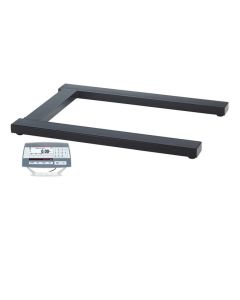
Pallet weighing scale for industrial contexts. Maximum capacity: 1500 kg.
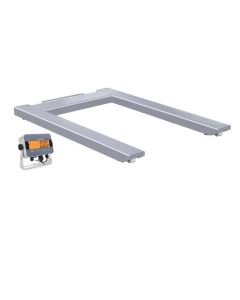
Pallet weighing scale. Maximum capacity: 1500 kg. Dimensions: 126 x 84 x h. 9 cm.
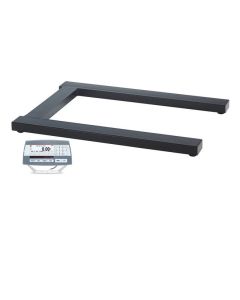
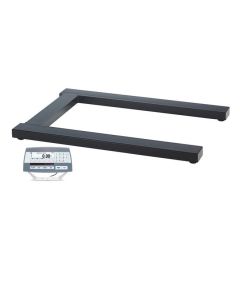
Pallet scale in painted steel. Maximum capacity: 600 kg.
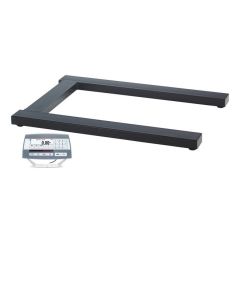
Pallet scale. Maximum capacity: 1500 kg. Dimensions: 125.6 x 84 x 7.8 cm.
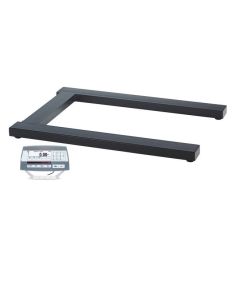
Industrial pallet scale. Maximum capacity: 600 kg. Dimensions: 125.6 x 84 x h. 7.8 cm
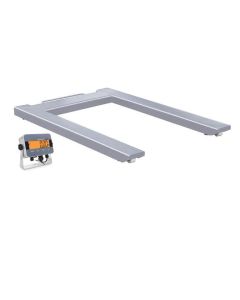
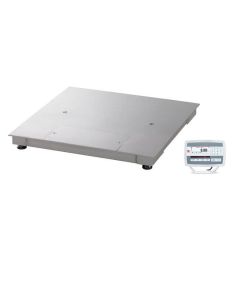
Stainless steel pallet scale. Maximum capacity: 1500 kg.
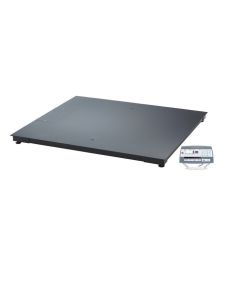
Floor scale. Maximum capacity: 300 kg. Dimensions: W. 80 x D. 80 x h. 9 cm.
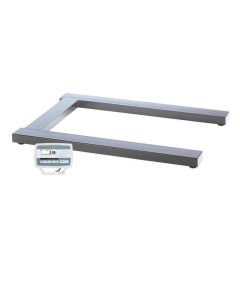
Industrial pallet scale. Maximum capacity: 600 kg. Dimensions: 125.6 x 84 x h. 7.8 cm
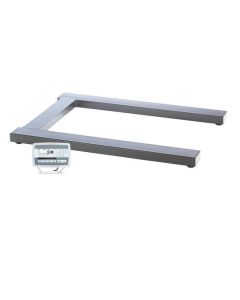
Pallet scale for industrial contexts. Maximum capacity: 1500 kg. Dimensions: 125.6 x 84 x h. 7.8 cm
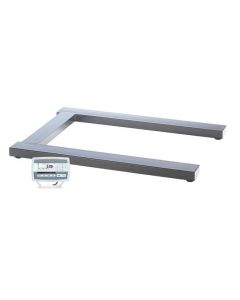
Pallet scale. Maximum capacity: 600 kg. Dimensions: 125.6 x 84 x h. 7.8 cm.
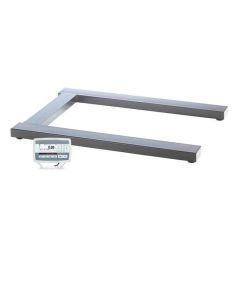
Pallet weighing scale for industrial contexts. Maximum capacity: 1500 kg.
Industrial scales represent a fundamental measuring tool in production, logistics, and material management processes. Designed to operate in environments characterized by critical conditions—dust, humidity, extreme temperatures—these devices guarantee reliability and precision regardless of environmental stresses. Their versatility makes them indispensable in sectors such as food processing, pharmaceuticals, the chemical industry, metallurgy, and wholesale trade, where weighing accuracy directly affects final product quality and regulatory compliance.
An industrial scale is not merely a weighing instrument: it is a strategic element in operational workflows that allows for the control of raw material costs, the optimization of shipping loads, and the guarantee of documentary traceability. Available variants range from floor scales, ideal for massive loads and positioned in fixed areas, to pallet scales, specifically designed for logistical movement, up to bench solutions for quality control and formulation applications.
An industrial scale stands out from ordinary commercial instrumentation for its ability to withstand intensive work cycles and hostile environments. Metrological precision ensures that every weighing is repeatable and reproducible, a crucial requirement in contexts where small discrepancies translate into significant economic losses. In the food sector, for example, a pallet scale allows for the verification that containers respect the weights declared on the packaging, avoiding regulatory disputes and claims from distribution. In the logistics sector, the control of load weight affects the determination of transport rates and the safety of goods handling: an inaccurate measurement generates hidden costs and operational risks. Modern industrial scales integrate digital interfaces, wireless data transmission, and compatibility with Warehouse Management Systems (WMS), transforming raw weight data into structured information available in real-time for process analysis and optimization.
Concrete applications highlight how investing in an appropriate industrial scale reduces waste, accelerates loading and unloading operations, and guarantees traceable documentation according to international standards. In processing companies, the control of incoming raw materials is the first qualitative step: an uncalibrated or unreliable scale compromises the entire production chain. In logistics hubs, where thousands of packages are processed daily, the speed and reliability of measurement determine the warehouse throughput and final customer satisfaction, transforming an apparently simple tool into a relevant competitive element.
Industrial scales are divided into several construction categories, each responding to specific operational scenarios and space requirements. Floor scales represent the classic solution: robust and planar structures, generally in painted carbon steel or stainless steel, with capacities ranging from 300 to 1500 kilograms. The low profile facilitates access for pallet trucks and forklifts, making these scales the default choice for warehouses, processing plants, and logistics platforms. Pallet scales constitute a specialization: weighing platforms dimensioned to house European pallets (80x120 cm) or different pallets, ensuring that the load is distributed evenly over the sensitive surface. There are mobile variants, with directional wheels, ideal for temporary operations or in tight spaces, and fixed variants, anchored to the floor for continuous use. Bench scales find application in laboratories, raw material warehouses, and quality control stations, where loads are contained (up to 150-300 kg) and precision must be high (often ±0.5% of full scale). Finally, hanging scales allow for the weighing of suspended objects, a common solution in meat processing, waste management, or metal coil handling contexts.
The choice of type depends on integration with existing operational flows: a high-density warehouse, where horizontal movement of pallets is daily, benefits from a mobile pallet scale that allows for checking the weight where the load is already positioned, reducing unnecessary handling. A quality control station, where loads are dozens of bags of raw material or containers to be verified, prefers a bench scale with a raised display and rapid tare functionality. Construction materials vary in parallel: painted carbon steel offers a good cost-resistance ratio for dry and controlled environments; stainless steel becomes imperative in humid, saline contexts or with exposure to aggressive detergents, such as food processing plants or fish processing facilities.
Selecting an industrial scale requires a systematic evaluation of numerous technical and organizational factors. The first element is the maximum capacity: exceeding the declared limit not only degrades metrological accuracy but also damages the load cells and significantly shortens the useful life of the instrument. A consolidated practice recommends choosing a scale with a maximum capacity 20-30% higher than the average expected load, in order to operate in the most linear zone of the response curve and reduce premature wear. The second parameter is the resolution, expressed in divisions (d): a 1500 kg scale with a resolution of 0.5 kg (minimum readable division) is insufficient if the application requires precision to the decagram; conversely, requesting excessive resolution entails higher costs without real benefits. The evaluation of the weighing platform size is critical: a platform that is too small for the load requires precise positioning, increases operation times, and introduces center-of-gravity errors; an oversized platform occupies precious space and increases bulk. Similarly, the platform height must be congruent with the handling systems: a platform that is too low forces the pallet truck to tilt, compromising stability and reading; an excessively raised platform creates access difficulties and ergonomic risks.
Furthermore, evaluating the frequency of use and the operating environment influences the choice of construction and material. A scale in a protected area, intended for occasional operations (2-3 weighings per day), tolerates simpler and more economical solutions; a scale in a loading area with dozens of weighings per hour, exposed to dust, humidity, and detergents, requires structural robustness, integrated drainage, waterproof connectors, and scheduled maintenance. Integration with information systems (WMS, ERP, traceability software) represents a growing differentiator: scales equipped with digital output (USB, Ethernet, wireless) facilitate the automation of data recording and reduce manual transcription errors. Finally, check the local availability of calibration and maintenance: even the best industrial scale requires periodic calibration according to metrological standards; suppliers with a widespread assistance network guarantee operational continuity and regulatory compliance without prolonged interruptions.
Industrial scales marketed in the European Union are subject to the MID Directive (Measuring Instruments Directive) 2014/32/EU, which establishes metrological, safety, and CE marking requirements. This regulation classifies weighing instruments into categories depending on their intended use: a scale for determining the price of goods must respect stricter precision specifications than a scale for internal process control. The EN 45501 standard (Metrological aspects of non-automatic weighing instruments) prescribes the methods, frequency, and documentation of metrological verification operations, generally on an annual or biennial basis according to use. Scales intended for trade, i.e., where the weight directly affects the determination of the price to the final consumer, must possess the metrological conformity mark and undergo verification by notified bodies; for scales intended exclusively for process control (non-commercial), requirements are less stringent but still include traceability of calibration to national or international standards.
Regarding safety and hygiene aspects, specific environments impose additional constraints: in food areas, the scale must comply with HACCP and FSMA (Food Safety Modernization Act) regulations, with contact surfaces resistant to detergents and sanitization temperatures, absence of hollow corners where residues can accumulate, and materials certified for food contact. In chemical or pharmaceutical sectors, compliance with GMP (Good Manufacturing Practices) is required, which includes validation of the scale in the specific operational context, complete documentation of preventive maintenance, and personnel training. Scales in Ex environments (at risk of explosion) must be certified according to ATEX 2014/34/EU, with electrical components built not to generate sparks or excessive heat. Always check that the manufacturer provides initial calibration certificates, declarations of conformity, and multi-language user manuals; these documents are not optional but constituent elements of legal compliance for operation.
Explore all products in the category and compare the available solutions to find the one best suited to your operational context. The correct industrial scale transforms weight control from an ordinary operation into a strategic tool for efficiency and regulatory compliance.
An industrial scale is a multi-purpose instrument for weighing various materials and loads in different sectors, while a pallet scale is specifically designed to accommodate standard pallets and facilitate logistical operations. Pallet scales have a low profile and dimensions compatible with pallet trucks and forklifts, optimizing speed and precision in goods handling.
Select a maximum capacity 20-30% higher than your average expected load. If your pallets weigh an average of 800 kg, choose a 1000-1200 kg scale. Operating near the maximum limit reduces precision and accelerates sensor wear. A conservative choice improves the reliability and longevity of the instrument.
Yes, according to the EN 45501 standard and the MID Directive 2014/32/EU, scales must undergo periodic calibration, generally annual or biennial depending on the intensity of use and the commercial destination. Scales used to set the price of goods require more frequent checks than those for internal process control.
Stainless steel (AISI 304 or 316) is the ideal choice for humid environments, exposed to sea salt, aggressive detergents, or corrosive vapors. Painted carbon steel is sufficient for protected and dry environments but does not resist oxidation in critical conditions. Environmental assessment is decisive for actual durability.
Many modern industrial scales have digital USB, Ethernet, or wireless outputs that allow direct integration with WMS software and ERP systems. Verify that the chosen model has interfaces compatible with your IT infrastructure and consult the supplier for connection and configuration methods.
For process control in the food sector, a resolution of 0.1-0.5 kg is generally sufficient for verifying compliance with the declared weight. If the application requires precise formulations (e.g., ingredient dosing), choose lower resolutions. Excessively fine resolution entails high costs without real benefits if not fully utilized.
 English
 Italian
 French
 German
 Spanish