
mon-fri 9-13 / 14.30-18.30
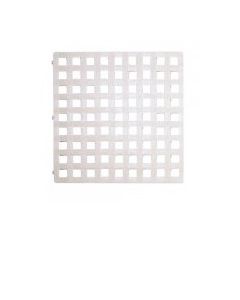
Modular interlocking perforated square floor slat. In HDPE. Dimensions: 500 x 500 x 25 mm. Color: white.
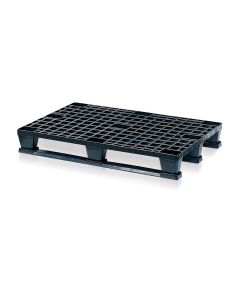
Recycled polyethylene pallet. Dimensions: W. 120 x D. 80 x h. 13.5 cm.
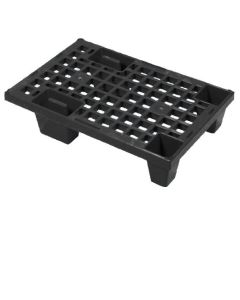
Black PP export pallet. Dimensions: 1200 x 1000 x 150 mm. Perforated loading deck.
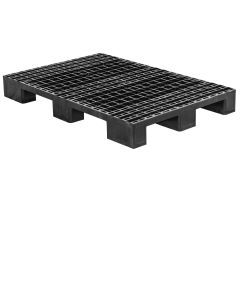
HDPE pallet with 9 feet. Perforated loading deck. Dimensions: 1200 x 800 x 130 mm. Colour: black.
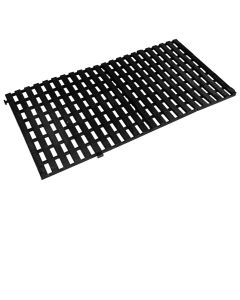
Rectangular LDPE platform with perforated surface, interlocking modular design. Dimensions: 1170 x 580 x 30 mm. Color: black.
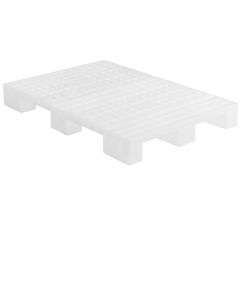
Plastic pallet. Perforated loading surface. Dimensions: 1200 x 800 x 130 mm.
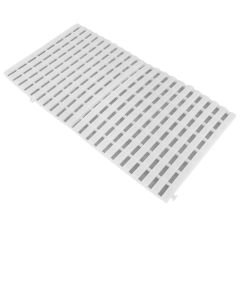
Interlocking modular rectangular pallet with perforated top. Dimensions: 1170 x 580 x 30 mm. In white LDPE.
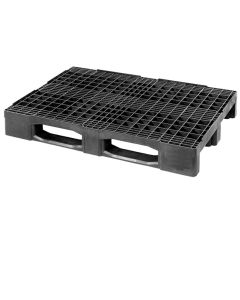
3-skid pallet with perforated deck. Dimensions: 1200 x 800 x 160 mm. Color: black.
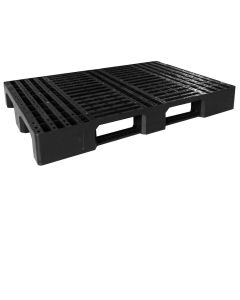
9-foot pallet with 3 runners in black HDPE, perforated deck. Dim.: 1200 x 800 x 130 mm.
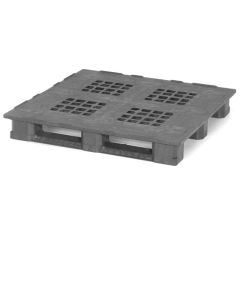
Oversized pallet with semi-closed surface. Dimensions: 800 x 600 x 160 mm. In grey PP.
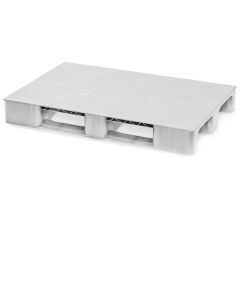
Pallet with 2 runners and closed deck, in PP. Dimensions: 1200 x 800 x 150 mm. Color: grey.
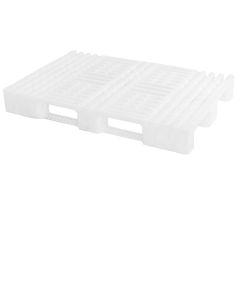
9-foot pallet with 3 runners in white HDPE, perforated top. Dim.: 1200 x 800 x 130 mm. Suitable for food contact.
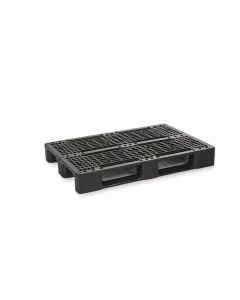
Regenerated polyethylene pallet. Static load capacity 4000 kg. Dimensions: W. 120 x D. 80 x h. 15 cm.
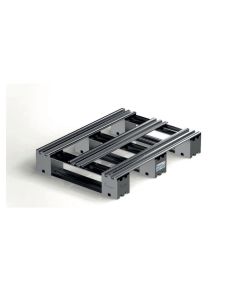
Galvanized steel pallet 800x600 mm, 9.3 kg. 3-axis structure with rivet fastening, fireproof and recyclable for sustainable and safe logistics.
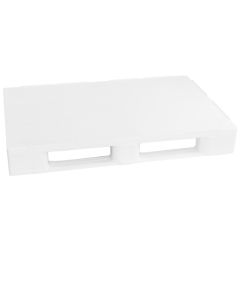
Pallet with closed deck and 3 runners. Dimensions: 1200 x 800 x 150 mm. Color: white. Made of HDPE.
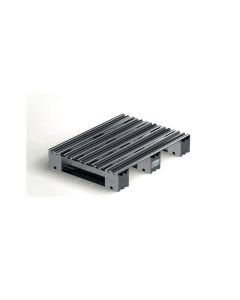
h1037_02 galvanized steel pallet, 800x600 mm, 11 kg. 5-slat structure without welds, fireproof and recyclable for intensive industrial logistics.
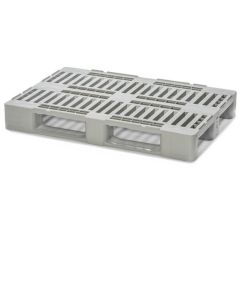
Grey HDPE Euro pallet for industrial warehouses. Dimensions: 1200 x 800 x 160 mm. Perforated loading deck.
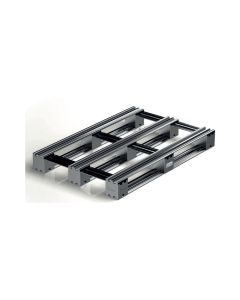
Galvanized steel pallet 800x1200 mm, weight 14.6 kg. 3-runner structure with rivet fastening, fireproof and suitable for international shipping.
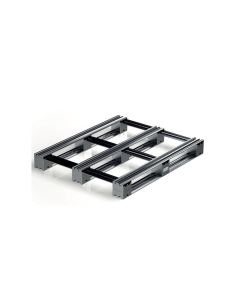
Galvanized steel pallet 1000x1200 mm. Lightweight 3-axis structure (15.2 kg), fireproof and recyclable. Rivet fastening without welding.
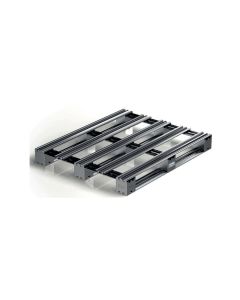
Industrial galvanized steel pallet 1000x1200 mm. 5-axis structure, 17.8 kg, 100% fireproof and recyclable, ideal for logistics and secure storage.
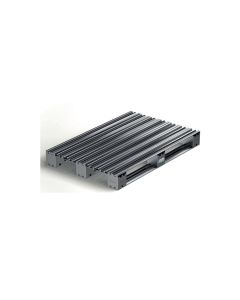
Galvanized steel pallet 1200x800 mm, 19.7 kg. 7-board structure with rivet technology, fireproof and ideal for international logistics and export.
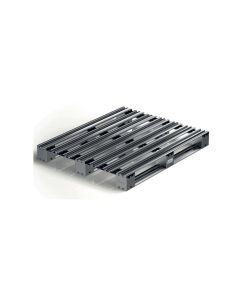
Galvanized steel pallet 1000x1200 mm with 7 slats. Lightweight riveted structure, fireproof and recyclable for safe industrial storage and logistics.
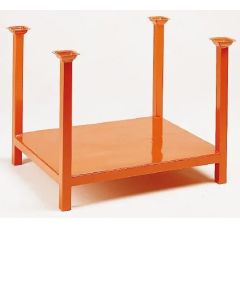
Pack of 5 pieces
€965.65 VAT excl.Post pallet with cup feet. Stackable. Dimensions: 1000x800x580 mm. Capacity: 1000 kg.
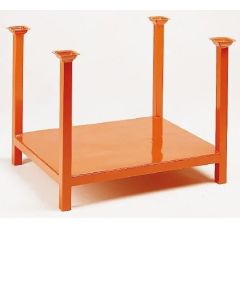
Pack of 5 pieces
€1,016.75 VAT excl.Stackable post pallet. Cup feet. Dimensions: 1200x800x580 mm Capacity: 1000 kg.
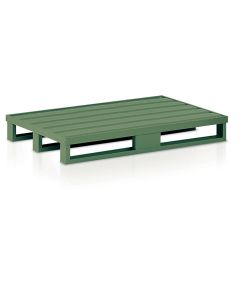
Sheet metal pallet with runners. Dimensions: W. 120 x D. 80 x H. 16 cm.
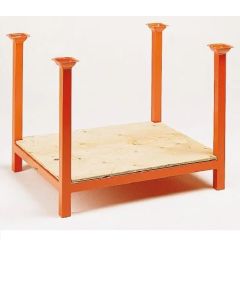
Pack of 5 pieces
€1,106.25 VAT excl.Stackable steel pallet with stacking cups and wooden deck. Dim.: 1000x800x565 mm. Load capacity: 1000 kg. Color: green.
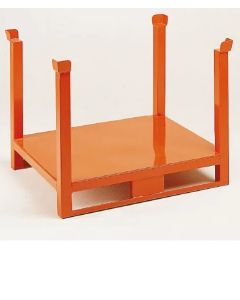
Pack of 5 pieces
€1,150.75 VAT excl.Pallet with runner and sheet metal top. Dimensions: 1000x800x600 mm. Capacity: 1500 kg.
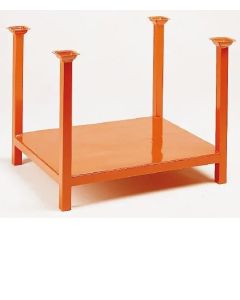
Pack of 5 pieces
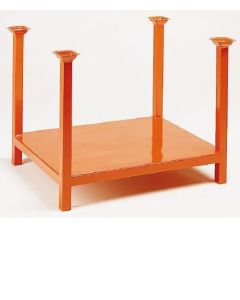
€1,188.30 VAT excl.Industrial pallet with free uprights. Cup feet. Dim: 1200x1000x580 mm. Capacity: 1000 kg.
Pack of 5 pieces
€1,372.20 VAT excl.Powder-coated tubular steel pallet. Cup feet. Dimensions: 1500x800x580 mm. Capacity: 1000 kg.
Pack of 5 pieces
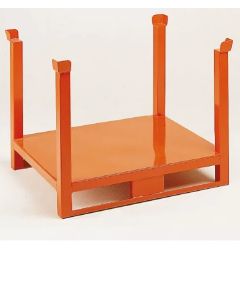
€1,449.60 VAT excl.Industrial pallet with skid and sheet metal top. Dimensions: 1200x800x800 mm. Capacity: 1500 kg.
Pack of 5 pieces
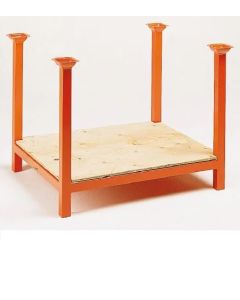
€1,548.80 VAT excl.Stackable steel pallet with cup feet and wooden top. Dim.: 1200x1000x565 mm. Capacity: 1000 kg. Color: green.
Pack of 5 pieces
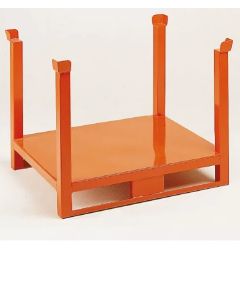
€1,605.40 VAT excl.Pallet with free posts on skids. Sheet metal bottom. Dimensions: 1500x800x600 mm. Capacity: 1500 kg.
Pack of 5 pieces
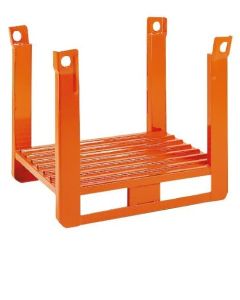
€1,923.30 VAT excl.Metal pallet with ribbed bottom and skids on the long side. Dimensions: 1200x1000x610 mm. Color: orange.
Pack of 5 pieces
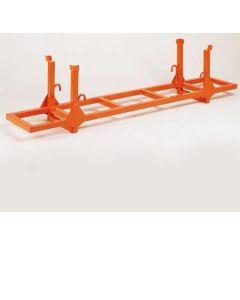
€1,978.80 VAT excl.Stackable bar storage pallet. With crane hooks. Dimensions: 2000x560 mm. Capacity: 2000 kg.
Pack of 5 pieces
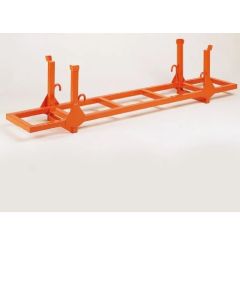
€2,336.65 VAT excl.Bar pallet equipped with crane hooks. Dimensions: 3000x560 mm. Capacity: 3000 kg.
Pack of 5 pieces
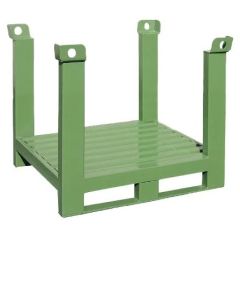
€2,605.70 VAT excl.Metal pallet with flat skids on long side. Dimensions: 1500x800x610 mm. Capacity: 2000 kg.
Pallets and platforms represent fundamental elements in the management of logistics and industrial storage, constituting the infrastructure on which the efficient handling of goods rests. These support systems are characterized by construction versatility, allowing the transport, storage, and distribution of loads in production, commercial, and warehouse environments of any size. The choice of the most appropriate type depends on multiple variables: nature of the load, frequency of handling, required durability, and compatibility with logistics automation systems.
Available in different materials—from recycled plastic to technical polymers and galvanized steel—pallets respond to specific operational needs, ensuring product protection and optimization of warehouse space. The dimensional standardization of EUR solutions and customized configurations allow for easy integration with mechanical handling equipment such as pallet trucks, forklifts, and vertical storage systems.
The use of pallets and platforms represents a consolidated solution to reduce the operational costs of the distribution chain and improve safety during handling. An adequate support structure facilitates the work of operators, reducing the risk of damage to the goods and allowing for a more efficient use of forklifts and pallet trucks. In the HoReCa context, HDPE platforms offer particular advantages for the food sector thanks to compliance with hygiene regulations and the absence of contaminants. In industrial warehouses, pallets in recycled polyethylene or galvanized steel guarantee high capacities and a longevity that compensates for the initial investment. The configuration with a perforated top allows for better air circulation, essential for storing products sensitive to humidity.
In addition to functional advantages, choosing pallets and platforms that comply with international standards facilitates commercial transactions and cross-border logistics, reducing customs clearance times and simplifying loading and unloading operations at customer sites. Compatibility with automatic tracking systems (RFID, barcodes) allows for greater transparency in the supply chain. Investing in quality solutions also means contributing to environmental sustainability: many plastic pallets are made from recycled materials, while steel ones are fully recyclable at the end of their life.
The catalog of pallets and platforms is divided into several material and construction families, each responding to specific application contexts. Polyethylene and polypropylene pallets represent the most common solution in controlled environments and in the food sector, thanks to their chemical resistance, low weight, and ease of sanitization. Available in compact versions (height 13-15 cm) for horizontal storage or with more robust structures (up to 160 mm in height) for industrial racking, these models support capacities from 500 up to 4000 kg in static configuration. Modular interlocking platforms, in LDPE or HDPE, allow for the customization of vertical space and easier handling, proving particularly advantageous when storage spaces require flexibility. Square models (500 x 500 mm) find application in the creation of modular surfaces and the support of light boxed goods.
Galvanized steel pallets are the preferred choice for corrosive environments, outdoor warehouses, and heavy logistics, where the capacity exceeds 1000 kg and the frequency of handling is high. Available with 3, 5, and 7-axis structures, these systems guarantee structural rigidity and decadal durability. Standard dimensions (800 x 600 mm, 1000 x 800 mm, 1200 x 1000 mm) allow for perfect alignment with vertical storage systems and easy handling with pallet trucks and forklifts. An intermediate category is represented by post pallets with feet equipped with cups or skids: these models, often made of painted steel with a wooden top, allow for stable stacking and overlapping, making them ideal for warehouses with vertical space constraints. The post structure eliminates lateral obstacles, facilitating manual loading operations.
Finally, sheet metal platforms with skids constitute a specialized solution for loads that require smooth sliding on flat surfaces or for transport within robotic processing cells. The integrated steel skid reduces friction and protects the support surface, extending the useful life of the platform and reducing energy consumption during mechanical handling.
Selecting the most appropriate solution requires a preliminary assessment of several operational parameters, starting from the weight and dimensions of the load the pallet will have to support. The static capacity must be verified in relation to the gross weight of the goods plus the weight of the container, multiplying by a safety factor (generally 1.25-1.5) if the load is subjected to frequent movement or impacts. A polyethylene pallet with a nominal capacity of 1000 kg may prove insufficient if the application involves repeated dynamic lifting: in this case, it is advisable to move towards a steel solution with a higher capacity. The nature of the product transported strongly influences the choice of material: freshness-sensitive foods require HDPE food-contact certified platforms, while aggressive chemical environments necessitate galvanized steel or polymers with high chemical resistance. The useful height of the pallet must be compatible with the available space in vertical warehouses; pallets with a height exceeding 150 mm significantly reduce the number of storable levels.
A common mistake is underestimating the importance of the loading surface configuration: a perforated top guarantees ventilation and drainage, making it preferable for packaged goods or agricultural products, while a closed top offers more stability on irregular surfaces. The choice between a single pallet unit and a modular system must take into account the frequency of recombination: if the warehouse requires monthly dimensional adjustments, modular interlocking platforms drastically reduce operational costs compared to multiple fixed pallet SKUs. Systems with cup feet or skids are indicated when safe stacking of multiple units is required without mechanical aids, typically in consolidated shipping or temporary storage contexts. Furthermore, check compatibility with the pallet trucks and forklifts available in the company: standard EUR pallets (1200 x 800 mm) are universally compatible, while oversized formats may require dedicated equipment.
The standardization of pallets is regulated internationally by the EN 13698 standard, which establishes the design, construction, and performance requirements for wooden, plastic, and steel pallets. In the European context, the EUR/EPAL format (1200 x 800 mm) is the most widespread, ensuring logistical interoperability and facilitating load exchange operations at customers and suppliers. For applications in the food sector, pallets must comply with Regulation (EC) No. 1935/2004, which governs materials and articles intended to come into contact with food. This standard categorically excludes materials containing toxic substances or those that migrate towards the product. The HDPE and virgin polyethylene pallets used in our catalog are certified according to this directive, guaranteeing traceability and hygienic safety. For cross-border transport, particularly towards non-EU countries, ISPM-15 phytosanitary certification is frequently required, which attests to the heat treatment of any wood present in the structure or the loading surface.
In terms of structural safety, pallets must comply with the deformation and resistance limits defined by the EN ISO 6780 (dimensions and tolerances), EN 13699 (plastic pallets), and EN 10721 (steel pallets) standards. These standards provide for static, dynamic, and impact load tests to verify structural integrity and durability over time. In the context of prevention of accidents at work (Legislative Decree 81/2008), pallets must be free of protrusions, splinters, or sharp elements that could cause injury to operators during handling. Labeling must clearly state the maximum capacity, dimensions, and any limitations of use. In controlled environments such as hospitals and medical facilities, pallets must be easily sanitizable and certified for non-release of contaminants; in these cases, virgin plastic solutions are preferable to recycled materials. Regular maintenance (visual inspection, cleaning, checking cups or skids) extends the operational life of the pallet and reduces the risks of structural failure.
Explore all the products in the category and compare the available solutions to find the one best suited to your operational context. Carefully evaluate the required capacity, the most suitable material, and the functional configuration in relation to the logistics cycle and the specific regulations of your sector.
Plastic pallets (polyethylene, polypropylene) are lighter, resist chemicals and humidity, and are ideal for the food sector; galvanized steel ones support higher loads, guarantee greater structural rigidity, and are preferred in heavy logistics and outdoor environments. The choice depends on the required capacity, the operating environment, and cost-benefit considerations.
The capacity indicated on the pallet represents the maximum weight supported under static conditions. For dynamic or repeated movements, apply a safety coefficient (1.25-1.5) to the gross weight of the load. If the calculation exceeds the nominal capacity, opt for a model with higher capacity or consider a double pallet configuration.
Yes, provided the pallet is certified as suitable for food contact according to Regulation (EC) 1935/2004. Our virgin HDPE pallets comply with this regulation. Always check the certification and avoid recycled materials if contact with food is direct or prolonged.
A polyethylene pallet lasts on average 3-5 years in an indoor warehouse; a galvanized steel one can exceed 10-15 years if subjected to regular maintenance. Duration depends on handling frequency, environmental conditions (humidity, extreme temperatures), and quality of maintenance.
Choose pallets with a low height (13-15 cm for compact plastic) and configure shelving that exploits the available height. Modular interlocking systems allow you to adjust the vertical footprint based on the specific load, maximizing the number of storable levels.
No, recycled plastic is not recommended for direct food contact because it can contain residues and contaminants that are difficult to eliminate. Use only certified food-contact virgin polyethylene pallets and always request compliance documentation from the supplier.
The EUR/EPAL format (1200 x 800 mm) is the most common international standard and is compatible with almost all handling equipment. This format ensures logistical interoperability and reduces management and customs costs for cross-border loads.
 English
 Italian
 French
 German
 Spanish