
mon-fri 9-13 / 14.30-18.30
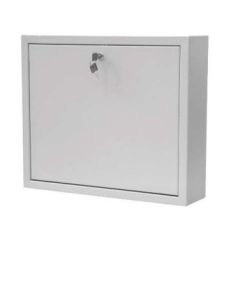
Pack of 50 pieces
€5,400.00 VAT incl.Wall box for housing PCs and notebooks up to 17 inches. Dimensions: W46 x D13 x H55 cm
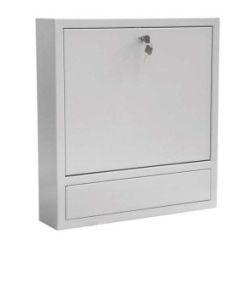
Pack of 50 pieces
€6,840.00 VAT incl.Wall-mounted cabinet with lower compartment ideal for protecting and storing notebooks or PCs. Dimensions: W55 x D13 x H60 cm
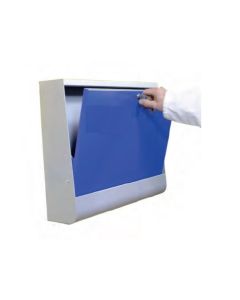
Wall-mounted cabinet for laptops up to 19" suitable for school furniture. Equipped with Yale-type key lock.
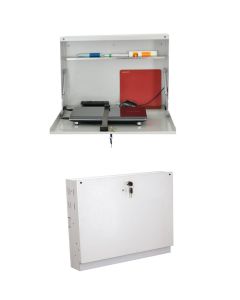
Security box for PCs and notebooks for schools and universities equipped with a key lock. Suitable for notebooks or tablets up to 19".
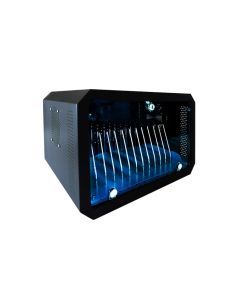
Charging station for Tablets, Notebooks and iPads suitable for schools, universities and training courses. Capacity: 12 devices.
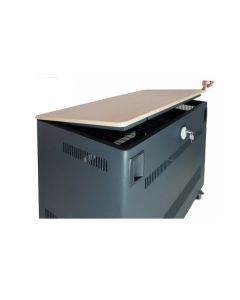
36-station charging cart suitable for Tablets and Notebooks designed for school furniture. Top opening. Key lock closure.
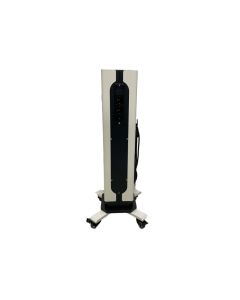
Charging column for tablets and smartphones with sockets, USB ports, and wireless charging. Dimensions: W 388 x D 201 x H 919 mm (height without wheels).
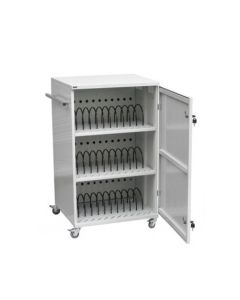
Charging cart for school furniture with front door with double key lock. Capacity 36 tablets/notebooks. Color: light grey.
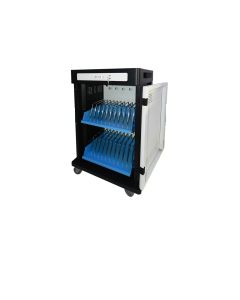
Charging trolley for school furniture with a capacity of 24 devices. Equipped with 4 swivel and self-locking wheels. Dimensions: W.700 x D.600 x H.945 mm.
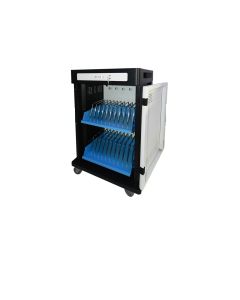
Charging trolley with double front and rear doors. Equipped with 24 slots for iPads, Tablets and Notebooks. Dimensions: W.700 x D.670 x H.945 mm.
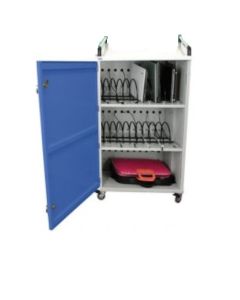
Storage and charging trolley for tablets or notebooks in painted steel. Dimensions: W64 x D62 x H114 cm
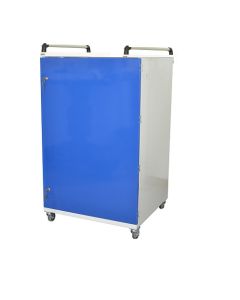
Storage and charging trolley for 35 Notebooks or Tablets equipped with lockable wheels with brakes. Front door with double key lock.
The integration of digital technologies in primary and secondary schools has radically transformed the logistical needs of modern classrooms. Notebook and tablet carts represent the indispensable infrastructural solution for safely and efficiently managing shared technological equipment between different classes. These devices do not only serve as storage units, but are true intelligent hubs capable of managing the charging cycles of dozens of devices simultaneously, protecting batteries from voltage surges and overheating. Adopting a professional charging and storage system allows for the optimization of teaching time, ensuring that every device is ready for use at the start of each lesson.
Our selection of tablet and iPad charging lockers has been designed to meet the daily challenges of educational environments, where material robustness must coexist with ease of use for teachers and technical staff. Each unit is made with reinforced metal structures and passive or forced ventilation systems to ensure maximum longevity for electronic components. Choosing a professional charging system means investing in the safety of the entire school complex, drastically reducing risks related to improvised wiring or electrical overloads, while maintaining the aesthetic and functional order necessary for contemporary school environments.
The purchase of a professional notebook charging station is a strategic choice that impacts the very lifespan of a school's technological investments. One of the main problems encountered in schools is the rapid degradation of batteries due to irregular charging or the use of unsuitable power adapters; our carts solve this critical issue thanks to sequential energy management systems that avoid absorption peaks on the institute's electrical network. The mobility guaranteed by multidirectional wheels with brakes allows for the transformation of a common classroom into a state-of-the-art language or computer laboratory in just a few moments, facilitating the sharing of resources between different floors or sections of the school building.
Beyond the purely technical aspect, security against theft and vandalism is a fundamental pillar of this equipment. Tablet charging lockers are equipped with secure key or numeric code locks, allowing devices to be stored during night hours or school closing periods without worry. The armored structure protects devices from accidental impacts and unauthorized access, centralizing the responsibility of custody in a single point easily monitored by responsible personnel. Furthermore, the internal organization of cables eliminates clutter and prevents damage to tablet connectors, which represent one of the most frequent causes of malfunction in school contexts where use is rapid and sometimes poorly cared for by young users.
The landscape of charging solutions is mainly divided into two macro-categories: fixed stations and mobile units. Tablet carts for schools are equipped with ergonomic handles and silent rubber wheels, ideal for being moved along corridors and inside elevators without producing vibrations harmful to the hard drives or internal circuits of notebooks. These carts can accommodate from 10 up to 40 devices, organized in vertical or horizontal padded slots to prevent scratches to the casings. Many versions include pull-out shelves that facilitate wiring operations and the quick extraction of devices by individual students under the teacher's supervision.
On the other hand, for head offices, administrative offices, or dedicated teaching rooms, fixed charging lockers represent the most compact solution. These can be wall-mounted or installed on existing desks, optimizing vertical space. There are also hybrid variants that integrate spaces within the cart for projectors, printers, or wireless routers, transforming the cabinet into a true mobile control room for multimedia teaching. Finishes range from classic industrial gray to brighter colors, suitable for primary schools, always using epoxy powder coatings resistant to detergents and disinfectants used for daily sanitization of common surfaces.
The selection of a charging cart for school furniture must first be based on the type and size of the devices to be hosted. A 10-inch tablet requires a different space than a 15.6-inch notebook; it is therefore essential to check the net dimensions of the slots to avoid the charging cables being excessively bent, risking premature breakage. A critical decision criterion concerns electrical management: for institutes with dated electrical systems, it is preferable to opt for carts equipped with programmable timers or cycle charging systems, which distribute power alternately to the various groups of devices so as not to trip the main switch during the start-up phase.
Another often underestimated factor is ventilation. Notebooks generate a considerable amount of heat during charging; a good professional charging cart must have strategically positioned ventilation holes or, in larger models, thermostated fans that activate only when necessary. The ease of access to the rear area where the power adapters are housed should also be evaluated: clean cable management prevents cables from tangling, making replacement or maintenance operations simple. Finally, the choice between a key or electronic lock depends on internal security protocols: the key is ideal for centralized management, while the numeric code allows access to multiple teachers without the need to exchange physical keys.
As these are electrical devices used in environments frequented by minors, the reference regulations are extremely strict. Each tablet charging station must be CE certified and comply with low voltage and electromagnetic compatibility directives. It is essential that the internal electrical system of the cart is equipped with protection against overload and short circuits. In the school environment, the use of products with rounded edges and the absence of sharp parts is highly recommended to prevent accidental injuries, in full compliance with the safety standards for office and school furniture applicable at the European level.
Furthermore, cable management must be such as to prevent direct user contact with the live parts of the devices' original power adapters. The materials used for construction must be fireproof or have high heat resistance properties. Many of our carts follow the parameters of certifications for electrical safety in public environments, ensuring that, in the event of a single power adapter malfunction, the damage remains contained and does not compromise the entire system. The presence of a main magnetothermic switch on board the cart is a technical requirement that we strongly recommend checking during the purchase phase, as it represents the last line of defense for the protection of the school's technological assets.
Explore all products in the category and compare the available solutions to find the one best suited to your operational context.
The capacity of the carts varies depending on the model chosen, starting from compact units for 10 or 12 devices up to professional stations capable of hosting 30, 36, or 40 units. It is important never to exceed the capacity indicated by the manufacturer to ensure proper ventilation and not to overload the internal electrical circuit of the cart.
Yes, the charging lockers and carts are universal. Inside, there are standard slots where tablets, iPads, or notebooks of any brand can be placed. Charging occurs by connecting the original power adapters of the devices to the internal electrical outlets or using integrated USB cables if the cart supports this technology.
Professional carts are designed with passive ventilation systems, via laser-cut slots in the metal structure, or active ventilation with electric fans. These systems ensure that air circulates between the devices, dissipating the heat generated by the batteries and power adapters to prevent dangerous overheating for the electronics.
Absolutely yes. The carts and cabinets are made of solid steel and equipped with secure locking systems, such as cylinder locks with keys or electronic keypads for numeric codes. Many models also provide the possibility of being anchored to the floor or wall using special kits, increasing the level of passive security.
For schools with limited electrical systems, we recommend carts equipped with sequential charging systems or programmable timers. These devices manage the activation of groups of outlets at different times, avoiding the initial absorption peak that could trip the school's main switch.
Notebook carts are equipped with high-quality wheels, usually swiveling and with rubber tread so as not to damage floors and to facilitate overcoming small level changes or thresholds. Two of the four wheels are always equipped with brakes to ensure maximum stability once the cart is positioned in the classroom.
No, the initial installation is designed to be performed by school staff or the IT representative. The carts have intuitive cable organization systems that allow power adapters to be locked in a separate compartment, passing only the final connector to the device, maintaining order over time.
 English
  Italian
 French
 German
 Spanish